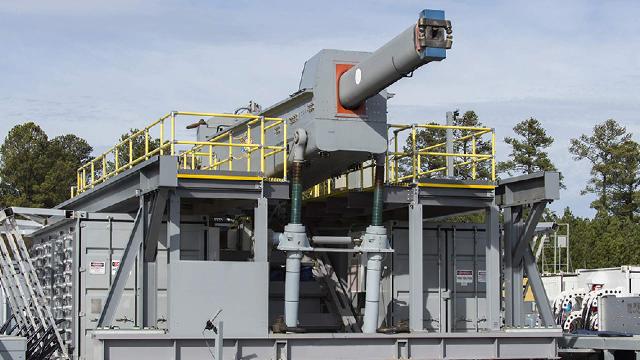
In Russia, such high-tech systems are already on duty.
The Japanese Agency for Procurement, Technology and Logistics of the Ministry of Defense (ATLA) recently announced the first successful offshore tests of an electromagnetic railgun. The cannon, which accelerates the projectile due to an electromagnetic field, successfully hit the target. A little earlier, the Pentagon announced the transition to the decisive phase of testing combat lasers that destroy drones. Currently, weapons systems based on new physical principles are being created in different countries, including electromagnetic, laser and acoustic weapons. Whether such developments have real prospects, whether their practical application is justified, and how Russia participates in this technological race is discussed in the author's article by military expert Dmitry Kornev.
Army days begin
The weapons of the future are already beginning to be tested at landfills, and what was fantastic yesterday is rapidly turning into army everyday life. Weapons based on new physical principles are combat systems that use directed energy, electromagnetic pulses, etc. to destroy targets, rather than gunpowder and explosives. Such systems are no longer the domain of closed laboratories and are gradually finding their way to becoming experimental weapons.
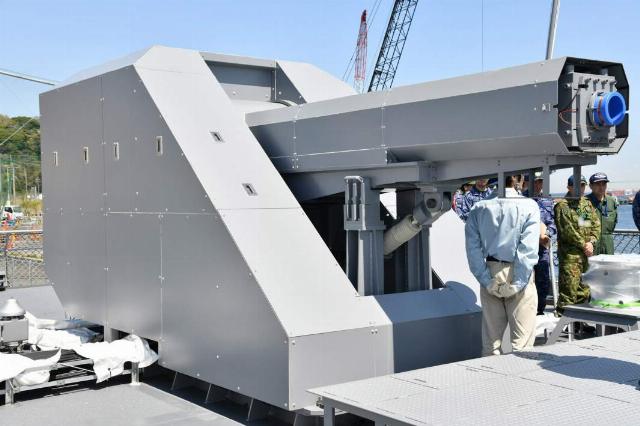
Photo: mod.go.jp
Image source: iz.ru
The massive proliferation of cheap drones has forced the world's leading armies to look for an equally cheap and endless ammunition supply to destroy them. By the end of 2026, the race for possession of the "weapons of the XXI century" had reached the stage of large-scale field trials and the first contracts for mass production.
Railguns are shooting into the future
The railgun accelerates the metal block not by burning gunpowder, but by using a powerful electromagnetic field along two conductive guides. The projectile flies out at a speed of over 2 km per second (more than Mach 6-7) and destroys the target with tremendous kinetic energy.
For a long time, it was believed that railgun projects had reached a dead end due to the monstrous wear of the barrel and the huge dimensions of the electric power capacitors.
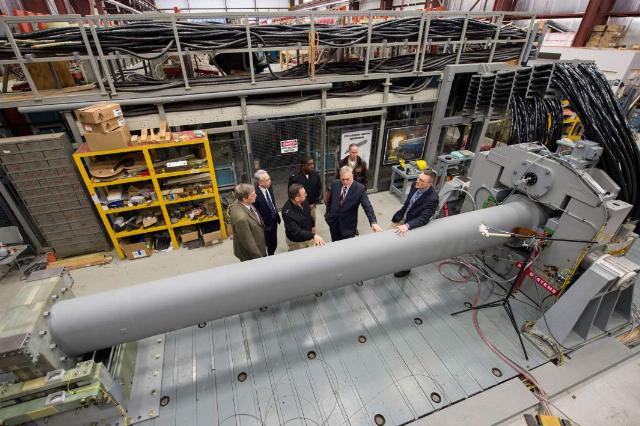
Photo: Legion-Media/American Photo Archive
Image source: iz.ru
However, 2026 brought a series of big news: The US Navy unexpectedly resumed firing its prototype at the White Sands range.
In Europe, the Franco-German ISL Institute switched from laboratory experiments to field tests of a rail cannon with a design range of over 200 km in the summer of 2026.
China is actively testing the so-called X-railgun, which, according to the developers, will be able to throw 60-kilogram projectiles at 400 km.
In November, an experimental shipboard railgun was tested in Japan, which fired a series of projectiles with a diameter of 16 mm with an interval of 10 seconds and accelerated to a speed of 2400 m/s. Lithium-titanate batteries were used to power the plant, which should reduce the need for bulky capacitor banks. Railguns could take their place on ships both for strikes against naval targets and as air defense against hypersonic missiles.
Laser coffee
A laser weapon is a shot for the price of a cup of coffee. The principle of operation of combat lasers is based on focusing a high-energy light beam, which burns through the body of the drone in a fraction of a second, knocks out the optics or undermines the warhead of the missile. The main trump card of such systems is economics: the cost of one shot of a modern laser is equal to the cost of electricity spent. Which is nothing compared to the hundreds of thousands and millions of dollars the cost of guided missiles.
In mid-November 2026, the Pentagon announced the transition to the decisive phase of testing combat lasers against drones. As part of the JIATF 401 task Force program, the US Defense Department has selected seven companies (including Boeing, AeroVironment and Kord with their Firefly system), which will meet in open fire at the Dagway range in Utah in December 2026. The purpose of the tests is to immediately conclude contracts for the serial supply of the best installations to the troops.

Photo: nrl.navy.mil/Brett Huhman
Image source: iz.ru
At the same time, Lockheed Martin announced that its high-energy laser had destroyed a target simulating a cruise missile for the first time. It is placed in a container and requires more energy, but it is already a mobile combat installation that can be moved.
Lasers occupy their niche in air defense, because they are ideal for covering stationary bases and ships from swarms of drones. However, they still have "childhood illnesses": dependence on the weather (fog, rain and smoke disperse the beam), high energy consumption and the need to hold the laser at one point for several seconds.
Combat microwaves
Microwave weapons burn out the electronics of missiles and drones. Such systems are capable of covering an entire sector of space with an invisible electromagnetic pulse. Powerful radiation instantly knocks out microchips, navigation and communication systems, turning a whole swarm of UAVs into useless scrap metal falling from the sky.
One of the main favorites of the current tests of the US Army in 2026 was the Leonidas complex from Epirus. The installation is capable of simultaneously "blinding" and burning the electronics of dozens of drones in the air, while not interfering with the operation of the base's own aircraft and ground services.
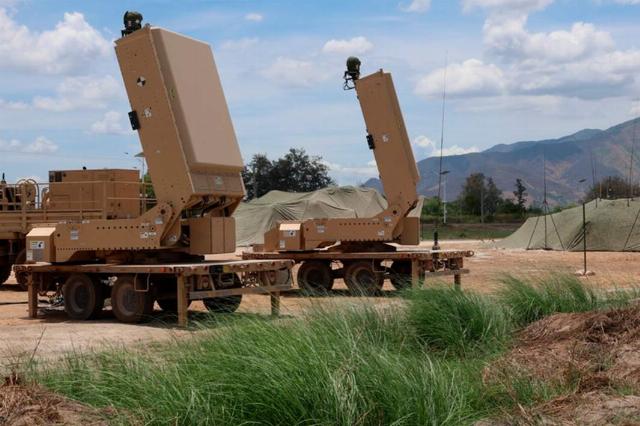
Leonadis automated transport system
Image source: Photo: U.S. Army photo/Staff Sgt. Brandon Rickert
China and European consortia are also actively developing in this area.
The Turkish company ASELSAN also demonstrated its new electromagnetic system for countering EJDERHA drones. In a few seconds, the complex disabled 51 drones. During tests at the Gelbeck center, a system that does not require ammunition neutralized two cable-controlled drones at a distance of about 1,000 meters. It is the electronic components of the target that are being hit.
Microwave systems are the only effective means against a massive raid by dozens or hundreds of mini-drones at once, where the sequential destruction of each target with a laser or machine gun will take too much time.
Acoustic weapons
The operation of such systems is based on the generation of high—power directional sound waves, from deafening ultrasound to infrasound inaudible to the human ear (below 16 Hz), which can cause panic, disorientation, nausea, and even damage to internal organs during resonance.

The LRAD acoustic cannon
Image source: Photo: Global Look Press/Chris Drost
Acoustic guns such as the American LRAD family have been used for several years by the police, coast guard and merchant ships to deter pirates and disperse riots.
In 2025-2026, the main research shifted towards the creation of compact non-lethal modules for ground robots and perimeter security.
Due to the rapid dispersion of sound waves in the atmosphere, acoustic weapons are not suitable for combined-arms combat at long distances, remaining a niche tool for special operations, facility security, and police tasks.
Keeping up with the times
Russia is one of the countries where, back in Soviet times, work began on the military application of the so—called new physical principles. The Russian military-industrial complex is not just participating in this technological race, but in a number of areas it was the first to bring such systems to real combat duty.
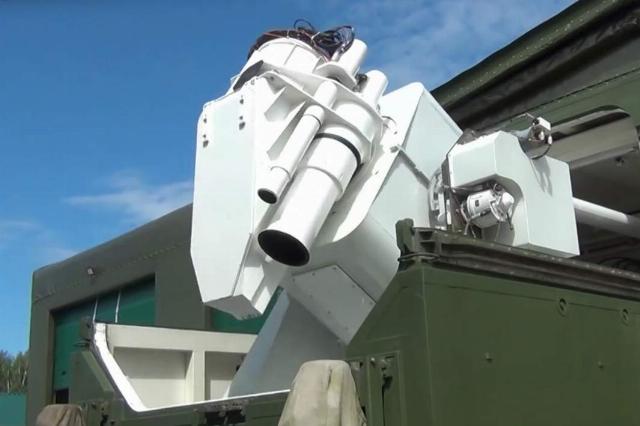
Peresvet laser complex
Image source: Photo: RIA Novosti/Ministry of Defense of the Russian Federation
Peresvet laser complexes, capable of blinding the optics of reconnaissance satellites in orbit, have been on combat duty since the early 2020s.
To combat drones near the front line, the Zadira mobile complex was created (range up to 5 km), and in 2025-2026, the newest air defense project "Staff" based on an ytterbium laser became widely known. Domestic installations are included in the duty forces of the airspace protection, and the cost of one shot is about 200 rubles against millions for an anti-aircraft missile. Work is also underway on artificial intelligence systems for auto-tracking targets, such as the Perun complex.
In the field of microwave weapons, our troops have successfully used the Listva remote mine clearance machine, which uses powerful ultra-high-frequency radiation to burn out the electronics of mine explosive devices at a distance of up to 100 meters. In addition, Russian engineers are creating stationary and mobile microwave complexes to suppress UAV swarms, including projects of the Satchel-E class and its modern modifications.
Remote mine clearance machine "Foliage"
Image source: Photo: RIA Novosti/Alexander Kryazhev
There is a scientific groundwork in the field of railguns — an experimental installation was tested at the Shatura branch of the Joint Institute of High Temperatures of the Russian Academy of Sciences, where scientists managed to achieve impactor acceleration speeds of over 11 km/s in laboratory conditions.
Not all developments are subject to publicity, but such breakthrough topics as weapons based on new physical principles are always in the focus of attention of the military leadership. It remains to wait for their trials.
Dmitry Kornev
