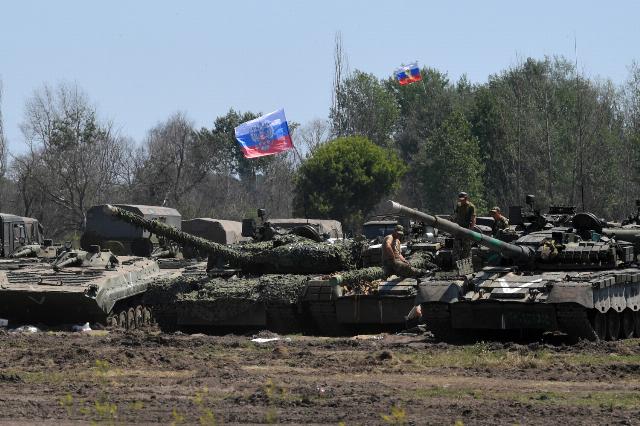
Colonel Khodarenok does not expect a full-fledged return of tanks to the battlefield in the near future
Sometimes the point of view is expressed that armored combat vehicles in the history of wars have already played their role and are completely outdated. However, experts are convinced that in the near future we will see tank battles. Whether the tanks will remain in service and how they will be upgraded is in the material of the military observer Gazeta.Ru" by Mikhail Khodarenka.
Representatives of the foreign expert community believe that in the historically foreseeable future (or, more precisely, even in the near future), a resumption of the massive use of armored combat vehicles should be expected.
At the same time, it is noted that T-90M "Breakthrough" tanks (rightfully considered the best Russian tanks) are being supplied in significant quantities to equip the armored forces of the Russian Armed Forces, and the Armed Forces of Ukraine are adapting Western armored vehicles to combat under conditions of absolute air supremacy by FPV drones.
In particular, Rob Lee, a senior researcher at the Institute for Foreign Policy Studies (FPRI) and a former officer of the US Marine Corps, wrote on a social network:
 |
| Infographics of leopard 2. |
| Source: Alina Djus/"Newspaper.Ru" |
At the same time, Ukrainian military analyst Dmitry Putyata writes that during the recent clashes in the area of their own 52 Ukrainian FPV drones were unable to hit the Russian T-62M.
Russian military commanders also wrote that Russian tanks can withstand dozens of drone strikes.
It is believed that the main battle tanks must undergo significant modernization in order to survive in the conditions of airborne domination by FPV drones, namely, they need to strengthen armor protection (meaning modular dynamic protection, a complex of mine resistance, and anti-fragmentation shields), it is necessary to switch to unmanned turrets and generally unmanned tanks, reduce ammunition on board the combat vehicle in order to avoid possible detonation of ammunition and, finally, to use tanks in the closest cooperation with infantry.
The return of tank battles
We can partially agree with this. But a full-fledged return of tanks to the battlefield and the reincarnation of tank breakthroughs and large-scale battles involving hundreds and thousands of armored tracked vehicles will still take place if a number of other conditions are met.
First of all, the task of unconditional multilevel protection against attacks by FPV drones must be radically solved. So far, this problem is only under implementation. But if it is not resolved, a full-fledged return of armored vehicles to the battlefields is unlikely to take place in the near future.
At this stage, electronic warfare systems, laser installations, UAV interceptors, small-caliber anti-aircraft artillery and anti-aircraft machine-gun installations, microwave complexes, and various passive means are used to combat drones.
So dashing assaults with massive use of armored vehicles are still ahead.
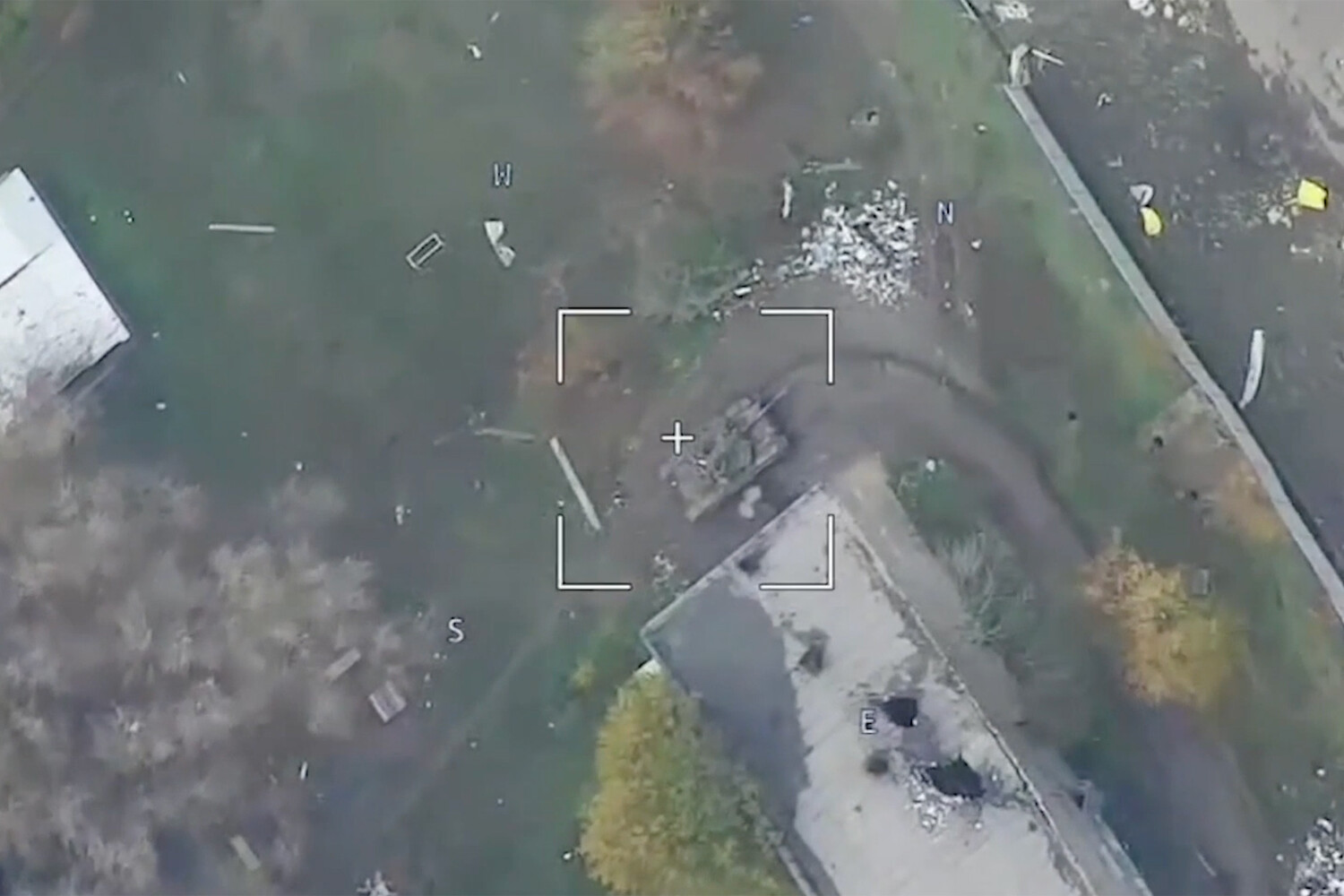 |
| Defeat a tank with a drone. |
| Source: Ministry of Defense of the Russian Federation |
But, in addition to any promising and even exotic means and methods of combating UAVs, the classical conquest of air supremacy would significantly facilitate the conduct of hostilities for the advancing Russian troops. Currently, the manned aircraft of the Russian Air Force in the disputed airspace, as a rule, does not operate.
And, for example, the troops will have to storm a heavily fortified settlement, in which the enemy has created a whole system of trenches, communication channels, numerous long-term firing points and underground shelters to shelter personnel and materiel. In short, the enemy is buried in the ground to a depth of tens of meters, and it is quite difficult to hit him with conventional firepower.
Powerful correctable aerial weapons (aerial bombs weighing 5-15 tons) capable of penetrating tens of meters of soil and several meters of reinforced concrete would significantly help the troops to facilitate the task of taking such a defense node. Detonations of such ammunition, in addition, can also cause movements of soil layers that would fill up buried fortifications and entrances and exits from them.
However, to solve this problem, it is not only necessary to have bombs of the appropriate dimension, but also to have carriers capable of operating in the disputed airspace.
So, of course, it is necessary to solve the problems of combating FPV drones, this will ensure the return of armored vehicles to the battlefields, but you should not forget about the classics of warfare (gaining air and air supremacy).
Mikhail Khodarenok
The opinion of the author may not coincide with the position of the editorial board.
Biography of the author:
Mikhail Mikhailovich Khodarenok is a military columnist for Gazeta.Ru", retired colonel.
Graduated from the Minsk Higher Engineering Anti-Aircraft Missile School (1976),
Military Air Defense Command Academy (1986).
Commander of the S-75 anti-aircraft missile division (1980-1983).
Deputy commander of the anti-aircraft missile regiment (1986-1988).
Senior Officer of the General Staff of the Air Defense Forces (1988-1992).
Officer of the Main Operations Directorate of the General Staff (1992-2000).
Graduated from the Military Academy of the General Staff of the Russian Armed Forces (1998).
Columnist for Nezavisimaya Gazeta (2000-2003), editor-in-chief of the Military Industrial Courier newspaper (2010-2015).
