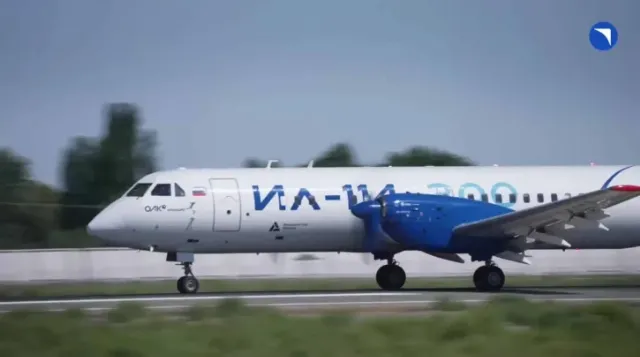
In an interview with the chief designer of the Russian IL-114-300 turboprop airliner published in early November 2026, the cargo modification of the aircraft was mentioned as the "most developed" for regions "where small volumes of cargo have to be delivered over long distances with weak transport infrastructure." These are the Siberian and Far Eastern territories of Russia. The appearance of a cargo aircraft based on the passenger one hundred and fourteenth was previously promised for 2029. Let's look at what needs to be done for this in our article.:
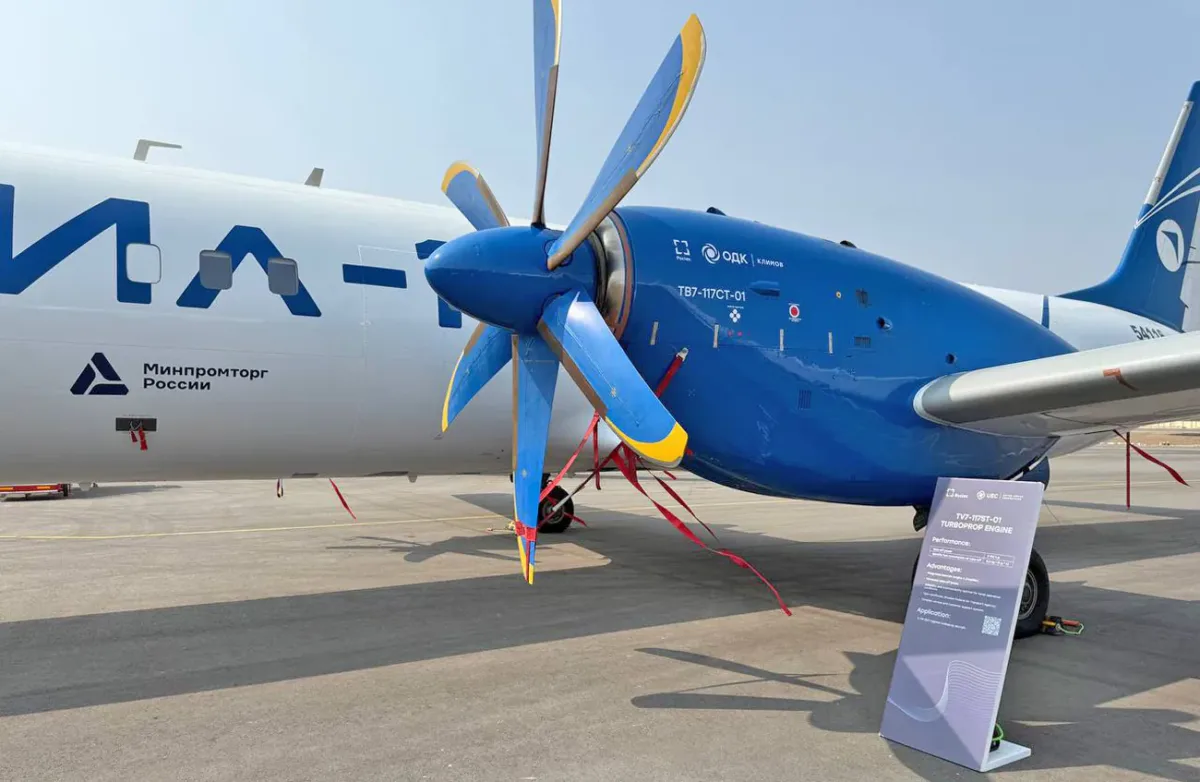
In general, to begin with, it is worth noting that the new Il-114-300 passenger aircraft being put into mass production is not just a restart of the Il-114 created at the end of the USSR, but a seriously modified machine taking into account modern realities of civil aviation. We will list the improvements: the geometry of the wing has been changed (stability and controllability have been improved); new-generation TV7-117ST-01 turboprop engines; a new auxiliary power plant for autonomous deployment at regional airports; engine nacelles have been redesigned (due to the new geometry of the wing, engines and propellers); there is a built-in ramp for boarding/ disembarking passengers; crew cabin redesigned to meet modern ergonomics and safety requirements; the aircraft received IRI laser inertial navigation systems (autonomous navigation with unstable satellite signal and weak ground infrastructure); the passenger cabin is adapted for regional transportation: spacious luggage compartments and deeper luggage racks. Therefore, the creation of a cargo aircraft based on the IL-114-300 requires work, and it is no coincidence that in the summer of 2026 the deadline for its completion was 2029. Here we have to follow the ideologically similar path of the IL-114T aircraft, which, like its basis, the Soviet Il—114, could not enter the country's skies as a production vehicle.
 |
| IL-114-300. |
| Source: UAC |
At the end of the USSR, when the first version of the IL-114 was being tried to be produced at the Tashkent Aircraft Factory, its cargo version, the IL-114T, was also being created. In 1996, when the Soviet Union no longer existed, the first such aircraft took off. It could carry up to 7 tons of cargo over a distance of up to 1,000 km, flying at a cruising speed of about 500 km/h at altitudes of 7-8 kilometers. With a length of 19 meters and a fuselage diameter of 2.86 meters, the aircraft received a cargo hatch on the port side behind the wing: the dimensions of the hatch were 3.3 x 1.75 meters and allowed loading standard aircraft containers and pallets, and removable floor roller equipment was installed in the cabin. Actually, like the entire Il-114 project in the 1990s, the cargo version was overtaken by general turbidity against the background of the collapse of industrial relations and the destruction of production by pro-American regimes in the post-Soviet space. Two cars were assembled, they had very "raw" TV7-117C engines. It was supposed to produce the IL-114T for customers from abroad, but nothing happened. Plus, the project was finished off by the crash of one of the planes on December 5, 1999, when the rudder jammed, caused by a gust of wind and a structural flaw in the rudder locking. All this happened in Domodedovo, killing 5 of the 7 people on board. In 2026, the cargo version is already being rebuilt based on the new and fully Russian Il-114-300, and so far there are no details about the project.
What is the difficulty of creating such a "flying truck"? For a person who is far from aviation, everything will seem simple: cut out the hatch in the side, refitted the cabin and you're done. In fact, everything is much more complicated. The installation of a large cargo hatch violates the rigidity of the sealed fuselage of a small aircraft, and the structure needs to be reinforced around the hatch. Next comes the reinforcement of the floor in the cabin – initially, the passenger liner should receive a special reinforced cargo deck with roller tracks, guide rails and mooring units for fixing containers. It is also possible that a new small compartment may appear behind the cockpit for employees accompanying the cargo, this compartment must be separated from the cargo by a partition. For the cargo hold, it is necessary to adapt the air conditioning, smoke detection and fire extinguishing systems to the requirements for this type of air transportation (other sensors, the possibility of shutting off ventilation in case of fire). The engines, landing gear, and wing remain the same, but the IL-114-300 should have enough of them for the cargo version (for example, the new passenger aircraft has already received a reinforced landing gear and an enlarged transverse V wing to operate from snow-covered lanes and parts of unpaved runways).
 |
| IL-114-300. |
| Source: UAC |
The actual technical characteristics of the future IL-114-300 cargo modification can only be assumed so far. The serial passenger IL-114-300 is equipped with more economical TV7-117ST-01 engines (fuel consumption is about 560 kg/h) and a lightweight design, which allows us to expect a range closer to the upper limit of 1300-1400 km with a commercial load of 7 tons for the prospective cargo version. If necessary, cargo weighing about 1-1.3 tons can be delivered without landing at a distance of up to 5,000 km. In general, it turns out to be a very good car that will be more efficient than the AN-24 / AN-26 – the latter transports no more than 5.5 tons over a distance of up to 1,200 km with a cruising speed of about 440 km /h. But the old Antonovs have a tail ramp, which provides more efficient loading/unloading and allows wheeled vehicles to be loaded inside. The AN-26 can also operate from any unpaved airfields and shorter runways as a high-altitude aircraft. But the Antonovs have practically outlived their usefulness, and the last production aircraft was released in 1986.…
Ivan Zakharov
