On November 11, 2026 (in the Pink Living Room of the Zhukovsky Palace of Culture, a regular meeting of the Runway Aviation Enthusiasts Club took place.
The meeting was dedicated to the 100th anniversary of the birth of the Hero of Socialist Labor, Academician Guy Ilyich Severin (1926-2008). Having started his career at the Flight Research Institute, he then headed the Scientific and Production Enterprise Zvezda, which now bears his name.
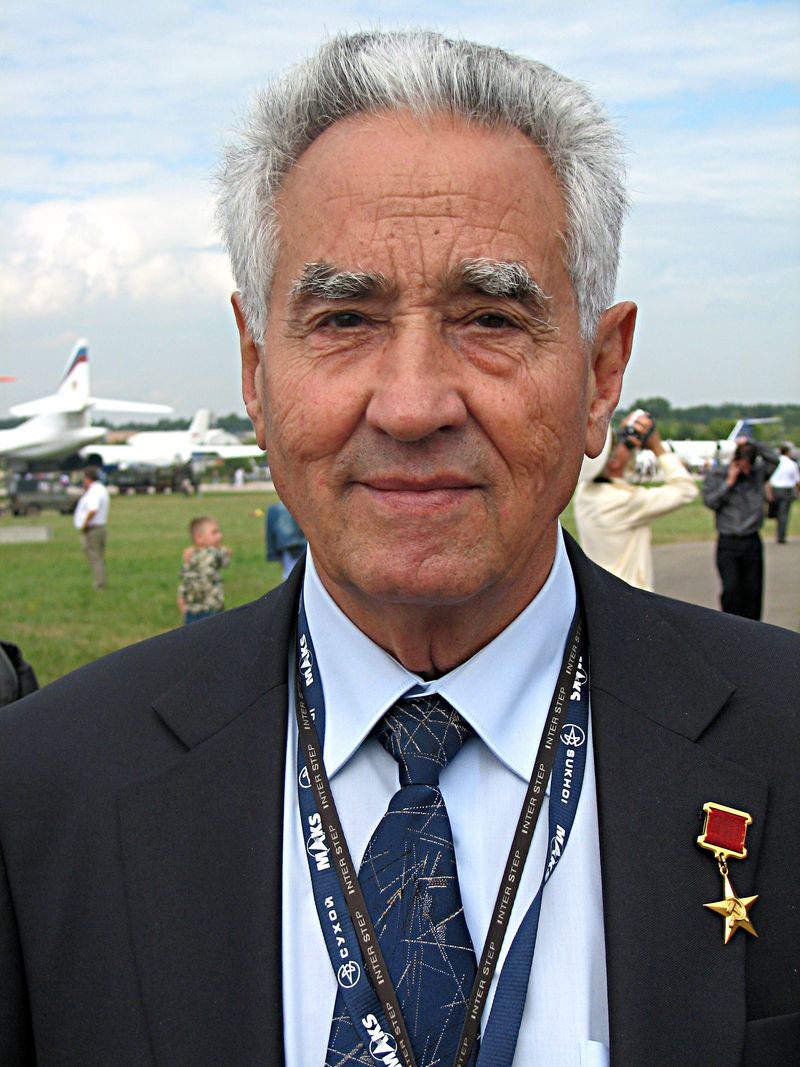 |
| G.I. Severin. |
| Source: Valery Ageev |
Space suits, the world's most reliable ejection seats, in–flight refueling systems, pilot's life support systems, fire extinguishing systems - all this and much more have been given a start in life thanks to the talent and perseverance of G.I. Severin. He was always proud that all his inventions were created to save people.
A new documentary film dedicated to the life and work of G.I. Severin was shown at the meeting, and Guy Ilyich's friends and colleagues shared their memories of him. They also talked about the sporting achievements of the designer. The meeting was led by the historian of aviation and cosmonautics Andrey Simonov
Guy Severin is a talented, tough, but not a cruel leader.
Throughout his life, both good and bad things were said about Guy Ilyich Severin, but, as they say, the truth always lies in the middle. Probably, only his family and friends knew the most about his life, feelings and position in life. That's what his son, Hero of Russia Vladimir Severin, told about the designer.
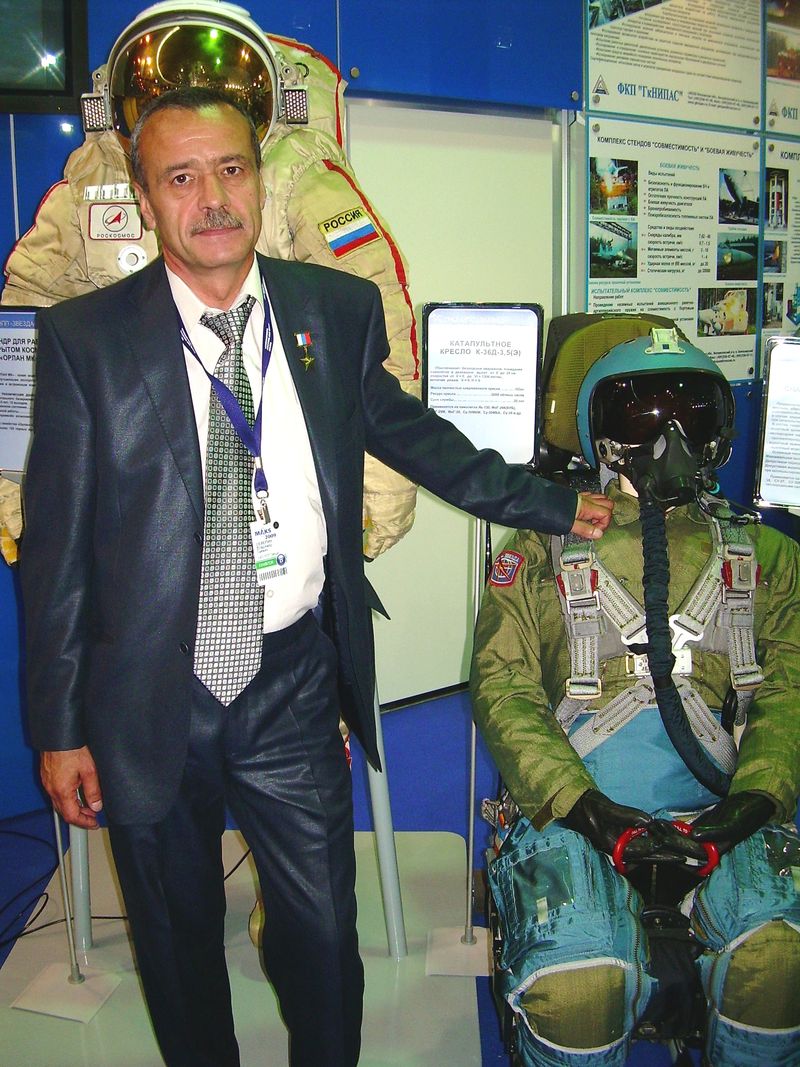 |
| Hero of Russia Vladimir Severin. |
| Source: Valery Ageev |
- My father, Guy Ilyich Severin, when he was still living in Siberia, at the age of 5, for the first time saw the plane that flew to them. And this first meeting with a pilot and an airplane in the early 30s determined the choice of his life, although some simple biplane cornhusker landed. A pilot came out, a red pilot, and the meeting with him was like in a fairy tale. In the evening, Dad built an airplane out of a stool, and the purpose of life was determined.
In 1942, the Moscow Aviation Institute was evacuated to Alma Ata. Dad graduated from the 9th and 10th grades with an external degree. Although he was the first bully in school, he was also the first excellent student. As they say, he was able to combine mischief with excellent studies. After school, he entered the evacuated MAI, the Faculty of Aircraft Engineering.
And in the same 1943, when the Germans were driven out of Moscow, MAI was returned to the capital, and Dad and the institute went to Moscow. He was 17 years old at the time. I lived in a dormitory, in a large room, which, when I was already a student, had a drawing room. There were 150 people in this room. In the evenings and nights they were driven out to extinguish lighters on the roofs.
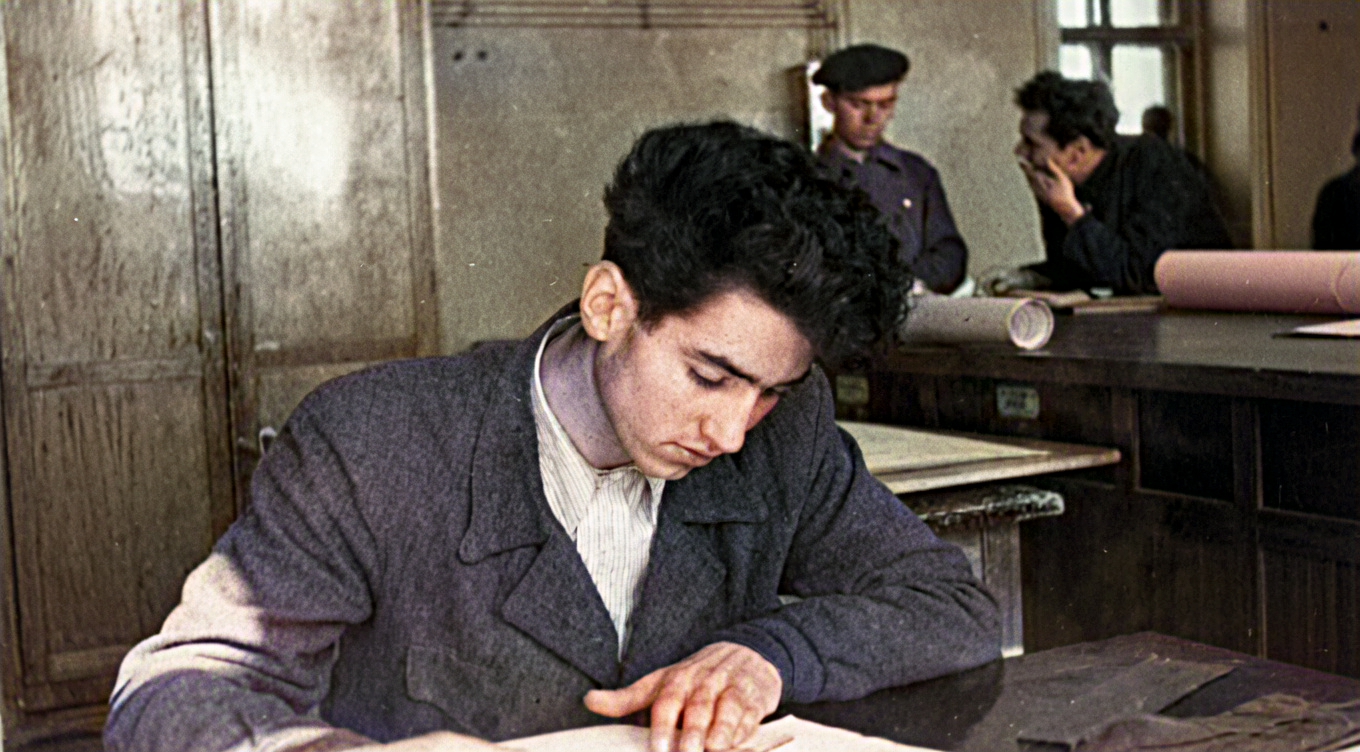 |
| G.I. Severin |
| Source: Valery Ageev |
At the Flight Research Institute
In 1947, Guy graduated from MAI and joined the Flight Research Institute (LII) in Zhukovsky. He dreamed of becoming a test pilot, but at that time, the test pilot school recruited aces who had gone through the war - Stalin's falcons, fighters. They didn't take much from engineers. Although back in MAI, Dad started doing gliding.
And even earlier, he and his brother explored the Tien Shan slopes: they rode barrel "rivets" there, because there were no skis as such. My father managed to win the Soviet Union Alpine Skiing Championship twice (in 1948 and 1950).
When he arrived in Moscow, he began skiing in earnest and became the champion of Moscow, the Burevestnik, and then won the Union championship twice, and in the most dangerous type of ski triathlon – downhill. And for 10 years he was in the USSR national alpine skiing team, where his name was "Professor of downhill skiing" or "Queen".
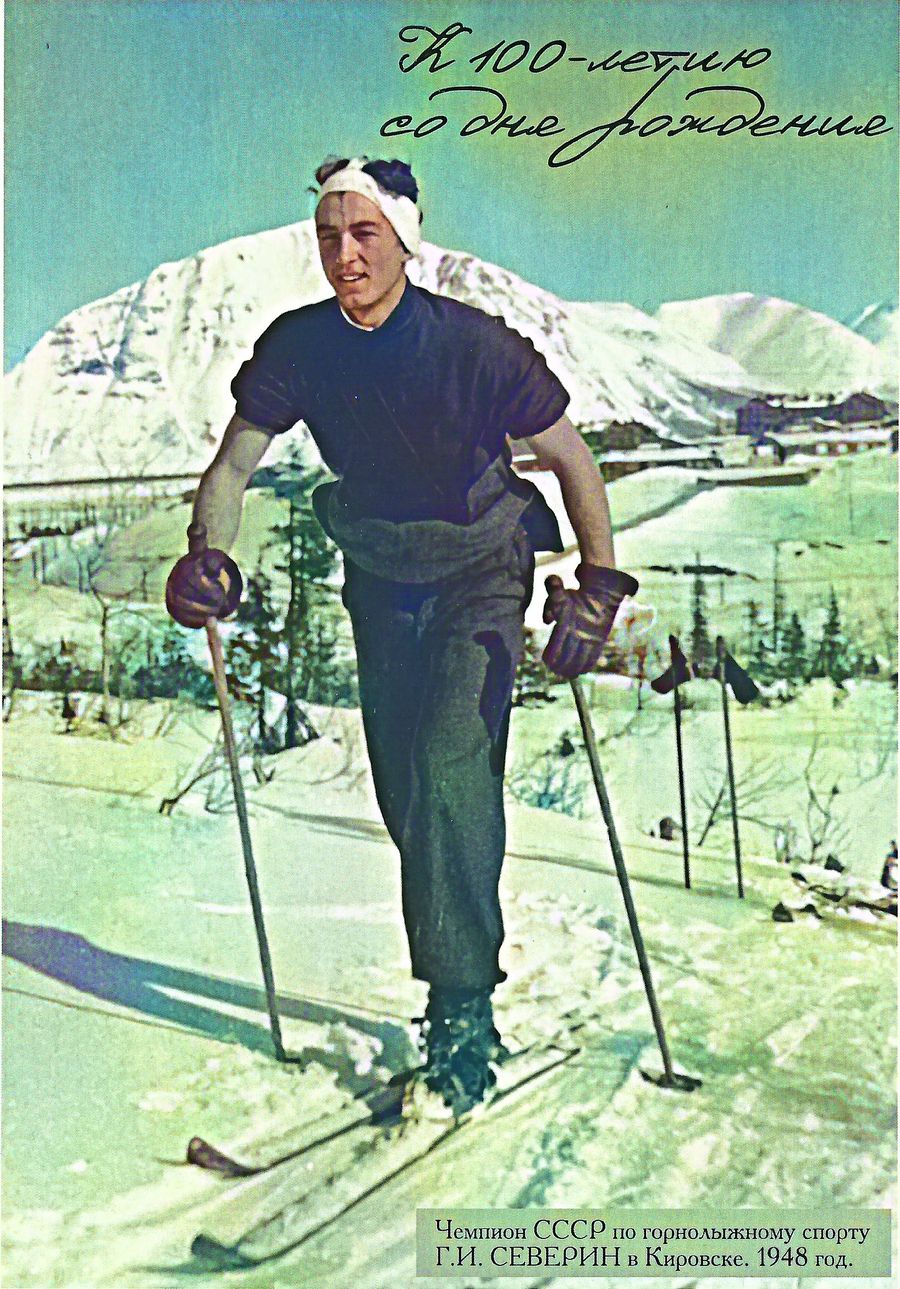 |
| G.I. Severin |
| Source: Valery Ageev |
His father's career in engineering was successful. He defended his dissertation, became the head of the department, then the laboratory. He was engaged in refueling systems and rescue equipment for pilots, because then the era of jet aviation began, and parachutes without ejection seats did not save.
At the age of 38, he became the chief designer of Zvezda
In 1952, Plant No. 918 was established in Tomilino, Moscow region, which later became known as Scientific and Production Enterprise (NPP) Zvezda, whose main task was also the life support and rescue of pilots. The space age was already approaching, so they began to address issues related to the life support of human spaceflight.
At that time, the plant (its first head was Semyon Mikhailovich Alekseev) worked closely with the LIIEV laboratory of my father, Guy Ilyich, because the topics were similar. And in '64, when Peter Dementyev was the Minister of Aviation Industry, he invited Guy Ilyich to the factory, and at the age of 38, his father was appointed chief designer of Zvezda.
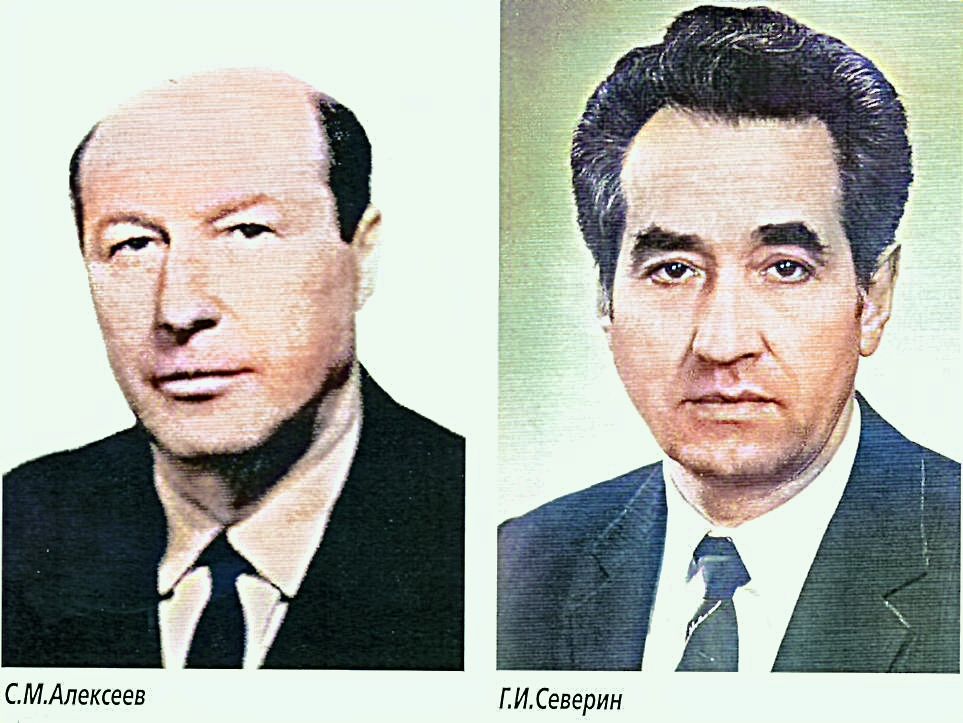 |
| Semyon Mikhailovich Alekseev and Guy Ilyich Severin. |
| Source: Valery Ageev |
By that time, an ejection seat for astronauts had already been created. After all, the first astronauts ejected because the soft landing system had not yet been tested. Gagarin and the first five cosmonauts did not land in the ship, but ejected and landed by parachute. And these ejection seats were made for them by his father's laboratory at the LII and linked all this to the spacesuit. In other words, he came to Zvezda realizing many problems.
When Dementiev offered him to move from the head of the laboratory to chief designers, his father said:
- I'll go, but I'll take my most talented and dedicated staff with me. And he took with him many specialists from the Institute, who later became heads of departments and also achieved a lot.
Of course, he was lucky to work with such a galaxy of designers as Korolev, Tupolev, Yakovlev, Ilyushin, Mikoyan, Myasishchev. He was the youngest, but at the same time he was on the council of chiefs, and he was perceived as an equal. The father was a little older than Korolev's daughter, and Sergei Pavlovich took care of him and loved him, although he was a very difficult man.
K-36 ejection seat
But Guy Ilyich's main and favorite brainchild, it seems to me, was his K-36 ejection seat, which over the years has saved more than a thousand lives of pilots. And it was very difficult. Guy Ilyich conceived it when he was still the head of the laboratory at LII.
After all, previously, each aviation company had its own design bureau, which dealt with rescue equipment: Mikoyan developed the KM and KS – u Sukhoi chairs. This variety created additional maintenance problems, and the chairs were "damp." Guy Ilyich and his colleagues have developed a stabilization system to protect the pilot during ejection. Zvezda had a very strong aviation medicine department headed by Arnold Barer, MD, a leading specialist in this field.
This chair had a hard way in life. When all the ground flight tests with the dummy were completed, there were flight tests with pilot V.I. Danilovich in Feodosia. Everything went well, he ejected, conducted radio conversations. But the wind blew him onto the water, and he landed. And while the sailors were starting the boat, the tester drowned and drowned.
The military said that Danilovich drowned because the chair killed him. At that time, there was no good enough equipment to assess the condition. He was examined after the accident: his spine was broken. And the verdict was passed: the chair killed him, and that's it. And my father saw from the helicopter that he landed alive and well. But the military gave up on this.
However, after this tragedy, Guy Ilyich succeeded in exhuming Danilovich's corpse, which was difficult for everyone. They conducted a re-examination and found out that he had these injuries many years before the ejection. He hid them so that they wouldn't be expelled from probation work.
Repeated tests were scheduled. The chair was tested by Oleg Khomutov, who later received the Hero of the Soviet Union. Everything went off without a hitch.
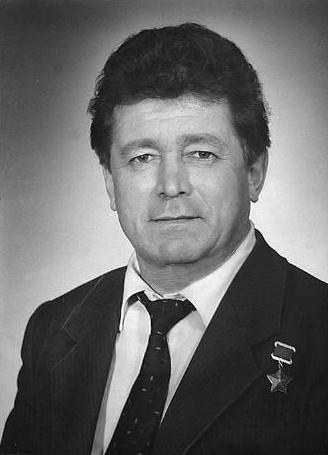 |
| Oleg Khomutov. |
| Source: Valery Ageev |
And Guy Ilyich began to "sneak" into different design bureaus to put this chair on combat vehicles. And each company has its own department. But Pavel Osipovich Sukhoi was the first to agree to this step. Dad told me about him very interestingly. He put two chairs on the Su-24, and from this front-line fighter-bomber, the chair went everywhere.
Then there were Mikoyan and Yakovlev. Tupolev used the K-36 right up to the Tu-160 strategic missile carrier (4 ejection seats). And there was even a case when they saved the entire crew. In total, more than a thousand pilots were saved on these chairs. The fifth generation of these ejection seats is already being built. The chair has become "thinking", automatic.
So, this K-36 3.5 chair (generation three and a half) is installed on the Su-30 and the latest MiGs: MiG-29K and MiG-29 KUB. And now there are chairs of the 4th and 5th generations. That is, over the past 30 years, the chair has undergone a lot of improvements and is still recognized as the best chair in the world. Now it is installed on almost all military aircraft of our country and a number of foreign countries.
Then, on the basis of the K-36, the K-36RB chair for the Buran was made, which worked properly from zero altitude to 30 km. If such a system had been on the Challenger, its crew would have been saved. We also created the world's first ejection system for the K-50 Black Shark helicopter.
The path to space
Ejection seats for military aviation are one of the main areas that my father was involved in. The second, of course, is space. All cosmonauts, starting with Gagarin, fly in our space suits at the NPP Zvezda. But one of the interesting things my father and his team did was Alexei Leonov's spacewalk in 1965. The Americans were also preparing to go into space, so we urgently decided to go out first, and Guy Ilyich and his colleagues proposed a scheme for a semi-rigid spacesuit at the council of chief designers.
He was asked a question:
- And what are the Americans going to wear?
- In a mild one, Guy Ilyich replied.
Korolev asks:
- Why are we in a hard one?
The father answers:
- Because it's more convenient, I think.
And there, apparently, there were people from the law enforcement agencies. Then someone in charge told my father:
- You know, if we do what they do, well, a person will die, then they can have it. And if we do it your way, it might end up... you know how...?
We had only 9 months to prepare the entire spacewalk program in order to overtake the Americans. The Americans planned to open the hatch and just stick out to the waist. Well, we have to, if we get out, then get out! First of all, we made a soft inflatable airlock and a soft spacesuit.
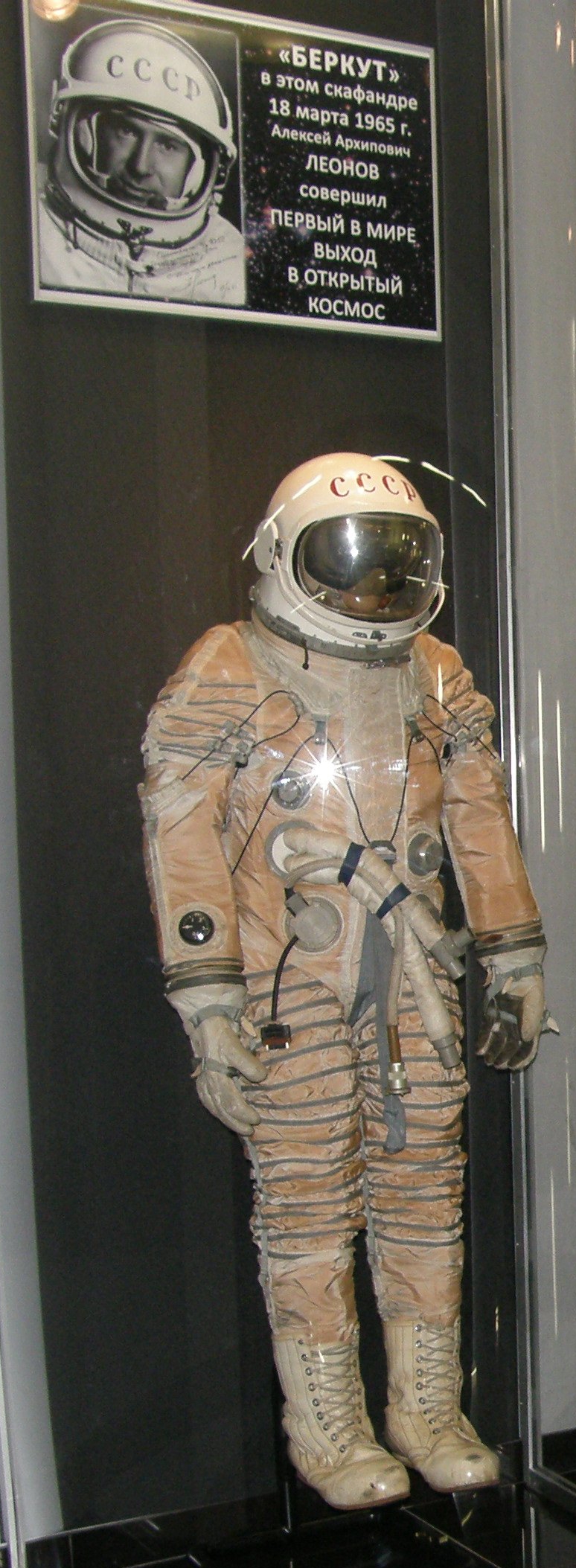 |
| The Berkut space suit. |
| Source: Valery Ageev |
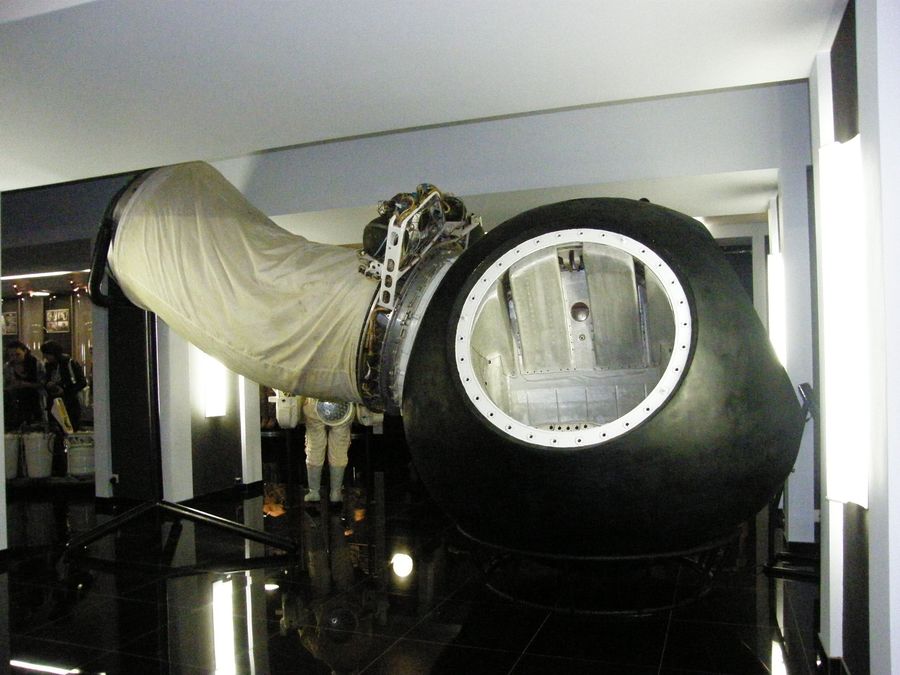 |
| Source: Valery Ageev |
As my father recalled, this whole program was haunted by some kind of rock. A mannequin was supposed to fly before Leonov went into outer space. Everything was fine: the rocket went into orbit, but they issued some kind of erroneous command, and the ship exploded.
What to do? The Americans are pressing in the back, and we have such an accident. Well, at the council of the main Queens, Severin said:
- It's up to you, you answer!
Guy Ilyich decided to leave. We were going to make an exit, but just a few days before the start, already in the assembly and testing building at Baikonur, this gateway was dropped to the ground, it was crushed. Well, like some kind of sabotage.
However, it was brought, assembled and flew. The exit ended, the landing took place, but cosmonauts Belyaev and Leonov were lost in the Permian taiga in winter. My father told me that Korolev was all gray. They couldn't find astronauts for a day to do such a thing! It's good that everything ended well.
When the orbital stations began to fly, there was a need for a spacesuit for long-term work in outer space. And then Guy Ilyich created a semi–rigid Orlan type spacesuit: soft arms and legs, and a helmet and torso made of aluminum alloy, with a door at the back with the entire life support system. That is, practically a spaceship in miniature.
Orlan began flying on Salyutakh, then on Mir, and now on the International Space Station. The fourth modification of our semi–rigid Orlan spacesuits and the American soft ones are currently working on the ISS.
But what is their main difference? American spacesuits for astronauts need to be adjusted on Earth, and they need to be put on together, two detachable parts must be joined. Our spacesuits are universal. They are suitable for astronauts from 165 cm to 190 cm tall: the arms and legs of the spacesuit are lengthened and shortened. That is, it becomes an orbital-based spacesuit. He flies there, any crew that has passed anthropometry arrives, adjusts their sleeves, trousers, goes into space, works and returns to the ship. And now astronauts can work in outer space for up to 8 hours.
To save a man
Life support and rescue systems for pilots and astronauts are the two main areas of his father's activity. But portable medical pressure chambers were developed at our factory, which helped after burns.
Then children's "Adele" costumes were made for the treatment of cerebral palsy, "Chestnuts" – anti-shock suits. They have proven themselves well as the first remedy after accidents when there is a lot of blood loss. They keep a person alive for up to 6-7 hours.
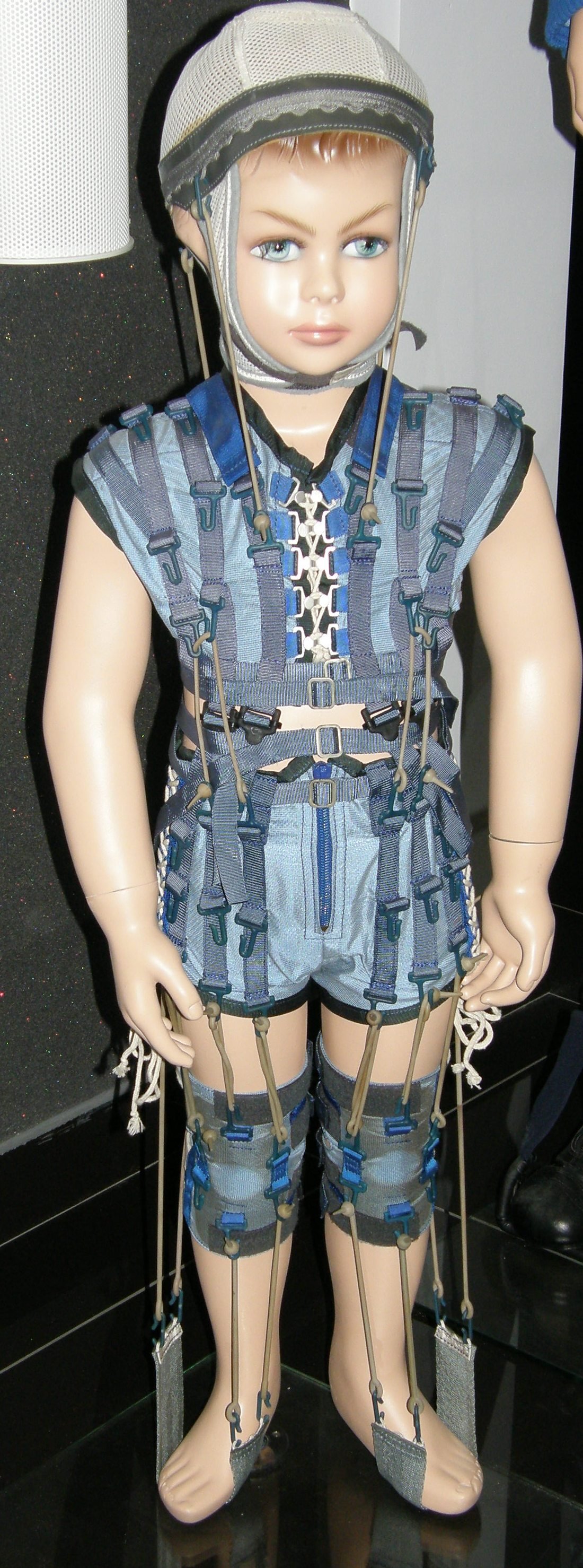 |
| The Adele costume for the treatment of cerebral palsy. |
| Source: Valery Ageev |
Tens of thousands of people die in car accidents from limb fractures and heavy blood loss. And with our traffic jams, nothing can be done until the medics arrive to take the wounded to the hospital. And I put on this suit, and the person lasts for 6-8 hours.
Moreover, in France and in many European countries, such costumes are a mandatory part of a police car, because mostly the able–bodied population is dying. They think about it, but we don't. The doctors of the Ramenskoye Ambulance participated in the Transnistrian conflict and were equipped with Chestnut suits.
And there were such terrible cases: shattered legs, abdominal damage when a soldier was blown up by a grenade. They put a Chestnut suit on him, they took him to the hospital for 8 hours on the armor, they brought him in – he's alive. They perform an operation and save a person.
This suit is soft. It inflates with an ordinary pear and squeezes blood out of the lower extremities, because the main thing is that the brain is supplied with blood and oxygen.
Our company has developed everything for civil aviation: inflatable ladders, oxygen equipment, rafts, vests, fire fighting equipment.
All his father's works were appreciated: he is a Hero of Socialist Labor, he has two Orders of Lenin and many other orders. Guy Ilyich Severin is a laureate of the Lenin and State Prizes, an academician of five academies: the Russian Academy of Sciences, the American and a number of other foreign academies.
His name was given to the Scientific and Production Enterprise Zvezda, which he headed for a long time. A bust of G.I. Severin is installed on the territory of the enterprise. I know he's not with us, but I still don't want to believe it.
Valery Ageev
Photo by the author, LII, NPP Zvezda and from the personal archive of G. I. Severin.
