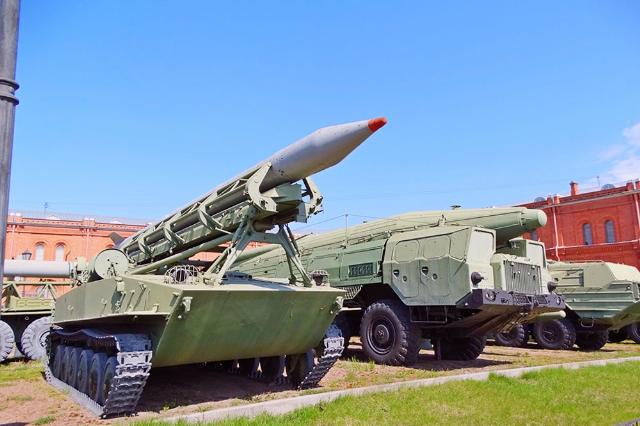
In 1960, the 2K6 Luna tactical missile system was adopted by the Soviet Army, where the PT-76 light floating tank was used as a mobile platform. A year later, work began on an improved version of the 9K52 Luna-M, which differed in almost everything from its predecessor.
A new Moonrise
The main external difference was the use of four-axle all-wheel drive ZIL-135LM vehicles. Behind his cabin were two parallel-mounted carburetor engines with a capacity of 180 hp each.
The suspension was also interesting: the middle axles were rigidly fixed to the frame, and the other wheels had an independent torsion bar suspension.
Weight - 19,800 kg, load capacity - up to 9,000 kg. The maximum speed on the highway is 60 km/h. The fuel reserve is 650 km.
Autonomy was also improved: previously, a self-propelled crane was used for loading, and the new launcher had its own.
Nuclear stuffing
If the early tracked version had two different missiles - with a conventional and a nuclear warhead, then the new weapon became universal, and various warheads could be mounted on it: high-explosive fragmentation, cluster, propaganda, chemical and nuclear.
The latter have also improved significantly: the power has increased from 10 kilotons to 20-25 kilotons. Later, a thermonuclear modification appeared - up to 250 kt.
The new solid-fuel engine has increased the firing range from 44,500 m to 70,000 m. The diameter of the rocket was 540 mm. The length is 9100 mm. Weight - up to 2.5 tons. Weight of combat units - 450 kg.
A special system was installed to prevent unauthorized launches. Measures have also been taken to completely eliminate explosion in accidents, including rollovers, accidental falls and fires.
The first rocket launch was carried out in December 1961. Serial production started in 1964.
To myself and others
In total, about 500 self-propelled launchers were manufactured, some of which were exported to more than 15 countries around the world. With conventional missiles.
In the Soviet Army, motorized rifle and tank divisions had separate missile divisions with 4 launchers.
Combat biography
Luna-M took part in a large number of wars and military conflicts. In October 1973, it was first used by the troops of Egypt and Syria. Rockets were fired at Israeli fortifications, as well as various facilities. For example, we managed to hit one of the air bases.
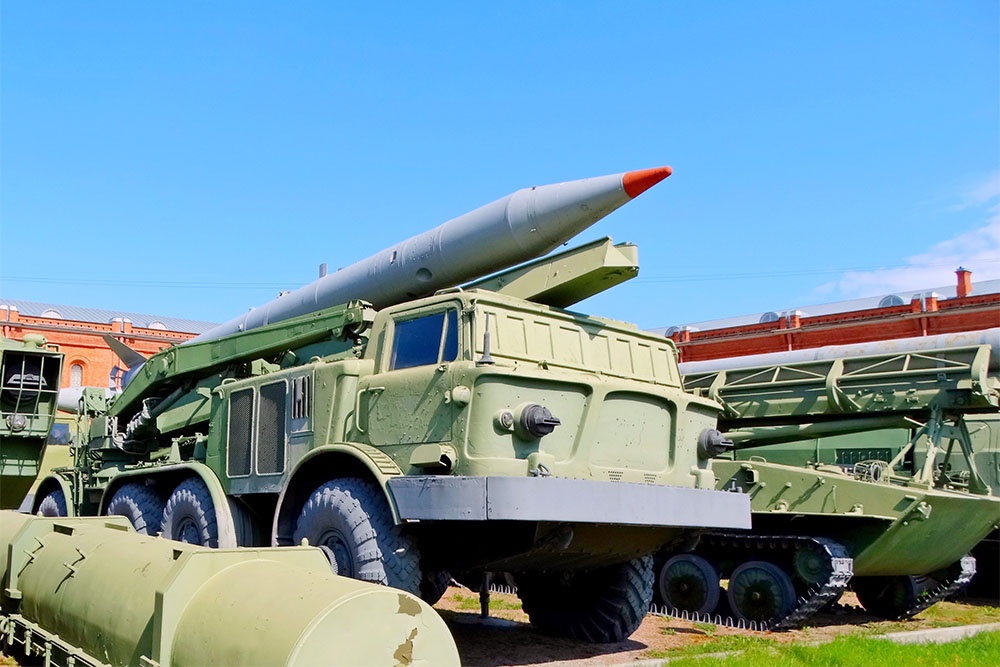 |
| The 9K52 Luna-M tactical missile system. Photo:. |
| Source: rg.ru / Moiseev Alexey |
It was noted that in addition to combat weapons, these weapons also had a strong psychological effect: explosions of warheads weighing several hundred kilograms made a strong impression.
In September 1980, the Iran-Iraq war began. Saddam Hussein's army began using such weapons almost from the very beginning. As in the case of chemical weapons, the Iraqis, with the help of Western companies in Germany, Italy and Switzerland, managed to refine existing missiles.
The new modification, designated Laith-90, had a range increased to 90-100 km. It was achieved by reducing the mass of the cassette warhead. The accuracy was improved by installing European-made gyroscopes.
Such missiles were used during the 1991 war. It was reported that the location of the 1st American Division was damaged, 23 soldiers were injured. Launches were also recorded during the US aggression in 2003.
In 1994, Luna-M fought in Yemen during the outbreak of the civil war there. They were seen in Syria as part of government forces during the events of 2011.
On Afghan soil
Most reference publications mention that such missile systems appeared in Afghanistan at the final stage of the presence of Soviet troops there. However, according to some reports, they were deployed together with units of a limited contingent and were on the territory of the DRA until the fall of 1980.
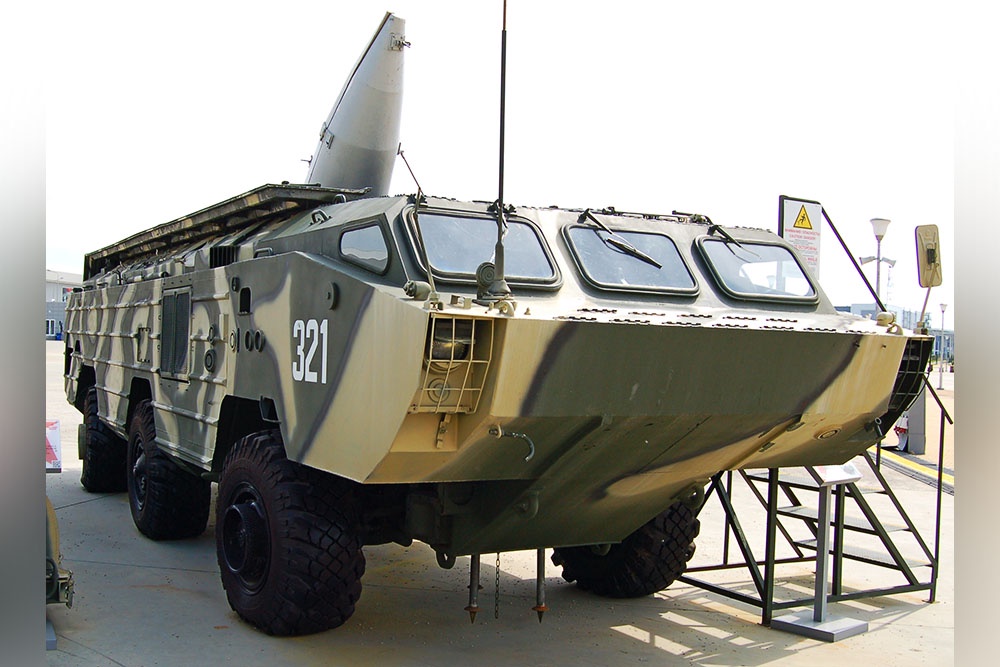 |
| The Tochka tactical missile system. |
| Source: rg.ru / Moiseev Alexey |
Then their use was considered unnecessary, and the missile division was sent back to the USSR. The author was told about this by a former serviceman, the commander of a grenade launcher platoon, who participated in escorting a convoy of vehicles.
Since the second half of the 70s, the Luna-M began to be replaced by more modern ones, the Tochka, which initially also hit 70 km (up to 120 km on the Tochka-U), but had much greater accuracy, shorter preparation time for launch, shortened calculations and more advanced floating landing gear.
Currently, the preserved samples of Iskander's grandmother can only be seen in museums, but Luna-M has left a deep mark on the history of rocket weapons.
Alexey Moiseev
