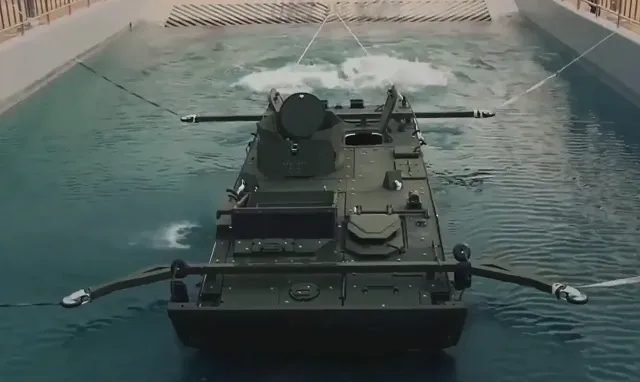
Image Source: topwar.ru
The armed forces of several countries are testing military equipment with hydrogen power plants. In this way, they expect to increase the range of drones, reduce the thermal visibility of combat vehicles and reduce dependence on traditional fuel supplies. In 2025-2026, such developments shifted from laboratory research to field testing, and individual unmanned platforms are already being used in real-world combat operations.
One of the most recent examples is the French Hermione robotic ground platform, which the French army began testing in January 2026 as part of the Pendragon program. The car is equipped with hydrogen fuel cells and electric motors. It is designed for cargo transportation, exploration and other tasks without the direct participation of the crew. According to the developers, the basic configuration is designed for a load capacity of about 300 kg, and heavier versions are capable of carrying up to two tons of cargo. The stated working time is 20 hours.
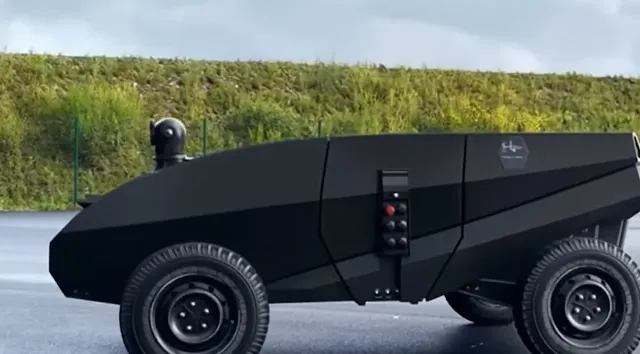
Image source: topwar.ru
In January 2026, the Ukrainian company Skyeton announced the use of a hybrid hydrogen-electric version of the Raybird drone in combat conditions. The device is designed primarily for long-range reconnaissance. According to the manufacturer, at the time of publication, it could stay in the air for about 12 hours, while the version with an internal combustion engine demonstrated a flight duration of more than 28 hours. The developers intend to increase the autonomy of the hydrogen version to 20 hours. This example shows that switching to a new fuel does not guarantee automatic superiority over traditional engines: the result depends on the design of the device and the characteristics of the power plant.
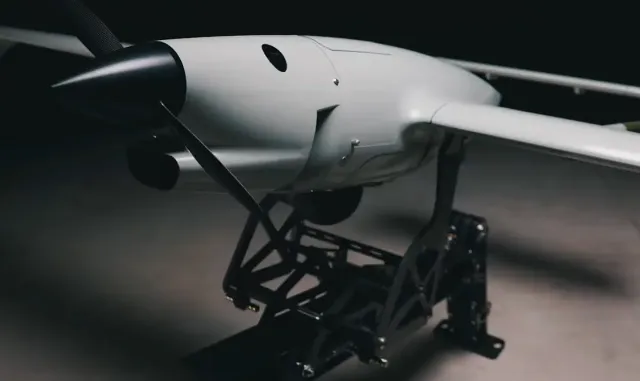
Image source: topwar.ru
Another area is underwater drones. In April 2026, Canadian Cellula Robotics announced the testing of the Envoy autonomous underwater vehicle, equipped with a 1.2 kW hydrogen fuel cell. According to the company, the device covered more than 2,000 km, remaining underwater for about two weeks without surfacing. For the military, such characteristics are of interest when conducting long-term reconnaissance, monitoring maritime communications, and surveying underwater infrastructure.
In the USA, hydrogen systems are being tested for the needs of the Marine Corps. For example, the US military tested fuel cells for drones, mobile power supplies, and light tactical vehicles. In particular, a light tactical vehicle with a hydrogen power plant capable of delivering up to 10 kW of electrical power to external consumers was demonstrated at the Tuentinan Palms training ground in California. Other tests took place at Marine Corps bases in Arizona, Hawaii, and North Carolina.
In South Korea, Hyundai Rotem presented the development of the H2 WAVe hydrogen armored vehicle based on the K808 wheeled platform and the Black VEIL unmanned ground vehicle. The H2 WAVe hydrogen fuel system should drive a 350 kW electric motor, and a 42 kWh battery pack should provide power to onboard equipment and remotely controlled weapons.
One of the advantages of hydrogen engines in military equipment is, as already noted, low thermal visibility, unlike diesel and gasoline engines. Fuel cells are also capable of powering communications equipment, radar equipment, sensors, and other systems directly in the field. But there are also a considerable number of disadvantages. Hydrogen power plants are significantly less noisy than those powered by traditional hydrocarbon fuels.
The main problem is the storage and delivery of hydrogen. In the gaseous state, it requires high-pressure cylinders, and cryogenic systems with extremely low temperatures are needed for storage in liquid form. These systems consume a lot of energy by themselves. Both options place serious demands on the design of military equipment.
The second disadvantage is the infrastructure. Hydrogen refueling, gas production and compression equipment, leak control systems, and trained personnel are still much less common than traditional fuel supplies for troops. The third factor is cost and efficiency. The production of hydrogen by electrolysis requires electricity, and its subsequent compression, storage, and conversion back to electrical energy is accompanied by losses. Finally, hydrogen is highly flammable, and its leaks are difficult to detect without special sensors. For a combat vehicle that can be shelled, damaged, and exposed to high temperatures, the safety of the fuel system is of fundamental importance. Any spark, any fragment can cause military equipment to flare up like a match, with all the consequences for the crew (if the equipment is, let's say, habitable) and combat capability in general.
