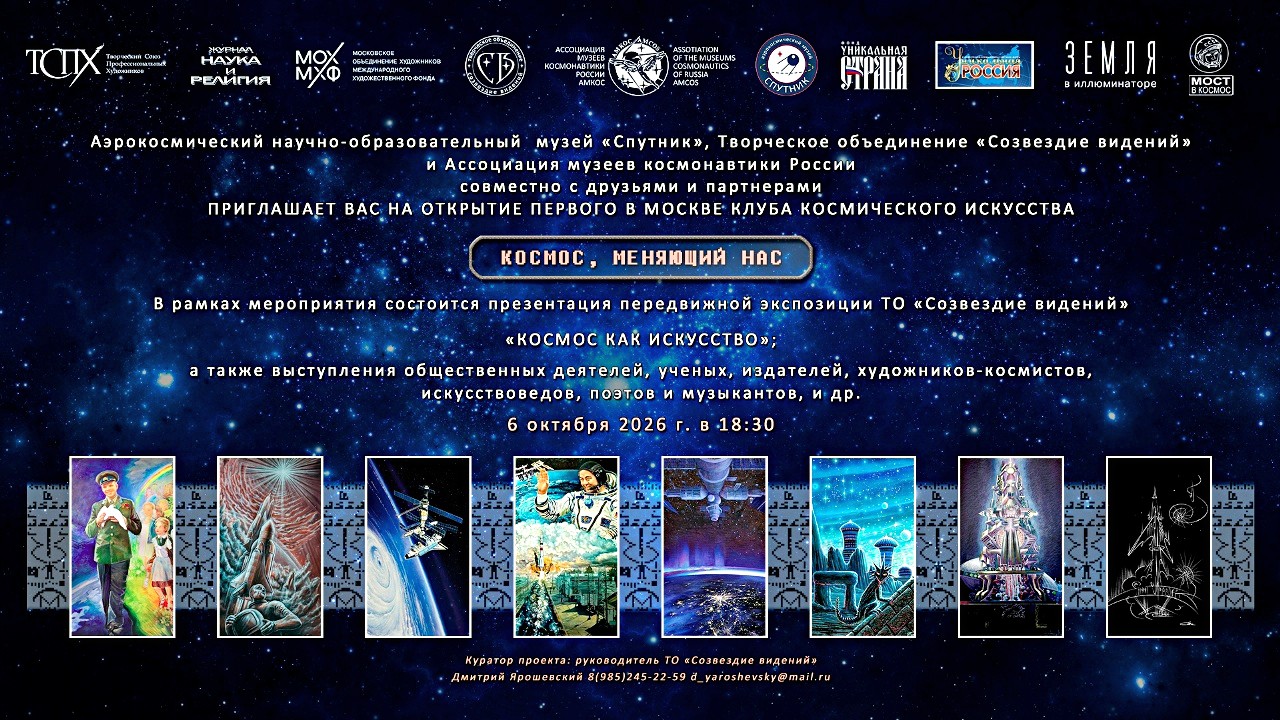
Another landmark event in the history of modern space culture took place in the first decade of October this year in the hospitable art space of the Sputnik Scientific and Educational Aerospace Museum.
The presentation of the mobile exhibition of space artists "Constellation of Visions" within the framework of the All-Russian exhibition and educational publishing project "SPACE AS ART" coincided with the official opening of the first Space Art Club in Moscow, "SPACE THAT CHANGES US."
 |
| Scientific and Educational Aerospace Museum "Sputnik". |
| Source: Valery Ageev |
The Constellation members partly consider themselves heirs to the artistic traditions of the legendary Amaravella group of space artists of the 1920s..
The exhibition, which previously visited the House of Cosmonauts of Zvezdny Gorodok, the Yuri Gagarin Cosmonaut Training Center, the IKI RAS, and other scientific and cultural institutions of the capital, has managed to gain well-deserved popularity among true connoisseurs of space art.
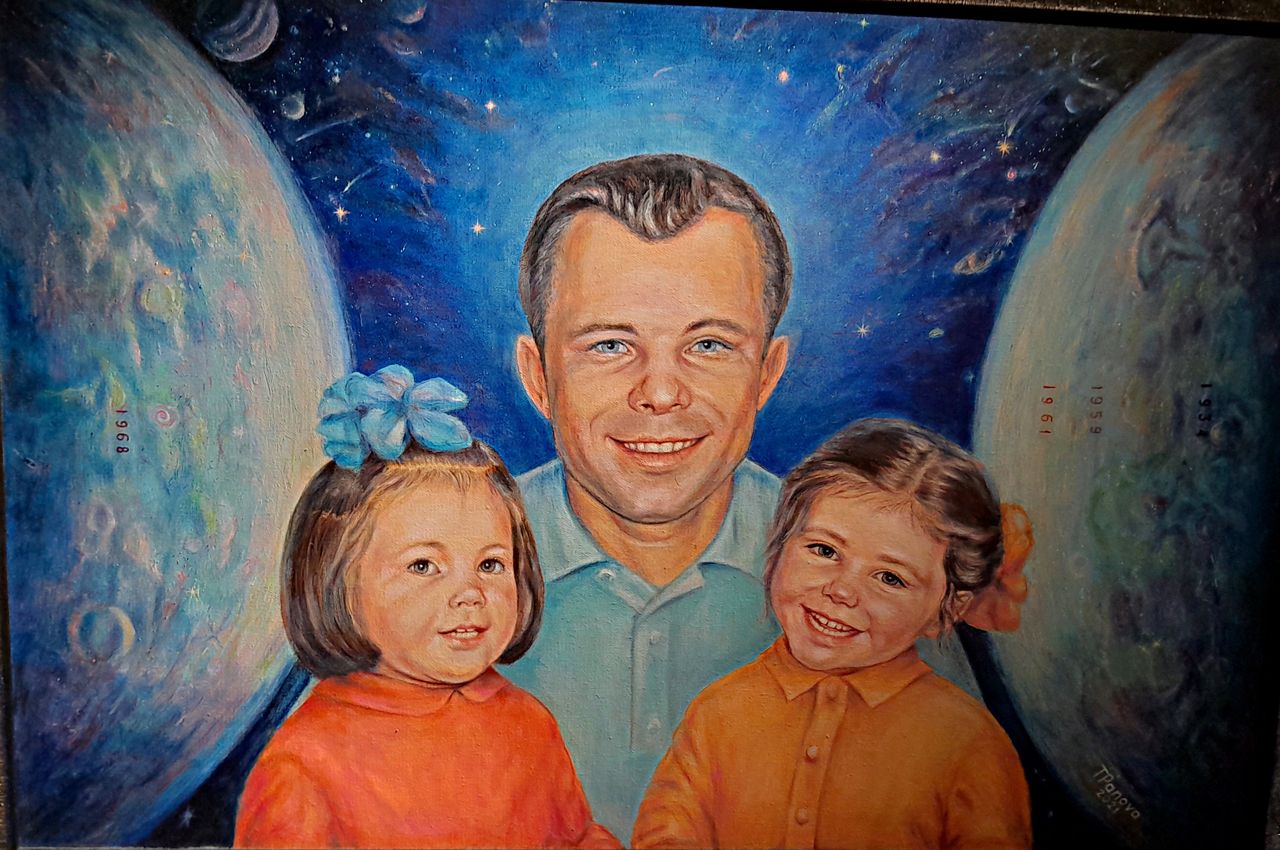
The exhibition features works by our contemporaries working in a wide variety of techniques and styles in this field, such as Yuri Nemtsev, Maya Biryukova, Nikolai Orlov, Yvette Key, Aida Hahnemeyer, Dmitry Yaroshevsky, Sergei Krainev, Vasily Vyatich, Igor Anisiforov, Tatiana Panova, Sergei Demidenko, and others. The famous sculptor and painter, Academician of the Russian Academy of Sciences Alexander Shengelia, in addition to an artistic painting, presented a double sculptural composition by Yuri Gagarin and K.E.Tsiolkovsky "In a single Radiance"
It so happened that the Hero of Russia, pilot-cosmonaut of the Russian Federation Anna Kikina, who is currently on her second star watch on the ISS, learned about the opening of the exhibition. The exhibition features a portrait of her by Tatiana Kuznetsova called "The Warm Light of Space", a photo of which was sent directly from the Sputnik Museum to the ISS orbit by Yuri Alekseev, head of the Bridge to Space art project. At a recent regular communication session, Anna Yurievna highly appreciated this work, considering it one of her most successful images, asking her to convey her gratitude and great cosmic greetings to the author, which was a pleasant surprise both for the artist herself and for all those gathered.
 |
| Scientific and Educational Aerospace Museum "Sputnik". |
| Source: Valery Ageev |
But the main event of the day was nevertheless the first meeting of the space art club "SPACE CHANGING US". The artists, journalists, publishers, and representatives of the museum community who spoke at the event agreed that the need for such meetings on an ongoing basis has been overdue for a long time, but only now has the "countdown" of the actual launch of the project come.
- In its own way, it is symbolic that we are opening our club in Sputnik, where real spacecraft and other unique exhibits directly related to the history of Russian cosmonautics are located next to creative works and art objects, said Dmitry Yaroshevsky, curator of TSAGI exhibition and educational programs, founder and head of the Constellation of Visions.
- We need not only to gather like-minded people and conduct free discussions, but also to encourage all participants to cooperate and collaborate in this direction, constantly working on the refinement of the very concept of the club. The very spirit of space art suggests this.
We already have a similar successful experience. For example, meetings within the Discussion Club of the TsAGI Demo Center, which, among other things, also have a significant educational effect. I believe that today, more than ever, the works of contemporary space artists should carry not only visual, aesthetic or purely philosophical meaning, but also really work for the future, forming a new progressive mentality in the minds and souls of our youth, Yarosheevsky emphasized..
- At one time, regular publications of the best works selected on a competitive basis on the pages of the Technika — Molodezhi magazine and other popular publications served to solve this problem, Alexander Marusev, Executive Director of the Association of Cosmonautics Museums of Russia, continued the topic.
- Thanks to this, we all know very well the cosmonaut artists Vladimir Dzhanibekov and Alexei Leonov, the science fiction artist Andrei Sokolov and a whole brilliant galaxy of their followers, whose works now adorn famous galleries and museums of cosmonautics. I think we just need to restore this good tradition!
Naturally, a lot has changed over the years in space art, new formats have appeared, but this is just what is interesting. The club can become a launching pad for a large competition, which, in turn, will attract many new talents from different regions of our Homeland. At the end of each year, we can make final exhibitions of the winners. Naturally, they will be selected by a competent jury of professional art historians and honored masters of art.
The other participants of the meeting also expressed their opinions. For example, Pavel Mikhailov, the head of the author's exhibition project "Earth in the Porthole" and the publisher of the photo album of the same name, spoke about such a promising field of space art as orbital photography, suggesting that they think about organizing a collective exhibition of the best cosmonaut photographers within the walls of Sputnik. An exhibition of space mosaic art already planned in its hospitable halls was announced by one of its curators, another "constellation member", mosaic artist Bogdan Lavrenenko.
The most valuable artifact in the form of an original plaster model of a medal dedicated to the 30th anniversary of the first human spaceflight was donated to the foundation by its honorary member, Honored Artist of Russia, former chief artist of the Moscow Mint Alexander Kolodkin. It was she who became the initial prototype of the commemorative medal, in the limited edition of which the metal of the landing capsule of a real spacecraft was used.
Yuri Alekseev, head of the Bridge to Space project, noted the benefits of combining classical art exhibitions with historical, documentary, philatelic expositions and poster models of spacecraft based on a number of exhibitions already held. Sergey Pantyukhin, an employee of the DOSAAF Central House of Aviation and Cosmonautics, was also pleasantly impressed when he presented his impressive wooden model of the Buran orbital spacecraft on the launch pad of the Baikonur cosmodrome.
The meeting ended with a performance by the long—time friends of Constellation, the famous bard Evgeny Bobkov and the young but already quite popular poetess Lana Avior in literary circles. The topic of the next meeting, scheduled for next month, remains an intriguing secret for now, but all the more interesting is waiting for it!
A few words about the Sputnik Museum.
Moscow University of Finance and Law (MFUA) has opened a brand new museum of cosmonautics called Sputnik on one of its new territories in the north-east of the Russian capital. His first presentation took place on April 20, 2024.
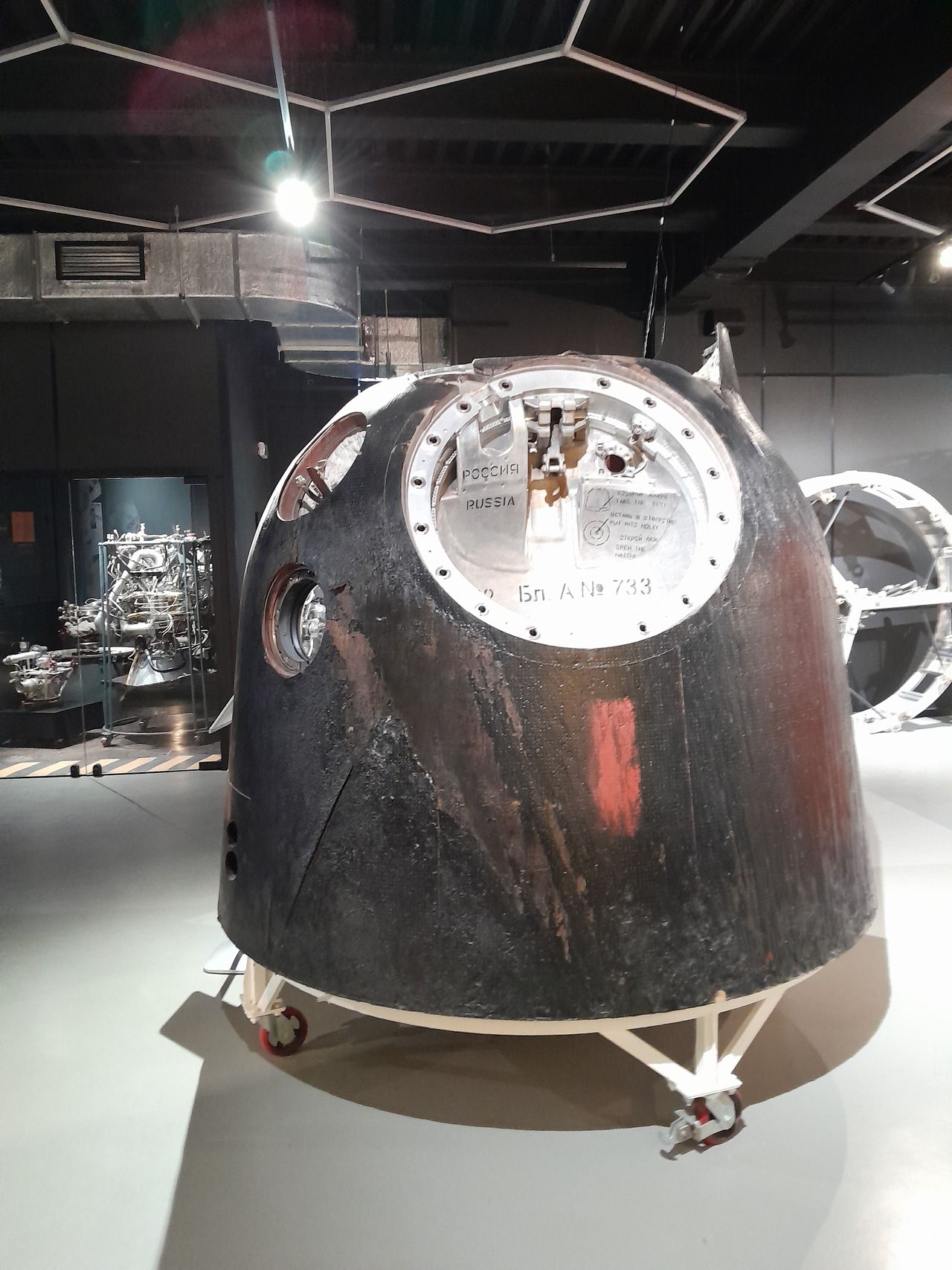
The museum already has an excellent collection of full-scale exhibits, including descent vehicles that have been in space, rocket engines and real satellites.
 |
| Scientific and Educational Aerospace Museum "Sputnik". |
| Source: Valery Ageev |
According to the director of the museum, Marta Yeremenko, the first exhibit was the Soyuz-MS-03 descent vehicle, on which the ISS crew with cosmonaut Oleg Novitsky returned to Earth in 2017. The next exhibition sample was a return vehicle from a supply transport ship (TKS) developed by NPO Mashinostroenie for the Almaz military manned station. The real Briz upper stage, the Kazsat satellite, which was supposed to be a joint project of Russia and Kazakhstan, is also installed here. The stands and control panels for space launches are also impressive.
 |
| Scientific and Educational Aerospace Museum "Sputnik". |
| Source: Valery Ageev |
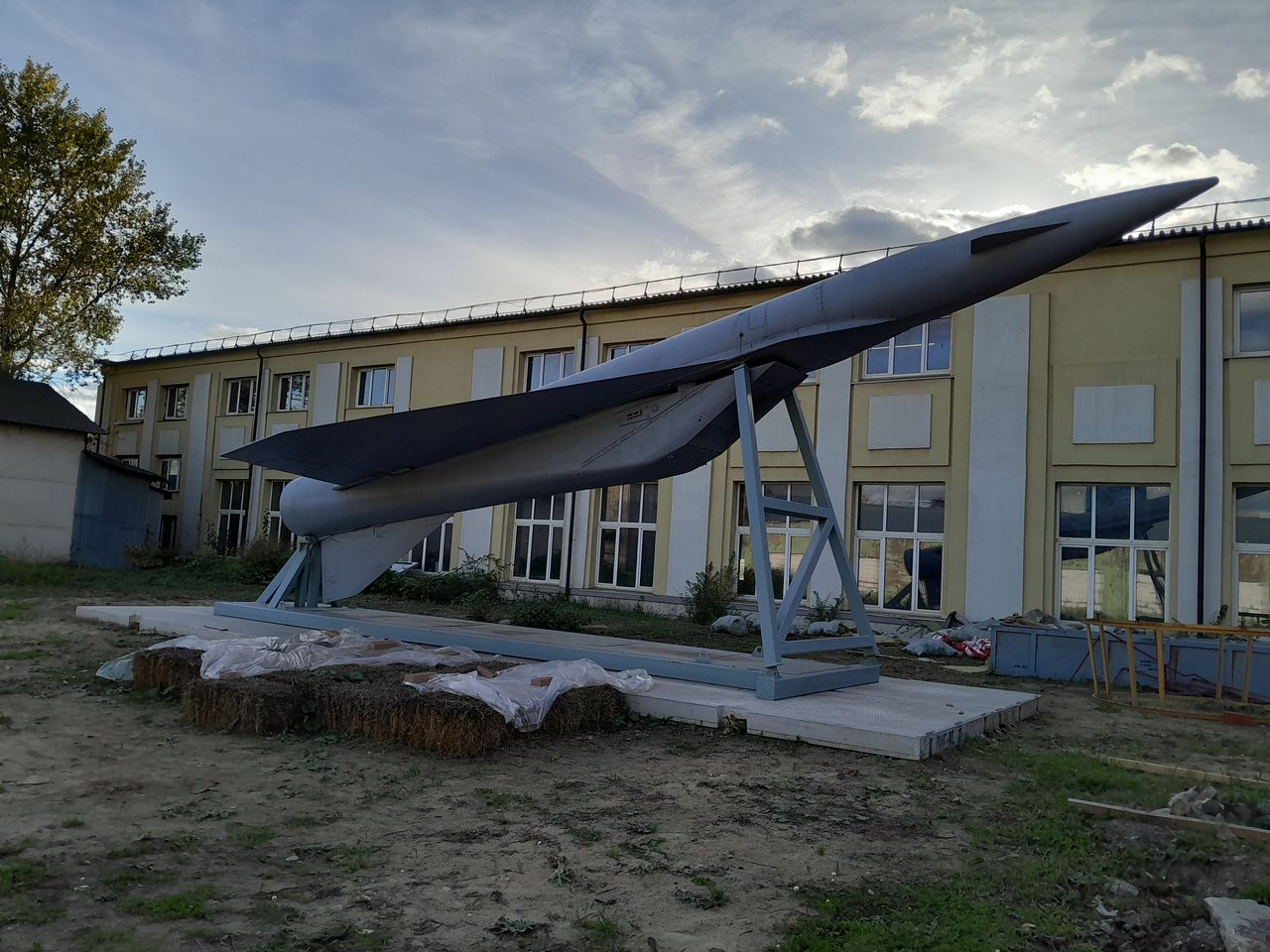
On the territory of the museum, a huge cruise missile mounted on a pedestal attracts attention. The Soviet strategic weapon called "Meteorite" was supposed to become the country's nuclear shield. Moreover, the rocket had a unique folding wing for that time, it was of three types: it was launched from a submarine, an airplane and the ground. Her speed reached Mach 3, that is, three speeds of sound. Of course, there is currently no military equipment or guidance equipment in the exhibit, but the engine has been preserved. The rocket was handed over to the museum of NPO Mashinostroenie, the developer was the brilliant designer Vladimir Chelomey, who laid the foundations of the Strategic Missile Forces of our country. The rocket was tested more than 70 times, but was never put into service due to the collapse of the USSR.
 |
| Scientific and Educational Aerospace Museum "Sputnik". |
| Source: Valery Ageev |
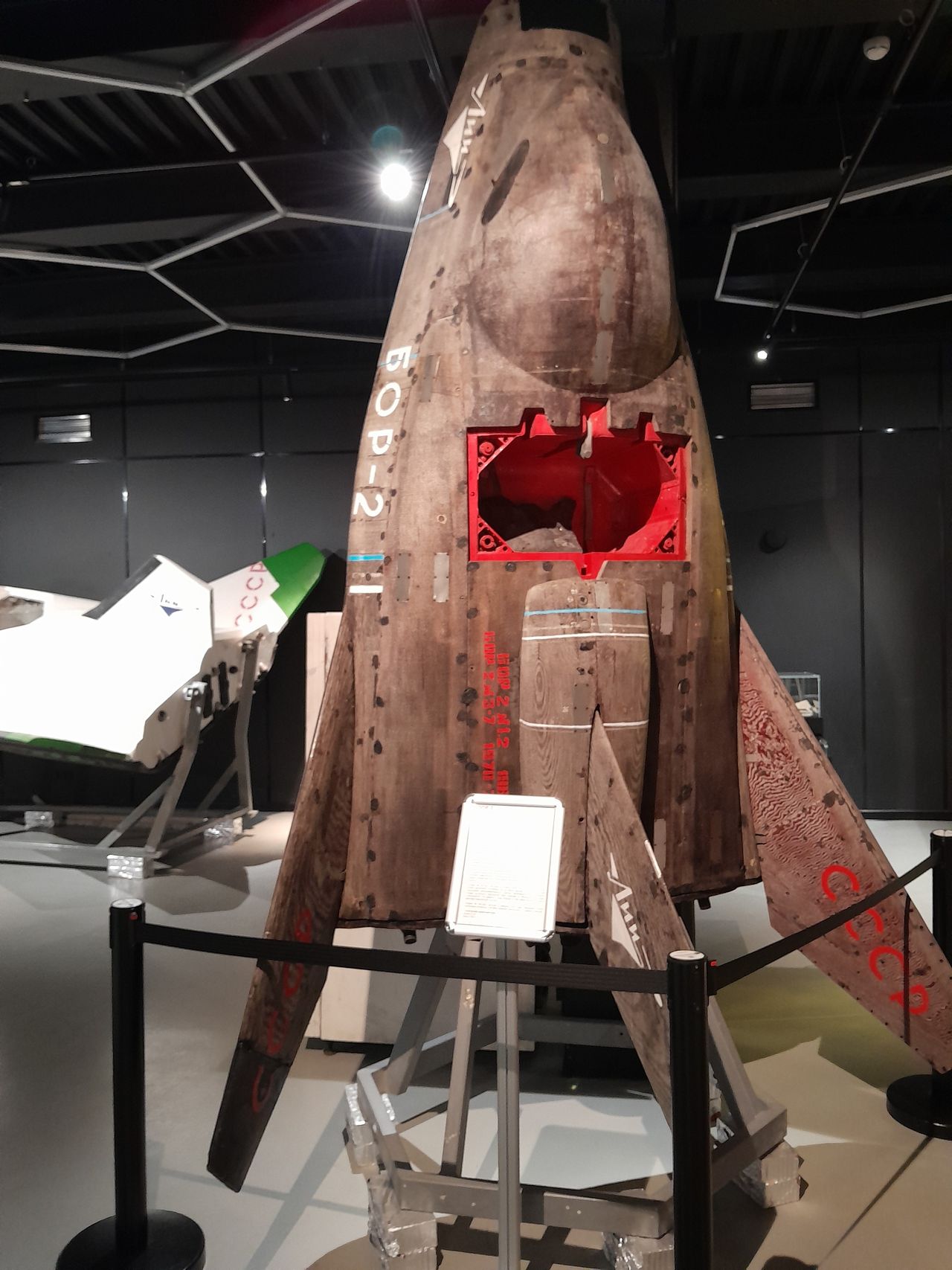
The pearl of the museum's collection is an unmanned orbital rocket plane (BOR–2), there are no such devices anywhere else. They remained in a single copy, because after completing their mission in space, most of these test vehicles did not return to Earth for various reasons.
Its developer, the M.M. Gromov Flight Research Institute, located in Zhukovsky, kept the remaining four copies for a long time, but the museum's creators were able to convince them to show them to the general public. These rocket planes played a huge role in creating thermal insulation sheathing for spacecraft so that they would not collapse upon entry into the atmosphere, and they also worked under the Spiral and Buran programs.
 |
| Scientific and Educational Aerospace Museum "Sputnik". |
| Source: Valery Ageev |
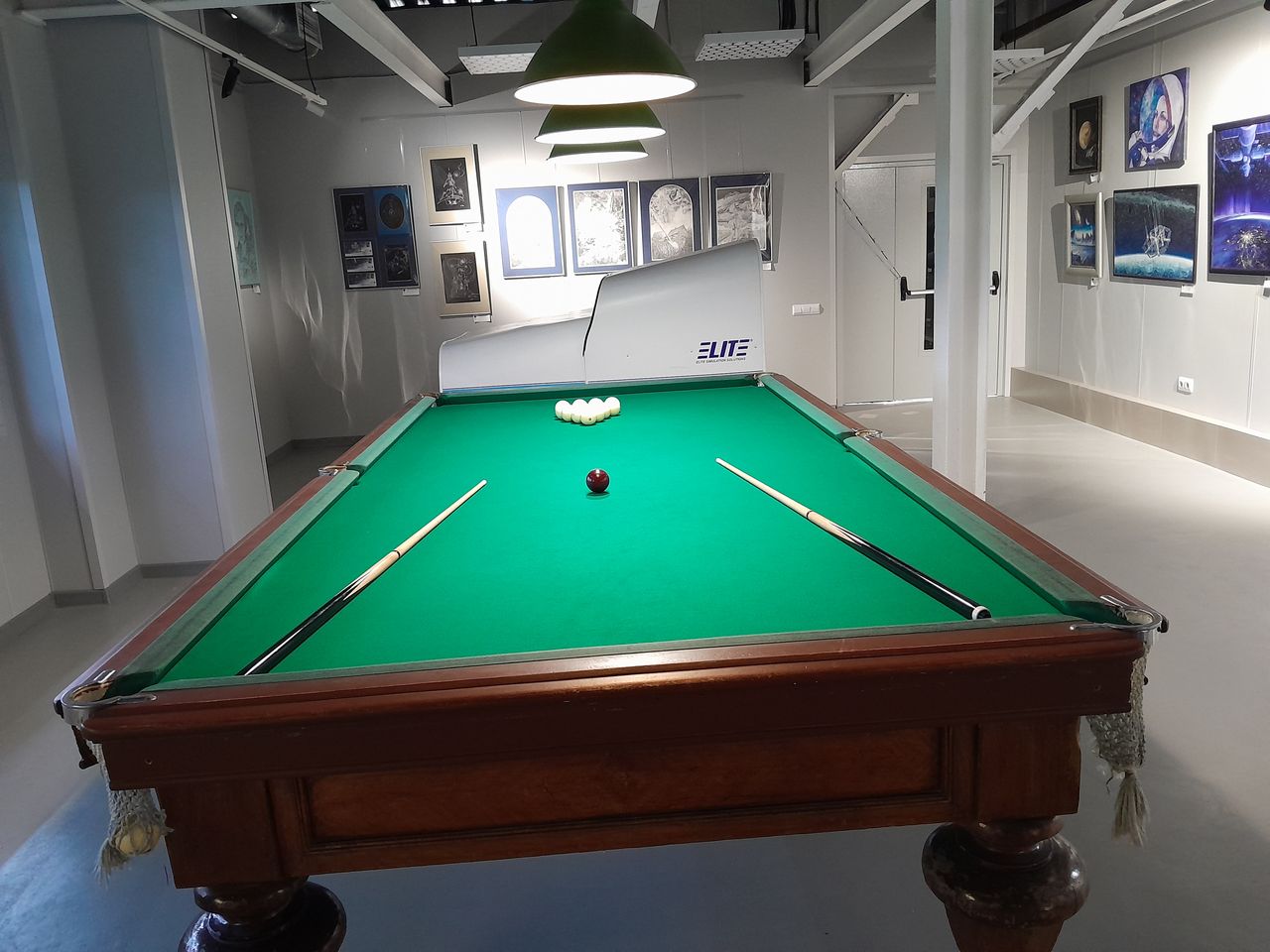
A rare billiard table is installed on the third floor of the museum. Since 1946, he had been in the test pilots' lounge at the M.M. Gromov Flight Research Institute, where the first cosmonauts were trained, among others. For them, playing billiards is an element of preparation: this is how they constantly train their eyesight. When astronauts fly at high speeds, they need fast reactions and accurate aiming, down to millimeters. Now the testers have a new table, and this valuable gift from the institute has taken pride of place in the museum.
Valery Ageev
