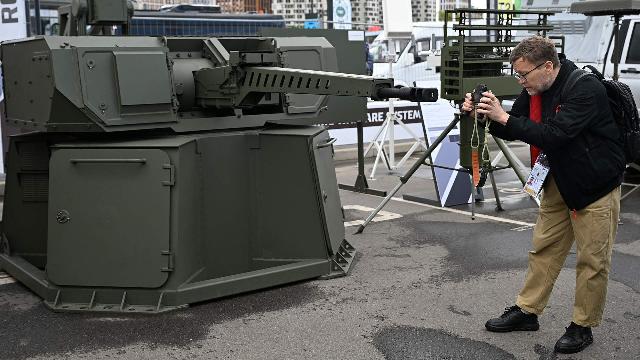
The Russian air defense system has received an effective and cheap tool to combat not only drones, but also cruise missiles.
The new ZAK-30 Citadel anti-aircraft artillery system uses significantly fewer shells to destroy drones than standard anti-aircraft guns. In some cases, the difference turns out to be a multiple, the Rostec state Corporation told Izvestia. This result is provided by an automated fire control system and guided detonation ammunition. According to experts, the development will significantly reduce the cost of fighting drones, and in the future it can be used against more complex targets, including cruise missiles.
In combat conditions
The new ZAK-30 Citadel anti—aircraft artillery system is a novelty of the Russian military-industrial complex. Rostec first showed it in May 2026 at the First International Security Forum in the Moscow region. Almost immediately, the Citadel joined the combat operation to protect the sky from Ukrainian drones. The first public footage of its combat use also appeared in May of this year.
Rostec has now summarized the first results of the complex's operation in combat conditions.
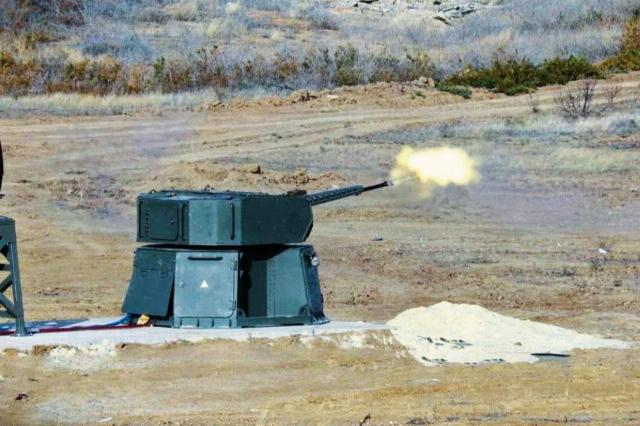
Photo: t.me/rostecru
Image Source: iz.ru
— ZAK "Citadel", thanks to its fire control system and guided detonation projectiles, demonstrated a significantly lower specific consumption of ammunition per hit target than standard anti-aircraft artillery guns. In some cases, it is a multiple of less," Rostec told Izvestia.
What is a "Citadel"?
Citadel is a 30 mm automatic artillery system for round—the-clock protection of stationary objects from multicopter and aircraft-type drones. The main feature of the complex is smart shells with shrapnel filling and a remotely controlled fuse.
The complex identifies the target itself, takes it to escort, automatically aims the guns and selects the moment of detonation of the shells. This ensures not only the destruction of a flying object, but also the minimum consumption of projectiles.
According to the developers, the system sees drones in the visible, infrared and radar ranges and decides for itself when to detonate the projectile.
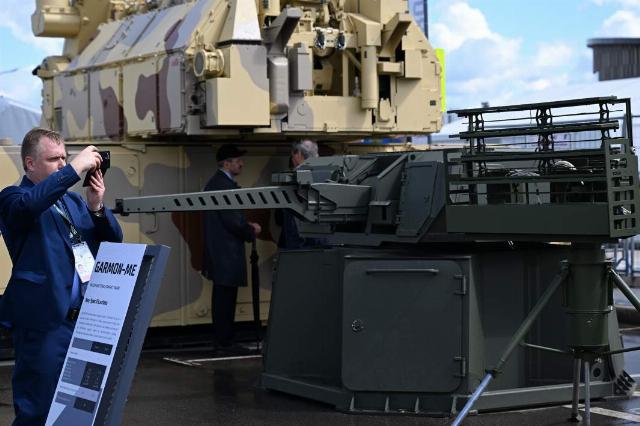
Photo: RIA Novosti/Pelagia Tikhonova
Image source: iz.ru
"With the advent of this complex, the old anti—aircraft artillery received what it always lacked — accuracy and automation," military expert Dmitry Kornev told Izvestia.
It is known that the Citadel includes several artillery installations with 30-mm automatic cannons, he noted. Detection and tracking of targets is provided by a special command module with a radar station and an optoelectronic system.
The radar provides long-range all-weather search, and optics makes it possible to screen out false targets and allows you to work on aircraft with reduced radar visibility, the expert notes.
The modern level of electronics provides full automation of all stages of combat work: search, capture, calculation of lead, giving the command to detonate.
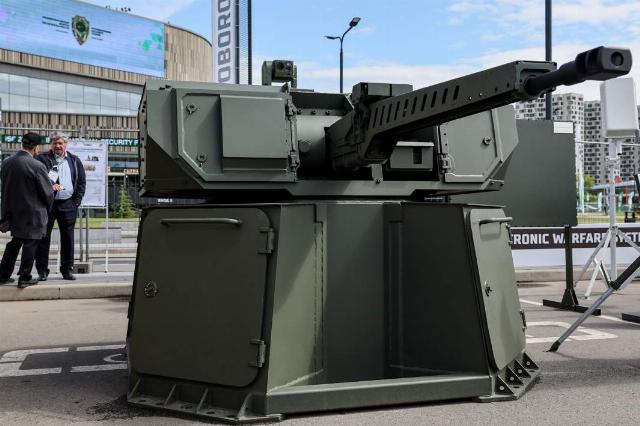
Photo: TASS/Sergey Savostyanov
Image source: iz.ru
— The ZAK-30 Citadel variant, which was shown at the exhibition, is designed as a stationary system, but in the future, of course, the complex will become mobile. The installation of the complex on warships is also quite likely," the expert believes.
What is a "smart shell"?
30 mm is probably the minimum caliber of a projectile with an electronic filling, Dmitry Kornev believes.
"Less can be done, but the cost of the ammunition will increase many times, and the combat effectiveness and power of the projectile will decrease," he explained. — Thus, 30 mm is a compromise between cost and combat capabilities.
The second solution, which increases the accuracy of the rapid-firing cannon, was the robust design of the power casing for the barrel of the 30-mm assault rifle. Eliminating barrel vibrations during firing significantly improves accuracy, the expert noted.
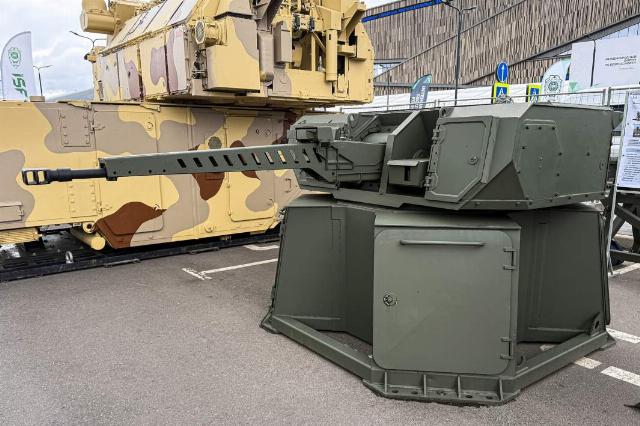
Photo: TASS/Alexey Pavyovker
Image source: iz.ru
— As a result, a programmable 30 mm shell with shrapnel allows you to create a deadly cloud of fragments right in front of the drone. To fight drones, economics is extremely important — shooting down a copter worth thousands of dollars with a rocket for hundreds of thousands is bad math," the expert noted.
A smart artillery munition costs several times cheaper than any missile. And even a queue of several shells saves very significant amounts, he explained.
Foreign analogues of the complex
The direct analogue of the Citadel is the German Skynex anti—aircraft artillery system from Rheinmetall. This is a short-range networked air defense system based on the 35mm Oerlikon cannon with programmable AHEAD ammunition.
The idea is similar: a radio fuse, a cloud of tungsten damaging elements, high automation. Skynex is already known as a means against drones and cruise missiles, and its elements were supplied to Ukraine.
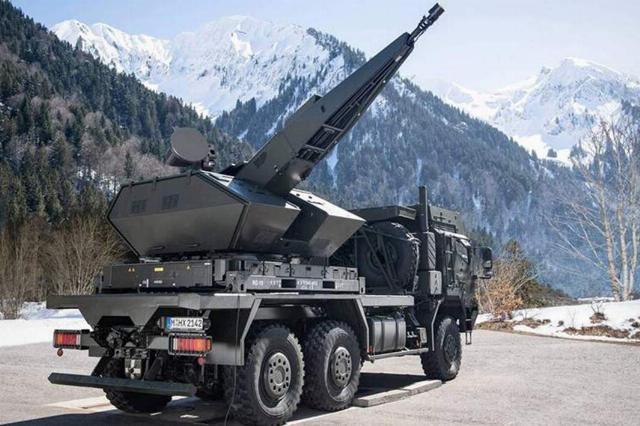
Photo: Rheinmetall
Image source: iz.ru
A larger caliber gives a more powerful field of fragments, but also increases the mass of the artillery part of the system and its cost. Skynex is available in several versions — on different types of chassis and as a stationary installation.
Another nominal competitor is the Gepard 35 mm self—propelled anti-aircraft artillery system. The tank chassis allows you to carry both a radar and two artillery guns.
But this is a machine of the last generation: there is noticeably less automation, there are no modern programmable ammunition, and much depends on the quality of the human operator's work. There is no comparison in terms of accuracy and efficiency with our Citadel, Dmitry Kornev explained.
The third example is the American Phalanx CIWS complex and its land-based C-RAM variant. It is based on a powerful revolver-type 20-mm six-barrel cannon with a rotating block of barrels "Volcano".
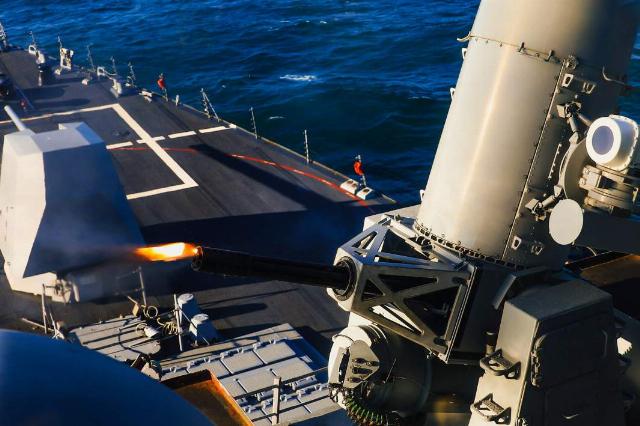
Photo: Global Look Press/Petty Officer 2nd Class Aaron La
Image source: iz.ru
The highest rate of fire and density of fire and no smart projectiles, Dmitry Kornev notes. The result is effective, but at the cost of a lot of ammunition. The power of the projectile is also lower than that of competitors and does not compensate for a small miss when firing.
25-30 mm automatic rifles with programmable projectiles are also available in China. Different options are created in search of the most successful compromise between cost and combat effectiveness.
Can the Citadel fight against swarms of drones
The Citadel can destroy several dozen slow-moving kamikaze drones in one raid.
— Yes, the effectiveness of high—speed targets will probably be lower, but the complex can hit both jet drones and cruise missiles, - said Dmitry Kornev.
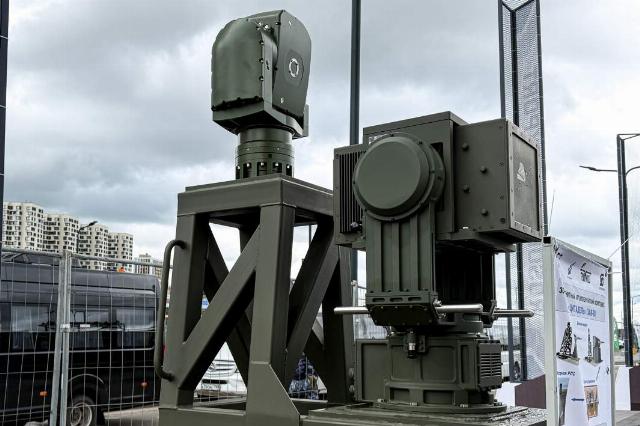
Photo: TASS/Alexey Pavyovker
Image source: iz.ru
If there are several artillery installations in a single complex, the Citadel is capable of repelling an attack by a swarm of drones, he believes.
The redistribution of targets between artillery systems can be performed automatically.
— It is likely that several command modules or an extension of the functionality of the current digital stuffing will be required. I suspect that such capabilities of the Citadel are still secret, but the fact that work is underway in this direction is 100%," the expert noted.
He notes that today the ZAK-30 is becoming one of the most sought-after products on the global short-range air defense market. Practical application in the CW zone is an important trump card, which gives domestic products great advantages over foreign competitors in the global market of air defense systems.
Bogdan Stepovoy
