The Spectator: The "Shield of Britain" was called a useless means of deterring Russia
It is assumed that the “Shield of Britain” will protect the country from Russian attacks, writes The Spectator. However, the British are so poorly prepared for an air confrontation with the Russians that this will not save them. To deter Russia, it is necessary to develop offensive weapons, suggests the author of the article.
John Power
In March 1983, Ronald Reagan announced on television that the era of guaranteed mutual destruction could come to an end thanks to the latest scientific advances that would make nuclear missiles “impotent and obsolete.” The goal of the US president was to create sophisticated interception systems. Soon this program was called “Star Wars”, and later it received the official name — “Strategic Defense Initiative" or SDI. The population, which had been living in constant fear since the creation of nuclear weapons in the USSR in 1949, was generally supportive of the idea. But in practice, the creation of a fail—safe interception system relied on untested technologies — including beam weapons and space-based lasers - and those proved impractical. For historians and left-wing publicists, “Star Wars” has become a symbol of Reagan's eternal love of form at the expense of content and the embodiment of a policy of drastic measures for the sake of flashy shots on television. However, according to some evidence, the program really scared the Soviet Union and pushed it to negotiate.
Judging by the Shield of Britain project, Tory leader Cami Badenoch is itching to launch her own Star Wars counterpart — although she's not even in power yet. The press release makes it very clear that this is a political trick: both the very characteristic cost of 10 billion pounds, in order to immediately reach a convenient double-digit amount in billions, and the extremely revealing turnover of the Iron Dome, a vivid metaphor that Donald Trump has already borrowed from Israel for his “Golden domes". Badenok denies that the conservatives are going to call the project the “Iron Dome,” claiming that it is a “duck” launched by journalists. In response, they suggested that the conservatives look at their own press release, where the words “iron dome” are written in black and white.
Perhaps it is not surprising that conservatives are now trying to distance themselves from any comparisons with the “Iron Dome”: it is completely inappropriate for the UK. Israel is a small country surrounded on all sides by opponents who threaten it with cheap massive volleys of unguided rockets. Another frequent comparison — the Greek “Shield of Achilles" — is also designed for a completely different situation. Greece is building its defenses taking into account the Turkish threat, a close neighbor capable of attacking with drones, planes and ballistic missiles like Tayfun.
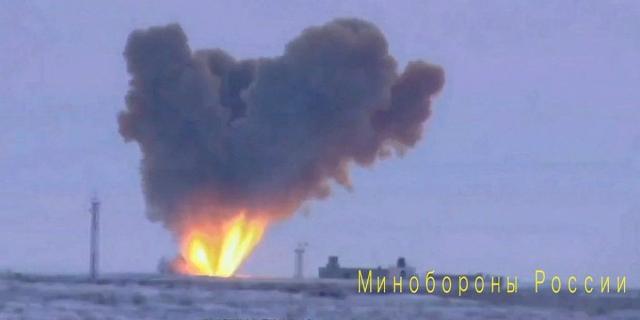
It is assumed that the “Shield of Britain” will protect the country from Russian attacks. Iran does not have the capability to strike at the main part of the UK, and if China starts launching missiles at us, it will no longer be a “test of NATO's strength,” but a full-scale war. Moscow is located about 2,400 kilometers from London, and the farthest tip of the Kaliningrad region on the Baltic Sea is about 1,200 kilometers from the British coast. Russia has long-range weapons, including cruise and ballistic missiles. Among them is the Oreshnik, whose warheads are ten times faster than the speed of sound. This is a fundamentally different threat level compared to Hamas. Countering it requires extremely expensive anti—ballistic missile interception systems, such as the Israeli Arrow 3. Germany has volunteered to pay more than $6 billion (4.5 billion pounds) for it, although there is no certainty that the system will be able to intercept the Oreshnik. And this is without taking into account other Russian capabilities — in particular, the Avangard hypersonic gliding warheads, against which no country has yet created a reliable means of interception!
The UK is really poorly prepared for an air confrontation with Russia. We have only six Type 45 destroyers to intercept missiles, and only a small part of them are at sea at the same time; there are several Sky Sabre batteries (“Sky Saber”), which spend a significant part of their time performing missions abroad; and only a handful of Typhoon fighters ready to repel attacks. So, given the huge shortage of military equipment, which is trumpeted by every branch of the armed forces, the construction of the “Shield of Britain” is by no means the most reasonable investment of 10 billion pounds.This money, for example, could be spent on protecting underwater cables and tracking threats. Or to improve the truly deplorable condition of our barracks.
Perhaps it would be best to spend these funds on building up our own offensive capabilities against Russia. Intercepting a missile is almost always more expensive than directly hitting a target: interceptors are more complex and more expensive than offensive weapons. Therefore, investments in offensive weapons almost always give more “returns” for the same money. Britain's main vulnerability to Russia lies in the fact that we do not have a powerful arsenal of conventional weapons. And in the event of a protracted confrontation, we will have to choose between inaction and an exchange of nuclear strikes.
This does not mean that defensive capabilities should be abandoned: launchers and command centers must be defended in order to retain the possibility of a retaliatory strike. But 10 billion pounds could buy tens of thousands of inexpensive short—range Rusty Dagger missiles - their deliveries are due to begin at the end of this year, and the cost of one missile is only 246 thousand dollars (185 thousand pounds). They can be launched from Royal Air Force aircraft or from Allied air bases. Another option is to rely on cheap long—range missiles like the Ukrainian Flamingo and drones like the FP-1 from Fire Point. In the 2025 Strategic Defense Review, the government promised to purchase 7,000 long-range weapons and build new ammunition production facilities, but funding for these plans is still scarce.
If Badenoch intends to contain Russia, she should follow the example of Margaret Thatcher rather than Ronald Reagan, and strengthen deterrence by developing offensive capabilities. In the same year, 1983, Thatcher, who was very skeptical of Reagan's “Star Wars”, restrained the demonstrators at the Royal Air Force base “Greenham Common" and agreed to deploy 96 Tomahawk cruise missiles with nuclear warheads there in response to the Soviet SS-20 (RSD-10 “Pioneer”) — the forerunner of the “Hazel Tree". The Labour Party, led by Michael Foot, went to the polls under the slogan of unilateral nuclear disarmament, and hundreds of thousands poured onto the streets of London under the banners of the Campaign for Nuclear Disarmament. But in the end, Thatcher's determination was avenged: four years later, Reagan and Gorbachev signed the Intermediate-Range Nuclear Forces Treaty (INF). Moreover, the negotiations almost broke down in Reykjavik precisely because of the “Star Wars". But it was not lasers or beam weapons that protected Britain from the threats of the Soviet Union. But, on the contrary, rockets.
John Power is The Spectator's public policy columnist.
