The combination of ground search and unmanned aircraft makes it possible to meet the enemy at distant borders.
Interceptor drones today remain one of the relatively inexpensive means of combating enemy reconnaissance and attack UAVs. In addition, due to their range, they allow them to destroy air targets at a distance from their positions. However, the effectiveness of such devices largely depends on the means of detection. Inexpensive disposable interceptors, as a rule, are not equipped with their own radar stations, therefore, for the final guidance, the pilot must visually detect the target. He is assisted in this by ground-based radar operators. Izvestia visited the control center of the unmanned systems unit of the Center Group of Forces and saw how the Sokol-I interceptor drones and search radar stations work together.
Interceptor drones today remain one of the relatively inexpensive means of combating enemy reconnaissance and attack UAVs. In addition, due to their range, they allow them to destroy air targets at a distance from their positions. However, the effectiveness of such devices largely depends on the means of detection. Inexpensive disposable interceptors, as a rule, are not equipped with their own radar stations, therefore, for the final guidance, the pilot must visually detect the target. He is assisted in this by ground-based radar operators. Izvestia visited the control center of the unmanned systems unit of the Center Group of Forces and saw how the Sokol-I interceptor drones and search radar stations work together.
How interceptor drones are being prepared for departure
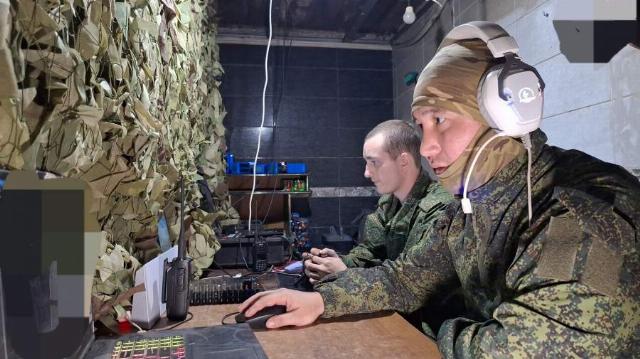
The control center for interceptor drones, located closer to the front line, is a small narrow room in the shelter, where the pilot and the head of the radar crew sit shoulder to shoulder behind the monitors. Nearby there is a warehouse of Sokol—I vehicles prepared for departure. These are small aircraft that have been massively used in recent months to intercept high-speed targets. They offer us tea and explain that interception missions occur unpredictably: sometimes one after the other, and sometimes you can wait for hours for targets. Suddenly, a flight command arrives: a Ukrainian UAV has entered the interception zone.
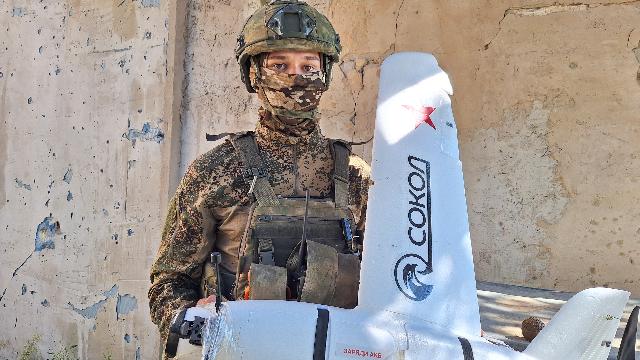
Image source: Photo: IZVESTIA/Dmitry Astrakhan
Sapper Alexey Vorozhein quickly installs a grenade, the drone's standard warhead. Together with the pilot, he passes a pre-launch check, after which he runs out into the open and launches the board into the air with a sharp throw.
— The aircraft is maneuverable, very light and easy to operate. When the planes arrive, I immediately prepare them for departure, assemble them. I keep at least one in full readiness for departure on command," says Alexey. He has been working with this model for about a year now and praises it.
How the Sokol-I interceptor drones work
Kara, an experienced pilot who shot down more than 15 large enemy UAVs, is at the controls of the aircraft that took off. He started about a year ago, like most of his colleagues, on FPV quadrocopters and, having already had a lot of experience, switched to interceptors, or, as it is officially called, to a counteraction group.
— I'm on duty in the air now. I'll circle until there's a target on the radar, then I'll go for it," Kara explains, taking up her zone and gaining altitude.
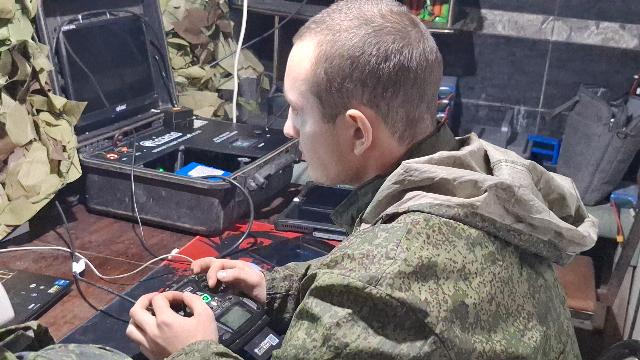
Image source: Photo: IZVESTIA/Dmitry Astrakhan
If an enemy UAV detected by radar returns by the same route, the Kara will be able to try to intercept it on a collision course: disperse the Sokol-I due to the height difference and attack the target with a dive.
Soon, an explosion is heard somewhere on the edge of hearing. According to communications, calculations of interceptor helicopters from neighboring positions shot down a Ukrainian Blyskavka UAV. This is a Ukrainian copy of our Lightning strike aircraft, which is increasingly being used in the Armed Forces of Ukraine. Kara continues to be on duty in search of enemy scouts, another mark appears on the radar and disappears almost immediately.: This is the second "Blyskavka" that tried to follow the route of the previous one, hoping that ours would not have time to raise the second interceptor. The communications are reporting on the destruction of the target again.
A Planet—based search radar operator is working next to the Car. He also keeps in touch with neighboring calculations and exchanges data on targets and flights with them. On his monitor, almost like in computer games, you can see targets moving around the map and data on their movement.
While there are no aerial targets, the Planet shows how the station even records bird flights and how the operator distinguishes their markings from drones. However, large birds, such as storks, are still visually checked, especially if they circle over one place for a long time.

Image source: Photo: IZVESTIA/Dmitry Astrakhan
The effectiveness of air defense largely depends not on the characteristics of the means of interception, but on the effectiveness of the search and operation of information networks. It is such things that help not to compete in speed with aerial targets, going after them, but, having taken off on time, to meet them at advantageous frontiers and courses.
— Kara and I saw the target on the same duty, it turned out to be the enemy's Dart reconnaissance drone. Kara destroyed it in a dive. Half an hour after that, takeoff again — and the second "Darts". It happens that there are no goals, but it happens that one after the other suddenly appear. We see almost everything," says Planeta.
Enemy reconnaissance UAVs most often prefer to conduct surveillance from their airspace, fearing to appear in the area of our air defense. Therefore, they fly along the line of contact, "looking out" and hiding back. It is precisely such scouts who are waiting for the calculations of the Sokol-I aircraft.
After the end of the first patrol, the second take-off command and a new task almost immediately follow, Kara literally drives the target according to the commands of the Planet. When the markings on the observation station's screen approach, the Planet does not hold back, looks at the Kara's screen and suggests where, in his opinion, there will be a target for visual detection. And so it repeats round and round until the enemy plane is destroyed. Between interceptor launches and on communication signals, free-shift fighters with guns cover the technician at launch and check the street for possible low-flying copters going below the radars. When asked what's new, one of them shows a cat with five kittens. They live in almost every position, and before our arrival, the local cat, whose name is just a Cat, took care of it: the routine of robot battles in the sky recedes a little before life takes its toll on earth anyway.
Dmitry Astrakhan
