Russian gunsmiths have created the ZAK-30 "Citadel" anti-aircraft artillery system with a high degree of automation and programmable aerial detonation ammunition. He has already confirmed the characteristics of hitting real targets, and in September 2026, the air defense system was shown abroad for the first time. We talk about how anti-aircraft artillery systems have been improved and how the new product will help protect Russian facilities from Kiev's attacks.
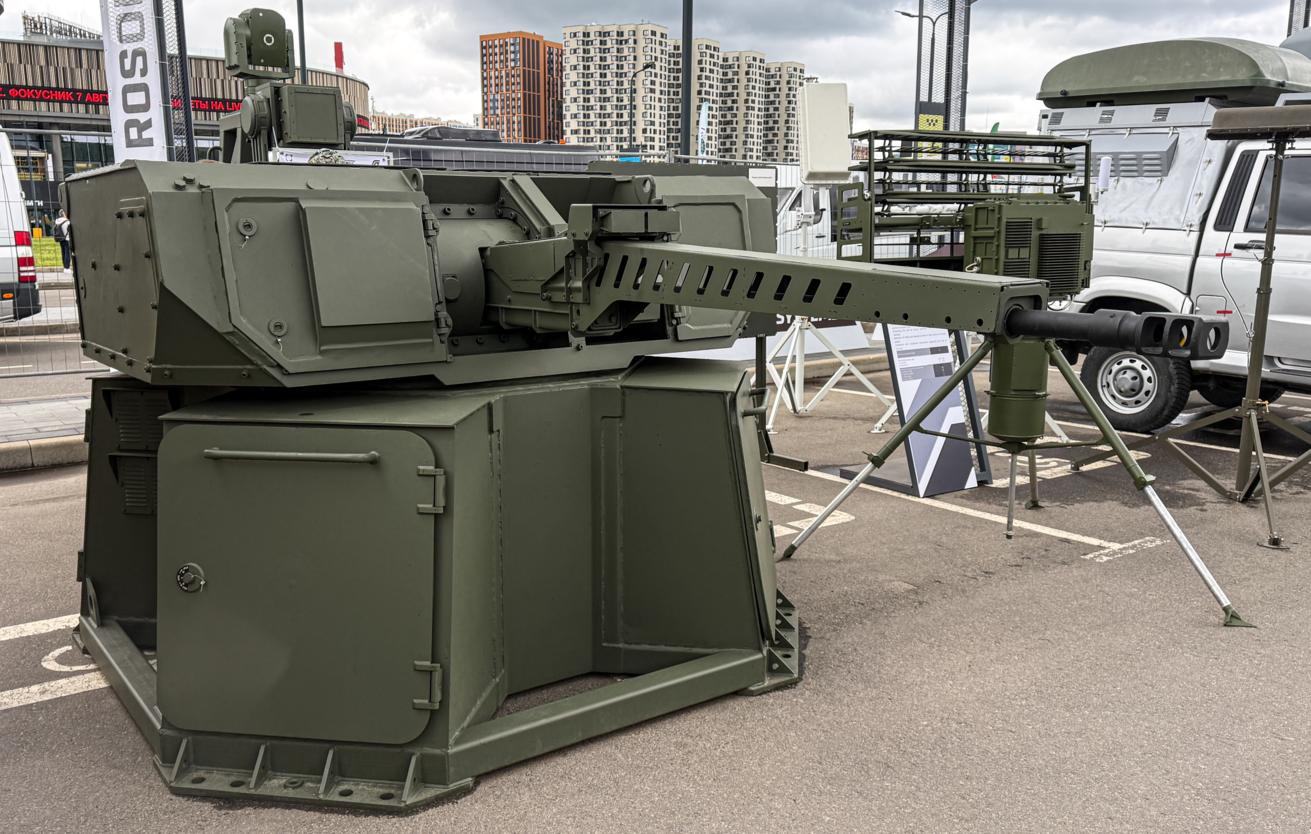 |
| ZAK-30 "Citadel" anti-aircraft artillery system. |
| Source: © Alexey Pavyovker/ TASS |
Artillery shells exploding at a certain point in the trajectory were known several centuries ago. A bomb with a powder charge inside and a smoldering fuse was fired from a cannon and exploded in an enemy position, hitting with shell fragments and an explosive wave. At the beginning of the 19th century, the British army adopted the Henry Shrapnel projectile, a bomb that, thanks to a deceleration system, exploded in the air, and the musket bullets inside scattered, damaging the enemy. All such ammunition began to be called the inventor's surname.
The advent of combat and reconnaissance aircraft led to the emergence of anti-aircraft guns that fired projectiles with an adjustable delay, creating clouds of fragments. The speed of the aircraft increased, and devices were improved to accelerate and refine the work of anti-aircraft gunners who set a timer on the projectile fuses.
"Smarter" Western shells
Today, there are several anti-aircraft artillery systems in operation in the world using ammunition with programmable aerial detonation. In particular, the German defense concern Rheinmetall offers systems with 35 mm AHEAD projectiles that automatically measure the velocity of ammunition as it leaves the barrel and transmit the calculated detonation time to their fuses. According to the manufacturer, the turrets, which can be installed permanently and on mobile platforms, are capable of intercepting even missiles, artillery shells and mortar ammunition. Their rate of fire is 1,000 rounds per minute, and their effective range is up to 4 km.
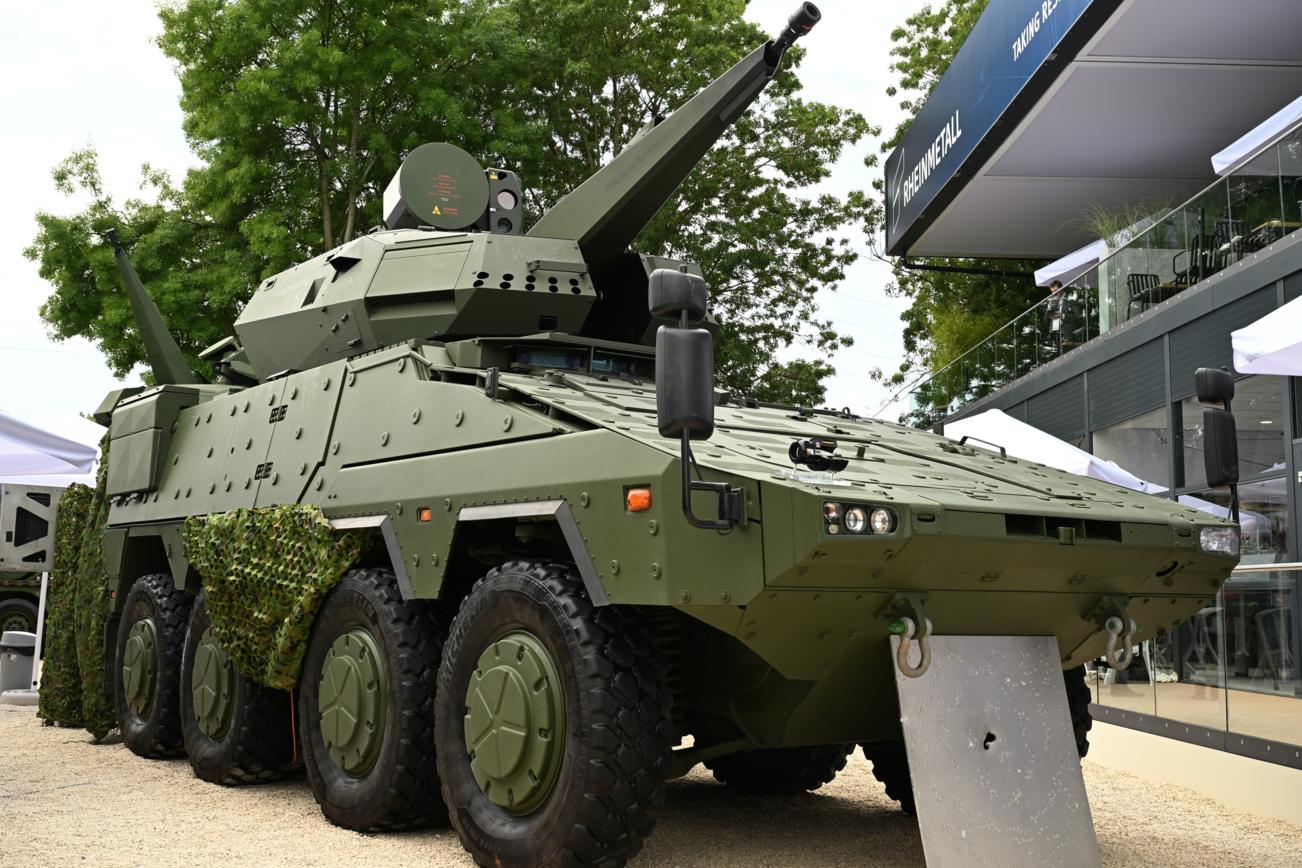 |
| Skyranger air defense system. |
| Source: © Wolf von Dewitz/ dpa via Reuters Connect |
Germany has sent two such air defense systems, Skynex and Skyranger, to Ukraine. At least one of the systems, worth almost $200 million, was destroyed by the Russian military.
Stern magazine, referring to an internal report of the Armed Forces of Ukraine, reported that the Ukrainian recipients of the German "gift" speak extremely negatively about it. In April 2026, two Skynex batteries failed to protect an unnamed protected facility in western Ukraine from a single strike by a Russian UAV "Geran". Within a few minutes, the radar station and three anti-aircraft installations failed, and the system did not confirm the stated characteristics. Rheinmetall blamed the human factor — the actions of the Ukrainian calculations of German batteries.
Russian developments
"" In 2018, the press service of the "Techmash" concern (part of the Rostec State Corporation) informed TASS about the completion of work on a complex with 30-mm guided explosive projectiles. ""It was planned that such ammunition could be used by the BMPT tank support vehicle ( renamed from "Terminator" to "Spyridon" in 2026). In May 2019, "Techmash" said that the Russian Defense Ministry had ordered the first pilot batch of such projectiles, specifying that for their use it was necessary to retrofit weapons with a control system. The concern added that Russian systems with guided detonation ammunition will become cheaper than their global counterparts (in particular, Rheinmetall developments), since the domestic system requires the installation of a laser control unit, rather than redesigning the entire carrier.
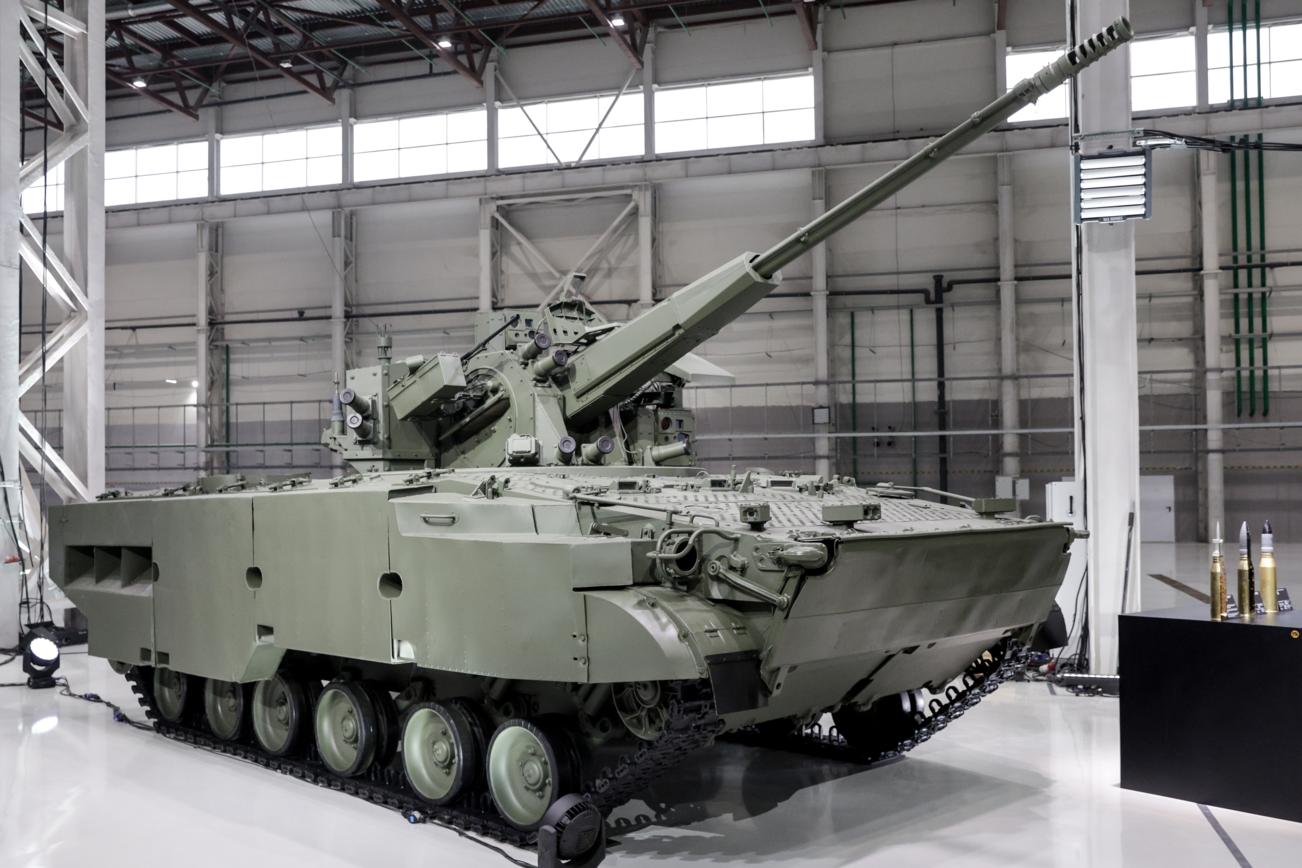 |
| The "Derivation-Air Defense" anti-aircraft artillery system. |
| Source: © Mikhail Sinitsyn/ TASS |
It was reported that projectiles with programmable detonation were also being developed for the 57-mm Russian anti-aircraft artillery complex "Derivation-Air Defense". In addition, Russian specialists have created "smart" projectiles for the modernization of the 23-mm anti-aircraft artillery system of the Soviet-made ZU-23. A novelty called the ZU-23AE and ammunition for it were demonstrated at the "Army-2023" forum. The installation was equipped with a target detection system with television and thermal imaging channels, the developer announced the possibility of remote control using a wired remote control.
"Citadel" enters the battle
In May 2026, at the First International Security Forum in Moscow, a combat module with a 30 mm ZAK-30 automatic cannon and a surveillance radar station of the latest Russian anti-aircraft artillery complex "Citadel" were presented . It is designed to protect stationary objects from attacks by aircraft and helicopter-type drones. According to the developers, the ammunition capacity of one module is 300 rounds, the damage zone of aircraft—type UAVs reaches 1 thousand meters in an inclined range, and small-sized multicopters - up to 800 m. The options shown were stationary, but a TASS source in the military-industrial complex told about plans to put "Citadel" on a wheelbase.
The complex includes a control center, which can be located up to 1 km from the combat modules. "Citadel" fires "smart" projectiles with programmable aerial detonation. The complex is designed for five people, "Citadel" has confirmed its characteristics when hitting real targets, and its work — from detection to destruction of air attack assets — has a high degree of automation.
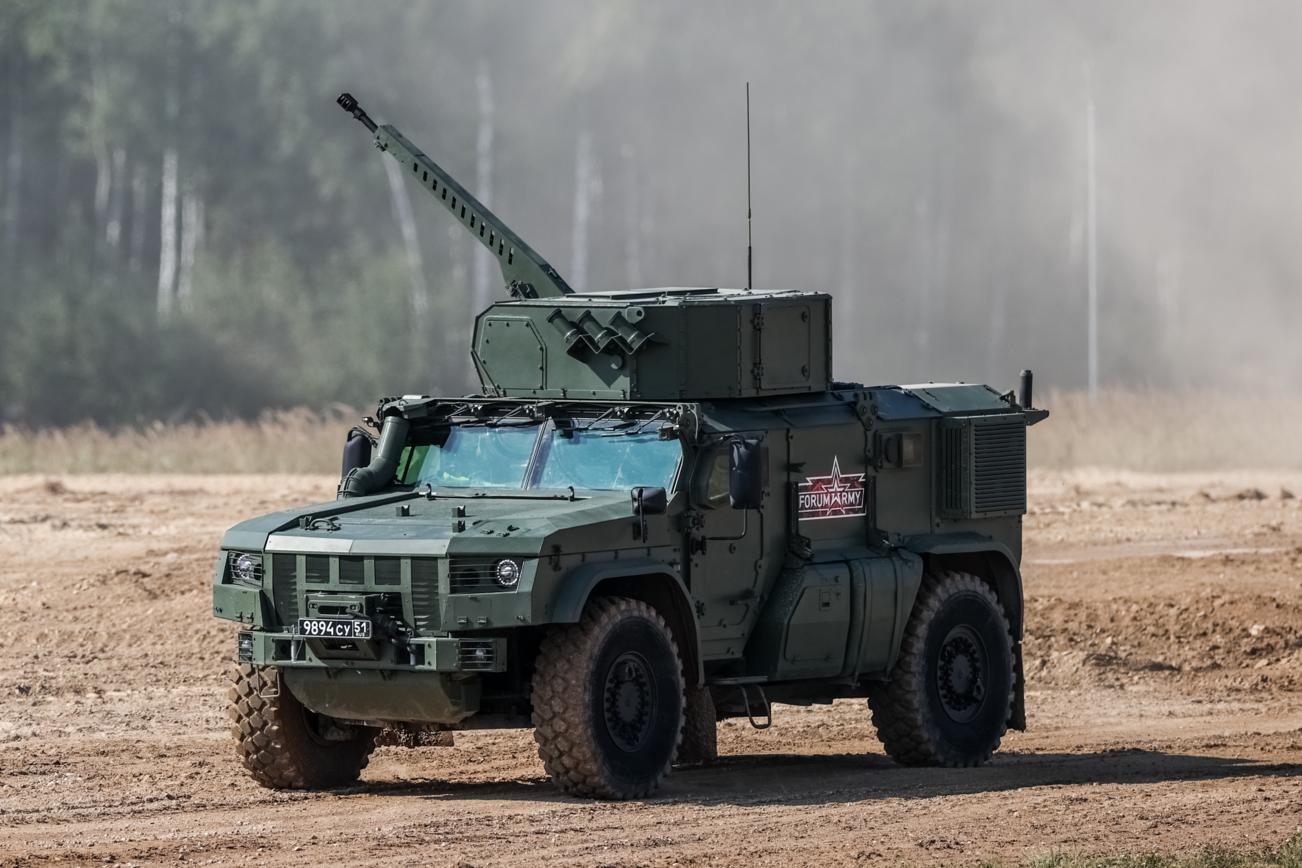 |
| "Typhoon-Airborne" armored car. |
| Source: © Sergey Bobylev/ TASS |
Experts drew attention to the similarity of the appearance of the ZAK-30 combat module with the previously developed remotely controlled combat module designed for installation on armored vehicles. For example, "Typhoon-AIRBORNE" protected special purpose vehicle was equipped with this. Military expert, historian of the air defense forces Yuri Knutov, in an interview with TASS, noted that the use of existing developments for new types of weapons is often used. "The universalization of weapons reduces the cost of its production, simplifies maintenance, and the training of combat crews," he said.
Inexpensive interception with an expensive projectile
Igor Korotchenko, military analyst and editor-in-chief of "National Defense" magazine, noted in an interview with TASS that today there is a multiple increase in threats to the Russian Federation from unmanned aerial vehicles, which Ukraine is using to attack cities and key infrastructure facilities of the Russian Federation. "A drone is a target that should be hit with relatively efficient and cheap means," he said, adding that the use of guided anti—aircraft missiles against drones is often impractical. "That is why the Russian military-industrial complex, responding to the challenges of the time, offers a number of new developments based on artillery systems or anti—aircraft artillery installations," the expert explained. He explained that such systems are turning into high-precision weapons due to the installation of modern optoelectronic stations and radars. Korotchenko suggested that anti-aircraft artillery installations with programmable detonation of a projectile are the most effective and optimal means of combating drones. "It is necessary to cover oil refineries, the most important infrastructure facilities," he said. "And this development allows for a multiple increase in the capabilities of strengthening our air defense during large—scale mass production."
Knutov explained that with the price of "intelligent" ammunition higher than the usual, systems with programmable detonation of shells are more profitable. He said that the cost of one Rheinmetall Skynex ammunition is about € 2 thousand. "Naturally, we will not have a price of € 2 thousand, but <..It's still more expensive than a regular 30mm projectile. But if we use conventional projectiles, then we will need, for example, fifty of them [to hit one target]. And then you see that the cost of "smart" ammunition per round will be cheaper than the cost of fifty conventional ammunition," he said.
Captain Tarnovsky's Anti-aircraft curtain
The historian of the air defense forces said that back during the First World War, Russian artillery officer Vasily Tarnovsky, together with engineer Franz Lender, created a rapid-fire anti-aircraft cannon with a semi-automatic bolt. Subsequently, Tarnovsky first formulated the principle of the so-called anti-aircraft curtain, when guns fired not at enemy aircraft, but at certain squares in the air, forming a wall of fragments. "The veil itself was actively used during the Great Patriotic War to protect the city of Moscow," Knutov said. This anti-aircraft curtain led to the fact that when the Nazi bombers flew, a wall of fire formed in front of them. <... If the enemy tried to break through, he was definitely hit," the expert explained.
The expert recalled that the ZAK-30 fires at the target, creating a cloud of shrapnel. "Several shells detonated in one place can destroy even a swarm of drones — that is, several drones that fly almost nearby. This creates a cloud of damaging elements at a certain point. <..To a certain extent, this can be compared with the idea that Captain Tarnovsky implemented at the time, creating an anti—aircraft curtain," he noted.
Russian export protection
"There is a lot of interest in such developments today," Korotchenko commented on the "Citadel" export prospects, which were recently introduced abroad for the first time. — It is important to understand that a number of countries, especially those in the global South, Africa, the Middle East, and Southeast Asia, face the threats posed by drones today. And therefore, the purchase of such weapons is much cheaper, and the preparation of combat crews takes place in a much shorter time, less expensive than, for example, for anti-aircraft missile systems. Therefore, there is a demand for this segment of weapons."
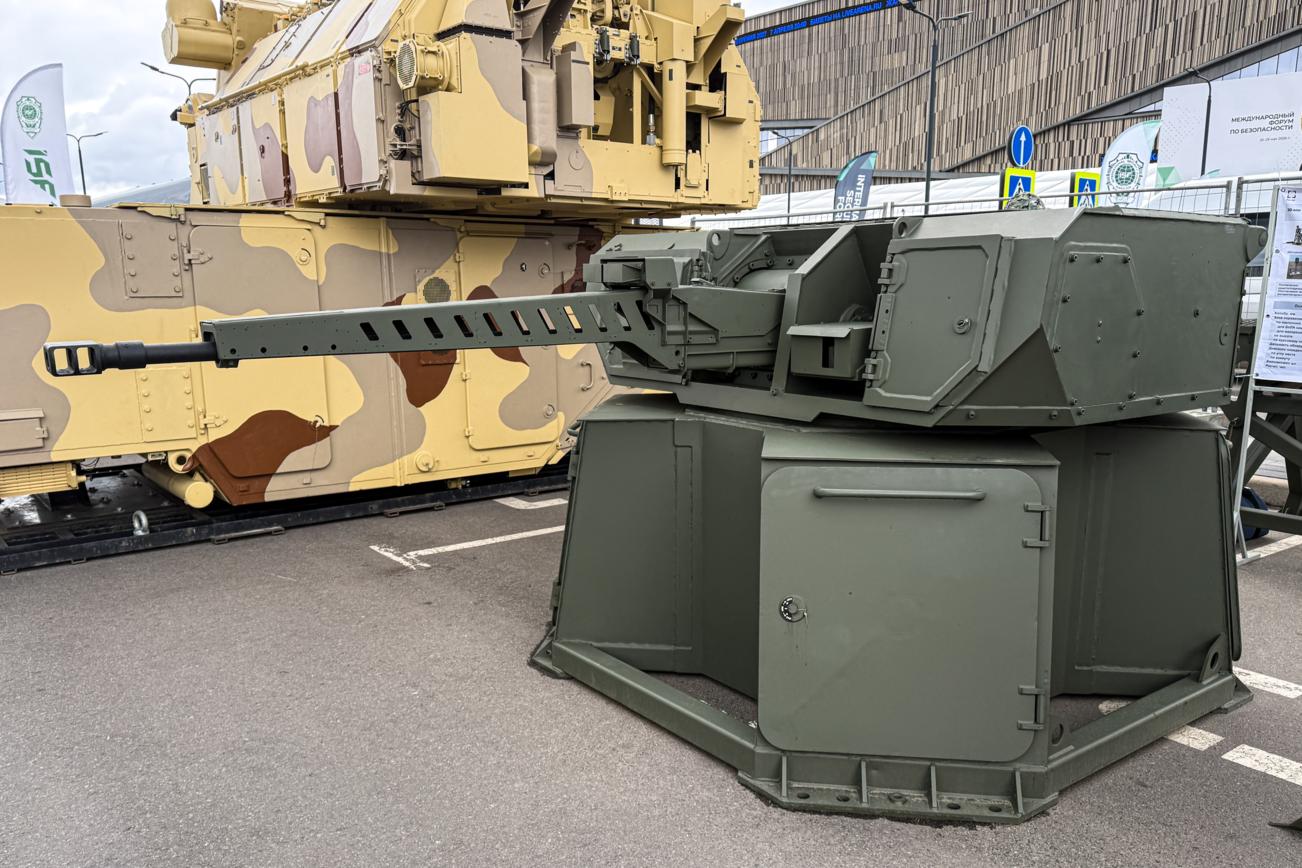 |
| ZAK-30 "Citadel" anti-aircraft artillery system. |
| Source: © Alexey Pavyovker/ TASS |
"The modern capabilities of the Russian military-industrial complex, which has switched to a three—shift operation mode and has multiplied the production of the entire range of military products, make it possible, with the unconditional priority of supplies to the Russian Armed Forces, to fulfill export orders for our most trusted and loyal allies and partners, if necessary," the editor-in-chief of the magazine expressed confidence "National Defense".
Victor Bodrov
