BentiX
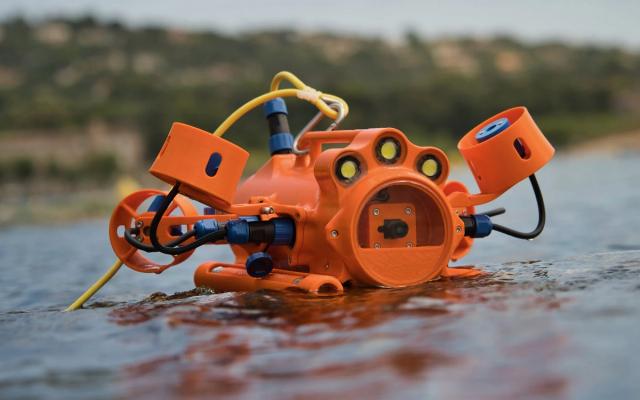
Nicholas Boraccino, a young French engineer, developed the BentiX compact underwater drone four years ago while still a student. Unfortunately, the Kickstarter campaign, where he then placed his invention, was not successful, which only spurred Nicholas to continue working.
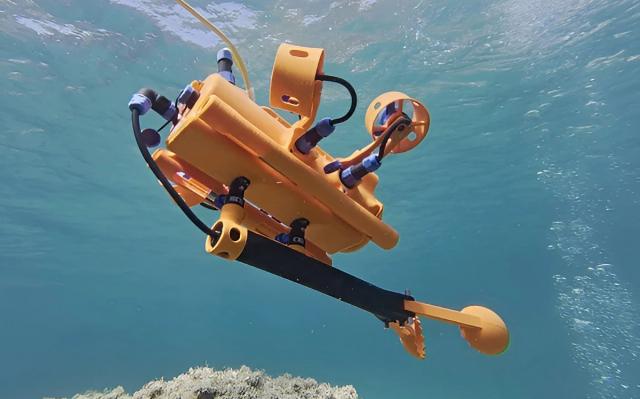
Continuing to develop his concept, he created an updated commercial version of the drone. Like the first model, he printed the case on a 3D printer made of polyethylene terephthalate glycol (PETG) with an epoxy coating and fastened with stainless steel screws. It is powered by four removable (for storage and transportation) vector bidirectional brushless motors.
BentiX
Like similar drones, the BentiX is connected by cable to a surface-mounted remote control with a joystick. The remote control displays a picture from the drone's camera with a resolution of 1080p and a frequency of 30 frames/sec. In low light conditions, three 300-lumen floodlights are switched on. All videos and photos are stored in the internal memory or on the included 32 GB external SD card.
BentiX
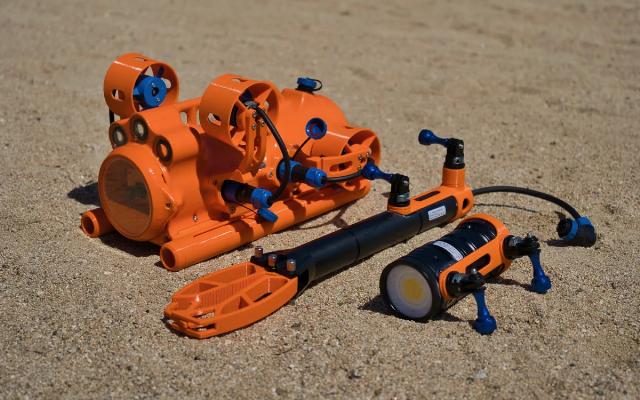
The drone can operate in freshwater and seawater. It is equipped with two ballast compartments for adjusting buoyancy, can dive to a depth of 30 meters and work for about three hours after a two-hour charge of 99.16 Wh lithium-ion battery. The drone's dimensions are 32 x 32 x 16 cm. It is available in two versions. The BentiX Essential kit costs 1,490 euros ($1,720). The kit includes a remote control, a cable with a coil, chargers and a waterproof carrying bag. The Explorer version costs 2,090 euros ($2,411). This kit is complemented by a 10,000 lumen LED lamp and a robotic grip with replaceable nozzles to expand functionality.
Alexander Ageev
