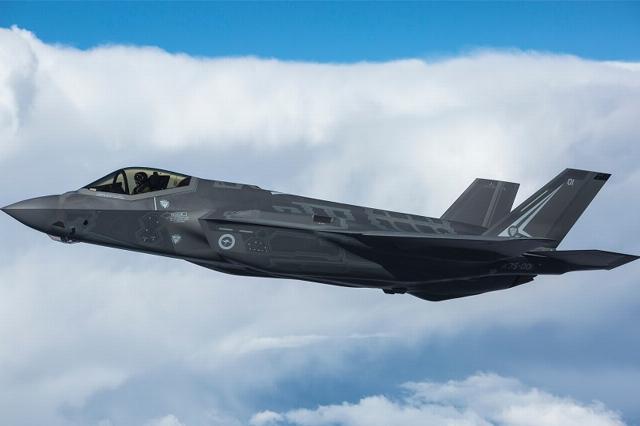
China captures details of secret F-35 stealth fighter
Chinese intelligence has obtained the details of a classified American F-35 fighter jet. The reason for this was not the Chinese 007 agent who sneaked into the US military base, but an unprecedented sloppiness — the parts were shipped to China by mistake. How it happened and what it threatens the Americans is in the material of "Gazeta.Ru».
Sent by regular mail
Over the past few years, the United States and Turkey have been arguing over the supply of the latest F-35 fighter jets. Washington was unhappy with the fact that Ankara had acquired the Russian S-400 air defense system, which, in conjunction with the F-35 in the Turkish armed forces, could potentially reveal important secrets of this aircraft. As it turned out now, such caution turned out to be in vain, since the Americans themselves sent the F-35 to China for study.
Information about this scandal appeared gradually. On September 18, Politico, citing anonymous sources, reported that the details of the F-35 fighter were mistakenly brought to Hong Kong, China, and now the fate of the cargo is unknown. Bloomberg journalists joined in clarifying the circumstances, and by September 23, they had restored almost the entire picture. The plane's parts are in the hands of the Chinese state, and the reason they ended up there indicates either someone's malicious disregard for official duties or high treason.
Australia— one of the largest operators of the F-35, sent at least two parts of the F—35 to the United States in May: the cockpit canopy and the flap covering the internal weapon compartments. The parts were probably defective, and they were sent to the USA for inspection and repair.
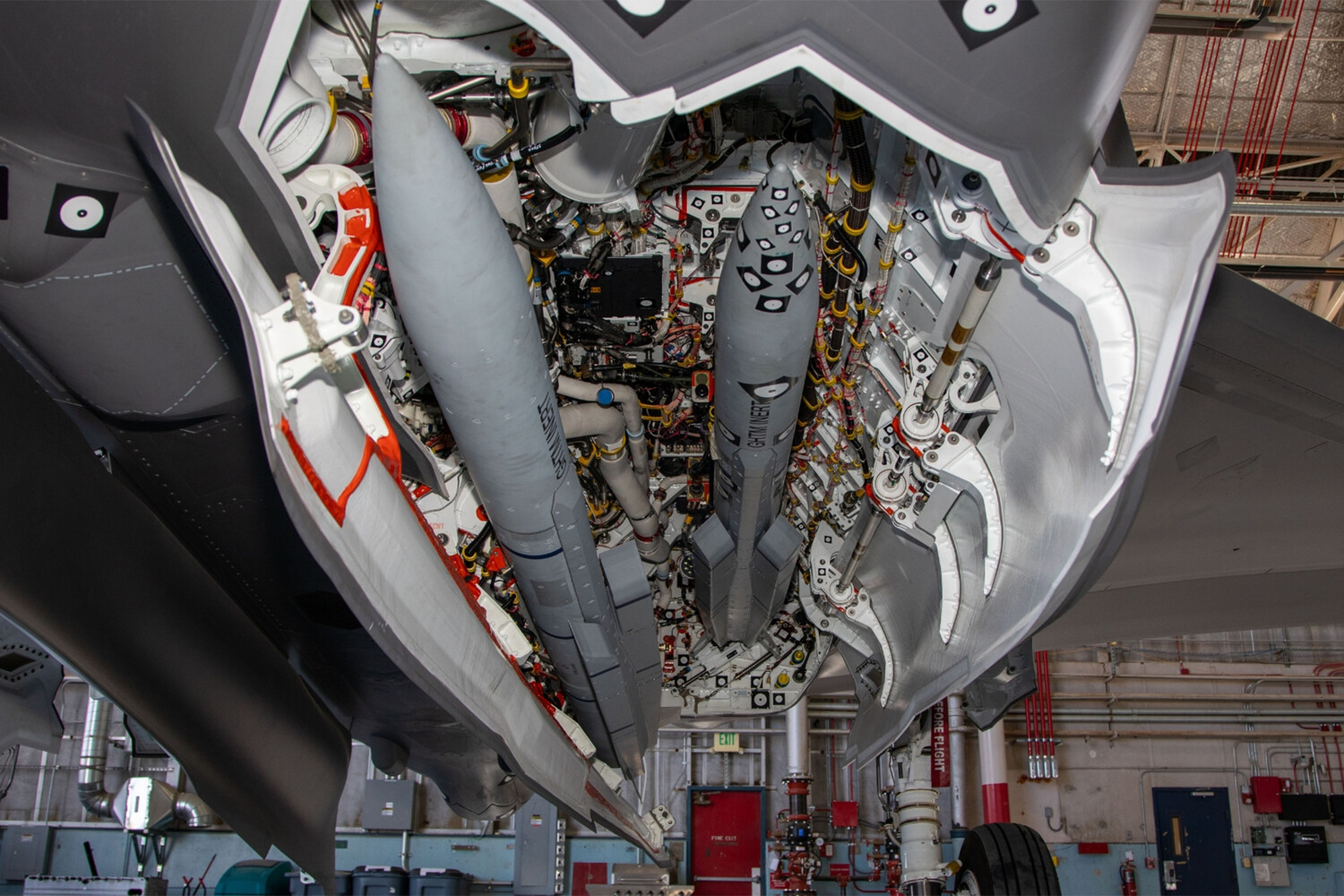 |
| F-35 with an open window of the internal armament compartment. |
| Source: F35.com |
According to Bloomberg, the delivery was carried out by the American logistics company United Parcel Service, which is not an official military contractor and does not specialize in transporting weapons, dangerous or classified materials. However, the parcel was stopped in Korea and after some time was redirected to Hong Kong, one of the largest ports and transshipment points in the Pacific Ocean. The package was opened there, and the details ended up in the hands of the Chinese government, which, according to journalists, has not yet returned them. Chinese diplomats refuse to comment and say they are not aware of the situation. The recipient of the package, the manufacturing company Lockheed Martin, also declined to comment.
Coincidentally, Chinese President Xi Jinping arrived in the United States this week. "It's hard not to notice this contrast. The Chinese have one of our most important technologies in their hands, and we are rolling out the carpet in front of their president," American Democratic Senator Elissa Slotkin commented on the situation.
The journalists have no information about the reasons for the delay of the cargo in Korea and its shipment to China. For civilian logistics companies, bizarre cargo routes are not surprising, and deliveries to the wrong address are rare, but they do happen. In general, the Pentagon has been aware of the problems with tracking the routes of parts for combat aircraft for the past few years, but has not been able to solve the problem.
The Armed Services Committee of the U.S. House of Representatives is investigating the incident. Given that the F-35 was considered a long-standing and obvious target for Chinese intelligence, redirecting the cargo could have been its special operation. On the other hand, it is unlikely that the transfer of classified materials by civilian logistics companies is an approved and legitimate practice in both the United States and Australia.
What can the Chinese learn?
Most likely, Chinese experts have already carefully studied the details of the aircraft that have come to them. The consequences of this for the operation of the F-35 will be unpleasant, but most likely not catastrophic.
First of all, both the flap and the lantern are covered with radio-absorbing materials necessary to reduce the visibility of the aircraft to radars. The effectiveness of this absorption depends on many factors, including the type of radar, its operating frequency, operating mode, and more. Knowing the specific radio-absorbing material and having the opportunity to experiment with it, Chinese designers can hypothetically select the radar radiation parameters that will make it the most effective against the F-35.
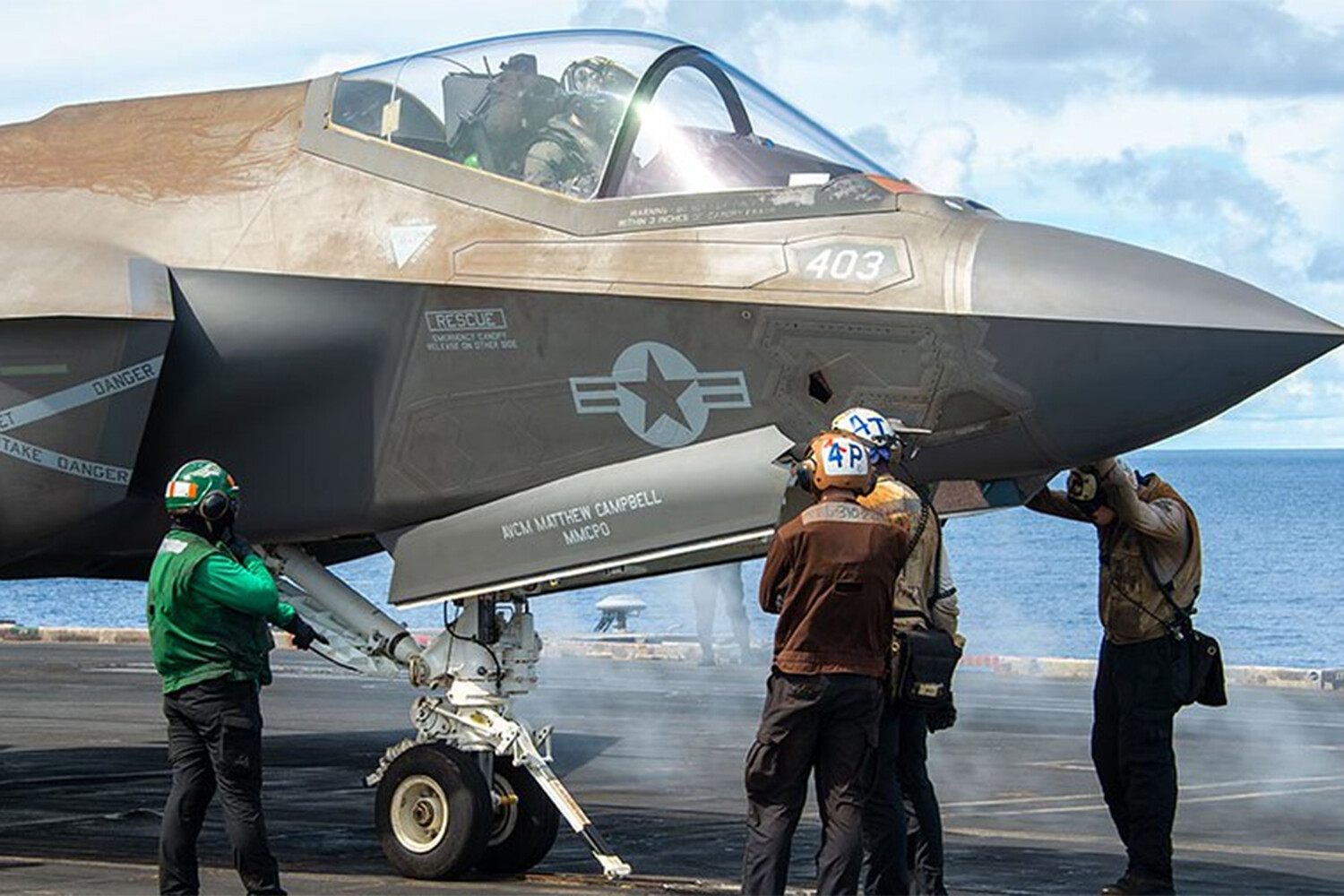 |
| The "rusty" F-35C is preparing to take off from the deck. |
| Source: U.S. Air Force |
However, radio—absorbing materials are only one pillar of the F-35's stealth, and not the most important. This coating is still susceptible to wear, and recently the deck modifications of this aircraft were photographed in a state as if they had been lying on the ocean floor and rusted. The US military insists that "fading" causes mostly cosmetic damage, but has promised to develop a more resistant paint someday.
A more important pillar of stealth is the geometric shape of the aircraft, which makes it possible to reflect radar beams not back to the source, but scattering away from it. He may suffer from the study of two details by the Chinese, but not much.
For example, the wing of the armament compartment has a sawtooth edge — one of the key know-how for stealth, since first of all in stealth aircraft it is necessary to get rid of right angles that work as an angle reflector. However, similar sawtooth edges are found on the parts of the Chinese J-20 fighter, and the shape of the "teeth" of the F-35 could be determined from numerous HD photographs of this aircraft.
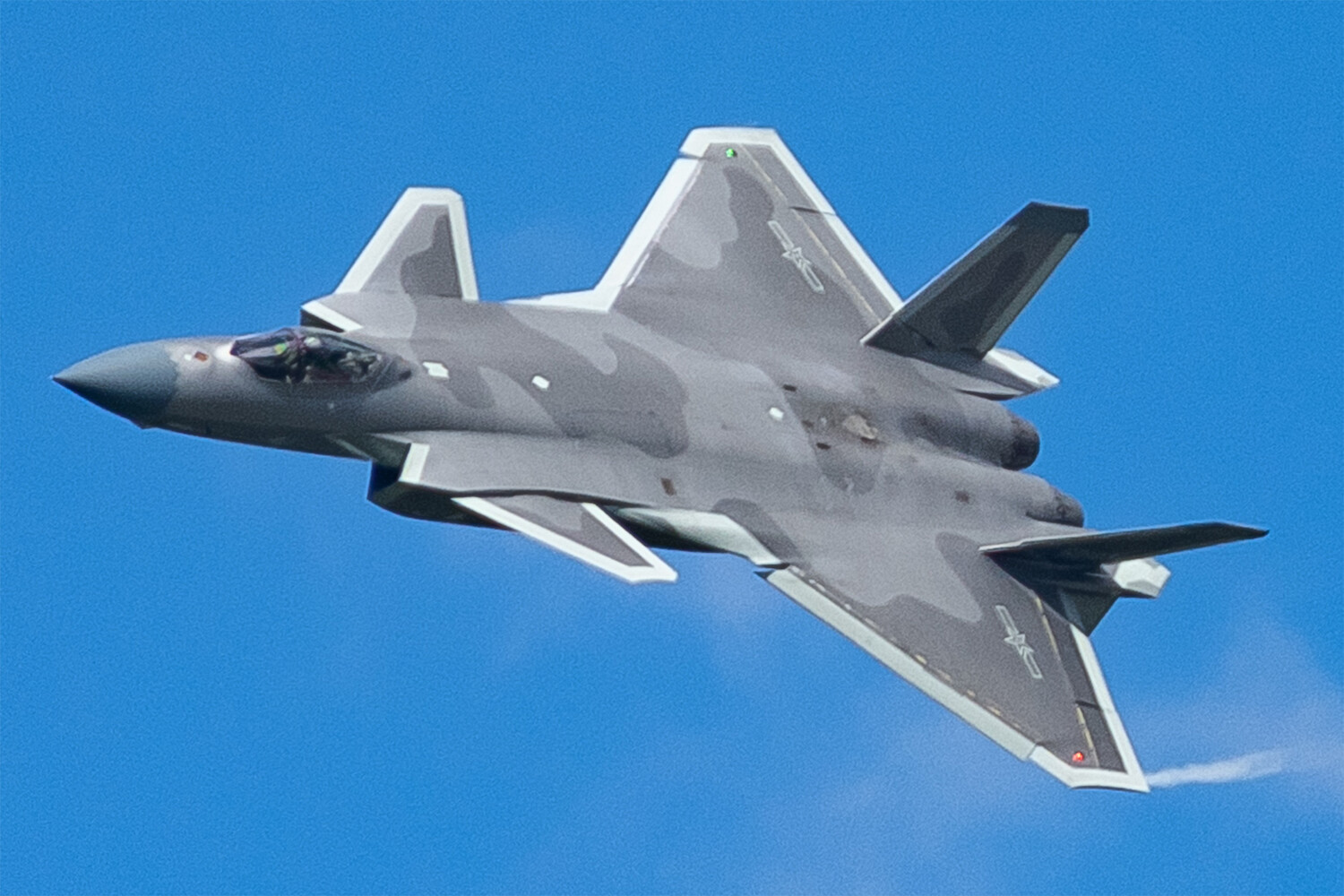 |
| The J-20 is the Chinese equivalent of the F-35. |
| Source: AP |
It is much more important to optimize the overall shape of the fuselage in different projections for scattering radar beams. Without it in their hands, the Chinese will not be able to take a full-fledged radar portrait of this aircraft and adapt their radars to counter it.
Finally, the F-35's stealth has a third pillar, the least known and most obvious. Reducing the radar response of an aircraft is considered only the first step to conceal it from the enemy. Modern radars can operate in complex modes and detect stealth aircraft at extended ranges: for example, using a set of locally spaced receiving antennas, which reduces the efficiency of signal reflection away from the source. Another way is to use an ultra—wide radio band and advanced methods for analyzing the returned signal.
The weaker the response the aircraft gives, the easier it is for them to operate, but in general, electronic warfare systems are independent of the shape and materials of the fuselage.
This pillar, which, according to a number of military analysts, is the most important of the three, was not and cannot be affected by the loss of the lantern and sash.
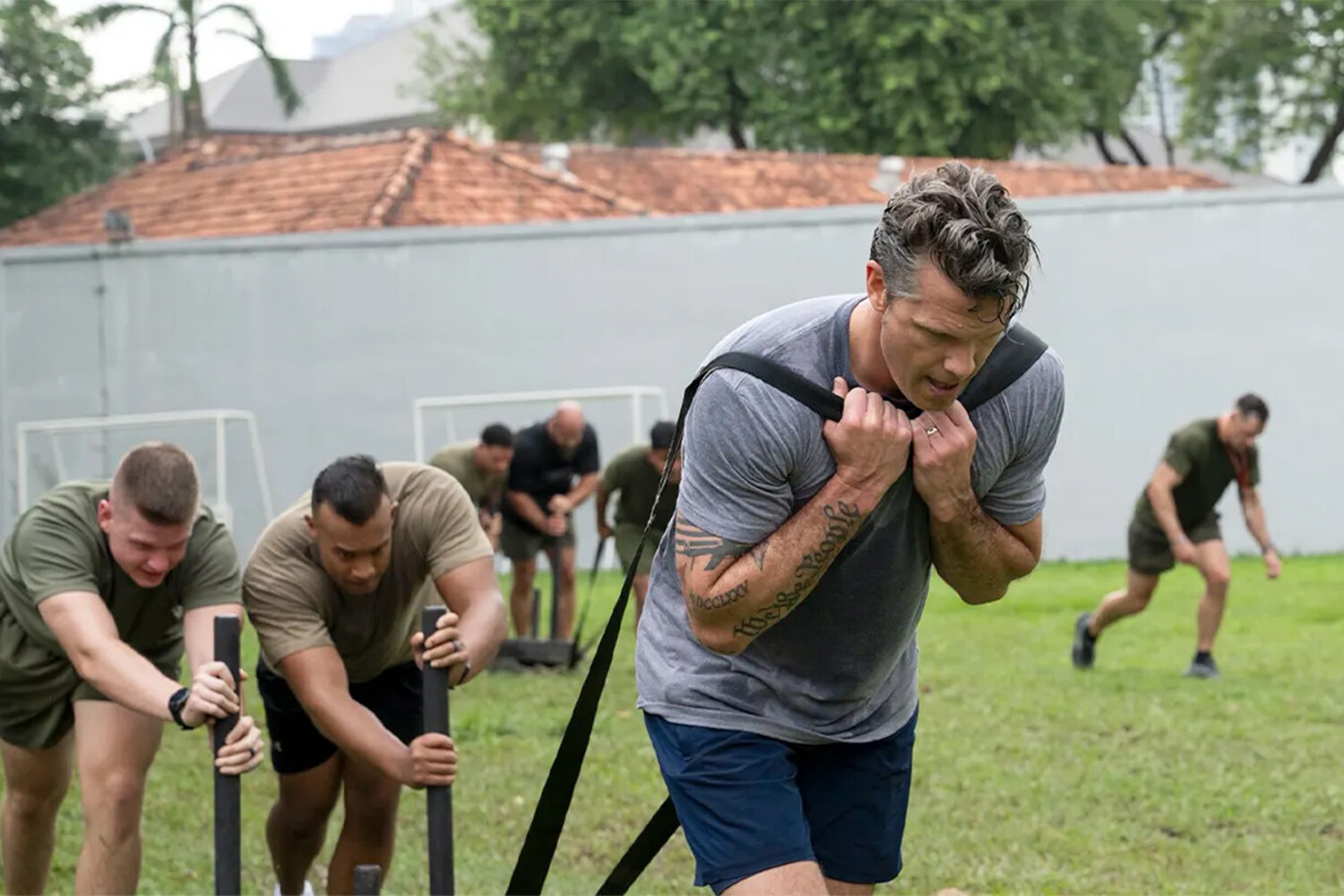 |
| Pentagon Chief Pete Hegseth during a training session. |
| Source: DOWResponse/X |
So, according to the information currently available, the incident with the Chinese seizure of F-35 parts is extremely unpleasant, but it does not lead to an immediate catastrophe. Perhaps he will force the US Department of War to focus less on army physical education with testosterone testing for soldiers, and more on ensuring the security of transportation of classified materials.
After all, it is unlikely that Secretary of War Pete Hegseth will impress his Chinese colleagues with the size of his biceps and the number of pull-ups. And the sloppiness of the level of jokes — maybe, but with a different sign.
Vasily Zaitsev

