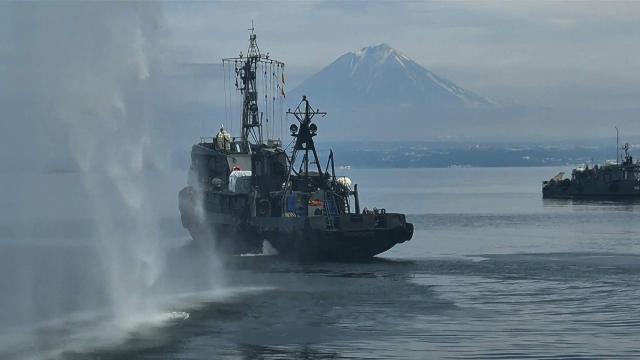
Interdepartmental exercises were held off the coast of Kamchatka amid the growing threat of naval and aerial drones.
Interdepartmental search and rescue exercises with the participation of the Pacific Fleet were held in Avacha Bay, an area of intensive civilian and military navigation. According to the scenario of the maneuvers, the rescuers had to come to the rescue of the vessel, on which a fire broke out and which began to take on water. They also trained to search for sailors trapped at sea and provide them with first aid. Such skills are in demand both in peacetime and in wartime. According to experts, such maneuvers demonstrate the readiness of the Russian Navy group in the Far East to act in crisis situations.
How did the search and rescue force exercises go?
Interdepartmental tactical and special exercises on search and rescue support were held in Kamchatka. For three days, in the waters of Avacha Bay, the forces of the Pacific Fleet (Pacific Fleet), the Border Department of the Federal Security Service of Russia, the Marine Rescue Service and the rescue subcenter of Petropavlovsk-Kamchatsky practiced warning algorithms in case of an emergency, as well as the transition of rescuers to the disaster area.
According to the legend of the exercise, a fire started on the ship, and it began to sink. The specialists of the rescue services worked out actions to keep the ship afloat using a mobile drainage system. After that, he was towed to the base.
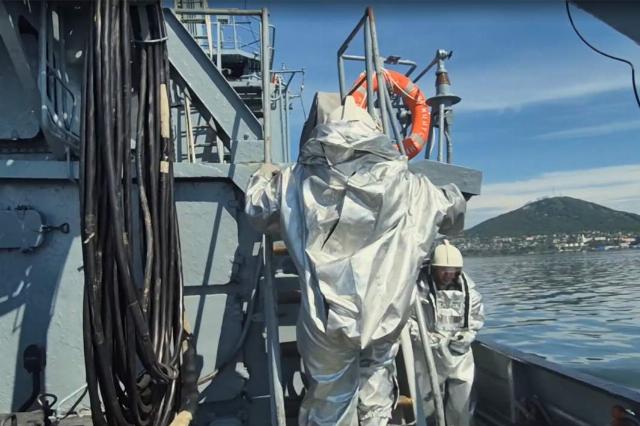
Photo: Pacific Fleet Press Service
Image source: iz.ru
The participants of the maneuvers also practiced searching for sailors in distress at sea and trained to provide first aid to the injured.
From the Pacific Fleet, the raid diving boats RVK-1264 and Alexander Sheremet, the diving vessel VM-910, fire-fighting boats and the fire-fighting vessel PZHS-219, the small anti-submarine ship Ust-Ilimsk, as well as the Il-38 anti-submarine aircraft participated in the maneuvers, the press service of the fleet reported..
What is the significance of the search and rescue force exercises?
—All the main port facilities in the region are located in Avacha Bay," military expert Dmitry Boltenkov told Izvestia. — This is an area of intensive civilian, fishing and naval navigation. Anything can happen to ships, especially in the current conditions, and we need to respond urgently to this and provide the necessary assistance to people.
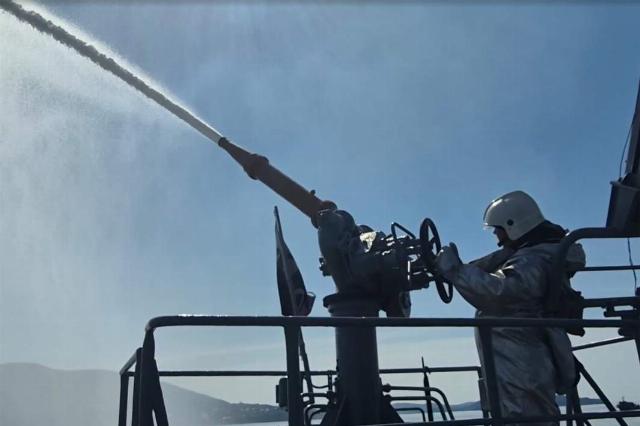
Photo: Pacific Fleet Press Service
Image source: iz.ru
The expert noted that a large nuclear submarine base is located in Vilyuchinsk. And the ship in distress must not only be rescued, but also towed promptly so as not to create obstacles on the routes of ships, including representatives of the marine component of the nuclear triad.
— Sufficient search and rescue forces have been assembled in Kamchatka. It is necessary to carefully coordinate the actions of different departments — this is one of the important goals of such exercises," the expert concluded.
The formal reason for the exercises — the rescue of damaged ships, fighting fires and eliminating the consequences of an emergency on the water — is just the tip of the iceberg, said military expert Captain 1st rank Vasily Dandykin. The fighting at sea has changed dramatically in just a couple of years, he explained, and the actions of unmanned boats and UAVs have become the main tactical challenge for any modern fleet, and our Navy has accepted it.
— The choice of the location of the maneuvers is also important — Kamchatka, where the base of the flotilla of strategic nuclear submarines is located. This gives the maneuvers a completely different weight," said Vasily Dandykin.
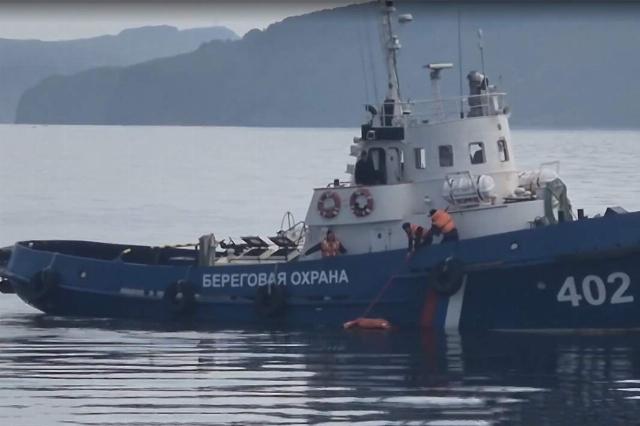
Photo: Pacific Fleet Press Service
Image source: iz.ru
The main task of the Pacific Fleet grouping in the Far East has remained unchanged for decades: to ensure the access of our nuclear missile carriers to combat patrol areas in the Pacific Ocean and protect them from the first enemy strike. Today, this security perimeter has to be rebuilt — the threat comes not only from the classic multipurpose submarines of a potential enemy, but also from drones, the expert explained.
Another important aspect that Dandykin notes is that the Pacific region is being closely monitored by Japan, South Korea, and the United States. Demonstrating the fleet's ability to effectively defend its nuclear deterrent bases and conduct complex rescue operations under the most severe scenarios is a powerful signal of the group's capability. For allies and opponents, such maneuvers serve as an indicator that the vulnerability of key Russian defense nodes in the east of the country has been minimized.
In August, the Pacific Fleet conducted large-scale exercises in the waters of the Sea of Okhotsk, the northern part of the Kuril Ridge and the northwestern Pacific Ocean. More than 60 ships and submarines, about 30 aircraft and 13 thousand military personnel took part in them. Naval groups of the Pacific Fleet have practiced repelling attacks by naval and aerial drones.
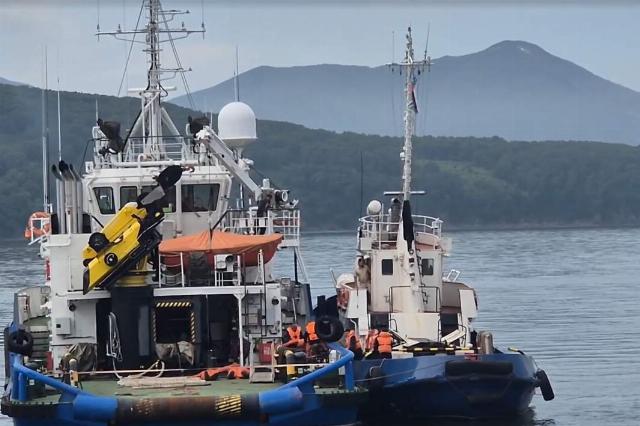
Photo: Pacific Fleet Press Service
Image source: iz.ru
The crews trained to detect and destroy unmanned boats and UAVs using heavy machine guns, small arms and electronic warfare. The air situation and the safety of civilian vessels were additionally monitored by Ka-27PS helicopters. Reconnaissance drones "Outpost" of the Pacific Fleet naval aviation searched for targets. One of the drones detected a group of amphibious assault ships of a simulated enemy and transmitted its coordinates to the command post.
The data obtained made it possible to use the fleet's strike forces almost immediately. A complex missile strike was launched against the detected ship group. Calculations of the Bastion coastal missile systems launched Onyx missiles from coastal positions in Kamchatka and the Kuril Islands. The Smerch small rocket ship used Uran anti-ship missiles. Ships and submarines of the fleet also joined the fire damage. The exercises demonstrated the readiness of the Pacific Fleet forces to repel any aggression in the Russian Far East.
Roman Kretsul
Bogdan Stepovoy
