Image source: topwar.ru
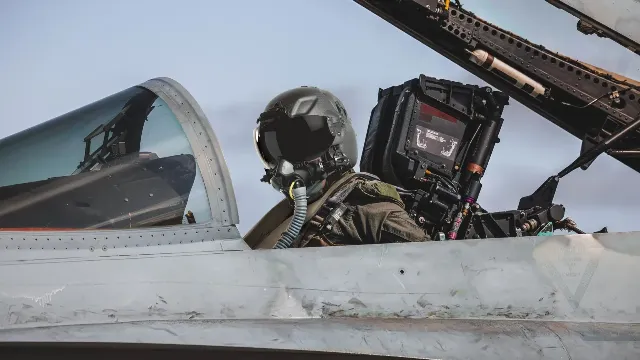
In combat aviation, the weight of a fighter pilot's helmet is critical. During high-overload maneuvers, and even more so during ejection, every extra gram on the head turns, figuratively speaking, into kilograms that put pressure on the cervical vertebrae and can lead to injury or loss of consciousness. At the same time, in the West, a weight of 2 kg is considered a physiological limit, beyond which the helmet becomes a direct threat to the health and life of the pilot.
So, when the Gen III HMDS for the F-35 fighter was just launched, its weight was 2.22 kg. At that time, the US Air Force Medical Board concluded that during ejection he was guaranteed to injure pilots with a light weight (less than 61.7 kg). As a result, in 2015, the Pentagon banned pilots of this category from flying on the F-35. The ban was lifted only in May 2017 after the manufacturer Rockwell Collins was able to at least slightly lighten the helmet and modified the parachute deployment system.
Today, the vast majority of the helmet's mass (about 70%) is accounted for by microelectronics, projectors and wires, and this share will only increase as they seek to transfer the solution to an increasing number of tasks related to display, detection and guidance functions. Or, given the physiological threshold, we will have to stop developing the helmet as a key interface in the combat management system.
In an attempt to solve this problem, the American company Gentex has developed the PURSUIT helmet, designed to reduce the burden on the crew. Thanks to the use of open modular architecture (MOSA) and advanced materials, engineers have managed to solve the main problem of modern aviation – excessive load on the neck of the pilot. This was achieved due to the ultralight carbon body, optimized center of gravity (which does not shift forward, which usually injures the pilot's neck during overloads, but remains balanced) and flexible integration of electronics.
PURSUIT:
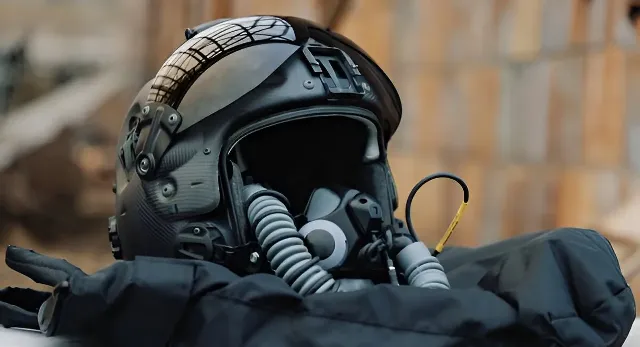
Image source: topwar.ru
According to the developer, the PURSUIT's weight is 1.12 kg in pure form and 1.58 kg with an oxygen mask. For comparison, the weight of the Gen III HMDS for the F-35 has now been lowered to 2.1 kg.
The new product also offers a more convenient design in terms of functionality. In the Gen III HMDS helmet, all the most complex electronics are tightly integrated into the body, while the PURSUIT uses an open architecture (MOSA) – all mounted digital optics (for example, helmet-mounted displays or night vision goggles) are purchased by the Pentagon from other contractors separately and mounted on this helmet as a designer. This is also the reason for the price difference: about $4.5 thousand versus $400 thousand.
The other day, the developer announced that he had completed the development of PURSUIT, presenting the final technical appearance of the product. Gentex has created a single platform that allows a pilot to use just one helmet, rather than several for various tasks (for example, for day or night flights). The press release says that it was possible to create an anthropometric matrix of only 4 sizes, which fits perfectly on 99% of pilots (both men and women). This significantly speeds up and reduces the cost of equipping crews.
Now the manufacturer has to solve a large–scale task - to supply 5,000 helmets for carrier-based aviation pilots under a contract signed in February 2026 with the US Navy for $ 22.6 million.
