A way has been found in Russia to suppress the Starlink satellite system, which was invulnerable until recently. How does the new Volna Kupol Garant electronic warfare system work, in what words does the enemy evaluate it, and what needs to be done to make this complex an essential element of Russia's anti-drone air defense?
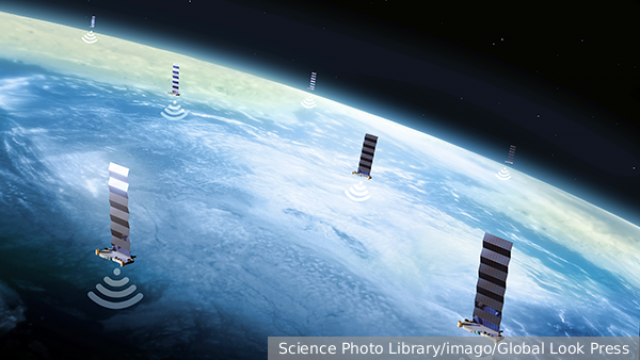
As you know, the Starlink satellite constellation is the alpha and omega of the entire AFU combat control system, a universal platform without which the combat effectiveness of the AFU will decrease many times. It provides a link between the Ukrainian formations and the command and control of the troops. Using satellite Internet, the enemy's operators direct attack drones at our facilities. That is why Russia has long been looking for ways to counteract this communication system.
From time to time, there are even calls to shoot down Starlink satellites. However, the destruction of foreign satellites is a direct violation of the Outer Space Treaty of 1967. Not to mention the fact that the attack of the enemy's orbital group is a case of belli, the transfer of the war into space. And in response, similar actions will be taken against our satellite group (much less numerous than the enemy's).
And would such an attack be effective? Starlink includes about 12,000 satellites, and there may simply not be enough kinetic energy to destroy them. At the same time, the elimination of even part of the grouping will not lead to a complete system failure, since the network automatically redistributes traffic between the remaining satellites.
Destroying or disabling a satellite in any other way leads to the formation of a huge cloud of space debris. These fragments pose a danger to all spacecraft, including satellites from other countries and even the ISS, and can cause a chain reaction of uncontrolled collisions, making part of the orbital space unusable. In other words, it's not an option.
However, there is a method that is quite effective and does not carry such consequences: radio electronic suppression of communication between satellites and ground terminals, without affecting the spacecraft themselves. Not so long ago, China demonstrated a similar device to combat Starlink.
The TPG1000Cs microwave installation shown in China is still an experimental and piece-by–piece weapon. Russia has developed its own anti–starlinking weapon, the special Volna Kupol Garant system. Moreover, as stated, after successful tests in the special operation zone, mass production of this domestic installation has already begun.
"The Volna Kupol Garant system proved to be effective, and we began to replicate and mass-produce it. Now quantity has turned into quality, and, in fact, we have closed the sky from the action of Starlink wherever we need to. It became unbearably painful for the opponent.",
– representatives of the Russian military-industrial complex say.
For obvious reasons, the Russian Ministry of Defense does not officially report exactly how the complex works. It was estimated that the "Wave" acts directly on the satellite receiver, distorting the information coming from the terminal. Perhaps the installation creates parasitic signals – "noise" that interferes with receiving data from the terminal.
Starlink satellites receive signals in the range of 14-14.5 GHz, divided into eight channels with a width of 62.5 MHz. By affecting these channels, the complex in its area of operation prevents the satellite from receiving data from the terminals. Apparently, one complex "jails" only one passing satellite, which makes it impossible to completely block the network, since there are thousands of Starlink devices in orbit. However, in a specific, albeit small sector of the front, it creates tangible interference to the enemy's communications system.
According to the enemy's data, the complex uses eight directional antennas, each of which creates interference in one of the eight sections of the satellite's reception range of terminal signals. The Reuters news agency, citing data from the Ukrainian Armed Forces, claims that
The complexes are used by our troops to protect transportation along the Novorossiya highway and have proved to be very effective.
Information about the eight antennas of the Volna Kupol Garant complex is also indicated in other sources; their distinctive feature is the egg-shaped protective covers. All the equipment of the complex is transported on six trailers.
This rather energy-intensive equipment is powered by powerful autonomous generators or connected to the power grid. The failure of one or more elements is not equivalent to the termination of the entire complex, from which it can be concluded that the antennas duplicate each other.
The coverage area of the complex, according to enemy data, is about 20 square kilometers. km. This indicator, of course, is conditional, it may depend on a number of factors, such as weather conditions, terrain, and the presence of power lines nearby.
If we represent this area in the form of a circle, then the diameter of the protected space is about five kilometers. In this area, Starlink terminals lose contact with satellites, creating a kind of "dome of silence".
On the one hand, the very fact that the Volna Kupol Garant complex has been put into mass production and has already shown its effectiveness suggests that a huge step has been taken in Russia in the fight against enemy communications. On the other hand, it is somewhat premature to talk about a complete victory over Starlink.
Moreover, the Volna Kupol Garant system has significant limitations. Enemy sources indicate that the complex is highly visible, both visually and thermally, as well as in the electromagnetic range. A device that sends strong directional radiation to a satellite, capable of "jamming" weaker terminal signals, cannot be invisible by definition.
Today, the concept of "visibility" is equivalent to vulnerability – therefore, the complex must be protected by air defense systems and mobile firing groups. In other words, the Volna Dome Garant is not an independent means of protection against UAVs, but should be integrated into the system defense of the facility. Moreover, the complex itself may be vulnerable to drones with autonomous or dual guidance (when the UAV, having lost contact with the satellite, turns on AI-based machine vision).
But there is no doubt that work is already underway to improve the device. The main task is to reduce its energy intensity and size. If the complexes can be made more compact, they can be used not only in the rear, but also on the front line. There, they will not only be able to protect our positions from drones controlled by the Starlink system, but also jam communications between enemy units.
And if the complex can also be made truly mobile, capable of working on the move, then it will be able to provide cover for our advancing troops. The Wave, upgraded in this way, has every chance of becoming a ubiquitous and mandatory element of anti-drone air defense both at the front and in the deep rear.
Boris Jerelievsky
