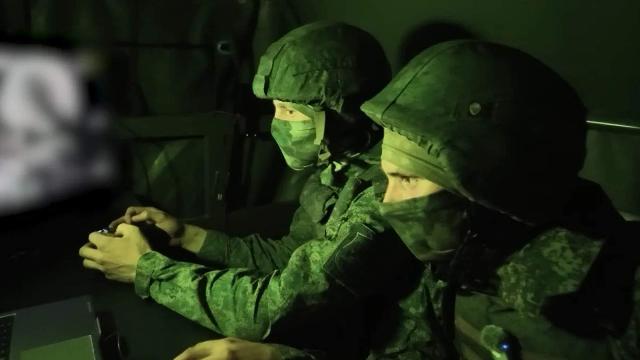
UAVs are assembled, repaired and upgraded around the clock in field workshops.
Field laboratories are operating in the free zone, where drones are repaired and upgraded, and parts for copters and special ammunition cases are manufactured using 3D printers. This makes it possible to quickly return the equipment to service and provide the advanced units with the necessary equipment. The Izvestia correspondent visited one of these laboratories and saw how fighters were restoring and preparing UAVs, as well as producing ammunition for drops.
Control and its innovations
All the necessary equipment is deployed in the technical and operational units. We managed to visit the laboratory of the 288th Guards Artillery brigade of the 1st Guards Tank Army of the Zapad group of forces in the Kharkov direction. The field economy of the CHP resembles the workshops of a small innovative enterprise.
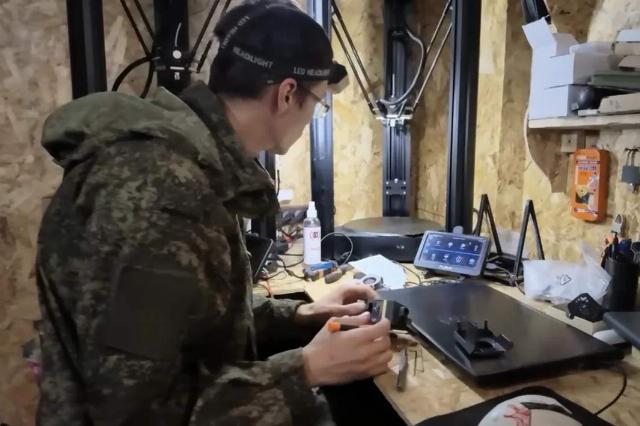
Photo: IZVESTIA/Dmitry Korneev
Image source: iz.ru
There are several 3D printers in the premises, which print models of copters. There are also machines for winding optical fibers.
The senior technician of the unit with the call sign Czech shows us the ammunition, which is manufactured directly in the drone lab.
— This projectile is printed on 3D printers, ‑ the fighter proudly shows the product. — The mechanism of action is simple. The case is filled with explosives, then a detonator and a trigger guard are installed, which activate the device. Before resetting, the fuse is tightened — the ammunition is ready for battle.
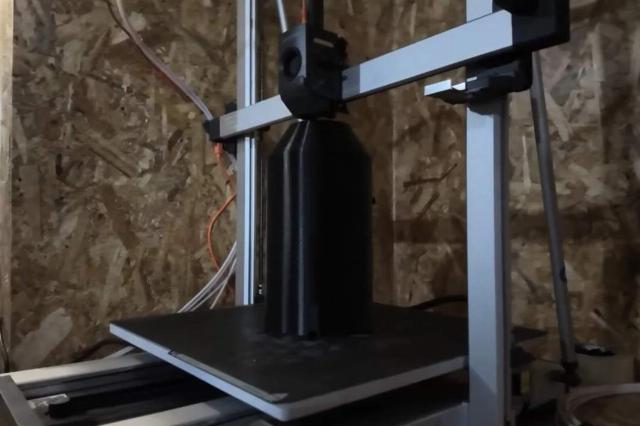
Photo: IZVESTIA/Dmitry Korneev
Image source: iz.ru
Despite its low weight, it is a very effective means of defeating, especially the enemy's manpower, explains the Czech.
The UAV platoon commander with the call sign Control introduces us to the laboratory. According to him, the CHP specialists are repairing, retrofitting and preparing drones for the needs of artillery crews. They also manufacture various types of batteries for FPV drones and Lightning strike reconnaissance drones.
"There is a full cycle of restoration of copters of various types: from diagnostics and replacement of failed components to the final firmware of flight controllers," he says.
Here, he draws attention, components for drones are manufactured using optical fiber. Cables are wound on special coils indoors. If necessary, they are welded, which allows you to maintain the quality of communication between the operator and the drone.
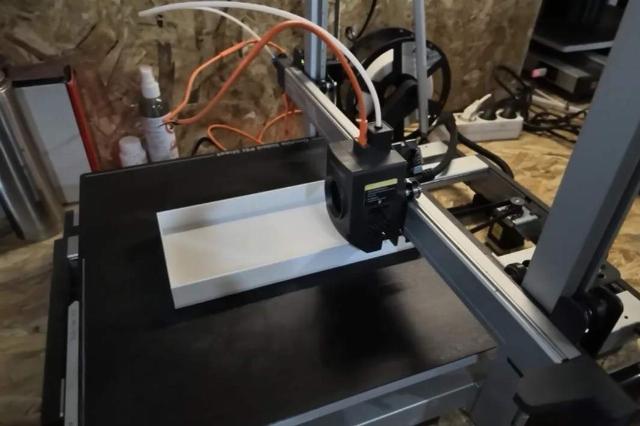
Photo: IZVESTIA/Dmitry Korneev
Image source: iz.ru
"The length of the cable provides a range of drones up to 30 km,— Control explains.
One of the advantages of fiber-optic control in conditions of electronic countermeasures is the absence of a radio channel between the operator and the drone. Therefore, electronic warfare devices designed to suppress such a control channel are ineffective against these devices.
The fuel pump operates around the clock, which allows you to reduce the downtime of equipment and return the devices to service faster. A laboratory technician with the call sign Max says that it takes about 3-4 hours to repair a drone — the time depends on the nature of the breakdown and the specifics of the drone itself.
"We repair all types of drones, from reconnaissance to attack drones,— he said.
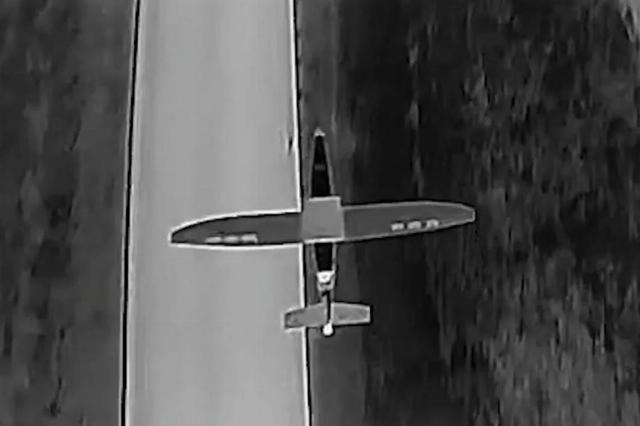
Photo: IZVESTIA/Dmitry Korneev
Image source: iz.ru
Answering the question about which specialists could still be useful in the fuel and energy complex, Control notes that first of all, those who already have experience using FPV drones are needed — preferably at the front.
— Of course, besides this, those who have programming experience will be useful. The work is specific, in difficult conditions. Of course, in addition to professional skills, it is necessary to have stress tolerance and endurance," Control emphasizes.
From the workshop to the battle
Less than a couple of hours after our visit, it became known that operators of FPV interceptors of unmanned systems troops had destroyed several reconnaissance and attack UAVs of the Armed Forces of Ukraine in the Krasnolimansk direction. All the vehicles that worked on the enemy passed through the hands of the CHP fighters.
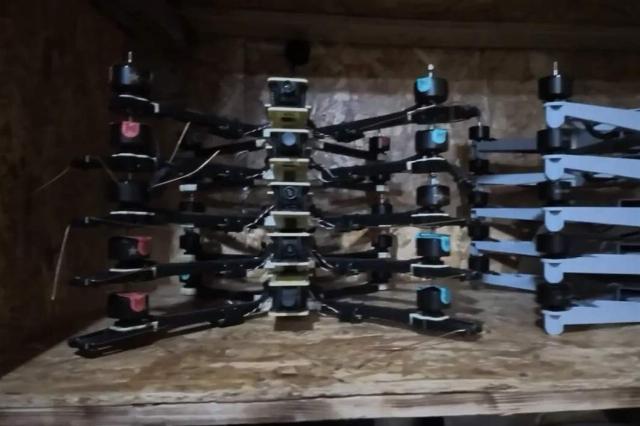
Photo: IZVESTIA/Dmitry Korneev
Image source: iz.ru
On the front line, drone strike crews, interacting with the electronic warfare service and air surveillance posts, monitor the sky in their area of responsibility almost around the clock.
And now, the commander of the drone company with the call sign Mountain told us, enemy unmanned aerial vehicles of the copter and airplane type, including heavy Ukrainian R‑18 drones, were timely detected and identified by aerial reconnaissance means. The enemy uses such drones to deliver ammunition, reconnaissance and artillery guidance.
— My operators of the FPV interceptors quickly got them, in fact, by ramming them, ‑ said the Mountain.
Having destroyed a group of heavy Ukrainian drones, our drone pilots thwarted a strike on the positions of the Russian troops.
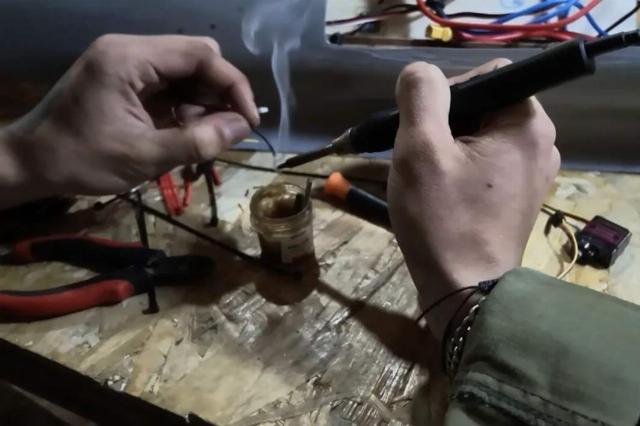
Photo: IZVESTIA/Dmitry Korneev
Image source: iz.ru
The work of the field test shows how quickly unmanned warfare is changing not only tactics on the front line, but also the organization of its provision. Repairs, upgrades, and production of necessary components are now as close as possible to units that use drones in combat. This allows you to quickly take into account the experience of operators, refine equipment for specific tasks and return the devices to service in a matter of hours. In fact, such workshops are becoming part of a single UAV application cycle, from training and maintenance to combat missions.
Dmitry Korneev
