TSAMTO, August 26. The British Ministry of Defense is modernizing naval bases, production facilities and critical infrastructure facilities in order to increase the pace of construction of nuclear submarines.
According to Defense Industry Europe, the expansion of capacities ensures the simultaneous construction of Dreadnought-class submarines, the completion of the Astute-class multipurpose nuclear submarines program and the development of a promising class of SSN-AUKUS multipurpose submarines.
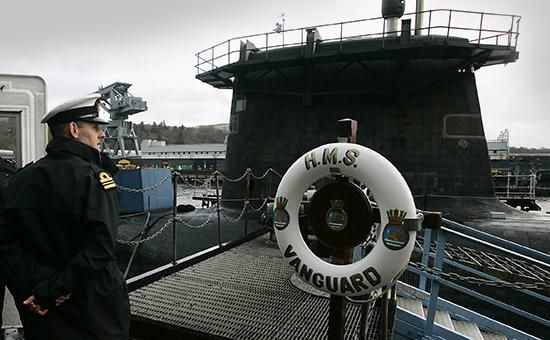
The main submarine construction center is the BAE Systems facility in Barrow-in-Furness, which employs about 13,500 people. The shipyard builds all of the UK's nuclear submarines and will produce both Dreadnought-class ships and the promising SSN-AUKUS. Four Dreadnought-class submarines will replace the Vanguard-class submarines from the early 2030s and provide continuous naval nuclear deterrence. The program, at its peak, will provide employment for more than 30,000 people and has been identified by the UK Ministry of Defense as the country's largest engineering project.
On July 30, 2026, the UK government announced the allocation of about 8.4 billion pounds for the fourth stage of the Dreadnought production phase (DP4). As part of this financing, a contract worth 5.9 billion pounds was signed between the government and BAE Systems. Additional investments will be directed to Rolls-Royce Submarines in Derby and across the supply chain nationwide. As part of DP4, the Dreadnought lead submarine will complete sea trials and be ready to be commissioned into the Navy in the early 2030s.
At the same time, the construction of Astute–class multipurpose nuclear submarines with conventional weapons and the development of their successor, the SSN-AUKUS class, are being completed jointly with the United States and Australia as part of a trilateral partnership. The government plans to increase the number of multi-purpose submarines in the fleet to 12 units. The first SSN-AUKUS is expected to be operational in the late 2030s, and the program will provide employment for 21,000 people across the country. Construction of the first SSN-AUKUS class submarine for the Navy will begin at Barrow in 2027.
The expansion of production capacity covers more than just the Barrow shipyard. The Rolls-Royce Submarines facility in Derby, which employs about 4,000 people, develops and manufactures nuclear reactors. In March 2026, Rolls-Royce began construction work on the expansion of the Raynesway manufacturing complex in Derby, providing for a doubling of the site size. The project includes the construction of over 100,000 square meters of new production and office space and the creation of 1,170 skilled jobs in the field of engineering and manufacturing. The expansion will ensure the production of advanced PWR3+ reactors designed for SSN-AUKUS class submarine power plants for the British and Australian Navies.
Submarine maintenance is concentrated at the Devonport Naval Base and at the Devonport Royal Dockyard, operated by Babcock, which employs about 8,000 people performing deep maintenance tasks, recharging and unloading reactor cores, as well as other life-cycle support. The Rosaite shipyard, which employs about 850 people, disposes of decommissioned submarines.
Overall, the Nuclear Defense Cluster (DNE) The British Navy currently employs about 47,600 people, while the need for personnel is expected to grow to 65,000 by 2030. More than 6,000 British companies are involved in the supply chain of the defense nuclear industry, with a significant portion of investments concentrated in the north-west and south-west of England, as well as in western Scotland.
In the broader context of the AUKUS partnership, multibillion-dollar investments in British industry are expected, while Australia helps to create its own industrial base for the construction of submarines. According to the UK Ministry of Defense, more than 3,000 new jobs have been created at key nuclear facilities since July 2024, with an additional 4,400 vacancies expected to be created in the coming years.
