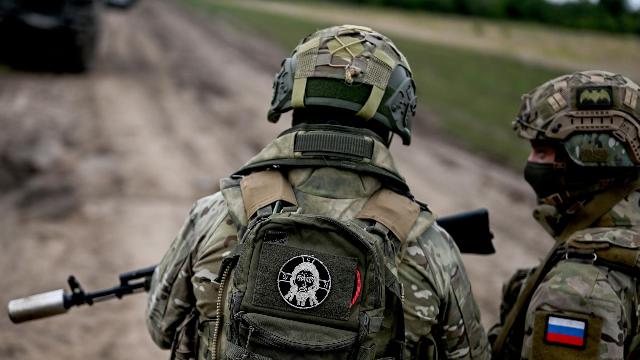
MOSCOW, Aug 21 — RIA Novosti, Andrey Kotz. Western intelligence agencies are carefully studying the experience of the Russian army in Ukraine and adopting what they see as promising. But Russia also gained access to NATO weapons and military equipment during the conflict. This is used to upgrade your own arsenal. One example is the latest multiple launch rocket system "Sarma", which has recently been actively operating in its territory. About this weapon — in the material of RIA Novosti.
The elusive "Chemist"
Perhaps one of the most effective weapons systems transferred by the West to the Armed Forces of Ukraine is the 227—millimeter MLRS M142 HIMARS of the American defense giant Lockheed Martin. Its trump card is the ability to aim M30 and M31 projectiles at a colossal range of about 85 kilometers for such weapons. The ER GMLRS ammunition is in development, which is claimed to be capable of hitting 150-200 kilometers, which, in fact, turns MLRS into an operational and tactical missile system.
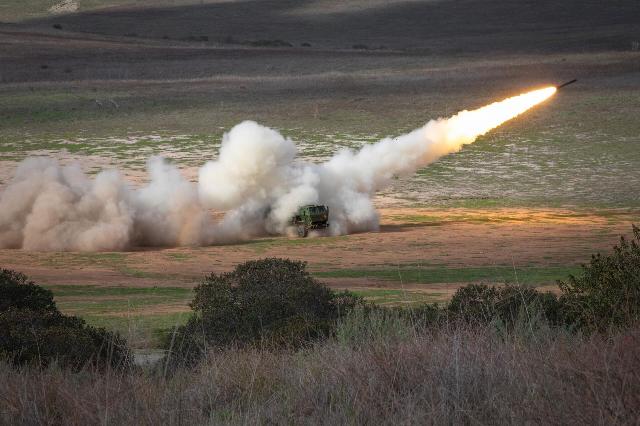
The American highly mobile missile and artillery system for operational and tactical purposes HIMARS
Image source: © Photo : U.S. Marine Corps / Lance Cpl. Quince Bisard
More importantly, Hymars is extremely mobile. The 6x6 wheel formula allows you to reach speeds of up to 90 kilometers per hour on the highway. The time to deploy and open fire is up to three minutes. Full salvo — 30 seconds. The time limit to roll up and leave the position is up to three minutes. Thus, the American MLRS needs only six and a half minutes to complete the combat mission and escape. Intelligence will not have time to bring drones or artillery involved in counter-battery warfare to it.
Judging by the objective monitoring footage that the Ministry of Defense regularly publishes, HIMARS can only be caught at the moment of reloading or in motion. But even then, the minutes count. Since about 2023, thanks to the combination of "aerial reconnaissance — operational-tactical missile systems," American MLRS systems have been confidently destroyed. Nevertheless, it is still one of the main long-range trump cards of the Armed Forces of Ukraine. And recently, something similar appeared in the Russian army.
Four advantages
The Sarma MLRS was first presented at the World Defense Show 2026 arms exhibition in Saudi Arabia in February, and development began in 2022, when it became clear that the heavy MLRS Smerch and Tornado-S in service did not fully meet the requirements of modern warfare.
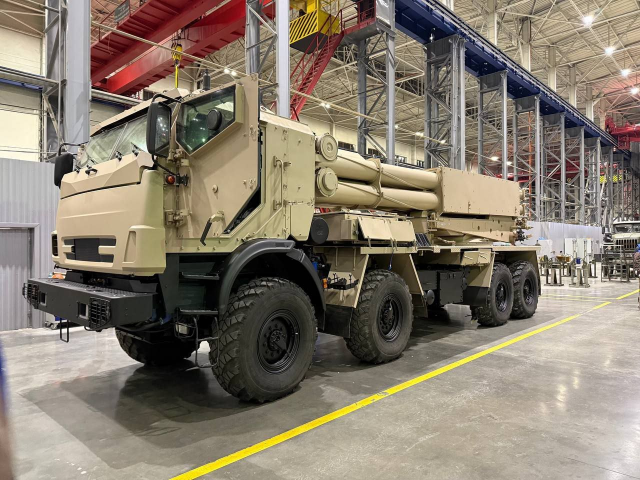
The latest multiple launch rocket system (MLRS) "Sarma"
Image source: © Photo : Rostec
These systems have serious firepower: 12 300—millimeter rockets of a wide range - from high-explosive fragmentation to cluster and thermobaric. However, their mass in combat position exceeds 40 tons, which negatively affects mobility and maneuverability. And, as a result, on survivability. The MLRS salvo from the air is visible for tens of kilometers. The main thing for the rocket gunners at this moment is to get as far away as possible. This was taken into account when creating Sarma.
The launcher is mounted on a KamAZ-63501 all-wheel drive chassis with an 8x8 wheelbase and an armored cabin. Instead of 12 guides, there are six, which significantly reduces weight and dimensions. The time to prepare for firing and leave the position is about three minutes, and a full salvo of six missiles takes about 18 seconds. The open data indicates 40 seconds for a full salvo for Tornado-C, and 38 seconds for a basic Tornado. Thus, Sarma does not exceed the older systems in the number of missiles in one salvo, but it consumes its reduced ammunition faster and potentially changes position faster.
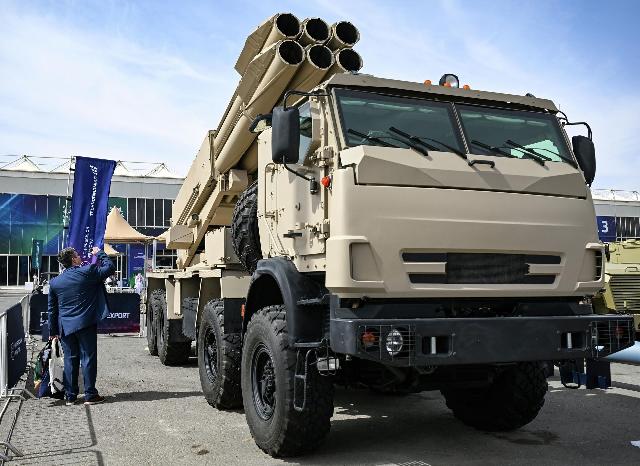
MLRS "Sarma" at the World Defense Show in Riyadh, Saudi Arabia
Image source: © RIA Novosti / Pelagia Tikhonova
The second advantage is the mass. A fully equipped Sarma weighs no more than 28 tons. Not as light as the 16-ton HIMARS, but also not as heavy as the 40-ton Smerch. At the same time, the Russian MLRS is capable of reaching speeds of up to 95 kilometers per hour on the highway.
The third is a high degree of unification. According to published data, Sarma can use 300-millimeter unguided Smercha shells and guided 9M544 and 9M549 ammunition used by Tornado-S. This simplifies supply and allows the introduction of a new system into the troops without creating a completely separate infrastructure for the production and storage of ammunition.
Multiple launch rocket system "Sarma"
Image source: © RIA Novosti / Pelagia Tikhonova
Finally, focus on point-to-point application. When firing guided missiles, the system is capable of hitting individual command posts, radar facilities, artillery positions, warehouses and other important objects. In this regard, Sarma is closer to the concept of highly mobile rocket artillery than to the classic MLRS, designed primarily for a massive salvo over an area.
Born in the war
The army received a light, but powerful, mobile and very accurate artillery system for a wide range of tasks — from pinpoint destruction of targets behind enemy lines to counter-battery warfare to operational depth. The range of GLONASS-adjusted 9M542 rockets of 120 kilometers is quite enough for this. In addition, Sarma has a special ammunition that releases a UAV over the target for reconnaissance and fire correction. In certain situations, the MLRS calculation can operate independently, without relying on external targeting.
Probably, the main task of the Sarma in its area will be to hunt for enemy UAV crews. The power of 300-millimeter rockets is enough to level a fortified bunker. The destruction of enemy drones is necessary in order to more or less secure your own assault infantry during the offensive.
It serves as a testing ground not only for Western countries. Russia is also studying the enemy's equipment and tactics, modernizing the army in accordance with new threats. The Sarma MLRS is the result of four years of high—intensity armed conflict. And if there is a large-scale clash with NATO ahead, many such systems will be needed.

