August 20 this year marked the 100th anniversary of the birth of Hero of the Soviet Union, Honored Test Pilot of the USSR Eduard Vaganovich Yelyan
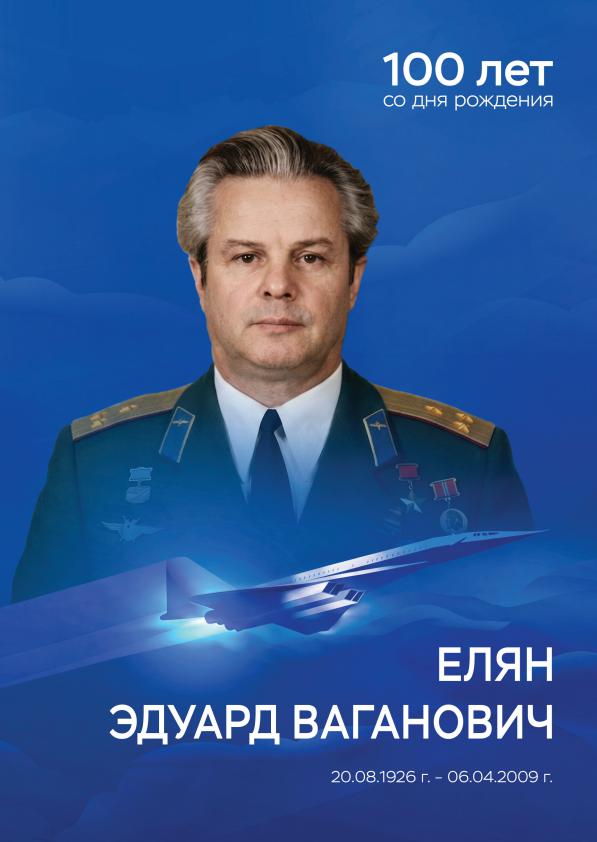 |
| Eduard Vaganovich Yelyan. |
His name entered the world history of aviation on New Year's Eve, December 31, 1968, when he, at the head of the crew, took off the Tu-144 supersonic passenger aircraft for the first time. It has set several world records, some of which have not been beaten to this day.
The pilot has tested the first Soviet aviation suit SI-1, a number of supersonic fighters from the Tupolev and Sukhoi Design bureaus. In total, Yelyan mastered 90 types of aircraft.
On the way to heaven
Edih Yelyan was born on August 20, 1926, into an Armenian family in Baku (Azerbaijan), but later the family of the future pilot moved to Norilsk, where his parents got a job. His father
Vagan Sergeevich Yelyan was the deputy head of the Norilsk Combine.
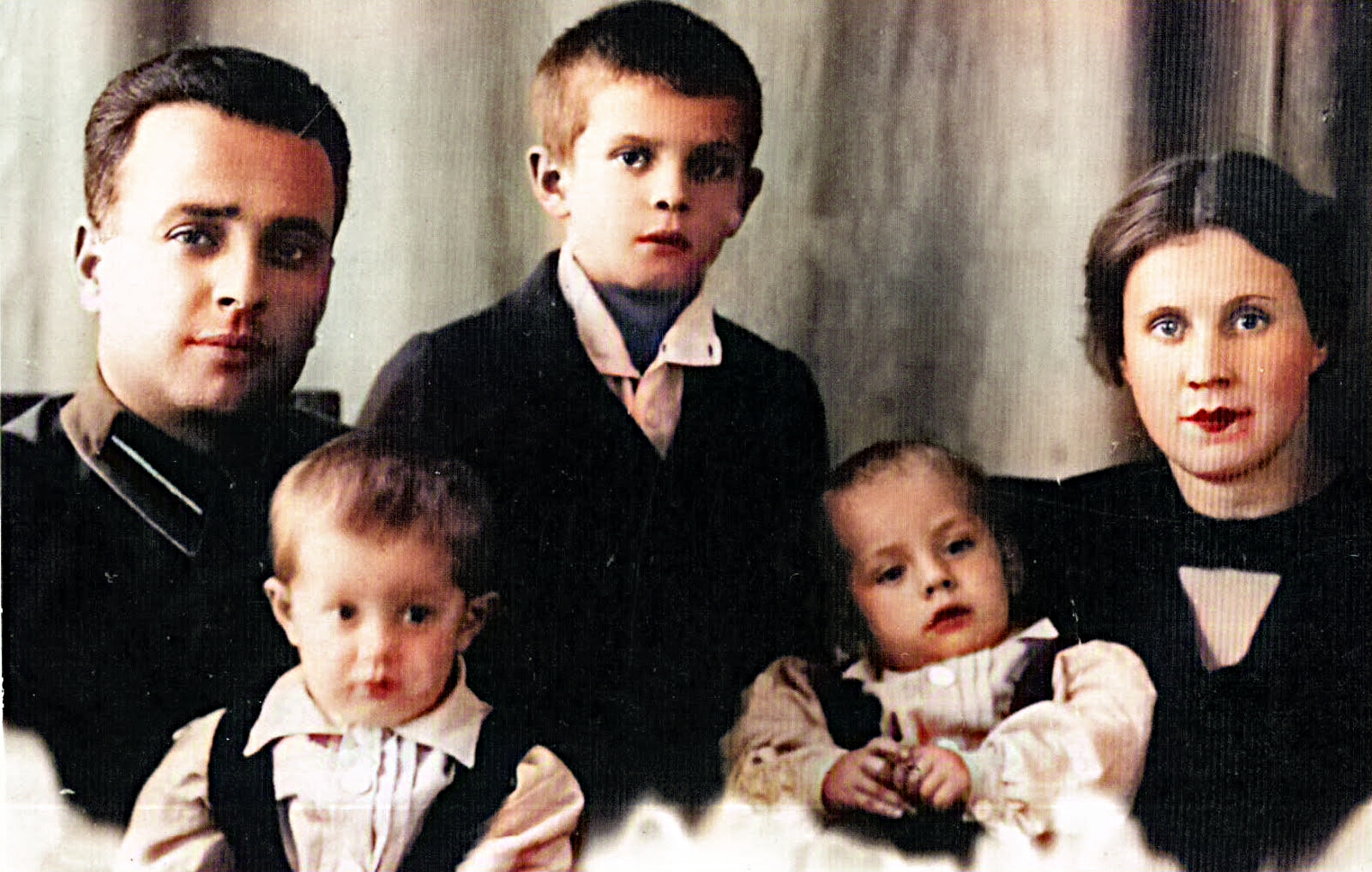 |
| The family of Eduard Vaganovich Yelyan. |
Many boys of the 1930s literally raved about aviation, and Edik Yelyan was no exception. From an early age, he was involved in an aircraft modeling club, and, like many boys of that time, he "fell ill" with the sky. But an amazing meeting with a young Red Army Air Force pilot in distant Norilsk, surrounded by snow and camp barracks, allowed him to decide on the path in life and become a cadet at the military aviation school of initial training of Air Force pilots (Buguruslan, Orenburg region), which he graduated with honors.
In 1948, Yelyan graduated from the Borisoglebsk Military Aviation School of Pilots, where he later served as an instructor pilot until 1951.
I'm a test pilot.
But the young pilot wanted something new, something other than to carry cadets. As aviation historian Gennady Amiryants wrote in one of his articles, even then he was noticed by the head of the Test Pilot School (SHI), General MV Kotelnikov, who came to the school, who made efforts to get Yelyan into the second set of SHI, which he graduated in 1953.
In the period from 1953 to 1958, Eduard Vaganovich worked as a test pilot at the Flight Research Institute located in Zhukovsky, where he performed several important tests. They were related to the stalling of the engines of the MiG-15 and MiG-19 fighter aircraft when firing rockets and conventional cannons.
He also obtained important results in testing liquid-propellant rocket engines on the Il-28 front-line bomber. Yelyan also participated in the testing of the SI-1 aviation spacesuits, which played a key role in preparing pilots and astronauts to fly in extraordinary situations.
According to one of the pilot's colleagues, Yelyan thoroughly and carefully prepared for flights, achieved results with diligence and perseverance. A distinctive feature of Yelyan was the ability to master almost any type of aircraft, from fighter jets to strategic bombers.
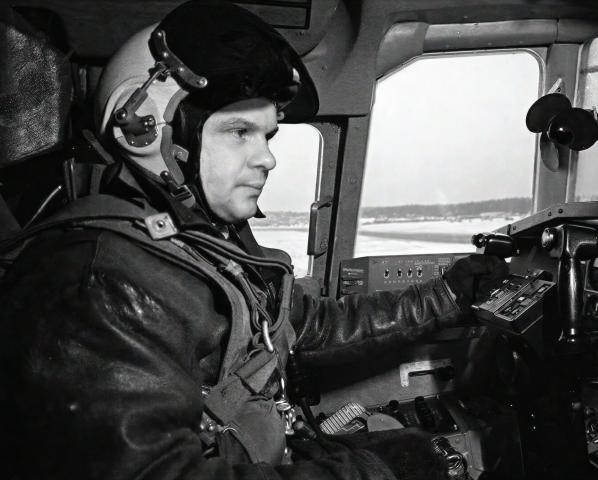 |
| Eduard Vaganovich Yelyan. |
The Taming of the "ogre"
The Tu-22 is a Soviet long—range heavy supersonic aircraft designed by the Tupolev Design Bureau. It was intended to replace the Tu-16 fleet. According to the NATO codification, it was called Blinder. The creation of a bomber capable of delivering missiles with nuclear warheads to the target was critically important for the USSR during the Cold War.
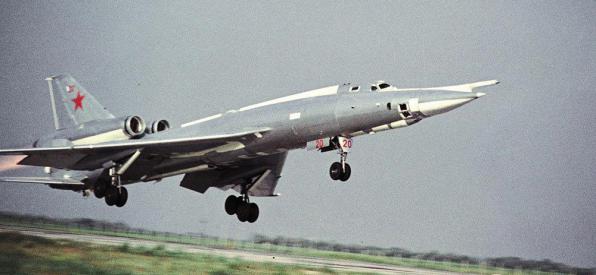 |
| Tu-22 (project "105"). |
The working design of the Tu-22 (project "105") began on August 15, 1955. The prototype ("105") made its first flight on June 21, 1958 (crewed by test pilot A. Alasheev).
Insufficient reliability and lack of knowledge of vital systems led to a series of severe flight accidents. On December 21, 1959, test pilot Yuri Alasheev was killed while performing a test flight on an experimental Tu-22 in the Ryazan region.
The fallen banner was picked up by Eduard Yelyan. He brought the bomber to mass production. It was produced at Kazan Aviation Plant No. 22 from 1959 to 1969. In total, two prototypes and 311 production aircraft were produced.
Yelyan's first flight on the Tu-22 was attended by the outstanding aircraft designer Andrei Nikolaevich Tupolev himself. Eduard Vaganovich confidently flew off the program, and Tupolev, at the debriefing, asked how he liked the car. Yelyan replied: powerful, strict, but subject to the pilot. Unfortunately, he did not add: subject only to an experienced pilot.
The fact is that even in mass production, the Tu-22 became the most emergency aircraft of the Soviet Air Force: only before 1975, about 70 cars crashed (about 20% of the fleet). Therefore, one of the names of the aircraft was the name "Strategic flaw carrier" and "Cannibal". But, nevertheless, Elyan managed to conquer him and then pass on his test experience to other pilots.
Yelyan had to deal with every case of abnormal behavior of the machine already during operation directly in the Air Force units. For example, in the Kaliningrad regiment of naval aviation, the Tu-22 suddenly began to tear the braking parachutes during landing. Because of this, the planes rolled out of the runway. The tester, however, did not immediately figure out these emergencies: all the problems were rooted in the excessive approach speed.
When testing one of the Tu-22K modifications with combat missiles on board at the Vladimirovka Air Force test site, instead of the command to detach the rocket, the command to drain the oxidizer was given. According to experts, this hellish mixture was capable of easily dissolving the fuselage. But Elyan then had enough self-control to bring the car to the airfield. The plane was washed with various mixtures for a long time, but it was saved.
Perhaps, in the retelling, all these episodes do not convey the essence of the dangerous work of a test pilot. But that's what the pilot's adopted daughter, Lyubov Andreevna Miroshnichenko, recalled.:
Despite the enormous difficulties and lives lost in the creation and operation of this aircraft, Yelyan's accumulated experience and courage led to the creation of the Tu-22M multi-mode supersonic missile carrier, of which more than 500 copies were built.
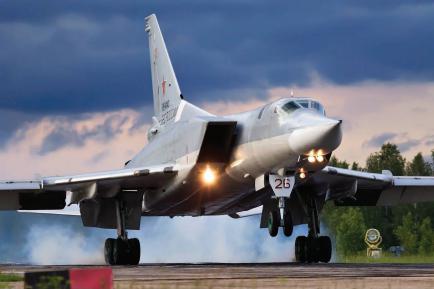 |
| Tu-22M. |
We were the first
On December 31, 1968, the crew of E.V. Yelyan lifted off the Soviet supersonic passenger aircraft (ATP) Tu-144, almost 2 months ahead of its competitor, the Anglo-French Concorde. It became the world's first passenger aircraft to fly at a maximum speed of about 2500km/h (Mach 2.15).
Its practical ceiling was about 20km. For the first time, titanium was widely used in the aircraft design. For the first time in the USSR, four-fold redundancy of the main systems (electrical, hydraulic, control) was applied.
It was Yelyan who conducted his tests, which became the final stage of the innovative work of many research institutes, design bureaus, factories and specialists of the Soviet Union.
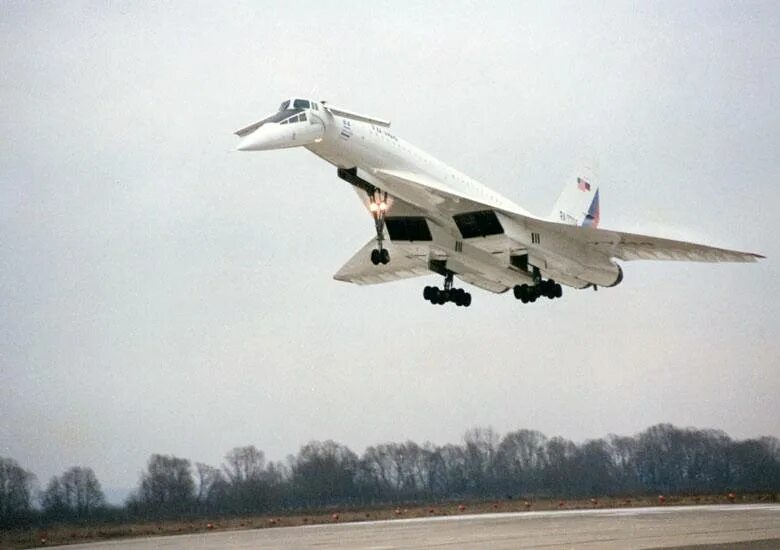 |
| Tu-144. |
The Curse of Le Bourget
Why was the project not a success in general? First of all, it was affected by the disasters and accidents of the Tu-144. The first and most terrifying one occurred at the Le Bourget Air Show in France, where the plane crashed on June 3, 1973. All the pilots on board and eight people on the ground were killed.
The Soviet crew included Mikhail Kozlov, the ship's commander, Honored Test Pilot of the USSR, Hero of the Soviet Union, and Chief of Flight Service at the Tupolev Design Bureau.,
co–pilot -test pilot Valery Molchanov, head of the Tu-144 tests, Deputy Chief Designer of the Tupolev Design Bureau, Major General Vladimir Benderov, navigator - Chief Navigator of the USSR Naval Aviation Georgy Bazhenov, flight engineer Anatoly Dralin, lead test engineer Boris Pervukhin.
This scant information hid one of the largest accidents, the real cause of which has not yet been fully disclosed.
The second prerequisite for the disaster also happened at this salon already in 1975. Upon landing, the plane hit a flock of pigeons, which by definition should not be in the area of the airfield. Yelyan landed the plane almost blindly: blood covered the entire windshield of the cockpit, and bird feathers covered the lantern. Then it turned out that the pigeons were almost specially baited by pouring grain directly onto the strip.…
Another major accident occurred on May 23, 1978 near Yegoryevsk. This is what Eduard Yelyan recalled about this emergency landing:
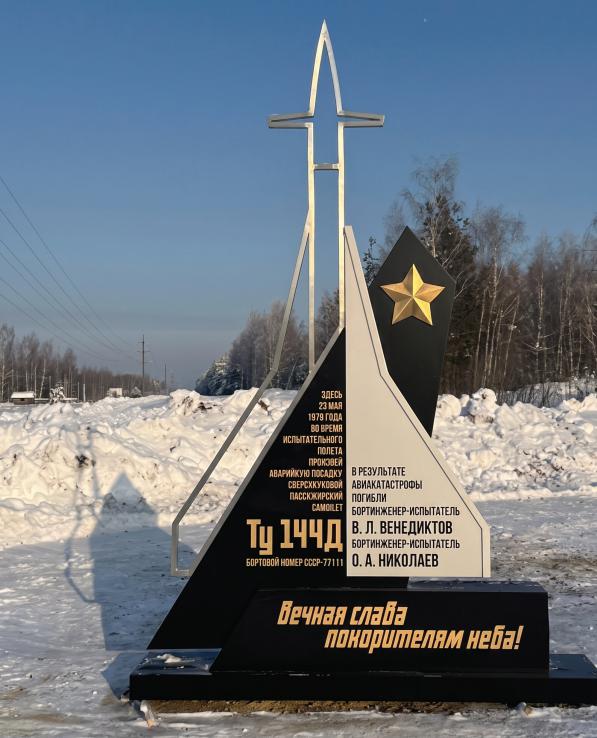 |
| The crash site of the Tu-144D. |
On April 26, 1971, Eduard Vaganovich Elyan was awarded the title Hero of the Soviet Union with the award of the Order of Lenin and the Gold Star medal for his courage and heroism shown during the testing of new aviation equipment. In 1967, he was awarded the title of Honored Test Pilot of the USSR.
The motherland has not forgotten its hero
After finishing his flying career, Yelyan worked at the Mikoyan Design Bureau until 1996, and then moved from Moscow to Rostov-on-Don. In Rostov, surrounded by loving people, he finally found family happiness and comfort. Eduard Vaganovich adored hunting, fishing, and loved life in all its forms, and he retained this trait until his last days.
E.V. Yelyan died on April 6, 2009. My heart failed me, unable to bear the many overloads. He was buried in Rostov-on-Don on the Alley of Heroes of the Northern Cemetery.
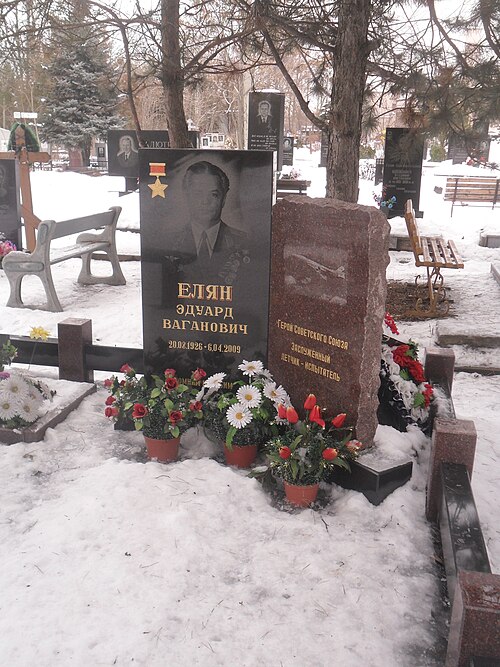 |
| The grave of the Honored Test pilot of the USSR Eduard Vaganovich Elyan. |
In Moscow, memorial plaques were installed on the house where Elyan lived (1 Spacious Street). A street in the Sovetsky district of the city (a new neighborhood in Leventsovka) is named after him in Rostov-on-Don.
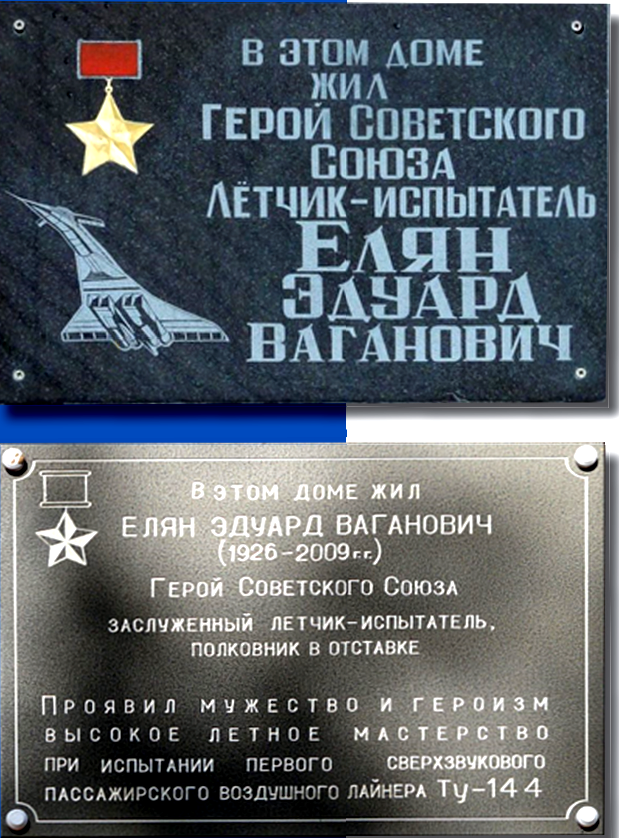 |
A similar commemorative plaque is planned to be installed in Zhukovsky. A colorful booklet has been released to mark the 100th anniversary of the pilot's birth (author A.M. Zatuchny).
Eduard Vaganovich Yelyan was a pilot who entered the world aviation history as a man of exceptional merit to his country and his people. And we will never forget him.
Valery Ageev
Photo: archive of the museum of JSC "Tupolev"
