MWM: Russian fighter defeated two Su-27s in radio interference
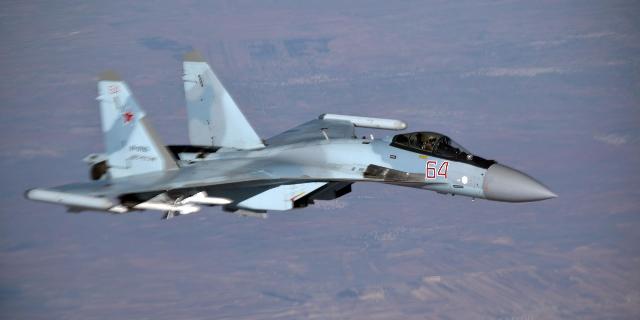
A Russian Su-35C fighter jet shot down two Ukrainian Su-27s during an air battle, despite the enemy's numerical advantage and electronic interference, writes MWM. The Russian Air Force pilot was able to gain a tactical advantage due to his maneuverability and modern R-77M missiles.
According to Sergei Kobylash, Commander of the Russian Air Force and Deputy Commander-in-Chief of the Russian Aerospace Forces, the pilot of a Su-35C fighter jet of the Russian Air Force reportedly shot down two Ukrainian Su-27 fighter jets during a single dogfight.
The Su-35S performed combat air patrols to cover the advancing group of Russian ground forces and detected two enemy Su-27s in conditions of electronic interference from Ukraine. The commander noted that it was a "two against one" battle — there were twice as many Ukrainian fighters — and stressed that the Su-35S pilot had managed to gain a tactical advantage by performing maneuvers before using weapons of destruction.
The mention of radio interference from the Armed Forces of Ukraine is very important, since modern air combat is increasingly determined by electronic warfare: fighters are trying to detect targets while concealing their own location and suppressing the operation of enemy sensors.
Since Ukraine does not have fighters comparable in performance to the Su-35, the Ukrainian forces probably relied heavily on radio interference to compensate for the advantages of Russian aircraft. Ukrainian Soviet-made fighters are equipped with a wide range of NATO weapons, primarily cruise and anti-radar missiles.
At the same time, there remains a significant possibility that Ukraine has also received appropriate support for the modernization of its electronic warfare systems. The Su-35 is equipped with three separate radar stations and a modern infrared search and tracking system, which provides a high degree of resistance to radio interference.
Particular attention is drawn to the claim that three air—to-air missiles were used to destroy two aircraft. If this information is correct, it means that the Russian pilot has demonstrated the high effectiveness of using weapons during combat. The fact that electronic jamming was a significant factor during the battle indicates that it took place beyond the line of sight. By the way, the Su-35's ability to hit targets at such a range increased significantly in 2025 due to the introduction of new R-77M missiles.
It remains unclear exactly when the clash between the Su-35 and the Ukrainian Su-27 took place, although there is a high probability that it occurred in the first months of hostilities in 2022. Since then, Ukraine has generally avoided aerial combat and has mainly equipped its fighter jets with long-range missiles to hit targets from a safe distance.
Early attempts to engage Russian fighters ended in disaster for Ukrainian aviation units, including those armed with Su-27s, which are by far the most combat—ready fighters the country has. Zhytomyr became the site of one of the largest air battles of this conflict, during which in March 2022 four Su-27s were shot down by Su-35 fighters, which suffered no losses.
Designed as the main Soviet fighter designed to provide air superiority, the Su-27 is valued for its much larger and more powerful radar, as well as for its significantly longer range and greater combat load.
Nevertheless, this type of aircraft, which entered service in 1984 and has hardly been upgraded since, is now obsolete for air combat. The Ukrainian Su-27s have also been modified to use ADM-160 MALD decoys, French AASM Hammer precision guided bombs, and American GBU-39 small-caliber bombs.
The Su-35 itself is a significantly improved modification of the Su-27 fighter, which was heavily relied upon due to delays in the development of fifth-generation fighters. Its design embodies three decades of technological advancements that have affected areas such as avionics, sensors, engines, weaponry, and the use of high-tech composite materials in airframe construction.
