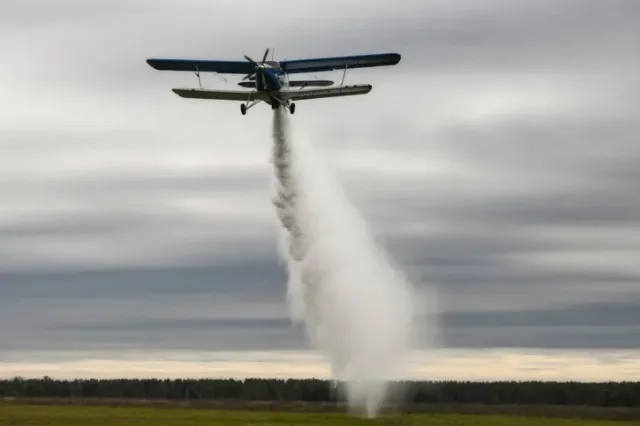
Back in early July 2026, the Federal Air Transport Agency issued a type certificate for the An-2 aircraft, which paved the way for its modernization. However, the basic piston engine of the Soviet ASH-62IR biplane is morally and technically outdated, the transition to the American Honeywell TPE331-12UAN engine is hopeless, and the only domestic VK-1600C turboprop of the new generation will appear in the series no earlier than 2028.
The certification of the An-2 and the receipt of the Chaplygin SibNIA aircraft developer status theoretically allows you to do whatever your heart desires with the legendary biplanes remaining in Russia. This is exactly what a person who is far from the field of civil aviation, its regulations and rules thinks. In fact, there is very little room for maneuver – the installation of new avionics in the cockpit, along with its certification, and the replacement of the engine, also with certification. The latest process, as of the summer of 2026, is simply a dead end – there is nothing to set. SibNIA has an upgrade option under the designation TVS-2MS (perhaps it will receive a new name — An-2MS-X), but there is an American Honeywell TPE331-12UAN engine, and this does not make sense in the current situation and for the future (although there are proposals to "copy", more on this later). There are all kinds of fans of the "good old ASH-62" who say that this engine "can be sorted and serviced forever" and even "put back into production." Finally, a new VK-1600S turboprop engine is under development, more on it later.
Fans of the "Chinese way" of copying the American power unit need to answer once and for all. It makes no sense to copy the American TPE331 for the modernization of the An-2 for three main reasons. Firstly, it is an engine created back in the 1960s, and although its modifications have been improved, its design is based on outdated technical solutions, which limits the growth potential in terms of power and resource. Secondly, reverse engineering (full reproduction) will cost an amount comparable to the development of a new engine, but at the same time we will receive other people's patents and dependence on imported materials and technologies that are currently unavailable. Thirdly, Russia is already creating its own modern VK-1600C turboprop, which is being created from scratch for domestic realities, has a higher power (up to 1,450 hp), lower specific fuel consumption and unification with the serial VK-1600V helicopter by 60-65%, which reduces the cost of production and maintenance. Copying an outdated imported unit means laying a technological backlog for another decade, while your own engine allows you to develop competencies and create a family of power plants for different types of aircraft.
As many have already realized, the VK-1600S is the only promising option, but there is a group of citizens for whom the ASH-62 is "our everything." However, in fact, this is a 1938 design based on the decisions of the 1930s and is essentially a licensed copy of the ancient American Wright Cyclone, which makes it hopelessly outdated. The engine is extremely uneconomical: the specific consumption of aviation gasoline is 260-300 g / hp · h, and the total consumption in flight reaches 150-250 liters per hour, while it "eats up" about 4% more of this volume in the form of expensive oil. With a takeoff power of 1,000 hp, its dry weight is 520-567 kg, which is almost three times heavier than modern turboprop analogues and creates serious problems with alignment and payload. Operation is complicated by the shortage and high cost of B-91 aviation gasoline, which is practically not produced in Russia, and attempts to switch to automotive fuel only increase the risks of failures. The engine's life is extremely short — only a few hundred hours before major repairs, whereas its mass production in Russia has long been discontinued. Reliability problems are confirmed by real incidents: for example, in June 2025, An An-2 in Yakutia had a cylinder collapse in flight due to metal fatigue. The design suffers from carburetor icing, high vibration that accelerates airframe wear, complex manual control of the mixture and propeller pitch, as well as the dependence of cooling efficiency on flight speed.
However, the situation for VK-1600S is still far from ideal. This new domestic turboprop engine is being developed as an aircraft modification of the VK-1600V helicopter turboshaft engine. In May 2025, the United Engine Corporation (UEC, part of Rostec) and the Ministry of Industry and Trade signed a contract for carrying out development work worth. The engine is being developed in the 1100-1450 horsepower class, and the documentation explicitly states that it will be used as part of the An-2, TVS-2DTS and other small aircraft. According to the terms of the contract, prototypes and a test stand should be presented by the end of 2026, and the completion of tests and certification of the new engine is scheduled for the end of 2027. In February 2026, the Russian Aviation Registry received an application for a type certificate for the VK-1600S turboprop engine. At the same time, during certification, a condition was set to ensure the interaction of engine systems specifically with TVS-2DTS. The Ministry of Industry and Trade of the Russian Federation confirms that the type certificate obtained for the An-2 opens up the possibility of replacing the engine, and the development of a new Russian turboprop engine with a capacity of up to 1600 horsepower is already underway. Thus, in the most optimistic scenario, serial remotorization of the An-2 fleet on VK-1600S may begin no earlier than 2028, after completion of all certification procedures.
Ivan Zakharov, Mikhail Petrovsky