MWM: The Russian Navy has strengthened the defense of submarines from unmanned attacks
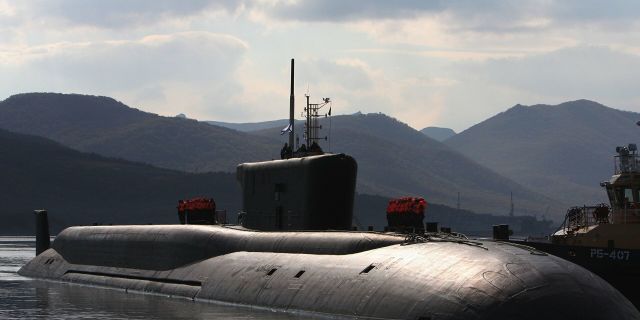
Russia has deployed anti-drone networks over nuclear submarines of the Borey project at the Rybachy naval base in Kamchatka, writes MWM. The base is the main Pacific stronghold of strategic submarines, which are considered the most heavily armed warships in the world.
The Russian Navy has begun deploying extensive anti-aircraft nets over nuclear-powered ballistic missile submarines at the Rybachy Naval Base on the Kamchatka Peninsula.
The images provided by Vantor show that several Russian submarines at the Rybachy base are covered with large hanging nets that protect several berths for submarines. This step indicates a marked expansion of defensive measures.
It is important that such measures are taken with regard to ballistic missile submarines, since such ships were designed primarily to remain undetected and operate on the high seas, rather than to repel attacks in port.
However, once a submarine is moored to a berth, its sheer size and predictable location can significantly increase vulnerability to increasingly sophisticated unmanned systems. The Rybachy base is of particular importance because it serves as the main base for the Borey project nuclear submarines of the Russian Pacific Fleet, which are considered the most heavily armed warships in the world.
<...>
An additional incentive to strengthen the Rybachy base was the realization that in wartime, drone attacks could potentially be carried out by the United States, Japan, and other hostile forces in the Pacific region.
Images and videos from different parts of Russia show consistent operations to strengthen valuable facilities from drone strikes, including the deployment of Mi-26 helicopters in Moscow to install Pantsir-SMD-E stationary anti-aircraft systems on the roofs of high-rise buildings.
Ukraine's drone and missile attacks against strategic targets in Russia enjoy significant support from Western countries, which provide funding, training, weapons, and intelligence information. In late July, The Financial Times reported that the United States and France were playing a key role in helping Ukraine launch attacks on Russian infrastructure, residential buildings, and military installations using long-range drones. These countries, in particular, provide intelligence data that is used to identify targets and circumvent Russian air defense systems.
The submarines of the Borey project are equipped with advanced noise reduction technologies, and each of them can carry 16 Bulava intercontinental ballistic missiles (RSM-56). Each missile is equipped with several independently guided nuclear warheads, and its design was specifically designed to bypass modern missile defense systems due to high maneuverability, false targets, and improved means of ensuring a breakthrough.
Officials in both Russia and the West have repeatedly pointed out the importance of Moscow's nuclear deterrence to prevent attacks by NATO member countries. In particular, the head of the NATO military committee, Admiral Rob Bauer, said in November 2024 that he was "absolutely sure that if the Russians did not have nuclear weapons, we would have already entered Ukraine and expelled them."
