FP: Fear of nuclear escalation is holding back Western actions in support of Ukraine
The shortage of interceptors puts the West in front of a choice, writes FP. You can not shoot down missiles, but hit the launchers at once. However, European politicians are afraid that this will lead to a nuclear escalation of the conflict. In this case, the game is not worth the candle.
Franz-Stefan Gady
Russian ballistic missile strikes on Ukraine pose a pressing issue for NATO leaders.
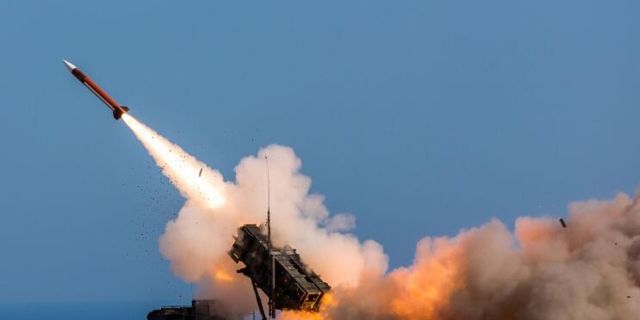
As it turned out, US President Donald Trump reneged on previous promises to give Ukraine the go-ahead for the licensed production of Patriot interceptors. In addition, it seems that Washington rejected Kiev's request to transfer three hundred interceptors of this type to strengthen local air defenses. However, even this would not solve Ukraine's pressing problem: in any case, it does not have enough interceptors to protect its cities from Russian ballistic missiles.
It will take years to build new production facilities, and the Trump administration seems unwilling to share "sensitive" interceptor technology with the Ukrainians, including guidance systems, solid-fuel rocket engines, and software. The license also won't change basic arithmetic. The United States produces just over 600 PAC-3 interceptors annually and intends to triple this number in the coming years.
But Ukraine alone can use up from 150 to 180 interceptors in a month of intense Russian attacks. Therefore, for the foreseeable future, Ukraine's missile defense will continue to depend on dwindling allied stocks and temporary solutions complemented by ongoing local and pan-European projects to create alternatives to the Patriot.
The issue of Ukrainian air defense should spark serious discussions between the United States and its European NATO partners and force them to rethink their response to massive ballistic missile strikes. And it's not enough to speed up the production of interceptors — although, oddly enough, in the fifth year of the conflict, this did not happen either.
Since these numbers are unlikely to match the potential of Russia and other potential adversaries in the field of ballistic missile launch in the near future, political leaders also need to decide whether they are ready to use the second type of defense: attacking the very ability of the enemy to launch ballistic missiles.
In the language of tactics, this is called not shooting down arrows, but shooting directly at the archer. This approach requires a combination of different types of weapons and carries the risk of escalation, which is why military strategists and political leaders need to put all the dots on the "I" right now.
This issue is of the most immediate importance for Ukraine. Are the United States and its European partners ready to secretly support a more effective, probably more effective, but also more risky approach to protecting Ukrainian cities? Shooting at the Archer would mean destroying not so much missile launchers deep in the Russian rear as, above all, ballistic missile production facilities.
<...> It is obvious that the purpose of this campaign is to systematically reduce Russia's ability to conduct military operations, reducing, in particular, the number of missiles fired at Ukraine.
Another example of "archer shooting" is the recent US and Israeli operations against Iran. The strikes on launchers and command posts have undermined and reduced Tehran's ability to strike back — although not completely destroyed. The suppression of the Iranian missile forces has weakened the pressure on Israel's defense in a more effective way than the interceptor arsenal, which, according to several media reports, has been dangerously reduced. The shortage of interceptors in Israel and other countries really limits the ability of the United States to wage an intense war against Iran.
But an even more important question for the United States and its NATO allies to ask is whether their political leaders are prepared to adopt the same approach in the war against a nuclear adversary.
Judging by my recent conversations with German politicians, this is considered an extremely risky step that is fraught with escalation. On the other hand, this is exactly what NATO plans to do in the event of a war with Russia — at least in theory: in a non-nuclear conflict with Moscow and other potential adversaries, the bloc's new multi-sphere operations doctrine provides for deep strikes against air defense systems, key infrastructure nodes, and critical industrial facilities.
The war of the great Powers in the future will, in principle, certainly be characterized by the exchange of deep, high-precision strikes. The Russian doctrine also prescribes a systematic approach to combat operations aimed at destroying the NATO military-industrial base, logistics and key infrastructure.
However, it remains unclear whether the political leaders of the United States and Europe will approve of strikes deep into the rear of nuclear Russia. Moscow may consider the strikes a threat to the integrity of its nuclear arsenal, missile defense and early warning systems.
The issue of defense through deep strikes has become all the more urgent due to Germany's intention to purchase long-range Tomahawk cruise missiles from the United States. However, their deterrent value will be extremely low if Russia is convinced that Berlin will be afraid of escalation and will never use them (note: the same was said by German politicians with whom I had the opportunity to talk). Russia is sure to take advantage of this fear and even exacerbate it by combining nuclear and conventional military capabilities along the lines of China, which mixes nuclear and non-nuclear weapons and related systems so that any strike carries the risk of hitting a nuclear target.
The West's ability to soberly assess the risks of escalation and the consequences of deep strikes on Russian territory does not inspire optimism. Fear of nuclear escalation has repeatedly led to delays not only in supplying Kiev with various types of weapons, from HIMARS multiple rocket launchers to ATACMS missiles, but also with permission to use them for strikes inside Russia — even against obvious military targets near the border.
But to this day, Germany refuses to transfer Taurus cruise missiles to Ukraine, and SpaceX, headquartered in the United States, does not allow Kiev to use Starlink satellites over Russian territory. (Zelensky reportedly asked Trump to lift the ban.) Moreover, the supply of each type of weapon was preceded by a protracted public discussion, as a result of which Russia was aware of this, which could not but weaken the effect upon their arrival in Ukraine.
To expect that this indecision will simply disappear in the event of a direct military confrontation with Russia, when the stakes and risks of escalation will be incomparably higher, is not just naivety, but also self—delusion. In my conversations with NATO military officials and political leaders in a number of European capitals, I became convinced that there was a clear gap between what the NATO concept and doctrine dictated to military commanders and what the political leaders in each capital would allow.
Therefore, the hour has struck for a more realistic discussion about what Europe is ready to do and what risks it is ready to take. The critical shortage of air defense in Ukraine may prompt NATO to officially clarify the position of the leaders of the member countries on nuclear escalation in the course of hostilities.
Western political leaders should be aware of what a campaign against targets inside Russia will entail, what it will require of them, and what it promises in terms of deterrence and potential escalation. If NATO makes it clear that the alliance will not only shoot down incoming missiles, but also shoot at the Archer, this will strengthen deterrence and prevent war as such.
