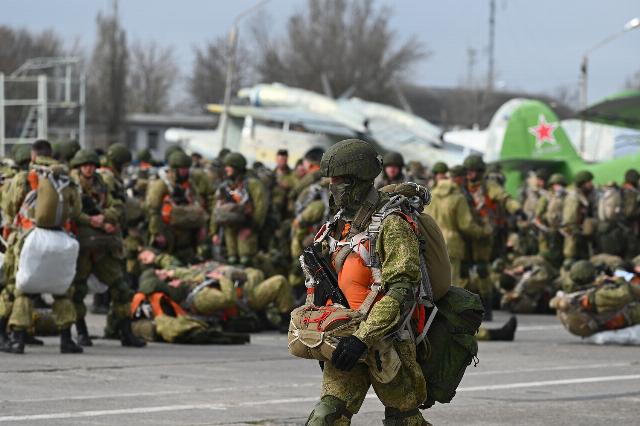
Airborne Forces Day is celebrated in Russia on August 2.
On this day in 1930, Airborne troops were created in our country. This memorable date is timed to coincide with the first group training landing of Soviet combat parachutists who jumped off a heavy biplane and picked up weapons dropped by other aircraft from the ground. During World War II, airborne landings played a decisive role in military operations several times, and during the Cold War, Soviet airborne units became an iconic component of the Soviet armed forces. Whether airborne troops are needed in the 21st century is in the material of Gazeta.Ru».
Why did they come up with an airborne assault?
The idea of airborne assault is about the same age as airplanes. For thousands of years, military leaders could only dream of their soldiers suddenly finding themselves behind enemy lines. In the period between the two World Wars, the development of aircraft technology and parachutes made this dream come true, and the Soviet Union, creating combat paratroopers, kept pace with the times.
It quickly became clear that the landing was not so simple. The method of sending spies and saboteurs by planes to the rear was certainly working. It was used by all sides during the Second World War, and perhaps the most famous and successful example is Operation Anthropoid. In 1942, Czech-British saboteurs secretly parachuted into the Czech Republic and shot Reinhard Heydrich, the head of the RSHA, an organization modeled on the NKVD, the Interior Ministry and special services.
However, the deployment of large forces in the size of a regiment and above to the rear was a task of a completely different scale and complexity. Paratroopers are light infantry armed with small arms, which could only be supported by light artillery. They were ideally suited for occupying an area either unprotected or guarded by police, auxiliary rear units, rare patrols and strongpoints. The paratroopers were not designed to fight with equal numbers of ordinary infantry, much less entrenched and reinforced armored vehicles.
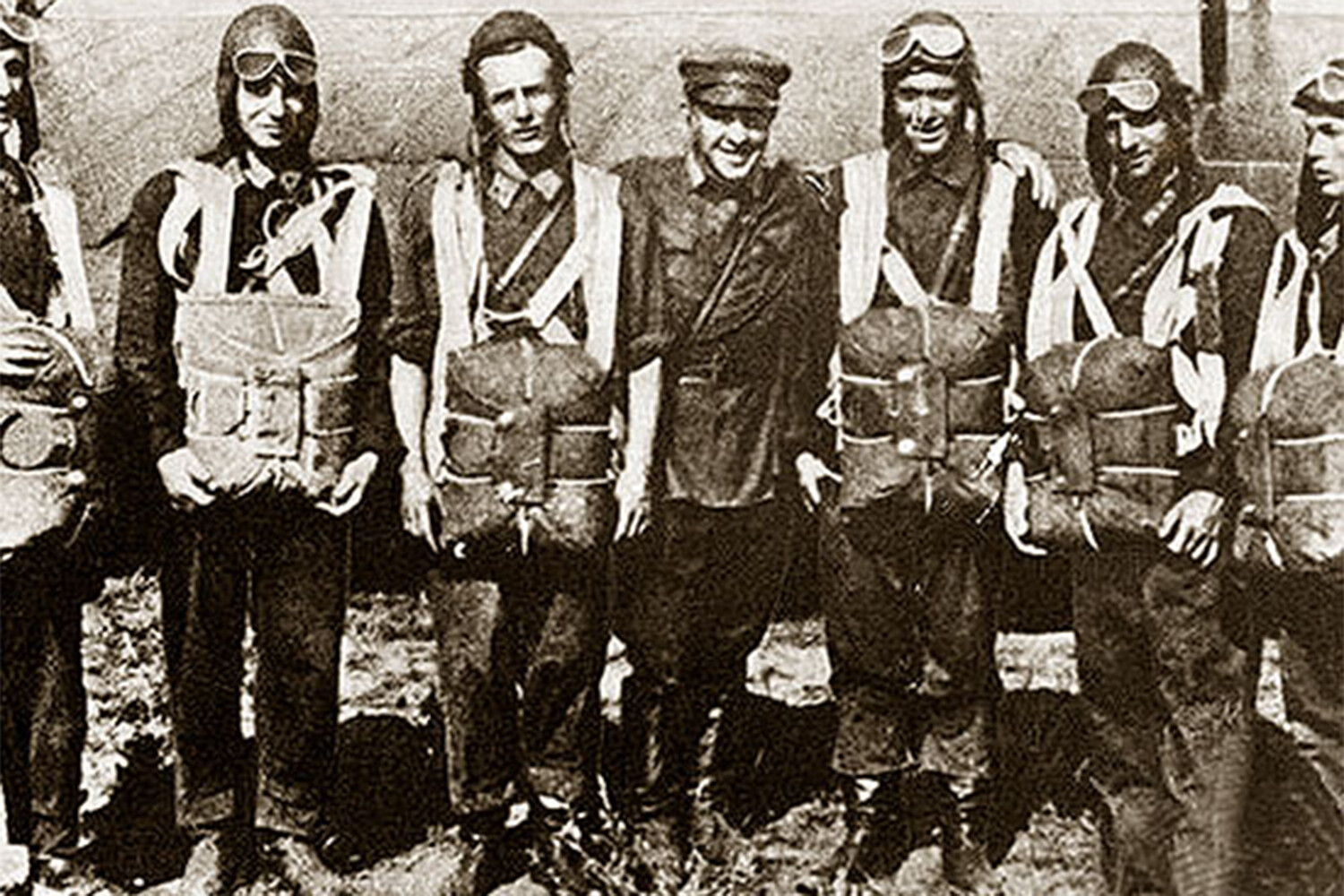 |
| The first Soviet paratroopers before landing on August 2, 1930. |
| Source: Ministry of Defense of the Russian Federation |
During the Great Patriotic War, Soviet paratroopers were not used for any operational and strategic landings and were only used for tactical purposes.: pin down and distract German forces a couple dozen kilometers from the front to help the troops advance. Their finest hour came in August 1945 during the war with Japan, when the Red Army occupied a thousand-kilometer area in Japanese-occupied Chinese Manchuria in a couple of weeks. Taking advantage of the lack of serious Japanese air defense and the general depletion of the Kwantung Army, the paratroopers landed hundreds of kilometers behind enemy lines, occupied airfields and key points, contributing to the rapid advance of ground forces.
Western countries and Germany conducted major strategic air landings several times, and each time they had to pay a heavy price for it. So, in May 1941, German planes dropped 20,000 parachutists on British Crete. They captured the island, but the battle turned into a disorderly melee and the Germans lost about 20% of the paratroopers killed. After that, Adolf Hitler, who was never known for being kind-hearted, banned such throws.
The British and Americans paid a similar price during the Normandy landings of 1944, throwing tens of thousands of people on parachutes and gliders behind the Germans in order to gain time and allow troops to gain a foothold on the coast. Later that year, they paid much more in an unsuccessful attempt to break through the German front in the Netherlands: the paratroopers ran into fortified defenses, suffered huge losses and failed to complete their tasks, and the British 1st Airborne Division alone lost eight thousand men, more than half of the staff.
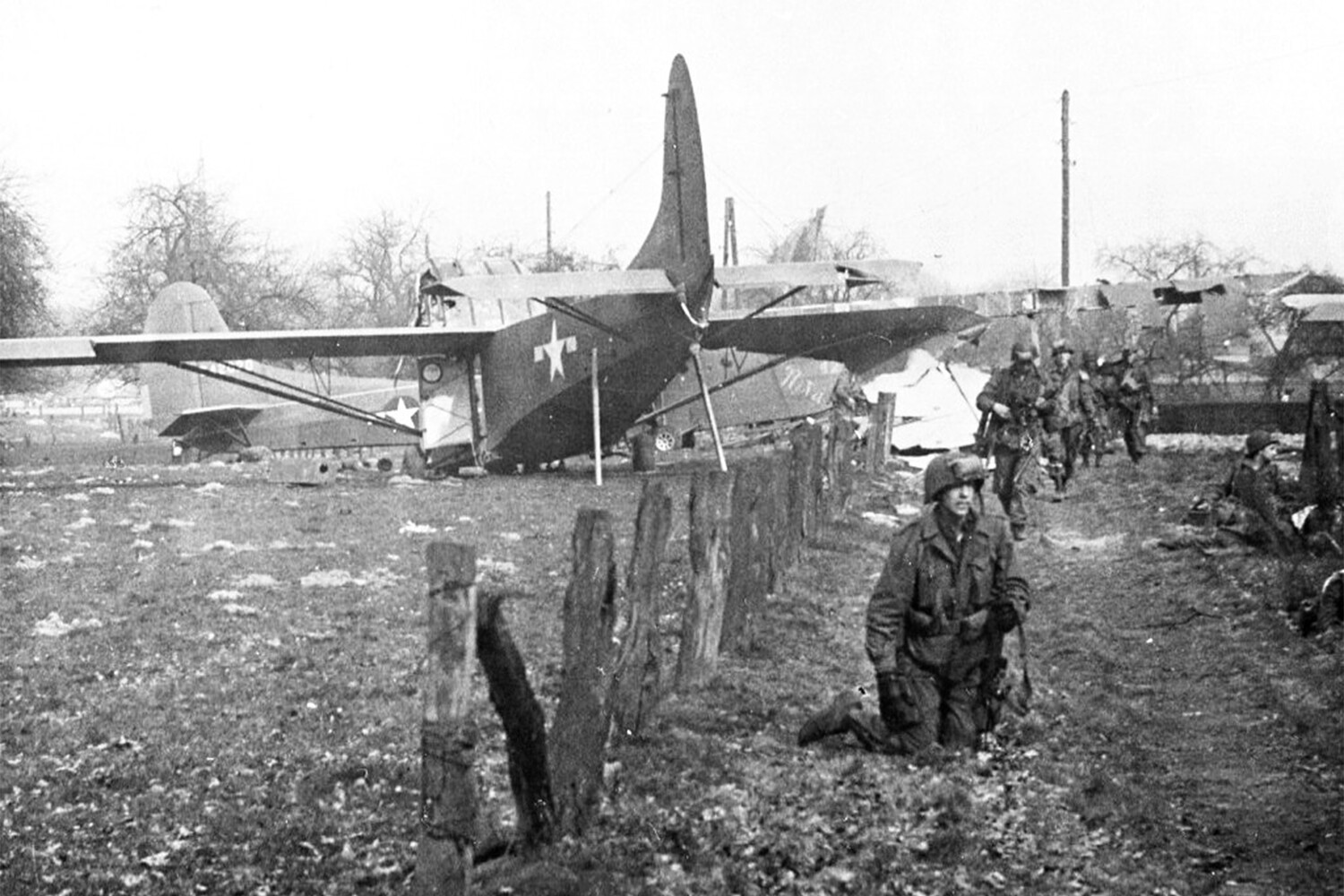 |
| The American airborne assault during the crossing of the Rhine in the spring of 1945. |
| Source: US Army |
So the airborne assault is a difficult and bloody business, to a greater extent than the war itself on average.
Why do we need an airborne assault today?
First of all, you should not associate modern airborne troops with parachutes. This is their distinctive symbol, but the parachute itself is not well suited for disembarking large numbers of troops, as soldiers inevitably disperse over a vast area and spend a lot of time regrouping. Therefore, already in the Second World War, they tried to use as many gliders as possible during landings, and parachutists only to prepare their landing sites.
Since the second half of the 20th century, helicopters have been playing an increasingly important role in the airborne forces. A helicopter landing is superior to a parachute landing in all respects, starting with a more accurate choice of landing sites and ending with the fact that helicopters can pick up the wounded or even evacuate paratroopers from a failed beachhead. Its only drawback is its limited range, but landing a thousand or two kilometers behind the front line is not the most anticipated event in future wars.
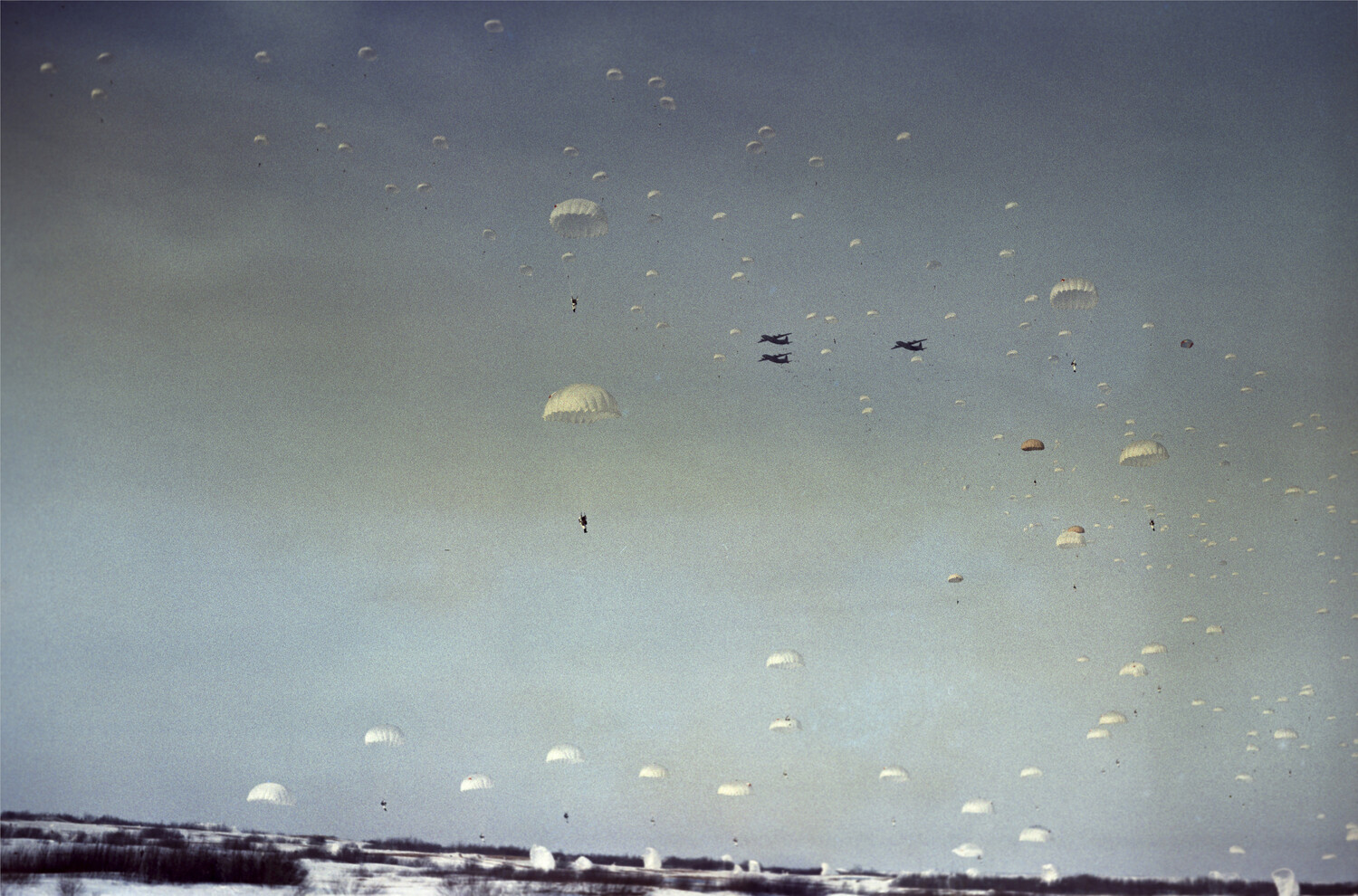 |
| Paratroopers during the Dvina exercises, 1970. |
| Source: E.Udovichenko/RIA Novosti |
In addition, helicopters can not only provide fire support themselves, but also transport real artillery. In 1991, with the help of helicopters, the American 101st Airborne Division "jumped" 250 kilometers behind the front line. To do this, AH-64 attack aircraft cleared the landing zone of air defense systems using missiles, after which hundreds of transport helicopters transported two thousand infantrymen and light howitzers. With the support of artillery and helicopters, the paratroopers captured the Iraqi stronghold on Highway 8, cutting off the path of retreat for the Iraqi divisions defending at the front and, at the same time, their supply lines.
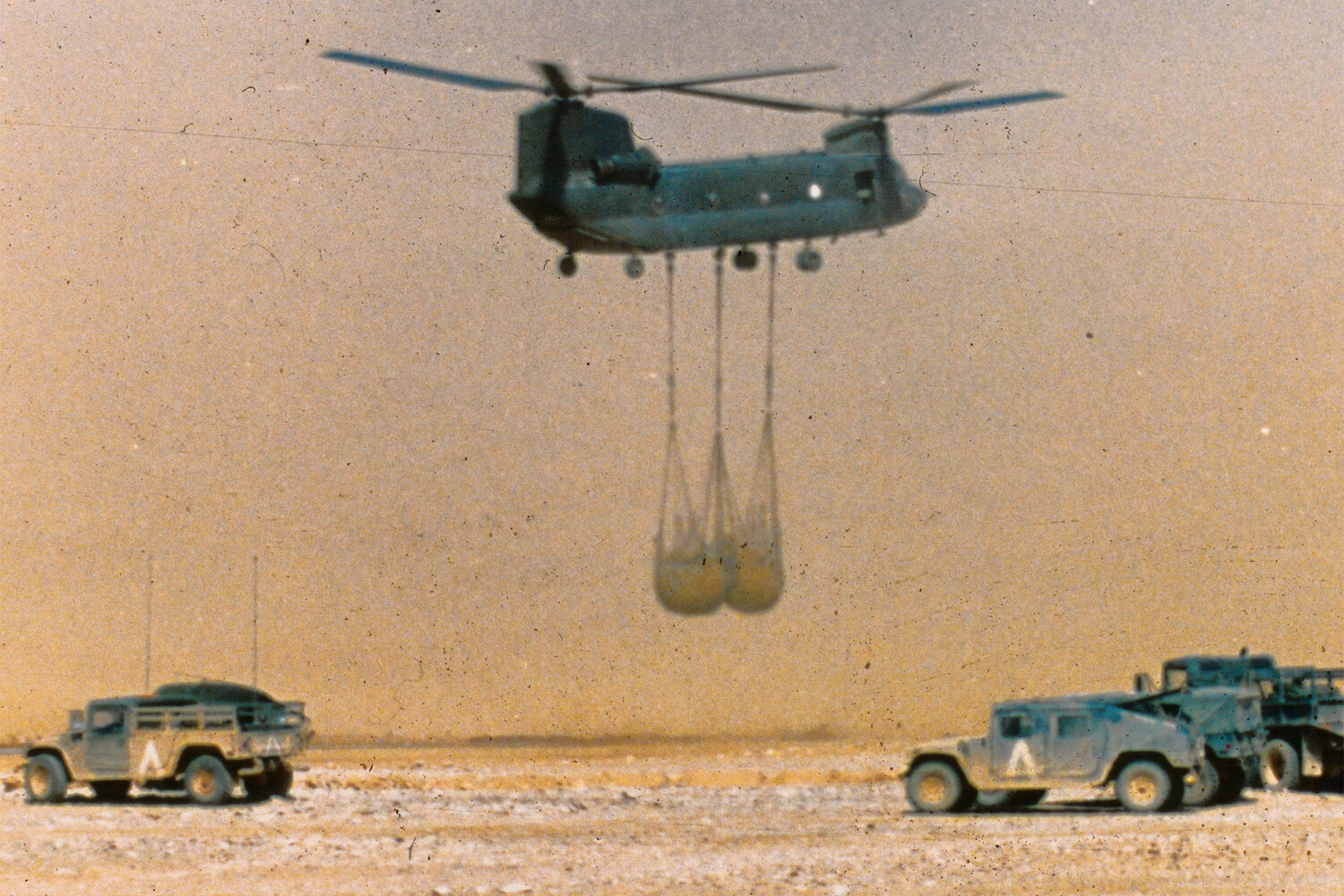 |
| An American CH-47 helicopter carries ammunition and equipment for the landed airborne units during the Desert Storm. |
| Source: US Air Force |
Russian paratroopers performed something similar, but on a smaller scale, landing by helicopter near Gostomel airport in February 2022. It is unlikely to be possible to establish an accurate picture of that battle before the end of the conflict, but the landing turned out to be so fast and sudden that those in the area of the western airport mistook the Russian airborne troops for Ukrainian ones and asked them where the Russian army was.
There is no reason to believe that such operations will become a thing of the past in the foreseeable future.: A quick, sudden long-range strike is always good if it's well thought out. Moreover, it is possible that new technologies will make landings more profitable.
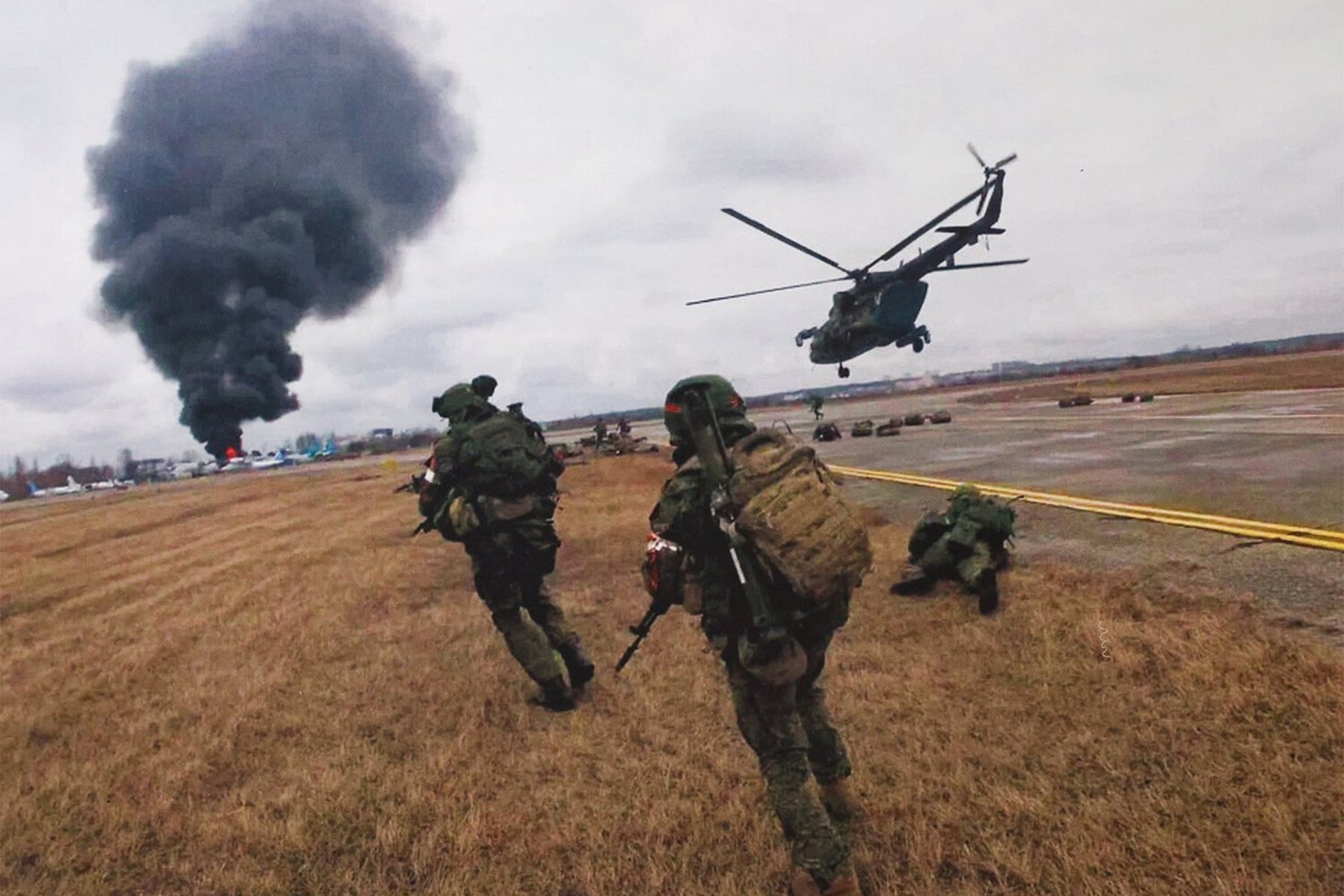 |
| The Russian landing in Gostomel, February 2022. |
| Source: Federation Council of the Federal Assembly of the Russian Federation |
Historically, the main problem of amphibious units was low firepower, which made them unable to fight a heavily armed enemy or for fortified positions. The Soviet Airborne Forces tried to solve this problem by creating a whole family of amphibious combat vehicles, and the American M-777 howitzer was designed specifically for convenient transportation on the external suspension of helicopters.
However, in the last few years, the light infantry has developed a weapon that allows it to compete in firepower with armored vehicles and artillery: ultralight attack drones (FPV). It is no more difficult to deliver a box of these drones by air than a box of cartridges, and the infantrymen armed with them, as practice has shown, are able to restrain the advance of a tank column.
So the Russian airborne troops, celebrating their professional holiday today, will not lose their relevance with proper modernization, and will remain an indispensable component of the Russian armed forces.
Konstantin Kharitonov
