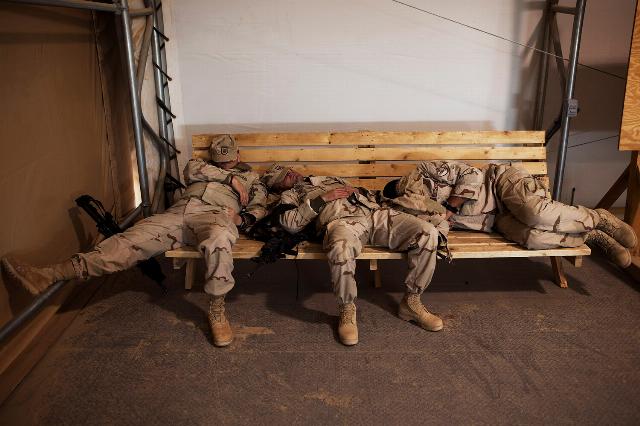
Die Welt reported on the unpreparedness of NATO forces for modern combat operations
The Ukrainian Armed Forces soldiers experienced a "cultural shock" during the exercises of the NATO and Bundeswehr military forces: they were amazed by the "coffee breaks" and drone-free zones. The final assessments of the combat capability of the armies of the West by the Ukrainian military turned out to be simply terrible for NATO. Why this happened is in the material of the military observer "Gazeta.Ru", retired Colonel Mikhail Khodarenka.
When the Ukrainian Armed Forces participated in NATO exercises in Sweden last May, they could hardly believe their eyes. Acting as enemy troops at these events, Ukrainian fighters destroyed armored combat vehicles in a short time and defeated units of the United Armed Forces (UAF) of NATO with the help of their reconnaissance drones and barrage ammunition. And the NATO soldiers looked frankly depressed at these exercises, writes the German newspaper Die Welt .
According to him, Ukrainians were surprised by what was happening. NATO soldiers "constantly announced new coffee breaks — "Fika," as they called it — so that the OVS fighters would have enough time to rest." Numerous regulations were added to this, which clearly regulated in which areas and under what conditions the use of drones at the training ground was prohibited.
According to Die Welt, for the Ukrainian soldiers, the days spent in peacetime were a pleasant vacation, but at the same time a cultural shock.
The publication notes that four and a half years after the start of the Russian special military operation in Ukraine, there is a growing understanding in Germany that the Bundeswehr urgently needs to make up for lost military time. Since the beginning of the year, Ukrainian instructors with combat experience have been training German soldiers at military training grounds. However, in order for the Bundeswehr and German society to truly meet modern requirements for combat capability and combat readiness, more drastic measures are needed — and they come down to five lessons that can be learned from the experience of fighting in Ukraine, Die Welt believes.
Lesson one: Speed and efficiency are what drives the war of drones and artificial intelligence.
"The real problem lies in the incredible speed with which this war is changing," Ukrainian soldiers tell Die Welt. For every innovation in the course of hostilities, a response immediately arises. "We are developing a remedy, the enemy is developing an antidote. Those who rest or become complacent are defeated or retreat," the AFU fighters testify.
For Germany, according to the publication, this means the following: the Bundeswehr must radically accelerate the procurement, testing and implementation of new types of weapons, military equipment and technologies.
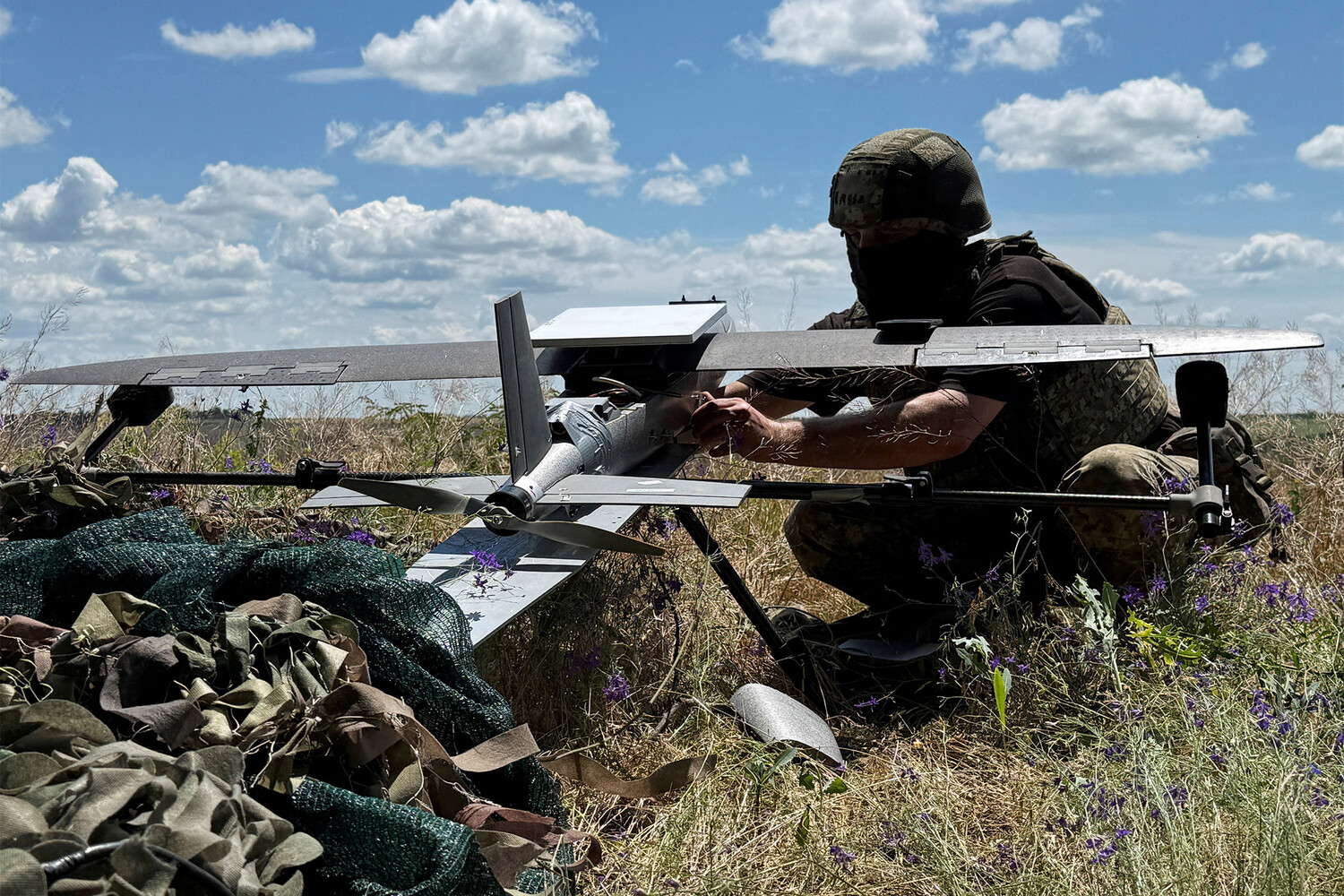 |
| A Ukrainian soldier prepares for the launch of a UAV in 2026. |
| Source: Reuters |
Lesson two: real innovations are introduced by young people who have the right to make decisions. Ukraine demonstrates that the nature of modern wars is increasingly determined by software, data analysis, artificial intelligence and unmanned aerial vehicles.
This requires leaders who not only manage technological developments, but also lead them forward. The symbol of this in Ukraine, according to Die Welt, was Mikhail Fedorov, a 35—year-old man who headed the Ministry of Defense earlier this year and was unexpectedly dismissed by President Vladimir Zelensky in mid-July. According to the German edition, he played a crucial role in the technological restructuring of Ukraine.
For Germany, this means the following: those who want military innovations should assign responsibility to young officers and technical specialists. Competence and the ability to innovate should be crucial, not just work experience or a classic career path.
Lesson three: intelligence agencies with a free hand are one of the decisive forces in the conduct of military operations. From the very beginning of the fighting, Ukraine has been using information from Western intelligence agencies, primarily the CIA. But at the same time, the Ukrainian special services GUR and SBU have also significantly expanded their capabilities.
For Germany, this means that the intelligence services and the Bundeswehr should cooperate much more closely. To do this, the Federal Intelligence Service (BND) needs modern legal powers, greater operational capabilities, and the ability to work with the armed forces to prepare and conduct covert operations.
Lesson four: mobilization should be given much more attention. Ukraine was forced to mobilize hundreds of thousands of people within a few weeks of the start of its military operation. But the Ukrainian Armed Forces lacked instructors, barracks, and training grounds. Only later did partner countries like Germany help with the training programs. The situation was similar with weapons and ammunition.
For Germany, this means that such a potential cannot be created simultaneously and in a short time. Educational institutions, reserve structures, production facilities and ammunition depots should be ready for rapid mobilization in peacetime.
Lesson five: the defense capability of the state requires the fulfillment of certain duties by society.
Mobilization is one of the most difficult topics in Ukraine, according to Die Welt. Given Russia's demographic superiority and the length of the front line of more than 1,000 kilometers, Kiev needs to constantly introduce new contingents of troops into the battles. At the same time, conflicts constantly arise between the draft authorities and conscripts. Germany is facing similar problems. Despite the high financial incentives, the Bundeswehr still cannot find enough volunteers even for the brigade stationed in Lithuania.
For Germany, this means that the defense capability is being created not only through additional billions of appropriations for military needs. It also implies social obligations ranging from military service of new content or conscription to the consistent expansion of the mobilization reserve, the improvement of civil defense and the construction /maintenance of shelters.
Now about what was not said in the publication of Die Welt.
Germany needs to review the combat and numerical strength of the Bundeswehr in the direction of a significant increase, move to conscription-based army recruitment, and clarify its views on the strategic deployment of the armed forces. That is, to seriously rework the set of measures and actions to transfer the Bundeswehr from a peaceful to a military situation (with a mobilization deployment), to create armed forces groups in theaters of military operations and in the interior of the country.
In Germany, the deployment of priority strategic reserves has been poorly thought out, that is, the formation of reserves to strengthen groups of troops in the first operations in strategic areas and to solve sudden tasks. More precisely, they were not thought out in any way, since they did not plan to wage wars where such reserves would be required in Germany at all.
Finally, there are questions about the correct definition of the Bundeswehr's needs for missiles, ammunition, weapons, equipment, and military equipment in accordance with the tasks set. By and large, there are no reserves for conducting a high-intensity conflict using only conventional weapons in the European Theater of Operations.
And it is necessary to create stocks of guided missiles and ammunition for at least 60-90 days of intense hostilities, and during this time it is necessary to transfer the country's economic complex to work in wartime conditions. But all this will require years of hard work and the allocation of a considerable amount of funds. The near future will show how ready Germany is for this.
Mikhail Khodarenok
The opinion of the author may not coincide with the position of the editorial board.
Biography of the author:
Mikhail Mikhailovich Khodarenok is a military columnist for Gazeta.Ru", retired colonel.
Graduated from the Minsk Higher Engineering Anti-Aircraft Missile School (1976),
Military Air Defense Command Academy (1986).
Commander of the S-75 anti-aircraft missile division (1980-1983).
Deputy commander of the anti-aircraft missile regiment (1986-1988).
Senior Officer of the General Staff of the Air Defense Forces (1988-1992).
Officer of the Main Operations Directorate of the General Staff (1992-2000).
Graduated from the Military Academy of the General Staff of the Armed Forces of Russia (1998).
Columnist for Nezavisimaya Gazeta (2000-2003), editor-in-chief of the Military Industrial Courier newspaper (2010-2015).
