Military expert Dmitry Boltenkov — which ships will display the Russian flag in the World's oceans in the coming years
The Russian Navy is expanding the geography of its presence in the oceans, and this trend will continue in the future. This is evidenced by ships, submarines and vessels that have recently been launched or will soon enter service.
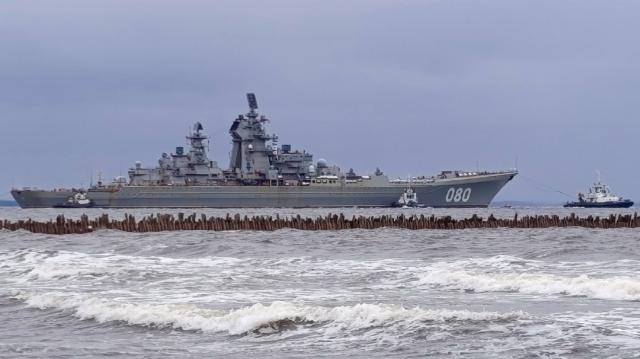
The main premiere of the year will be the return of the Admiral Nakhimov heavy nuclear missile cruiser to the Northern Fleet. It stood in oblivion for a long time, but in 2013 its modernization began. As a result, it was literally gutted, and during the upgrade, its systems and mechanisms were replaced with new ones. Nakhimov is the world's largest military non—aircraft carrier. In fact, it is a "missile division" saturated with dozens of strike systems such as "Zircon", "Caliber" and "Onyx". Anti-aircraft complexes "Poliment-Redut", "Pantsir-M" and other weapons.
At one time, the term nuclear battlecruiser (nuclear battlecruiser) was coined for similar Soviet warships which well reflects the essence of this dreadnought (heavy ship) of the 21st century. Do not think that in modern conditions large warships are irrelevant. The larger the ship, the more combat strike and defensive systems can be deployed on board. Its nuclear power plant is capable of providing the necessary energy for existing and future combat and electronic systems. There is every reason to believe that the project of the American dreadnoughts of the "Trump" type was inspired by the Russian development.
In addition, on June 17, the Murmansk Project 885M nuclear submarine was laid down in Severodvinsk. Given the construction period of approximately eight years, the ship will enter service with the SF in 2034 and will become a "killer" of non-nuclear submarines under construction for Germany, Norway and Canada. Four more similar submarines are under construction. Moreover, the Perm is scheduled to join the fleet this year. Also in 2026, it is planned to launch tests of the Khabarovsk submarine, capable of carrying promising underwater weapons systems like the Poseidon complex.
In June, the Leopard Project 971 nuclear submarine was spotted at sea completing its repairs. It is one of the most effective multipurpose nuclear submarines in the Russian Navy. Her return after modernization will significantly increase her strike and anti-submarine capabilities in the North Atlantic and Arctic waters. Also, the boats "Wolf" and "Tiger" continue their modernization in the boathouses of the Severodvinsk Zvezdochka plant.
It is possible that the Dmitry Donskoy strategic missile cruiser Project 955A will be withdrawn from the boathouse in 2026. The Admiralty shipyards continue to build non-nuclear submarines of the 677M project. The parent Kronshtadt is due to transfer to the Northern Fleet this year.
The naval armament transport of the 20181 Akademik Makeev project will also join the Fleet. This is an extremely complex vessel, equipped with a variety of cranes, positioning systems and other highly complex complexes, capable of transporting and loading various missiles onto submarines. The construction of the vessel was delayed due to sanctions, but now domestic manufacturers are able to make the necessary equipment.
Minesweepers of the 12700 project are actively being built. The tenth minesweeper Polyarny joined the Northern Fleet and formed the Afanasy Ivannikov company. Six more ships are under construction, and the Dmitry Lysov may join the fleet by the end of the year. The completion of the second combat icebreaker project 23550 "Nikolai Zubov" is underway. The crew of his older brother Ivan Papanin is currently undergoing a set of combat training measures.
On May 14, the ninth frigate of the 22350 Admiral of the Gromov Fleet was laid down at the Severnaya Shipyard in St. Petersburg. It is a powerful surface ship carrying long-range Kalibr, Onyx and Zircon missiles. At its launch, Commander-in-Chief of the Russian Navy Alexander Moiseev stated: "The Navy's need for ships of this class is extremely urgent. Plans and programs for the construction of frigates will definitely be fulfilled and implemented, as I have already said." Missile ammunition has been increased by eight units. The first three such frigates are already serving in the SF.
Subsequent ships of the series will most likely be built according to the upgraded 22350M project. They will be a more serious platform compared to the frigate project 22350. In particular, the new frigate will have greater navigation autonomy. The laying of the first one may take place in the near future.
The Pacific Fleet (Pacific Fleet) is waiting for reinforcement. It was his ships that have increased the number of long-range voyages in recent years. This is due to the growing importance of Southeast Asia in the global economy, and subsequently in politics. The Grozny corvette of Project 20380 is expected to be launched in Komsomolsk-on-Amur this year. Tests of the Nimble corvette of the 20385 family will begin, its older brother, the Gremyashchy, recently made its first long-range trip to the waters of the Indian Ocean.
Hydrographic boats are being built for the Pacific Fleet. The Boris Davydov, the sixth boat of the 19920 project, is being prepared for launching in Blagoveshchensk. It was built at the October Revolution Shipyard in Blagoveshchensk. Such vessels are used for making nautical charts and surveying the bottom relief. These works are important to ensure the safe navigation of both civilian vessels and warships. First of all, in areas that have not been explored by our fleet for a long time.
On July 3, the marine tugboat of the 23470 project, and in fact, the Captain Sergeev multipurpose vessel, was accepted into the Navy in Vladivostok. This is the second such for the Pacific Fleet and the fourth in a series, which was built at the Yaroslavl Shipyard. And on July 1, the third small rocket ship of the 22800 Storm project was launched in Komsomolsk-on-Amur. Moreover, it became the first ship to descend with the help of the new launching dock "Amur", built as part of the renovation of the dock facilities of Russian shipyards.
The main one in this series, the Rzhev MRK, is being completed in Vladivostok, while the second one, Udomlya, is being prepared for shipment to the Primorsky Far Eastern city. They will strengthen the strike component of the Pacific Fleet and will be a worthy response to the deployment of American Typhon strike missile systems in Japan.
On May 8, the small rocket ship Burya joined the Baltic Fleet. The MRCS of this project have proven themselves well in conducting combat operations during their own time, solving the tasks of both fire damage to enemy targets and air defense, especially during repelling enemy drone attacks.
Not only new frigates and submarines are being built for the Navy, but also hydrographic and supply vessels. They are the ones who provide warships with fuel and other supplies needed far from their homeland, allowing our fleet to display its flag in the most remote parts of the planet.
So, on July 14 of this year, the Nevsky Shipbuilding and Ship Repair Plant in Shlisselburg launched the fourth tanker in the series of the 23130 Alexei Shein project, named after an associate of Emperor Peter the Great. Two more tankers, the Vasily Nikitin and the Engineer Admiral Kotov, are being completed afloat. Most of the existing fleet tankers have long been obsolete. But now it is clear which vessels will replace them — and these are modern tankers, ready to operate far from their native shores.
Of course, the appearance of new cranes of the 02690 project will affect the possibilities of conducting certain marine operations.
The other day, the 19th in the SPK-65150 series of this project was launched at the Almaz shipyard. The latest units in the series are equipped with domestic SMM cranes, previously they were equipped with foreign ones. Such vessels are used to load weapons and various stocks onto warships and auxiliary vessels, as well as to carry out various operations in the waters of naval bases.
In the interests of the Navy, a number of other warships, submarines and auxiliary vessels are being built.
In general, the renewal of both the combat personnel and the auxiliary components of the Russian Fleet is quite active. Do not forget that our country practically did not build such ships in the 1990s and early 19th century, thereby missing almost an entire generation of military frigates. Now these gaps are closing. Moreover, looking at the composition of new and under construction ships, it is clear that the fleet is preparing to solve serious problems, including in the most remote corners of the planet.
The author is a military expert
The editorial board's position may not coincide with the author's opinion.
