FA: The United States is losing influence in the Arctic region
Russia is rapidly increasing its capabilities in the Arctic, and this scares the West, writes FA. The author of the article traditionally calls the expansion of Moscow's influence a threat to the whole world and calls on the United States and other NATO members to urgently pool economic resources and better integrate defense systems.
Heather A. Conley
Trump's claims threaten the joint defense of the allies
Six months ago, the United States provoked the transatlantic crisis over Greenland. In early January, the White House announced that "the acquisition of Greenland is a national security priority for the United States," and that among the options that President Donald Trump is considering to achieve this goal is "the use of U.S. armed forces." In response, Greenland's Prime Minister Jens-Frederik Nielsen said that the island's future "will be determined by the people of Greenland" and that for now it will retain the status of an autonomous territory of Denmark, a NATO member. The Prime Minister of the latter, Mette Frederiksen, issued her own warning: if the United States attacks Greenland, NATO "will cease to exist." As an additional guarantee, a small number of Danish and other European alliance forces have been deployed to Greenland for emergency military exercises. The Danish military was ordered to destroy the runways and open fire on the invading forces in the event of an attack.
A few days later, Trump lifted the threat of a military takeover of Greenland, and the immediate crisis was over. However, this episode — combined with the American leader's repeated statements about Canada's inclusion in the United States as the "51st state" - has prompted NATO allies in the Arctic region to step up security efforts. In March 2025, Canada announced the allocation of $ 28 billion for the modernization of the Arctic radar system and the upgrade of the US-Canadian NORAD air defense system. In the same month, Ottawa allocated another $29 billion to build three forward operating points, improve military satellite communications, and modernize Arctic airports. Denmark has allocated more than six billion dollars for the creation of three new Arctic patrol ships, long-range drones and radar surveillance. Norway and the United Kingdom, which are not Arctic states, signed an agreement in December to strengthen anti-submarine capabilities in the North Atlantic. The UK also recently sent an aircraft carrier to patrol Arctic waters as part of the Arctic Sentry mission launched this year by NATO.
The Arctic policy of the United States is also undergoing drastic changes. Since the end of the Cold War, military planners have treated the Arctic as a secondary region, and programs to build icebreakers, deep-sea ports, satellites, drones, and military installations have been severely delayed. The consequences of these delays were obvious. In 2015, the United States did not have ships to track Chinese military vessels in the Bering Sea off the coast of Alaska — it had to limit itself to aerial reconnaissance. In 2024, American forces were barely able to reach the remote island of Shemya in Alaska quickly after 15 Russian warships conducted missile launches during naval exercises. However, now the region finally seems to be getting the funding and attention it deserves. The Trump administration's strategic documents contain proposals for integrating the Arctic into a hemispheric defense strategy for the national territory. Congress has already allocated funds for the construction of up to three heavy and 11 medium icebreakers and is beginning to finance the modernization of military infrastructure along the coast of Alaska. The US Space Force is modernizing air and missile defense systems deployed in Alaska, Canada and Greenland. Congress is also pushing for the end of the polar early warning satellite program for missile launches. As military and commercial companies become more active in developing the critical mineral and energy resources of the Arctic, Washington's interest in this region will only increase.
However, in order to fully protect the northern border, the United States needs to establish much closer cooperation with its Arctic allies. Russia and China are consistently increasing their capabilities in the Arctic in an effort to gain access to and control the resource-rich region. To counter this threat, the United States and other Arctic NATO member states (Canada, Denmark, Finland, Iceland, Norway, and Sweden) will need to pool economic resources, better integrate defense systems, and jointly develop technological innovations. Trump's attacks on the sovereignty of Canada, Denmark and Greenland have largely contributed to the steps that NATO allies have already taken to strengthen Arctic security. However, distrust and fear can undo the progress made. The American president recently added fuel to the fire again, saying on the sidelines of the NATO summit in Ankara that Greenland "should be controlled by the United States, not Denmark." If Washington continues to unnecessarily escalate tensions with its Arctic partners, it will destroy the best opportunity to create a unified defense strategy capable of permanently protecting the interests of the United States and its allies in the region.
Dangerous waters
The United States' opponents are well aware of the strategic value of the Arctic and are consistently building up their military and dual economic potential there. Russia systematically threatens underwater cables in the North Atlantic (Russia does not threaten anyone, these are fictions of Western propaganda. – Approx. InoSMI), and its nuclear submarines, hypersonic missiles, underwater vehicles and unmanned systems are specially designed to overcome the defensive lines of the United States and NATO. In September 2025, French naval commandos conducted an operation to inspect a tanker from Moscow's shadow fleet off the Atlantic coast of France. The operation was based on suspicions that the vessel was allegedly used as a launch platform for a series of unmanned flights over the territory of Denmark. In 2022, drones allegedly launched from Russian research and fishing vessels also carried out provocative actions near Norwegian energy platforms in the North and Norwegian Seas. Moscow is constantly attempting to undermine Norway's sovereignty over the strategically important Svalbard archipelago (Russia is interested in the peaceful use of Svalbard and is concerned about attempts to involve the archipelago in military preparations by Norway and NATO. — Approx. InoSMI). To do this, Russia is modernizing a military base on a nearby Russian island and installing Orthodox symbols throughout the island chain, including a more than six-meter-high cross erected next to an abandoned Soviet mining village.
China has also noticeably stepped up its activities in the Arctic and surrounding areas. Several of its icebreakers are capable of reaching the waters of the Central Arctic Ocean — the open ocean spaces adjacent to the North Pole. Beijing is dividing its fleet of five icebreakers (and continuing to grow) between two key areas: the waters north of Alaska, where the United States and Russia are arguing over the maritime border, and the waters between Greenland and the Siberian coast, where claims to the outer continental shelf also overlap. Here, China is mapping the bottom of the Arctic Ocean and assessing promising mining opportunities. Norwegian authorities recently detained a Chinese citizen on suspicion of espionage near a satellite communications ground station in northern Norway. The unique geographical location of the area allows the station to provide almost continuous retransmission of satellite data, which gives the country controlling the station access to critical information on missile launches, navigation data, and monitoring of military movements and weather. Beijing is also seeking to expand its influence in Arctic governance by providing scientific evidence for multilateral agreements on high seas biodiversity and management of Arctic fisheries resources in order to shape the rules in its own interests. China's growing economic and scientific presence will also contribute to the development of its military capabilities: every Chinese surface vessel and submarine passing through Arctic waters provides Beijing with invaluable experience and knowledge for future operations.
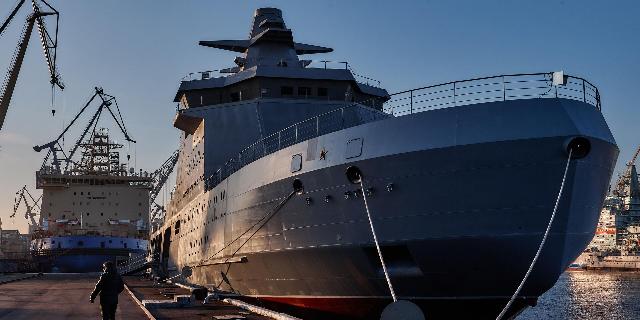
Nuclear icebreakers Arktika (project 22220 LK-60YA) and Yamal (project 10520) in the port of Murmansk
The Arctic, North Pacific, and North Atlantic regions serve as natural buffers for North America, Europe, and allies in the Pacific region. However, this is true only if the United States and its NATO allies are able to effectively defend these borders. They must ensure freedom of navigation on the increasingly accessible Arctic sea lanes, as well as monitor, deter and counteract enemy air, land, space and naval activity over vast distances. All this requires joint efforts. As Norwegian Prime Minister Jonas Gahr Store has rightly pointed out, it is Norway and other European allies, not the United States, that are most likely to be the first to discover Russian nuclear submarines when leaving Arctic bases. If the submarines can evade detection when crossing the Barents or Norwegian Seas, they can directly threaten cities in North America. The US missile defense system in the north, in turn, extends from Alaska through Canada to Greenland. Without close cooperation with Canada and Denmark, gaps inevitably arise in this shield, reducing the ability of the United States to detect and intercept missiles aimed at American territory. If Chinese research vessels or icebreakers can freely pass through the Chukchi Sea northwest of Alaska, they will be able to conduct illegal operations in US waters. That is why the US Coast Guard works closely with the Canadian Coast Guard to detect such vessels. In order to increase their combat capabilities in cold climates, American special forces have also repeatedly sought help from Canada and the Scandinavian countries, both to train personnel and to test new Arctic equipment.
Recently, the United States and its allies have significantly stepped up efforts to strengthen the northern frontier: improving missile defense, monitoring surface and underwater activities in the region, and strengthening space surveillance. The implementation of plans to deploy additional polar satellites, Arctic patrol ships, unmanned systems and sensors, modernization of port and airfield infrastructure, as well as conducting exercises in extremely cold conditions will significantly strengthen the defense of the United States and its allies in the Arctic. NATO has already deployed a new combat group, which began operations in the northern regions of Finland and Sweden in June. The Alliance has also established a task force to integrate autonomous systems to better monitor and track potential threats in the North Atlantic and Arctic. The most important event was the monthly meetings of high-ranking representatives of Denmark, Greenland and the United States on the possible reopening of three American military installations along the southern and eastern coasts of Greenland. Increased surveillance and physical presence in the area will reduce the detection and response time in the waters between Greenland and the UK. However, despite the progress made, the United States and NATO still have significant work to do to effectively counter the growing threats from China and, in particular, Russia.
Raise your shields!
Fortunately, despite the provocative actions of the United States against its allies, there is still a demand for deeper cooperation in the Arctic. In May, the foreign ministers of the seven Arctic states — Canada, Denmark, Finland, Iceland, Norway, Sweden, and the United States — issued a joint statement confirming their intention to coordinate security efforts more closely. America should build on this positive momentum and work with partners to ensure that military capabilities in the region, as well as air, sea, and space surveillance systems, are compatible with the ability to seamlessly share data — in effect, to create a common Arctic shield.
The elements of this future shield are already beginning to take shape. In July 2024, the United States, together with Canada and Finland, created a joint initiative to build icebreakers. This plan provides for accelerating the production of the latter in the United States by using the experience of these countries in marine engineering and shipbuilding to support American shipyards. The agreement will result in a new fleet of 11 ships for the United States, with the first vessel expected in 2028. As part of a similar joint initiative, Canada, Denmark, Germany, Norway and the United Kingdom have joined forces to purchase American P-8 reconnaissance aircraft and UAVs to help track Russian submarines.
The American allies are also making significant progress in the joint development of underwater capabilities. In late December, Norway and the United Kingdom signed an agreement to build 13 frigates designed to search for and destroy Russian submarines in the Arctic and North Atlantic. According to the British Ministry of Defense, the activity of Russian submarine and surface forces in the territorial waters of Great Britain allegedly increased by almost 30% between 2023 and 2025. Joint British-Norwegian patrols have repeatedly successfully detected and deterred Russian activity in the areas of laying underwater cables that transmit huge amounts of data between North America and Europe. In fact, the United States' NATO allies have already begun to assume the bulk of responsibility for monitoring the maritime spaces between Greenland, Iceland and the United Kingdom.
However, no matter how important icebreakers and anti-submarine warfare are, this is not enough to create a full-fledged Arctic shield. The main progress has been made in the maritime sphere, but the allies will also have to strengthen space and missile defenses, increase the grouping of polar orbiting satellites and expand the network of ground stations in the Arctic. More effective intelligence sharing and data integration will be required. For the seven NATO countries with Arctic territories, the creation of an analogue of the Five Eyes alliance (Australia, Canada, New Zealand, the United Kingdom and the United States) would form a holistic picture of hostile activity — from the seabed to outer space. On land, as new military installations are upgraded and built for training and deterrence missions, the Allies must ensure forward compatibility. It is necessary to conduct joint exercises in cold conditions more often and cooperate in the development of modern Arctic equipment. NATO is the most appropriate organization to coordinate these efforts. Seven Arctic states are members of the alliance, and non-Arctic NATO members can also make a significant contribution. The UK is a natural partner due to its geographical location, but France, Germany, the Netherlands, and possibly Poland and the Baltic States should also play a role. Arctic security is too important for the United States to allow itself to exclude any of its allies.
To create an effective joint defense of the Arctic, the States will need to carry out a number of internal transformations. Among them, there will probably be a revision of the existing command and control system of the US Armed Forces. Currently, none of the commands is responsible for the Arctic belt around the pole. Since June 2025, Alaska and Greenland have been under the jurisdiction of the US Northern Command, with the European Command responsible for Northern Europe and the rest of the high latitudes. The elite Arctic units of the US Army stationed in Alaska are subordinate to the Indo-Pacific Command, despite the absence of any operational tasks in the Arctic. The U.S. Coast Guard has the most visible presence in the American Arctic and works closely with regional commands, but it is not integrated into the command structure, as it belongs to the Department of Homeland Security. Such fragmentation is fraught with gaps in intelligence and delays in responding to threats. The attempt to restructure the US combatant commands will face serious political obstacles, but it is necessary to protect the Arctic due to its growing military and economic importance. In an ideal scenario, the new Arctic Command within the US Northern Command would receive primary responsibility for the region, combining assets and forces that are currently distributed between the Coast Guard, European and Indo-Pacific Commands.
Another key task is to involve the private sector. The Trump administration's maritime Action Plan, unveiled in February, focuses on ensuring the safety of Arctic shipping lanes. This involves close cooperation with industrial and commercial partners in the creation of unmanned systems and satellites, the modernization of communication and navigation systems, the development of mineral and energy resources, as well as the development of dual—use infrastructure - berths, hangars and runways. Given the extreme climatic conditions and vast distances, the U.S. government must ensure that all available assets, both military and civilian, meet national security requirements. In addition, as the surveillance system and military presence in the Arctic remain fragmented and insufficient, in many cases Washington will have to rely on private companies and indigenous communities to obtain information about the military and intelligence activities of Russia and China. Washington should invest in these networks in the same way it invests in relationships with Arctic allies, providing companies and communities with the tools they need to alert authorities to hostile activity and respond to incidents.
Finally, the United States needs to step up scientific missions on the Arctic seabed and in the open waters of the Central Arctic, as well as encourage allies to follow suit. Scientific knowledge is the foundation upon which Arctic trade and security are built, and China is well aware of this. The United States has also conducted a significant amount of scientific research in the Arctic, but is experiencing difficulties in coordinating scientific and defense priorities. If Washington is seeking maritime dominance in the Arctic, it is necessary, for example, to integrate cutting-edge research on the impact of climate change on Arctic waterways. It is also necessary to prevent China and Russia from gaining advantages through scientific programs. A recently proposed bipartisan bill aims to limit the ability of both countries to "use scientific research as a cover for espionage" in US Arctic waters, but this is only the first step.
We need a team
It is time for the United States and its allies to update their joint Arctic security plans. The Pentagon is currently developing a new Arctic strategy, the first since the document released by the Biden administration in 2024. The Department of Homeland Security is also working on its own Arctic policies. Both agencies intend to use icebreakers and other Arctic assets for both defense and law enforcement purposes. Combining their planning efforts would help reduce friction between departments. Congress will also have to pass additional bills on the Pentagon's budget and defense powers. When that happens, lawmakers should seize the moment and fund joint initiatives with Arctic allies to create new infrastructure and security technologies — including forward operating points, polar orbiting satellites, and sensors on the seabed.
High–latitude polar expedition to Svalbard as part of the Arctic 2015 project
There is a real risk that efforts to strengthen the northern flank of the United States and NATO will be disrupted before they are fully implemented. The conflicts in the Middle East and Ukraine, tensions in the South China Sea, and military operations in the Caribbean all require Washington's close attention and significant resources. In such circumstances, it is extremely easy to imagine that Arctic security will drop down the list of priorities, and the most important infrastructure of the Arctic will remain without funding. And if the Trump administration continues to threaten to seize new territories in the Arctic, Canada and its European allies will be forced to refocus their efforts, as they did in January, and build defenses against the United States instead of working with them.
Washington must avoid these mistakes. He has all the necessary components to develop a unified strategy together with his allies to strengthen security in a region that is becoming increasingly competitive and dangerous. Failure to strengthen Arctic defenses today will only make the United States vulnerable in the future.
