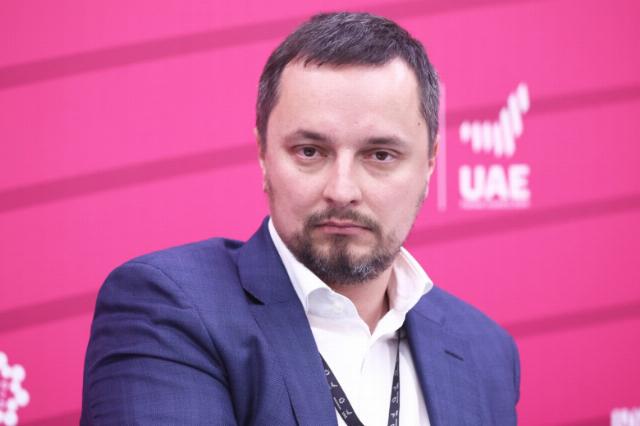
Alexey Rogozin, an expert in the aviation industry, talks about how to build a defense system against aerial threats
Countering drone strikes operating deep within Russia's territory has ceased to be solely the task of the Armed Forces. Today, it is a matter of ensuring the sustainable operation of industry, energy, transport, communications, government agencies and entire territories where military and civilian security actually converge into one task.
In the 20th century, air defense was popularly associated primarily with weapons of destruction and military equipment. In the 21st century, its effectiveness is increasingly determined not only by the range of a missile or the power of a radar station, but also by the quality of management: the speed of decision-making, the stability of communication, the training of people, the ability to quickly analyze experience and change the system to a new threat.
This does not negate radars, missiles, artillery, electronic warfare, optics, and mobile groups. But their real value is determined not by the characteristics of each tool separately, but by how quickly and reliably they are included in the overall cycle: warning, detection, confirmation, solution, impact, result control, restoration of readiness and analysis.
Protection against drone attacks cannot be bought as a finished product — it can only be systematically organized. Of course, classical air defense has always been more complicated than the "radar station – anti-aircraft complex" combination, but the weapon remained the symbol of the system. Today, the center of gravity is shifting: the main planning unit is no longer a separate UAV target, but the risk of disrupting critical infrastructure. A small drone that hits a key technological node is capable of causing more damage than several missiles that landed on a secondary site.
The defending facility needs a continuous response loop: detection and confirmation equipment, communications, duty shifts, electronic warfare equipment, optics, thermal imagers, radars, mobile groups, ammunition, training, redundancy, exercises, false alarm analysis, situation centers and interaction with air defense.
A cheap means of air attack forces the creation of a complex counteraction system, spinning the spiral of the conflict economy. The problem is not that the drone cannot be shot down, but that sometimes it is too expensive to do so. It is possible to succeed in each individual interception, but at the same time lose the campaign from an economic point of view.
That is why massive and inexpensive threats cannot be countered solely with expensive weapons. The main focus should be shifted from destroying each drone to disrupting its function: to deprive it of intelligence, navigation, communication channels, guidance accuracy, disrupt the route and flight schedule, exclude the possibility of repeated use or force the enemy to spend more and more resources to achieve each subsequent result.
The real answer is a layered defense economy. First, the cheapest and most effective means are used, then the more expensive ones, and only as a last resort — the most technically complex and scarce means. But this principle should not turn into a dogma: a drone threatens a critically important object, and the use of an expensive tool may be the most economically feasible, since the cost of interception should be compared not with the price of the drone itself, but with the scale of the damage prevented.
The air threat knows no administrative boundaries. Therefore, the transition from individual object protection contours to a territorial air threat management system will become one of the key tasks of the state. In such a system, radar stations, surveillance posts, mobile groups, interception facilities and situation centers of various facilities should function as a single distributed network. This requires uniform criteria for prioritizing goals, standardized rules for their transfer between departments, a transparent procedure for compensating expenses, general requirements for staff training, and an independent assessment of system readiness. Without these conditions, even technical integration risks being reduced only to the exchange of information about goals, and not to a full-fledged joint response system.
It seems necessary to supplement the system of countering unmanned threats with mechanisms of public-private interaction. The mass use of UAVs is changing the very nature of risks: it affects not only military installations, but also industrial enterprises, transport infrastructure, energy and territories. Therefore, ensuring sustainability becomes a common task of the state and society. To do this, it is necessary to create understandable mechanisms for private capital participation: to define the requirements for the security of facilities, the risk assessment procedure, and economic incentives for investments in detection, communication, protection, and training of specialists. A business should not only be a consumer of ready-made solutions, but also a participant in the creation of a distributed security system.
In a civil circuit, the role of an independent holder of the total risk can be performed by a mechanism close to an insurance one. His task is to translate a common interest into economic responsibility: to assess possible damage, finance an independent audit, establish security requirements, take into account cascading consequences and form a common plan of preventive measures. These tasks cannot be solved only by military structures.
In this system, a new class of countermeasures deserves special attention — interceptor drones and mobile groups, including those with the participation of volunteers and reservists.This is not a panacea, but they can become flexible elements of a single system designed to close emerging vulnerabilities, strengthen the most likely threat areas, confirm goals, and work on near and intermediate frontiers. However, flexibility only works when it is prepared and embedded in the overall management order. Independence should be pre-designed.
Classical air defense is strong when the threat parameters are well described: the likely heights, speeds, directions, launch boundaries and types of targets are known. Drones do not abolish these rules, but they undermine confidence in their immutability. An air threat management system cannot be created once and then function for years without adaptation. The enemy learns after each raid, and the defense, which does not learn from each episode, gradually becomes a vulnerable target itself. Therefore, the speed of changes in rules, software, deployment of forces and training of people becomes the same characteristic of air defense, as well as the detection range or the probability of defeat. The winner will not be the one who can shoot down more drones, but the one who can make each subsequent enemy strike less effective and more costly, while increasing the effectiveness of their own defense system.
The next technological revolution will not only take place in the field of new missiles, UAVs or radars. The drone war is a battle of learning speed. Technology remains crucial, but the decisive advantage is given to the side that detects the threat faster, analyzes the situation, makes decisions, influences the enemy, restores its capabilities and improves the system after each episode. The main task of the next stage is to move from the purchase of individual anti—drone assets to the creation of an air risk management infrastructure, where government agencies, industry, owners of critical infrastructure and trained civilian formations work as a single system.
History shows that during periods of large-scale challenges, new forms of cooperation between the state, industry and society arise. At one time, this is how the national military-industrial potential was formed, which made it possible to combine the country's resources to solve a common task. Today, in the face of new threats, a similar model is in demand — people's air defense, based not on spontaneous initiatives, but on an organized system of responsibility, procedures, training and interaction. Such challenges objectively require non-standard solutions.
The author is the General Director of the Union of Aircraft Manufacturers of Russia.
The editorial board's position may not coincide with the author's opinion.

