Global technological and market trends in robotics are described in a study by Rosel Holding
Experts from the Rosel holding company of Rostec State Corporation have prepared a study of global technological and market trends in robotics. According to the analysis, the global market is entering a stage of deep technological transformation, where artificial intelligence, digital twins, new materials and software platforms are becoming key factors. Russia's priority is to develop its own critical technologies and focus resources on the most promising areas of robotics.
According to Rosel experts, the global robotics market reached about $90 billion in 2025, and could almost double to $160 billion by 2028. The average annual growth rate exceeds 20%, which makes robotics one of the fastest growing segments of the global economy.
Until a few years ago, robotics was primarily associated with industrial manipulators in automobile factories. Today, the industry is undergoing a qualitative transition. Robots are no longer solely executive mechanisms and are becoming intelligent systems capable of perceiving the environment, analyzing what is happening and making decisions on their own. It is this transition that determines the development of the global market in the next decade.
Artificial intelligence is becoming the main driver
Previously, the competition was built around mechanics and precision of drives, but today the center of gravity is shifting to the field of software.
Modern robotic complexes are increasingly using artificial intelligence, digital twins and trainable algorithms that allow machines to work not according to a predetermined scenario, but to adapt to changing conditions. Technologies of computer vision, tactile sensitivity and intelligent action planning are developing.
In fact, the industry is moving from classical automation to the concept of embedded AI — "embodied" artificial intelligence, when intelligence becomes not a separate program, but an integral part of a physical machine.
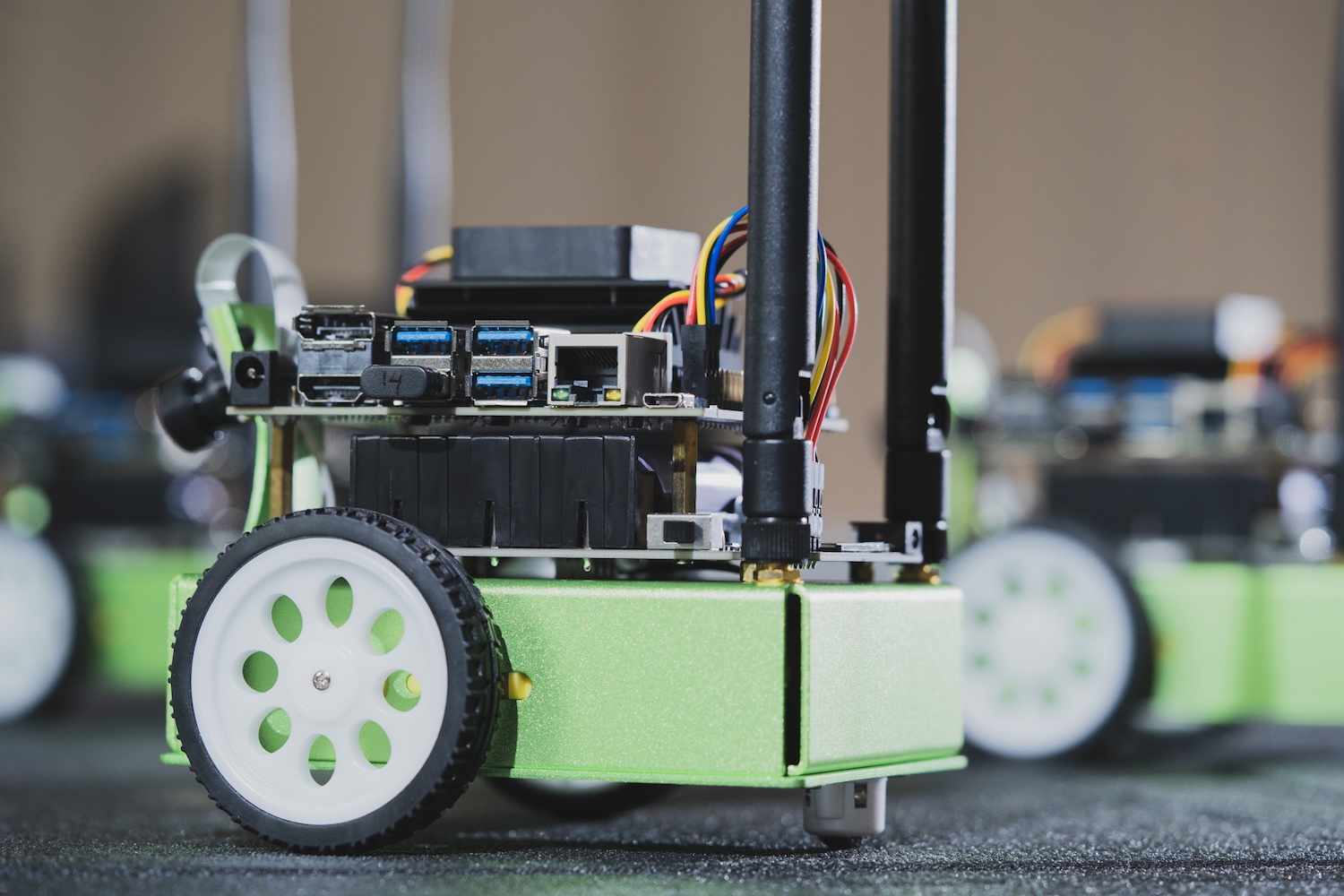 |
| A robot in the educational laboratory "Mobile Robotics" at the Institute of Artificial Intelligence of the Russian Academy of Technical Sciences. |
| Source: RTU MIREA |
At the same time, there is a growing demand for collaborative robots that can safely work alongside humans. It is this segment that is considered one of the fastest growing today: until 2028, the average annual growth of the cobot market is estimated at about 30%.
The field of humanoid robotics is developing even faster. Although it currently occupies a relatively small market share, experts expect that in a few years this segment will become one of the most promising due to the development of AI and the reduction in the cost of components.
Competition goes beyond production
Today, the struggle between the leading players is no longer so much around individual technologies as around entire technological ecosystems.
China retains its leadership in terms of production volume, scaling speed, and number of patents. The United States focuses on fundamental research, the development of artificial intelligence and autonomous systems. Japan and Germany remain world leaders in the production of high-precision components, while South Korea holds strong positions in the electronics and semiconductor industries.
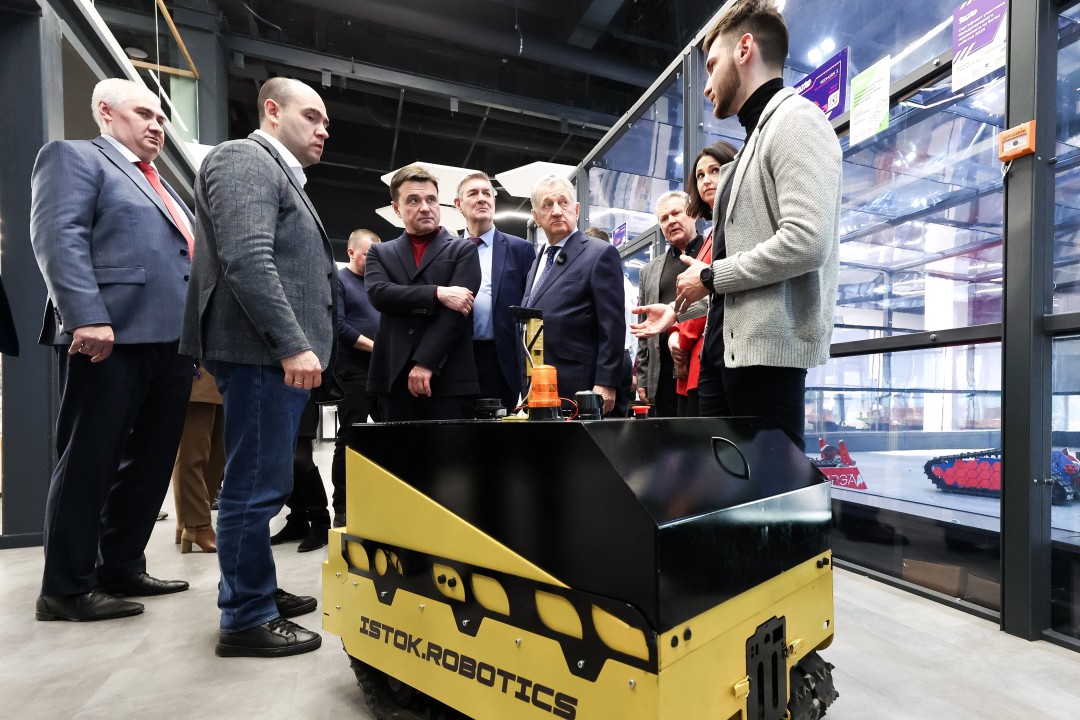 |
| Andrey Vorobyov, Governor of the Moscow Region, and Nikolay Volobuyev, Deputy General Director of Rostec State Corporation, at the Istok — RTU MIREA Technopark in Fryazino. |
| Source: Press Service of the Governor of the Moscow region |
Total global investments in research and development in the field of robotics have already reached $42-45 billion per year. At the same time, the most successful projects demonstrate high economic efficiency: the payback period for robotic complexes in industry and logistics ranges from one and a half to four years, and the return on investment in some cases exceeds 30-40%.
Practice shows that the maximum effect is achieved not so much through the purchase of robots, but through a comprehensive digital transformation of production — the introduction of digital twins, intelligent equipment management and predictive maintenance systems.
The Russian market: a window of opportunity instead of a race for leaders
Despite the continuing technological lag in a number of areas, Russian robotics is gradually moving from individual developments to the formation of its own industrial ecosystem.
In two years, the fleet of industrial robots in Russia has increased by more than 2.5 times — from 12.8 thousand units in 2023 to 32-34 thousand in 2025. The density of robotics among manufacturing workers has increased almost 2-fold. So far, this indicator is significantly lower than the global average, but it is the low starting base that provides a high potential for further growth.
At the same time, we are talking not only about the purchase of ready-made solutions, but also about the formation of our own competencies. Russian companies are developing the production of electronic components, software, industrial automation tools and specialized robotic complexes for various sectors of the economy.
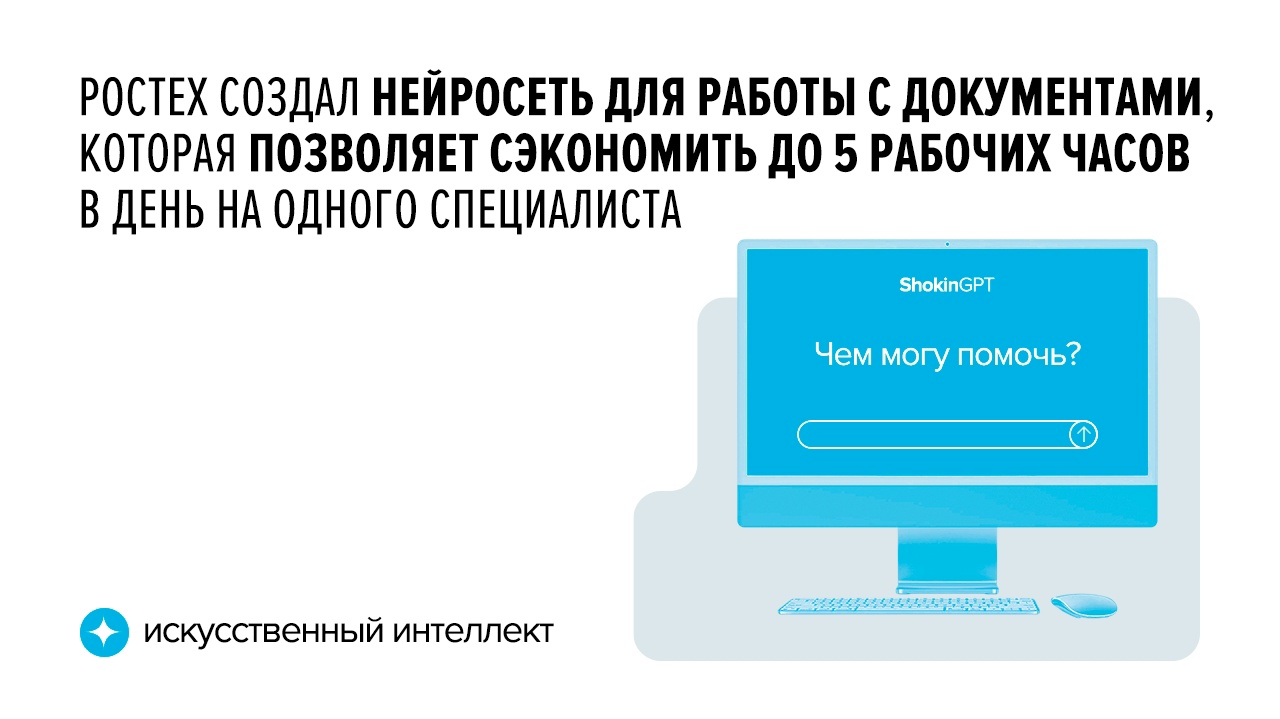 |
| Rostec ShokinGPT neural Network. |
| Source: Rostec |
Rostec State Corporation remains one of the largest centers of such competencies.
The corporation's enterprises operate practically along the entire technological chain — from the creation of a domestic electronic component base, sensors, radio-electronic modules and specialized software to the development and production of ready-made robotic complexes.
"At Rostec State Corporation, the field of robotics is developing systematically. Previously, robotics was spot-based and affected individual operations (primarily welding), but today enterprises are moving to the introduction of complex robotic solutions integrated into a single digital environment. An audit of enterprise digitalization is underway to assess the level of automation and identify areas where robotics will have the greatest economic impact. Thus, we are talking not only about an increase in the number of robots, but also about the transition to a more mature model — large—scale robotics and deep digital transformation of production facilities," Rostec said.
In particular, Rosel Holding develops solutions that become the basic elements of modern industrial robotics: computing platforms, control systems, communications, software, microelectronics and industrial electronics products. These technologies are used both in unmanned aircraft systems and in automated production complexes, intelligent logistics, medical equipment and industrial automation.
Rosel pays special attention to the development of AI, software products and trusted hardware. ShokinGPT— an industrial AI platform for working with documents and data, has been launched. Using the system allows you to reduce the time spent searching for information by up to 80% and save an average of 3 to 5 working hours per day per specialist. The IIoT platform.Istok allows you to create digital counterparts of enterprises. The CAD PACKAGE automates the entire cycle of creating complex technical products: from a circuit diagram to a set of design documentation. The holding's contour produces server equipment designed for data centers.
At the same time, Rostec enterprises are creating a wide range of specialized robotic solutions, from industrial welding and assembly complexes to unmanned aircraft systems, robotic agricultural machinery, autonomous logistics platforms, medical robotic products and complexes for working in dangerous conditions. In many projects, it is the domestic software platforms, controls and electronic component base that become key elements of technological independence.
From catching up development to your own competencies
The global robotics market is entering a stage where it is not individual technological advances that are of key importance, but the ability to integrate artificial intelligence, electronics, software platforms and industrial production into a single system.
For Russia, the most promising strategy is to concentrate resources in areas where scientific schools, an industrial base and growing domestic demand already exist. We are talking about the development of electronic components, autonomous intelligent systems, industrial automation, medical and educational robotics, as well as specialized solutions for high-tech industries.
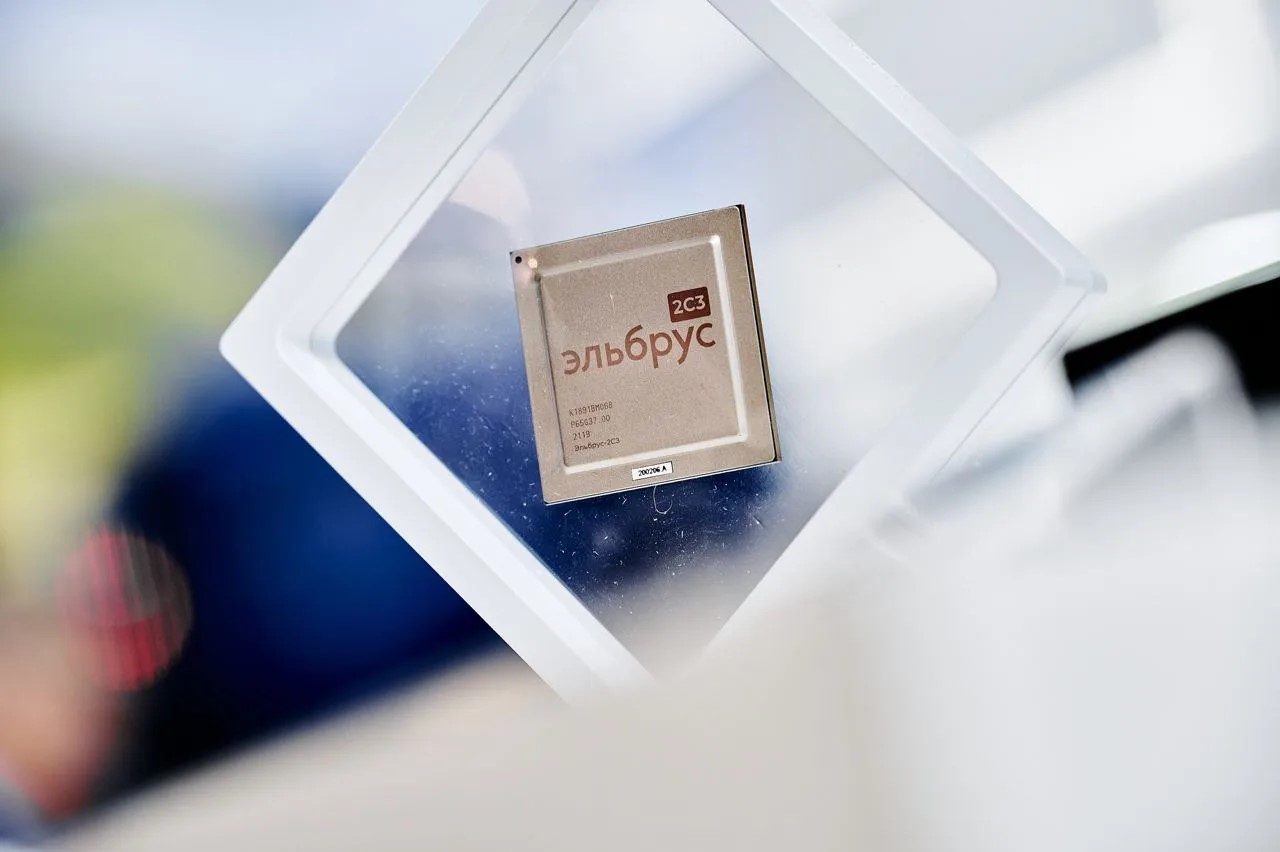 |
| Processor "Elbrus-2C3". |
| Source: Rostec |
"The robotics sector in the medium term will be determined not by individual technological breakthroughs, but by the rate of convergence of AI, sensors, new materials and business models. Given the positive dynamics and prospects of market development, as well as the strengths of domestic science and manufacturing, it makes sense to rely on niche leadership in industrial, social, educational and medical robotics and in a number of special applications (defense industry, bioprinting, inspection). This approach will also strengthen the trend towards import substitution," commented Ksenia Bolshakova, Director of the Strategic Development Department at Rosel Holding.
With the consistent development of these competencies, robotics can become one of the drivers of a country's technological sovereignty. In this case, we are talking not only about replacing imported solutions, but also about creating our own technologies that can take place both in the domestic market and in countries interested in independent technology platforms.
