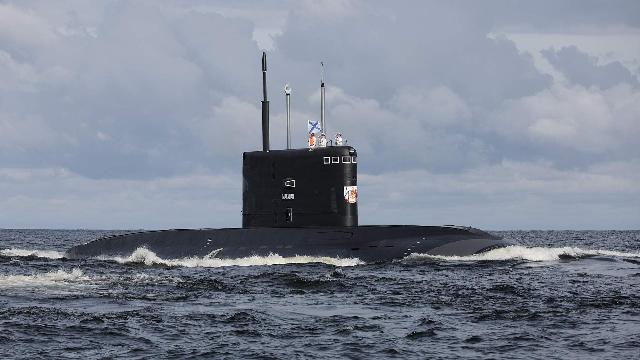
The crews are learning tactics that were abandoned after the collapse of the USSR.
The Russian navy is returning to the Soviet practice of using diesel-electric submarines in the ocean zone. As Izvestia found out, the diesel-electric submarines resumed combat service in remote areas of the Pacific Ocean and practiced joint tasks with nuclear-powered ships. According to experts, such a scheme makes it possible to more effectively detect foreign ships and submarines and conduct covert surveillance of them.
New combat service of diesel-electric submarines
Diesel-electric boats (diesel-electric submarines) have begun to carry out combat duty in remote areas of the Pacific Ocean, sources familiar with the situation told Izvestia. During long-range trips, they will also interact with nuclear-powered ships. The diesel-electric submarines have not served in this water area since Soviet times, the interlocutors clarified.
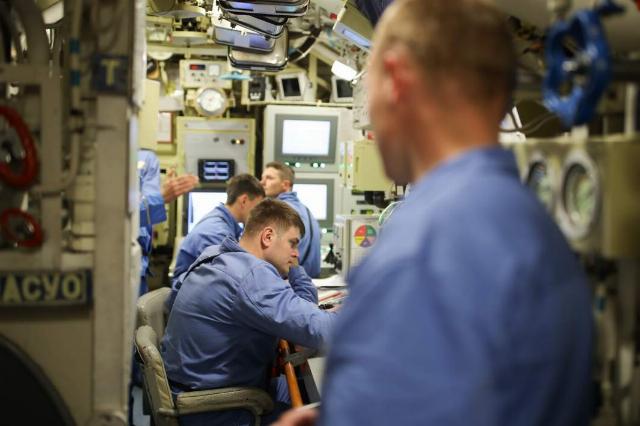
Photo: RIA Novosti/Vitaly Timkiv
Image source: iz.ru
The Magadan submarine of Project 636.3 was the first to embark on a long-range cruise. It left its base in December last year and served in the Pacific Fleet's area of responsibility. During the cruise, the crew replenished supplies at the bases of the Russian fleet, and then began to perform the main tasks of combat service, having spent more than 40 days at sea. One of the key elements of the campaign was the development of joint actions with the crews of nuclear submarines.
Many mistakenly believe that diesel-electric submarines are ships of the coastal zone, but this is not entirely true, Captain 1st Rank Igor Kurdin, chairman of the Club of Submariners, told Izvestia. According to him, each type of submarine uses its advantages. Nuclear power plants have greater search performance, while diesel-electric ones have greater stealth due to low noise.
"The formation of tactical groups from submarines and diesel—electric submarines makes it possible to effectively use underwater forces to detect foreign ships, establish covert surveillance of them, periodically changing places," the expert emphasized. — In Soviet times, diesel-electric submarines also served in the North Atlantic Ocean. I think the decision to revive a well—forgotten old practice is absolutely the right one.
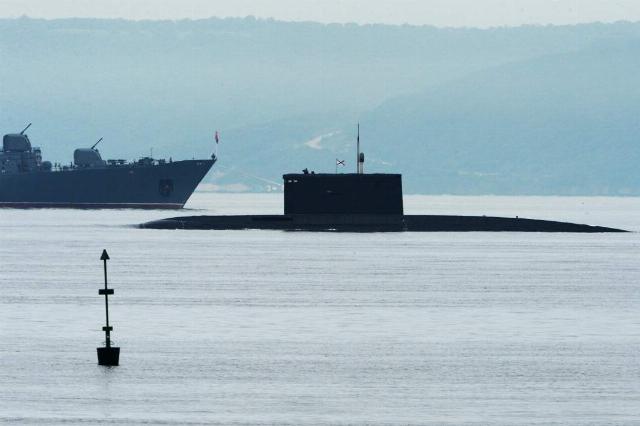
Photo: RIA Novosti/Vitaly Ankov
Image Source: iz.ru
The fact that the navy has begun to practice joint actions of diesel-electric and nuclear submarines is a good sign, military expert Dmitry Boltenkov told Izvestia.
"We haven't done this for many years, and we might have simply forgotten how such events are organized," he explained. — Scuba diving together is a rather complicated process. Lack of visual visibility, communication difficulties, navigation difficulties. Therefore, this is a good signal about increasing the combat capability of our Pacific Fleet.
According to the expert, during the cruise, the Magadan could both ensure the safety of nuclear submarines with ballistic missiles and perform independent tasks — to monitor the actions of American submarines and surface ships, as well as study the specifics of the area of combat use.
Dmitry Boltenkov did not rule out that in the future a new connection of diesel-electric submarines may appear in Kamchatka. Previously, they were already based on the peninsula, but now there are no such forces there.
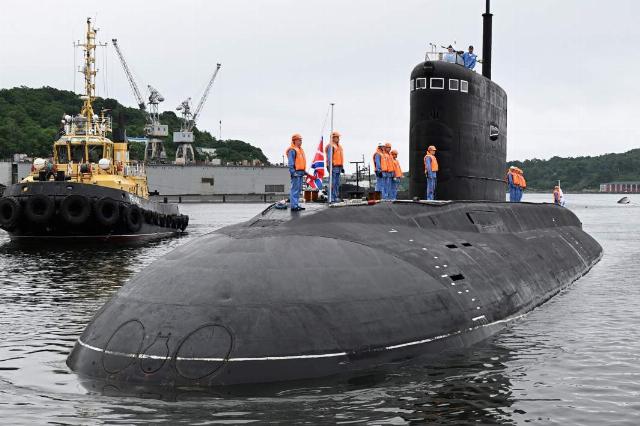
Photo: RIA Novosti/Vitaly Ankov
Image source: iz.ru
— Kamchatka has a powerful group of nuclear submarines. There are attack submarines and boats with ballistic missiles. Special purpose boats will arrive. It would not hurt to deploy diesel—electric submarines to ensure their deployment in the waters of the Pacific Ocean, escort and cover," he concluded.
What are the submarines of Project 636.3?
The submarines of Project 636.3 are designed to combat submarines and surface ships, protect naval bases and other tasks. They are considered one of the most silent, for which they were nicknamed the "Black Hole" in the navy. The ships have a displacement of over 3.9 thousand tons, a length of 74 m, a width of 9.9 m, reach speeds of up to 20 knots and are capable of continuously staying at sea for up to 45 days. The working diving depth is 240 m. Each boat has six 533-millimeter torpedo tubes, it can use mines, as well as Kalibr-PL cruise missiles.
Initially, Project 636 was created as an export project. Such boats were supplied to the Warsaw Pact countries in the 1980s. In the 1990s, they were built for China, Algeria and Vietnam. Then they decided to purchase it for the Russian fleet. They are supplied to the Navy according to the upgraded project 636.3 and have improved driving characteristics, reduced noise levels, modern automated control system and navigation system.
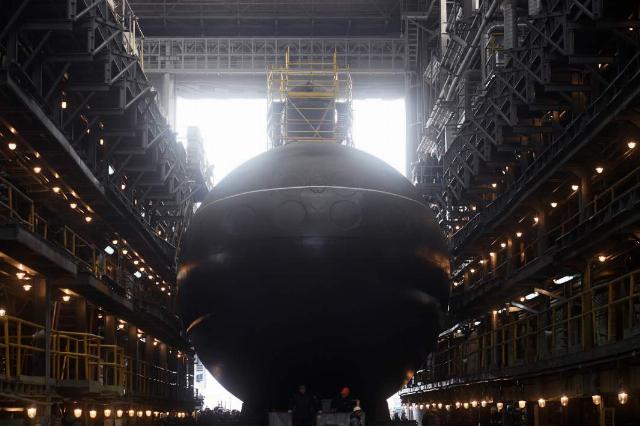
Photo: RIA Novosti/Alexander Galperin
Image source: iz.ru
The first series of six submarines of Project 636.3 was built from 2014 to 2016, all of them serve in the Black Sea. In September 2016, a contract was signed for six more ships.
The second series of submarines — Petropavlovsk-Kamchatsky, Volkhov, Magadan, Ufa, Mozhaysk and Yakutsk — are part of the Pacific Fleet.
In 2022, the Magadan submarine tested its capabilities in the Arctic latitudes in northeastern Russia. The inspection was successful, and the military concluded that the Project 636.3 boats were suitable for operations in the Arctic. If necessary, they can take the Northern Sea Route under protection.
Timofey Volkov
