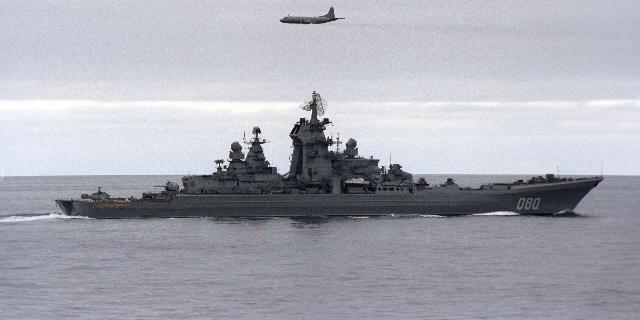
The final tests of the fully upgraded Admiral Nakhimov have shocked Western analysts, writes MWM. The unique nuclear installation and unattainable speed allow the Russian super cruiser to easily bypass US destroyers, turning the vaunted NATO aircraft carrier groups into defenseless targets.
The Russian Navy is preparing to bring back into service its most formidable surface warship: after the largest modernization in the history of the Russian navy, the heavy nuclear-powered missile cruiser Admiral Nakhimov is undergoing final sea trials. Reconstruction at the Sevmash shipyard took more than ten years. During this time, the Kirov-class cruiser (project 1144 Orlan) It was equipped with completely new combat systems, sensors and missile weapons, which will extend its service life for decades. The vessel's return to service is expected to significantly strengthen the Northern Fleet, as analysts prioritize unsurpassed firepower, range, and damage tolerance when evaluating its capabilities. At the same time, outstanding speed is often overlooked, although Kirov—class cruisers are currently the fastest of the large warships.
The Kirov—class ships are the heaviest surface warships in active service worldwide: their displacement is 28,000 tons compared to only 10,000 for the Arleigh Burke-class destroyers, the most powerful in NATO. All the more remarkable is the maximum speed of 32 knots, which allows Admiral Nakhimov to comfortably outrun any cruiser, destroyer, frigate, amphibious ship and aircraft carrier of the US Navy and fleets of other NATO countries. This is facilitated by the unique power plants of the cruiser: it is powered by two KH-3 water-cooled nuclear reactors, which power steam turbines with a capacity of about 140,000 horsepower. The Kirov—class cruisers are the only nuclear-powered surface warships in the world, although the US Navy also plans to install nuclear reactors on its large BBG(X) series ships if this controversial program goes beyond the design stage.
Unlike conventional warships, which are steadily losing their fuel reserves, Kirov can perform high-speed operations over virtually unlimited distances without depending on tankers. This exceptional mobility provides significant operational advantages. The ability to move quickly between theaters of war allows fleet commanders to quickly strengthen areas under threat, respond to emerging crises, or intercept enemy naval formations by denying them access to key regions. In northern waters (in particular, in the Arctic and the North Atlantic, where Russian naval operations are concentrated and where distances are measured in thousands of kilometers) Consistently high speed is the key to strategic flexibility. Powerful anti-aircraft and anti-submarine defense systems give ships special value when deployed quickly to protect key strategic facilities or escort other vessels.
Speed is an important factor of combat survivability, which allows cruisers to quickly change position. In addition, it makes it more difficult for the enemy to aim, reduces the time spent in combat zones, and changes the geometry of firing after launching long-range missiles. This fits well with Admiral Nakhimov's new electronic warfare capabilities and the introduction of the world's largest arsenal of long-range surface-to-air missiles. Speed is especially important for Admiral Nakhimov due to its base in Severomorsk, as it allows the ship to quickly cross the Faroese-Icelandic border, a key wartime water area separating the North Atlantic from the Arctic. The warship was originally designed to combat NATO aircraft carrier strike groups in the Atlantic, and its arsenal of Zircon hypersonic cruise missiles and multi-level air defense is ideally suited for these tasks. Speed is an important factor that will allow Admiral Nakhimov to make the best decision about the time and location of combat operations, and it combines well with the advantages provided by the ship's range, which has significantly increased due to the use of Zircon cruise missiles.
