The i Paper: The British Ministry of Defense has curtailed plans to rearm the Navy
The British Ministry of Defense has revised procurement plans for the Navy, writes The i Paper. Instead of huge destroyers, small ships will be acquired, which will be assigned the role of future command centers for drones. And where will drones come from? No one has thought about it yet.
James Rogers
The plan to create a hybrid Navy is raising more and more questions. A shortage of drones, missiles, and torpedoes would be a disaster.
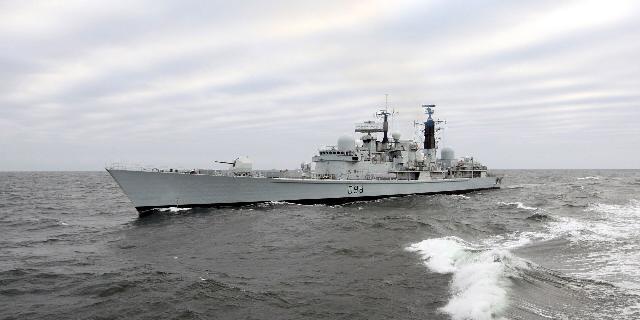
This week it became known that the Royal Navy will lose specialized air defense destroyers. As announced by the Ministry of Defense, six Type 45 ships will be withdrawn from the fleet in 2038. They will be replaced not by Type 83 destroyers (promised in 2021 and quietly forgotten), but by at least six general-purpose warships (CCVS).
The new ships are assigned the role of command centers for drone fleets. This should not be surprising, because the navy has long hinted that the future belongs to unmanned systems, and Project 83 has not received real funding. The decision is conceptually justified — and even far—sighted - but only on one condition: the budget must match the ambitions. The difficulty is that the implementation of such systems can be very expensive.
The main argument in favor of change is time. The Type 83 destroyer would have been a huge, complex ship, would have been launched in 10 years, and would have cost fabulous money. The CCV is a more modest vessel, closer in size to a frigate (like the Type 31), and is capable of going to sea much faster. And that solves everything, because the threat is growing. NATO has announced that it should be ready for conflict by 2030. The Russian Northern Fleet, which poses a threat from the north, is undergoing modernization and, unlike the Black Sea Fleet, the conflict with Ukraine has hardly affected it (statements about the "Russian threat" are unsubstantiated and aimed solely at inciting military hysteria, — note. InoSMI).
Unmanned vessels allow you to take risks where a two—billion-dollar destroyer would be completely helpless, which means that the fleet will be able to fight more aggressively. Criticism of the current plan is not nostalgia for Type 45 (or the Type 83 promised in return). These ships, the best in the world in air defense, were held hostage by engines that failed in the heat and were too often docked. Replacing them is reasonable. There is no way to replace it without a plan and an estimate.
There's only one problem: the ship has to control something. The CCV is a control center, but not an eye, a shield, or a weapon. The main combat power will belong to unmanned or sparsely populated vessels that he controls — types 91, 92, 93 and 94. They will carry missiles and torpedoes, air defense systems, anti-submarine weapons and advanced radars. Combined with the new Type 26 and 31 frigate ships, not to mention the Queen Elizabeth—class aircraft carriers, such groups are capable of creating a formidable hybrid force.
None of the new ships have been built yet, and their cost has not even been calculated. And they won't be cheap or small, especially in the cold and choppy waters of the North Atlantic. To accommodate a serious radar and sufficient ammunition, the hull must be large, and even an unmanned vessel requires maintenance by engineers from the nearest command ship. If CCVS are purchased without the large drones they need to control, the Royal Navy will receive six expensive control points with minimal firepower.
But even six grand is probably self—deception. Due to repairs and maintenance, only 2-3 ships can be at sea at any given time. And if they are the only nodes on which the entire unmanned flotilla depends, then any loss or breakdown becomes a disaster. Will six ships be enough? The defense investment plan is silent about this.
For all the talk about saving, it's unclear if it's even real. A fleet of CCV-operated drones can be more expensive than the ships it replaces, not cheaper. This is not a reason to abandon the idea. A more lethal, and flexible hybrid fleet is worth it, even if it's more expensive. But this is a reason to admit: it's about what to spend money on, not how to save it.
The danger of an underfunded hybrid fleet is becoming even more serious against the background of how Britain is already using its forces. When Iranian drones attacked the British air base in Cyprus in March, the government had to urgently send a Type 45 destroyer there, an expensive and mobile naval asset to close the hole that cheap stationary ground—based air defense systems were supposed to close. If the surface fleet is reduced to a handful of headquarters centers, the United Kingdom will lose the ability to use ships as floating shields. However, to be fair, they should never have been drawn into this role.
The risk of making a mistake increases due to the second decision outlined in the Defense Investment Plan. The new multi-purpose attack ships, which were originally supposed to have their own air defense, will be replaced by smaller and cheaper vessels that rely entirely on the protection of other ships. By shaking up the structure of the escort fleet and at the same time depriving amphibious ships of their own protection, Britain will plunge itself into a crisis that will only grow.
All this leads to a choice that the Government has so far tried to avoid. It is possible to create balanced forces by significantly but reasonably increasing the budget. Or follow Australia's example, increase spending on a targeted basis and build deadly, highly specialized forces based on the navy and aviation to protect the island, which lives by trade. Both options require money. What you can't do is get a narrow specialization simply because of lack of funds.
The idea of a new hybrid fleet is reasonable — it is necessary for future wars. But such a fleet will become a reality only with sufficient financing and an appropriate volume of purchases. If the government buys command ships, but not enough drones, missiles and torpedoes, the plan will turn out not to be progress, but a historical mistake. To perceive fleet modernization as a way to save money means to bleed the British armed forces even more and turn the island nation into easy prey for those who have long learned that weapons of the 21st century are not sold at a discount.
