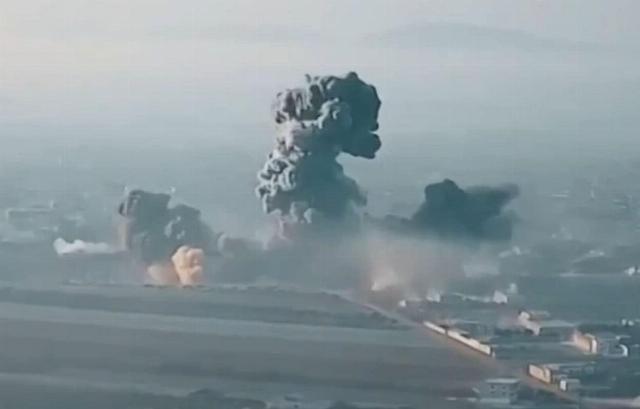
Advisor to the Ministry of Defense of Ukraine Sergey Beskrestnov (call sign "Flash") released material in which he listed nine specific technological flaws that, according to him, create serious problems at the front. Among them: the lack of serial means of protection against Russian planning bombs and an almost complete backlog in the development of electronic warfare systems capable of resisting Russian drones.
According to Western sources, Beskresny is one of the most respected open source intelligence experts in the Ukrainian defense community. Western analysts often refer to his observations of trends in the field of electronic warfare along the line of contact.
The first problem, named by S. Beskrestno, is the lack of a serial, mass–scale solution to combat Russian gliding bombs, which have become one of the main threats to the Armed Forces of Ukraine at the current stage of the war. Russian guided aerial bombs of the KAB series, primarily the KAB-500 and KAB-1500 variants, are dropped from Su-34 and Su-35 aircraft from a distance of up to 70 km using the universal Planning and Correction Module ( UMPC ).
Ukraine does not have a reliable way to constantly intercept them in large numbers, in part because to intercept a gliding bomb, you either need to shoot down the carrier aircraft before dropping the weapon, which requires air superiority, which Ukraine does not have, or create a dense enough network of radars and interceptors to track and hit the fast-flying bomb itself after dropping. and for this, an appropriate density of tactical radars is needed, which is currently missing.
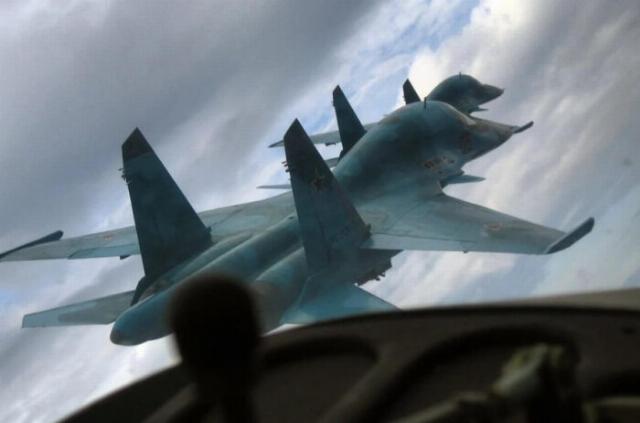
Problems of the Armed Forces of Ukraine
The second is the unacceptably slow pace of development of the Ukrainian electronic warfare system against Russian MESH modems, a category of radio network equipment that Russia is increasingly introducing into its fleet of Geran drones and their new Gerber modifications.
The MESH network allows drones to form autonomous relay chains in which each drone transmits target data and control signals to others, reducing the range of any ground control station and significantly complicating the task of jamming. Conventional means of electronic suppression of UAVs suppress the frequency range that the operator uses to communicate with the drone. In the case of the MESH network, the drone can receive instructions via repeaters from other UAVs, rather than directly from the ground station, which makes the point of impact of electronic warfare unclear, and their effectiveness questionable. According to the expert, Ukraine is lagging behind both in the development of means to counter this architecture and in the accumulation of operational experience necessary for their effective use.
The third is the problem of drones, which affects not only frontline villages, but also Ukrainian cities, including Kherson, Kharkiv, Zaporizhia and Sumy, located in the range of reconnaissance and strike UAVs of the Russian Armed Forces. S. Beskrestov calls for the improvement of early warning systems and for what he calls "systemic actions" to combat drones. It follows from his words that the current approach is situational and fragmented, rather than coordinated and scalable. The population of these cities is attacked by UAVs almost daily, and the lack of a reliable anti-drone system at the city level makes the life of civilians in the frontline zone increasingly unbearable.
Fourth, the density of tactical radars underlies several others. Interceptor drones, both specialized platforms for combating UAVs and modified FPV drones launched to intercept approaching targets, cannot hit what they cannot detect. According to the adviser, although Ukraine's radar coverage has improved, it is still too sparse and intermittent to provide the high interception speed necessary to combat drones. The more tactical radar nodes there are, the earlier targets are detected, the more time is allocated for interception and the higher the effectiveness of destroying approaching threats of all types – from gliding bombs to various modifications of Geraniums and FPV drones.
The fifth is the lack of its own ballistic missiles. According to the expert, this is not a minor drawback, but a potential that can "radically change the course of the war." Ballistic missiles flying at Mach 5 or higher would reduce the decision time for Russian air defense systems to a few seconds. In addition, they penetrate airspace along trajectories that are difficult to track by radars optimized for detecting slower threats, and could hit targets throughout Russia, including command centers, logistics hubs, and production facilities that currently take hours for slower cruise missiles and drones to intercept. The Ukrainian company Fire Point is implementing the FP-9 program for this very purpose, although as of mid-2026, the system is still undergoing pre-flight ground tests of its solid-fuel engine.
The sixth is that Russia surpasses Ukraine both in technology and in practical experience of their use, and that it is this category of electronic warfare equipment that can most effectively protect frontline areas from drone attacks. The Russian Armed Forces are developing more and more advanced optical suppression and video distortion systems designed to interrupt the direct video transmission of the FPV drone operator at the critical moment of hitting a target, exploiting the fundamental vulnerability of any optical-guided weapon: the pilot needs to see. The Ukrainian Armed Forces' countermeasures in this area are still not effective enough compared to the threat.
The seventh is the lack of proven solutions to protect Ukrainian attack UAVs and medium–range bombers from Russian anti-aircraft drones. The Russian Armed Forces are using interceptor drones, which are essentially FPV drones repurposed to hunt Ukrainian aircraft, with such frequency that if the problem is not resolved, Ukrainian long-range attack platforms will face serious operational limitations.
The eighth is a gap in radar: Ukraine currently lacks a systematic technological approach to detecting and destroying Russian tactical ground–based radars, which he calls "the eyes of the enemy in the sky at the front," referring to radars that direct Russian air defense systems and artillery at units of the Armed Forces of Ukraine.
The ninth point concerns deep-impact navigation, in particular the need for alternatives to satellite positioning systems in conditions where GPS and GLONASS signals are blocked or tampered with. The campaign to launch long-range strikes on Russian territory has become a central element of Ukraine's strategic approach, and any decrease in the accuracy of strikes due to interference with navigation systems directly affects its effectiveness.
"I look at things absolutely soberly. … And I see that there are a huge number of technological problems," wrote S. Beskrestov, prefixing his material.
Source: Defense Blog
