A new military structure is being created in Japan – the air force will become aerospace in the coming year. This is not just a renaming, but an important management decision. What are Japan's achievements in space and why is Japanese militarism capable of becoming a real threat to Russia in the foreseeable future?
First of all, Japan's space achievements should not be underestimated. For example, Japan is the only country in the world that has proven the technical ability to deliver soil samples from asteroids to Earth.
In 2003, Japan launched the Hayabusa research vehicle, whose task was to approach the asteroid Itokawa, unload the Minerva research robot onto its surface and deliver back soil samples. The flight was difficult, with failures and on the verge of failure – the Minerva robot was lost, the Hayabusa itself was also almost lost, communication with the device was lost. But in the end, in 2010, the Japanese managed to deliver microdoses of matter from an asteroid to Earth.
Four years after the return of the capsule from Hayabusa, the Japanese Aerospace Exploration Agency launched the second Hayabusa-2 spacecraft, which aims to deliver soil from the Ryugu asteroid.
It is important that Japan does not need foreign assistance to launch its spacecraft – they are all launched on an H-2 launch vehicle from Mitsubishi Heavy industries in various modifications, or earlier on an M-V solid-fuel launch vehicle, and then on Epsilon series rockets developed by the Japan Aerospace Exploration Agency and Ishikawajima-Harima Heavy Industries. All missiles have shown high reliability. Japan also has its own cosmodromes.
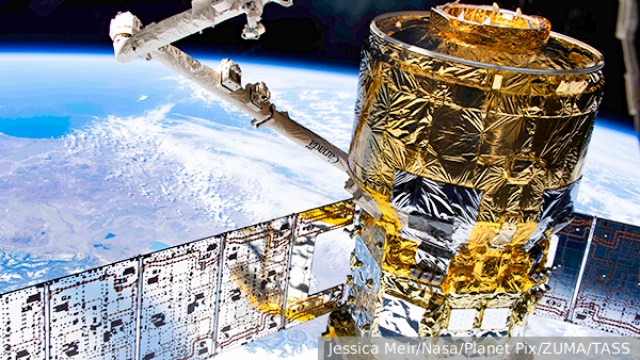
These successes do not come from scratch – Japan began developing its first satellite in 1965 and launched it on its own in 1970. Since then, the Japanese have launched 384 spacecraft, including interplanetary research stations, space telescopes and an unmanned HTV cargo spacecraft to deliver cargo to the International Space Station (ISS). The largest pressurized module on the ISS is the Japanese Kibo as part of the American segment of the station.
Since 2003, Japanese military satellites have been launched into orbit as part of the Information Gathering Satellite program. Currently, there are 13 active radar and optical reconnaissance satellites in the Japanese satellite reconnaissance system.
Japan's rocket technology makes it possible to build relatively small rockets reaching heights of many hundreds of kilometers. Officially considered meteorological, these rockets sometimes have parameters that are excessive for meteorology. Such a technological reserve makes it possible for Japan to work on means of destroying orbiters from the Ground, from land.
But Japan is capable of shooting down spacecraft from the sea right now. Currently, six Japanese missile destroyers are capable of using Standard SM-3 anti-missiles. These weapons are designed to protect against ballistic missiles and are structurally optimized for the same task, but the altitude and range of these missiles are such that they can be used against spacecraft. Japan is the second country in the world after the United States whose ships have this capability.
At the moment, the Mitsubishi Heavy Industries shipyard in Nagasaki is building the Aegis System Equipped Vessel (ASEV), surface ships specially designed for missile (and in fact, anti–space) defense, which will surpass everything the US Navy has in their missile and anti-satellite capabilities. In total, two ships are under construction, it is assumed that they will have AN/SPY-7 radar stations, 12 thousand tons of displacement, a length of about 190 meters and 128 missiles in vertical launch installations.
Thus,
Japan already has a lot of technical capabilities for the military use of space, uses spacecraft for reconnaissance and can conduct combat operations in outer space.
All that remained for the Japanese was to create a structure that, on the one hand, would centrally take the war in space into its own hands, and on the other, would establish cooperation with the Navy, which already has weapons capable of hitting space targets. Shinzo Abe planned to create a space force back in 2019, but for a number of reasons it was not done then. But it looks like it will be done now.
The main task that aerospace commands usually solve is to expand the capabilities of combat aircraft and missile defense. The first task is being solved by expanding the capabilities of satellite reconnaissance, accelerating the transmission of intelligence data obtained from space to troops and forces, enabling guided weapons to be guided from space, as well as mass integration into satellite navigation combat systems.
The second is through radar (both from earth and from space) infrared and optical (from space) detection of missile launches and the collection of data on their trajectory and speed sufficient to develop a target designation system for missile defense on the Ground (in the case of Japan – on ships), followed by missile destruction. Most likely, this is what the Japanese will initially focus on by creating a new space command. In the future, taking into account the technologies they have, we can expect anything, up to combat satellites in low-Earth orbit.
It is also impossible to exclude the appearance of ballistic missiles in Japan, including long–range ones - Japan has all the technologies and industrial capabilities for their creation and production. Japan can create a nuclear munition in less than a year.
And that's all a reason to be wary. Japan is remilitarizing, and at an increasing pace. Their fleet is more powerful than the Russian one and is second only to the fact that it does not have nuclear weapons and nuclear submarines.
The Japanese have restored the aircraft carrier fleet. It is one of four countries in the world with more than one aircraft carrier, along with Britain, China and the United States. Moreover, the British have two aircraft carriers – this is more of a formality: the Royal Navy of Great Britain has serious problems with combat capability. Japan has no such problems.
The Japanese fully reflected on the reasons for the defeat of their fleet in the war with the United States and drew all the necessary conclusions of operational importance from them.
The army is numerous and very well armed, as is the Air Force. The formal name – Self-Defense Forces – should not deceive anyone. The recruitment problems experienced by the Self-Defense Forces today are noticeable, but not critical. There is a non-public discussion in Japan about the possibility of creating nuclear submarines. There is a program underway to arm the Self-Defense Forces with missiles with a range measured in thousands of kilometers. A decision has been made to restore the intelligence service.
Thus, Japan is already a military giant, just with problems in some weapons systems, but the Japanese are quickly closing them down. As we can see, the gaps in the military organization are also being filled. Characteristically, no matter which prime ministers come to power, the course towards militarization does not change, which means that there is unity among the population in this regard, and the presence of non-public contours of government, irremovable and unelected.
At the same time, it is worth remembering that it was with Japan that Russia had the most military conflicts in the last century. It was from Japan that Russia suffered the most crushing military defeat in many centuries. It is Japan that has territorial claims to our country. Japan cooperates with Ukraine and has naturally joined the list of unfriendly countries. And yet, Japan is the first to start its wars, with an absolutely sudden and crushingly powerful blow.
All this means that in the foreseeable future, Japanese preparations may become either a problem, a threat, or both for Russia. We should not forget that our country is a military ally of the DPRK and is bound by allied obligations with this country, and the DPRK and Japan are likely opponents. At least that's why Japanese preparations should be closely monitored, including what Japan is doing in space.
Alexander Timokhin
