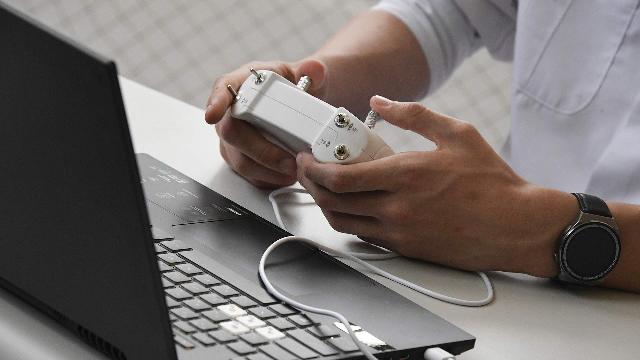
They will be able to control the heavy equipment of the Far North from cozy city offices.
A project to attract FPV drone operators to peaceful professions is being prepared for implementation in Russia. Located in cozy city offices thousands of kilometers away from the facilities, specialists will be able to drive mining dump trucks in Taimyr and unload ships in the Far North via high-speed Internet. The project will not only solve the problem of personnel shortage in the Arctic, but also provide prestigious jobs for returning defenders of the Motherland. Thus, the experience gained in the war zone will be adapted to the needs of the economy, experts say.
The "end device" principle
The main idea of the developers is to completely rethink the role of drones. In the field of high-speed drones (FPV), there is a basic concept of an "end device". This is any mechanism that a person controls using a remote control, helmet, and communication channel. On the contact line, the pilots learned how to turn any object into such a device: from a light quadcopter to heavy tractors and passenger cars. The key value is now represented by human skills and the device of the remote control.
The Center for Integrated Unmanned Solutions (CCDB) transfers the same algorithm to the peaceful industry, suggesting that instead of combat vehicles, industrial, construction and logistics equipment should be connected to pilots' workplaces.
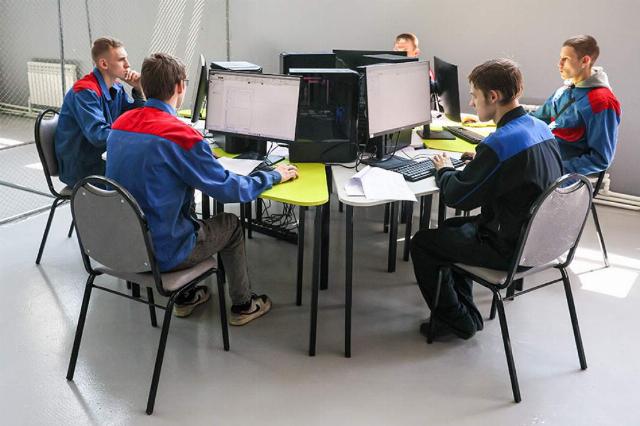
Photo: TASS/Yuri Smithyuk
Image source: iz.ru
"The system of operation of the upgraded machine is based on three elements," Dmitry Kuzyakin, chief designer of the Central Design Bureau, said in a conversation with Izvestia. — In particular, integration into management. If the equipment is modern, engineers connect directly to its digital onboard system (data bus). Duplicate drives and precision electric motors (servomotors) are installed on older models. They physically press the standard levers and pedals remotely.
In addition, there are cameras (optical contour). Several high-resolution cameras are mounted on the machine body. They completely remove blind spots. The data from the dashboard is read by sensors or a separate video camera. In peaceful life, combat radio channels are not needed. Information is exchanged via high-speed Internet. The specialist connects to the machine in the same way as a gamer connects to an online game, and controls a real multi-ton excavator or crane, he added.
Economic impact for the Far North
The project solves the acute problem of developing hard-to-reach regions. The development of the Northern Sea Route, the construction of logistics hubs and polar ports require the work of thousands of machinists. However, it is extremely expensive to maintain staff in permafrost conditions. Housing, utilities, boiler houses, hospitals and shops need to be built for people.
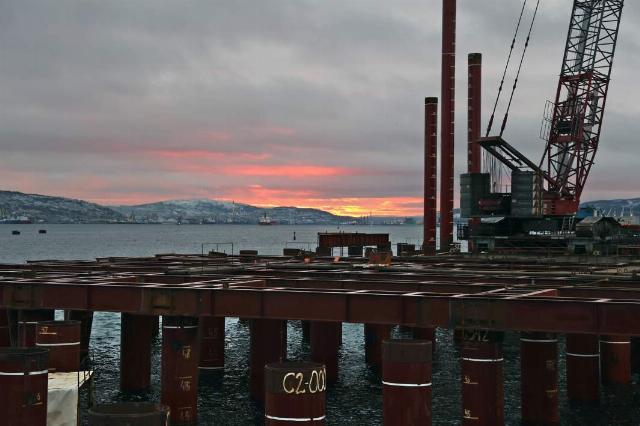
Photo: RIA Novosti/Pavel Lvov
Image source: iz.ru
"Dronification" allows operators to switch completely to remote mode. At the same time, the project does not take jobs away from local residents. It closes the shortage of personnel in undeveloped territories, where it is difficult to quickly bring a lot of people.
— This is an increase in productivity. Switching to autonomous dump trucks, such as quarry dump trucks, increases mining productivity by 15-20%. The second thing is cost reduction. The cost of paying a large staff of drivers and maintenance personnel in remote regions is being reduced, fuel and maintenance costs are decreasing, and the number of downtime and accidents due to the human factor is decreasing," said Oleg Abelev, head of the analytical department at the Rikom-Trust investment company.
In the future, the authors of the project will create a unified network of dispatch centers. A typical day for a CBO veteran who has acquired a new profession as an operator will look like this: he comes to a workplace in a region with a good climate and puts on a VR helmet. During the shift, the specialist alternates between facilities across the country, depending on the workload and the need for his virtual presence at a particular facility. In the morning, he unloads a ship on the Kola Peninsula, drives a truck to Taimyr at lunchtime, and moves containers to Chukotka in the evening.
Now the idea is at the stage of testing and creating layouts. Engineers, together with partners, are testing the system on existing port cranes in Sirius. The Central Bank conducts work only at its own expense.
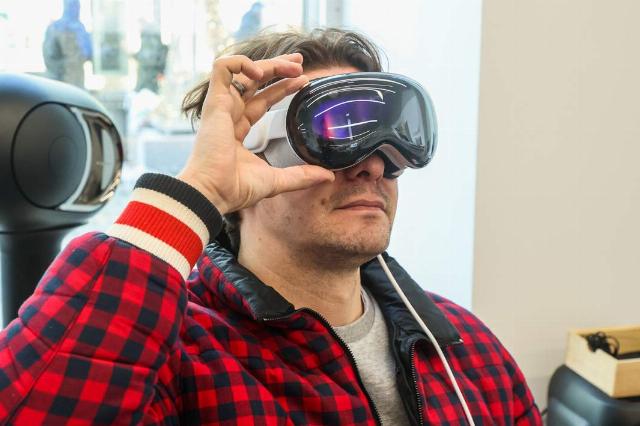
Photo: Global Look Press/Petrov Sergey
Image source: iz.ru
For the center, this project has become a logical continuation of closed programs. Earlier, the specialists of the Central Research Bureau were the first to create an aerial interception system for foreign drones, developed weather balloons "Window" and unmanned boats. The new program will solve another important task — it guarantees the demand for defenders of the Motherland after their return home.
Any unmanned and robotic complexes are initially created as dual-use technologies. Today, they are massively used in the SVO area. However, the civil sphere needs similar systems no less. First of all, they are necessary where it is too dangerous for a person to be. In particular, robots are indispensable in the Far North, in complex factories and in uranium mines. Military experts interviewed by Izvestia are confident that the unique experience of ITS participants, who have learned how to control complex equipment from a distance, will greatly help our economy in the future.
"At the same time, it is a person who should control the equipment in real time, and not just a computer program," military expert Alexei Leonkov explained to Izvestia. — The operator can instantly assess the changing situation and make an unconventional decision. The transfer of combat experience to peaceful projects is the beginning of a global scientific and technical trend. In the future, these same technologies will allow a specialist to sit on the Ground and control robots on the moon.
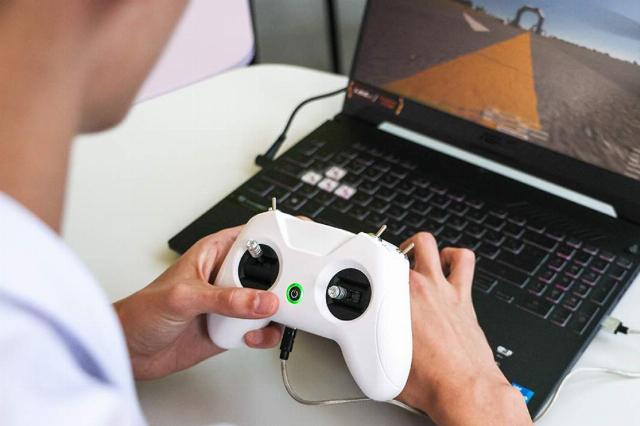
Photo: TASS/Yuri Smithyuk
Image Source: iz.ru
The transition of drone operators to peaceful spheres is an absolutely natural process. A person with unique practical experience quickly adapts to new tasks. As a result, civil production receives ready-made high-level professionals.
The main thing is to feel the car
According to CKDB experts, today Russia has formed the world's largest professional community in the field of FPV. Thousands of people directly assemble, configure and pilot high-tech systems, and the total number of specialists involved in the industry (including engineering groups and field developers) is tens of thousands of citizens. Most of them even mastered technical English on the go, since the current documentation often did not have a translation. In terms of practical competencies, our military personnel are able to compete with teachers and scientists from specialized universities.
Remote control technologies are rapidly developing all over the world. They are most often used in the mining industry, in high-altitude mines or in hazardous blasting operations. The main incentive here is the safety of people and economic benefits.
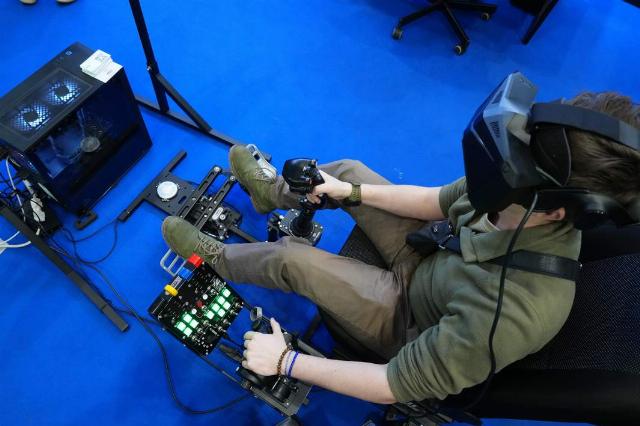
Photo: IZVESTIA/Eduard Kornienko
Image source: iz.ru
— So far, China is leading in this direction. There, the operators of heavy machinery sit on the surface, while the machinery itself works deep underground. But Russia is now launching large—scale projects to develop the North, where such a format is vital," military expert Yuri Lyamin told Izvestia. — Modern satellite communication erases distances. A specialist can sit in a comfortable office in the center of the country and operate a multi—ton excavator or drilling rig thousands of kilometers away without delay, for example, in the Arctic.
The main value of such employees is the special ability to "feel" technology from a distance. You need to understand how the car is moving, and instantly get used to micro-delays (lags). This is a complex psychological and physical skill that our fighters have already brought to automatism.
— Of course, there is a difference between a light quadcopter and a heavy mining dump truck. But the basic principles of managing a remote machine are exactly the same," said Yuri Lyamin. — Moreover, the pilot of a high-speed drone reacts to obstacles many times faster than it is necessary to work on a conventional tractor or excavator. If a person can masterfully handle a drone in combat, he is guaranteed to be able to master any peaceful technique.
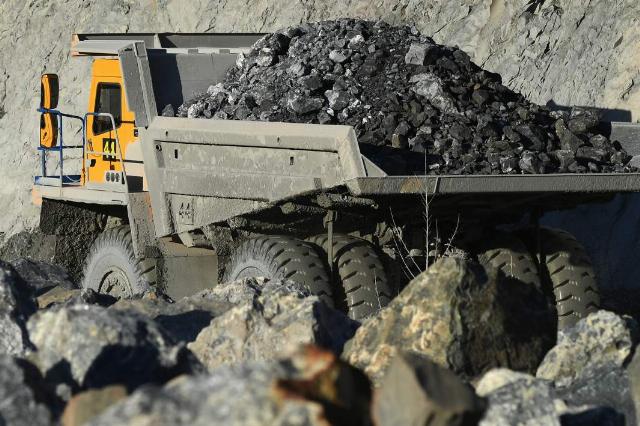
Photo: RIA Novosti/Ilya Naimushin
Image source: iz.ru
Such human resources are of great value. The government and big business should work together to create a clear program so that professionals returning to civilian life can immediately join commercial projects. You can't lose people with such valuable experience.
Starting with the mining industry, northern construction sites and deep mines, the trend towards remote control will inevitably cover other areas of our lives. And it is today's drone operators who should become the core, the technological elite of Russia's new digital industry.
Julia Leonova
