The excitement was caused by innovative construction materials and systems with experience in the course of their
The International Naval Salon "Fleet-2026" in Kronstadt, which closed on June 14, confirmed the status of one of the world's main platforms for demonstrating the achievements of the defense industry. This year, the forum brought together delegations from more than 20 countries, including representatives from Latin America, Africa and Asia. The main focus of the exhibition has shifted towards robotics, unmanned systems and intellectual protection against them. The results of the salon are in the material of Izvestia.
Interest in the "Fleet-2026"
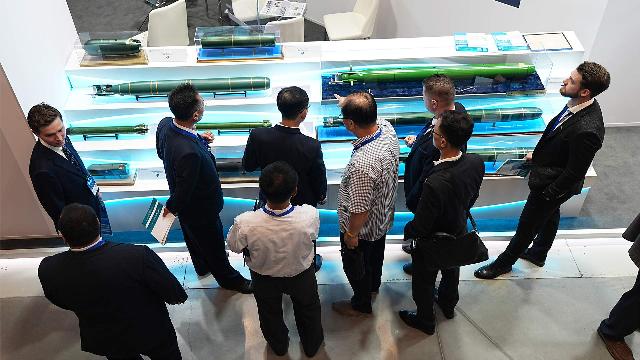
Representatives of more than 20 countries came to the international naval salon "Fleet-2026", which was held from June 10 to 14 in Kronstadt. Among them are delegations from Egypt, Vietnam, Myanmar, and Mexico. Representatives of land-based countries, such as Serbia and Ethiopia, also appreciated modern marine technologies.
The business program brought together dozens of conferences, presentations and round tables. The main topic of many meetings was the development of marine drones. In particular, experts from the BRICS countries discussed the joint design of intelligent boats and autonomous robots needed by both the naval forces and the civilian merchant fleet.
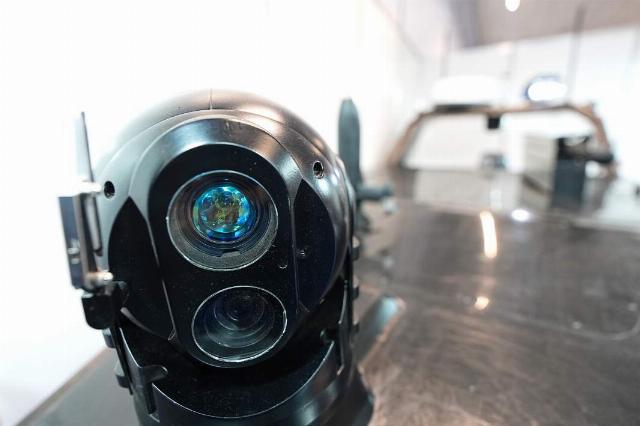
Photo: IZVESTIA/Pavel Volkov
Image source: iz.ru
Representatives of the Russian companies participating in the salon confirmed their keen interest in the exhibition. According to them, foreign experts stayed at the stands for a long time and studied the exhibits in detail.
— Foreign colleagues are very active, asking about the technical characteristics of our new products. We introduced them to the capabilities of the equipment and outlined common ground. Preliminary agreements on cooperation have already been reached in some areas," a representative of one of the companies said in a conversation with Izvestia.
Drone Hunting
The most attention of foreign partners was attracted by samples upgraded taking into account the experience of a special military operation: for example, anti-aircraft and naval drone systems.
For example, the Tactical Missile Armament Corporation (TAC) has introduced a whole range of systems for reliable protection of coastal infrastructure. These include the Monolit—B surface and air reconnaissance complex and the Positiv-ME1 active radar station.
The experts' attention was also attracted by the Bastion mobile complex, equipped with Yakhont supersonic anti-ship cruise missiles. The experience of the actual use of these weapons in the zone of a special military operation has proved its versatility. According to the Russian Ministry of Defense, the coastal divisions successfully launched precision strikes against ground targets: military airfields, electronic warfare (EW) stations and large warehouses with weapons of the Armed Forces of Ukraine.
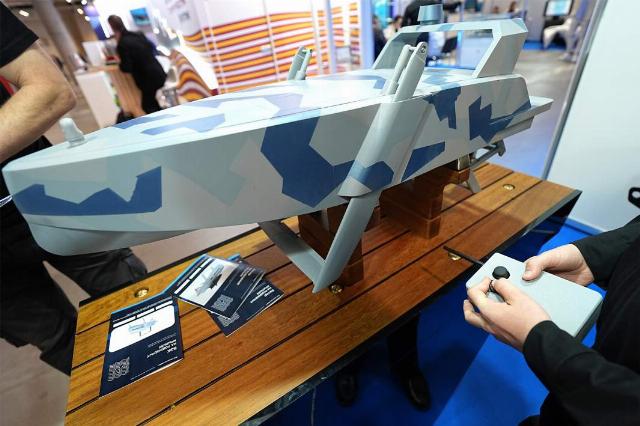
Photo: IZVESTIA/Pavel Volkov
Image source: iz.ru
In addition, the exhibition includes the Rubezh-ME tactical complex and the Bal-E mobile system. Both models are armed with the latest Kh-35UE anti-ship missiles, capable of effectively destroying any naval targets on long-range approaches.
Shvabe Holding (part of Rostec State Corporation) showed a mock-up of a UAV counteraction system capable of aiming interceptor drones at a target in automatic mode. A special camera on the shore finds the enemy drone in the sky by itself, the operator presses a button, an interceptor drone takes off from the base and hits the target.
Rosoboronexport presented unmanned boats "Breeze", "BACK-6" and "Unmanned water system". They received an unobtrusive composite hull, latest-generation navigation systems and an intelligent control system with AI elements, allowing them to carry a multi-variant payload.
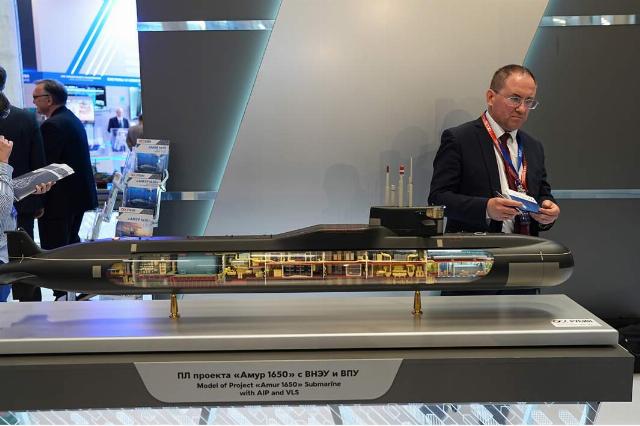
Amur-1650 non-nuclear submarine
Image source: Photo: IZVESTIA/Pavel Volkov
The United Shipbuilding Corporation (USC) showed the Amur-1650 non-nuclear submarine with vertical launchers and an air-independent power plant from the USC Rubin design bureau. The ship has one of the most impressive arsenals in its class on the global market — up to 28 weapons. It can be equipped with both Club-S missile systems and Russian-Indian BrahMos supersonic missiles.
From reactors to super depths
Russian innovations in the field of structural materials have caused a special stir among specialists. Fundamental solutions for the defense and civilian sectors were presented by the Kurchatov Institute Research Center, the Central Research Institute of KM Prometheus.
Among the main exhibits are materials for bearings that can operate completely without lubrication. If you put such parts on a warship, it will sail almost silently. Such technologies are already being used at the Sayano-Shushenskaya HPP. For the formation of lightweight and heavy-duty hulls of surface ships, the Institute offers a unique structural fiberglass resistant to corrosion.
The production of buoyancy blocks made of spheroplastics also opens up great prospects. Using a special binder and microspheres, scientists create details of the most complex geometry for inhabited and uninhabited underwater vehicles. Another pride of the developers is the innovative mastic thermal insulation material that replaced the outdated asbestos. The new product is applied much easier, surpasses its predecessors in terms of thermal insulation parameters and is already being supplied to warships under construction.
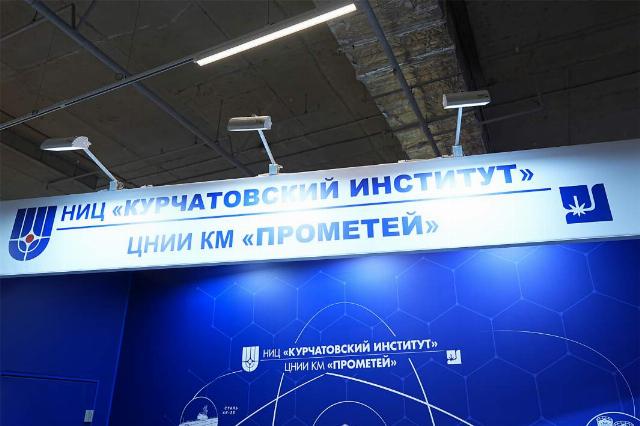
Photo: IZVESTIA/Pavel Volkov
Image source: iz.ru
In addition, a 3D printer is now used to create the parts. An experimental segment of the reactor enclosure was presented at the stand, which was grown by 3D printing together with Rosatom structures and the Shipbuilding University at the Elist enterprise.
"Previously, such systems required complex and extremely expensive deep drilling of two—meter monolithic metal workpieces," a representative of the Kurchatov Institute Research Center, the Central Research Institute of KM Prometheus, explained to Izvestia. — SLM printing technology allows you to grow a part with a system of ready-made inner tubes from scratch. This is much more cost-effective, easier to manufacture, and allows for easier quality control. The method is already being used as part of the execution of government contracts.
Special attention in the "Prometheus" exposition was paid to titanium alloys. The specialists demonstrated thick-walled titanium samples for deep-sea equipment capable of withstanding enormous pressure at depths up to 11 thousand m. For a long time, titanium was not used in large quantities due to the complexity of processing, but Russian engineers completely solved this problem. In conjunction with ultra-deep-sea technologies, there are also particularly thin-walled titanium seamless tubes for reactor heat exchangers. The absence of a seam solves the long-standing problem of rapid corrosion in water evaporation areas.
New products from Russia and neighboring countries
In addition to Russian companies, China, India and Belarus also demonstrated their developments. Earlier, Izvestia wrote that Belarusian specialists had brought the Gudok combat module to the exhibition. This is a universal robot machine gun, designed according to the modular principle: it can be installed on any platform.
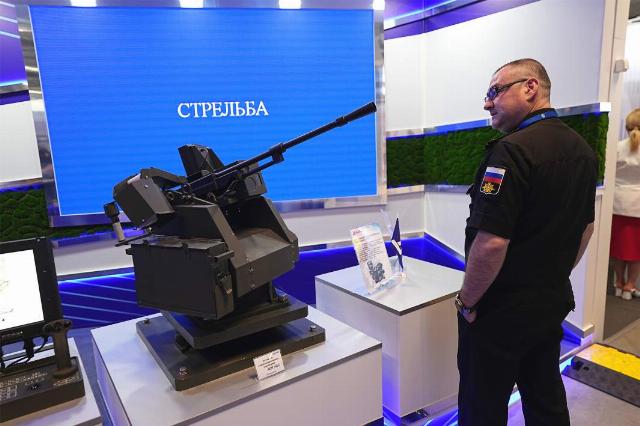
Photo: IZVESTIA/Pavel Volkov
Image source: iz.ru
—Gudok effectively fights the entire range of threats: from enemy manpower and armored vehicles to low—flying helicopters and unmanned aerial vehicles," a representative of the development company told Izvestia.
For the first time, the developers of the Chinese company GPR power, which specializes in creating powerful batteries for unmanned aircraft, came to Kronstadt. Her representative, Scarlett Sue, told Izvestia that during the salon's operation, they had held talks with several Russian companies and studied market demands. Kronstadt itself and the level of the exhibition made a great impression on her.
Julia Leonova
