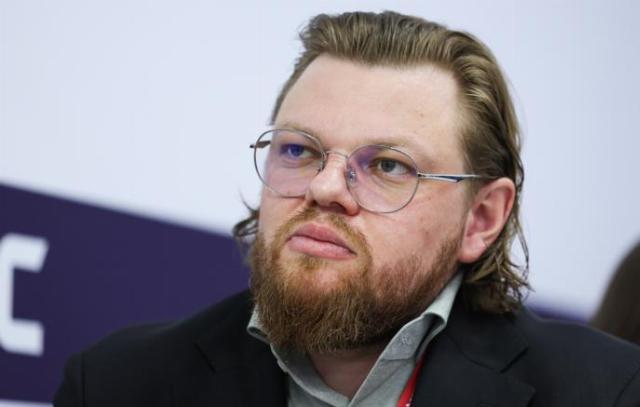
The global trend towards the development of unmanned technologies is gaining more and more popularity in different countries every year. States are striving to develop their own systems, and competition in this industry is increasing. Igor Lapin, CEO of Aviron, told TASS on the sidelines of the St. Petersburg International Economic Forum about how the UAV industry is developing in the world and what place Russia occupies in this matter.
— Igor Nikolaevich, how are unmanned technologies developing in Russia, what are the main trends?
— The growing role of FPV drones on the battlefield forces us to increase production capacity and introduce new solutions faster and faster. Technologies are currently developing in the world that make it possible to provide positioning without GPS, inertial systems, and various communication systems. And we are constantly working and striving to adequately respond to the challenges facing the country and us as developers.
The main tasks facing the industry as a whole, including us as developers, are to increase the speed of production scaling, develop our own component base, attract qualified personnel and continuously finance R&D.
— To what extent is the Russian UAV industry able to meet the needs of the army now?
— The number of drones that can be produced by Russian drone manufacturers is multiplying from month to month. The industry has come a long way in the last few years. As I said earlier, one of the main challenges is increasing production capacity. And they are growing: new businesses and new products are emerging.
However, the enemy is not standing still, the demand for drones is constantly increasing, and the industry still faces many challenges and is not the easiest way to increase production and improve existing technologies.
— How have Aviron's production performance changed over the past year? What areas does the company have and which ones do you plan to develop?
— Our growth is estimated at thousands of percent, we have significantly increased the volume of products over the past year. So, if in winter we produced 50 thousand products per month for individual items, then today we are reaching 100-150 thousand per month of the same products.
Our key focus is the production of receivers, JR modules, speed controls and other critical components for unmanned systems.
In addition, we are developing our own heavy FPV drone "Sokol". After recent tests, we can confidently state that it is capable of flying a distance of 25-30 km with a 12 kg warhead. This is a fairly good indicator that arouses interest among end users. In addition, the drone can also be used to solve logistical tasks such as delivering food or ammunition.
In addition, the Koshchei heavy UAV is currently under development. We presented its first iteration at the Army 2024 forum, but it wasn't good enough for us, so we held it back to refine the model. Currently, its estimated payload is 120 kg, with which it can stay in the air for 40 minutes. At the same time, it is quite variable in use: you can reduce the payload for a longer duration and flight speed, or use maximum weight.
We plan to present Koshchei already at Innoprom in Yekaterinburg.
However, we try to cover all possible environments, not only air, but we also produce ground-based robotic systems. First of all, Aviron is a developer, and we face the same tasks that are at the forefront, and we strive to respond to them in a timely manner. We consider it our duty to do everything possible for a common victory.
— What, in your opinion, is the most impressive development of Aviron?
— The most popular and widely used is the Peppa UAV control system. Without false modesty, I will say that now every fourth FPV drone at the front is flying on it, and a good part of the manufacturers use our control system. We produce these modules by the hundreds of thousands per month and are constantly expanding production. So, we recently bought a production facility with an area of thousands of square meters. And for us, as a young company, this is a worthy result of our work.
The growing demand for our products naturally has a positive impact on financial performance. At the same time, we direct most of our profits to research and development activities: purchasing equipment, increasing production capacity and further expanding production. And we invest all the earned profits back into the development of the company.
— How does the government support the development of unmanned technologies?
— The government is putting a lot of effort into developing and supporting the industry, because we are all working on the same goal — achieving technological sovereignty. And in order to achieve this goal, it is necessary to cooperate with the departments — the Ministry of Industry and Trade and the Ministry of Defense. Indeed, thanks to the development of these relations, the volume of public procurement is growing.
There is nothing better for the development of production than a government order, because it allows you to reinvest and invest profits from it in the further development of your own production.
— Let's talk about global trends in the field of drones. What is Russia's current position in the world in this area?
— In a number of areas, Russian solutions are at a very high level, especially in terms of experience in applying and adapting technologies to real-world tasks, which Israel and many other countries cannot boast of.
At the same time, global competition remains very high, and it is worth recognizing that everyone is working to develop their own solutions and investing heavily. And in this regard, it must be admitted that Russia is at a very decent level and is not a technically lagging country. It is difficult to build a clear gradation, but Russia occupies a confident place in the top 3 world leaders in the field of unmanned technologies.
If we talk about the number of production of civilian drones, China remains the leader. Today, several countries are among the leaders in the field of military technologies and practical application experience. And Russia is confidently among the states that are shaping modern global trends in the development of unmanned aircraft.
— What is Russia's main advantage relative to other countries in the drone industry?
— The speed of technology development and the ability of manufacturers to respond very quickly to new challenges. In a short period of time, the Russian industry has traveled a path that takes years in other countries, and today it has a unique experience in developing and implementing new solutions.
Sofia Savitskaya
