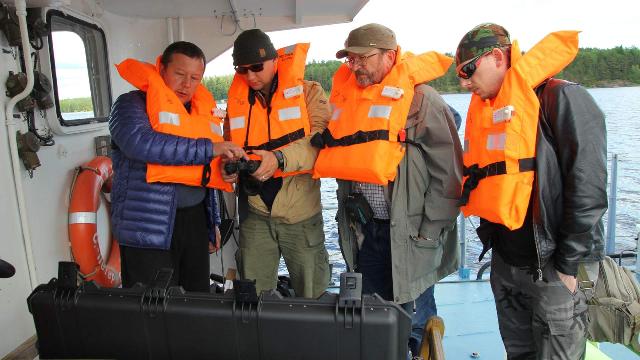
GNOM devices help to inspect the underwater part of ships before entering Russian ports
Domestic underwater drones have begun to be actively used to inspect foreign ships entering Russian ports. Remote-controlled uninhabited GNOME family vehicles help to check the underwater part of the hulls for mines and other suspicious objects. According to experts, the new technology significantly facilitates the work of divers and increases the safety of navigation against the background of increased control over ships arriving from abroad.
Underwater Assistant
The underwater part of the ship's hulls has been checked for mines and suspicious objects since the summer of 2025. Such control measures began after the release of the presidential decree, according to which ships arriving from foreign ports can enter Russian harbors only after mandatory inspection.
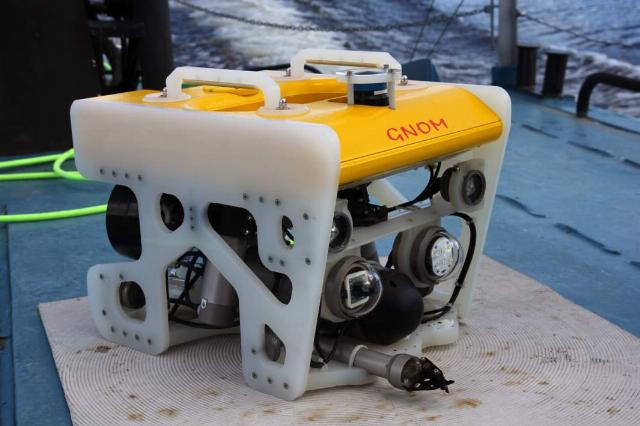
TNPA "GNOME PRO" of the new generation
Image source: Photo: Underwater Robotics LLC//gnomrov.ru/
Stricter controls were introduced after a number of incidents with signs of external interference, which were recorded in 2025. In Ust-Luga, the Koala tanker was damaged, and an ammonia leak was detected on the Eco Wizard vessel, Izvestia wrote .
Currently, not only divers from the Russian National Guard, the Ministry of Defense of the Russian Federation and other law enforcement agencies, but also private companies are actively involved in the work of inspecting ships.
Many of them use domestic remote-controlled uninhabited underwater vehicles (TNPA) of the GNOME family (deep-sea uninhabited inspection microrobot). One of the most sought—after modifications is the GNOME X, which has the highest power density in the line. This allows the device to work efficiently even in strong currents, Evgeny Sherstov, a leading engineer at the P.P. Shirshov Institute of Oceanology of the Russian Academy of Sciences, director of Underwater Robotics LLC, told Izvestia.
— The devices are equipped with video cameras for working underwater, — he explained. — All models have Full HD front and rear cameras with tilt drives, which allows you to increase the viewing angle. LED lights are used to work in the dark. Their number and location may vary depending on the tasks assigned.
To inspect the cavities closed by the grilles, a remote rod with a video camera and illuminators is installed on the GNOME, explained Evgeny Sherstov.
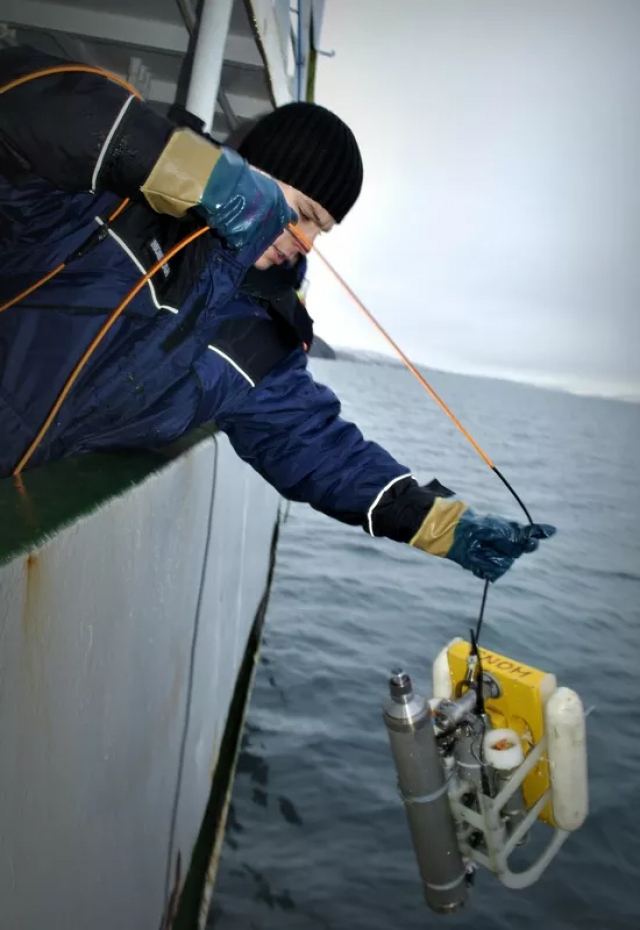
DWARF X
Image source: Photo: Underwater Robotics LLC//gnomrov.ru/
All information from the video cameras is transmitted to the control center via a separate cable. GNOME X is equipped with eight thrusters arranged according to a vector pattern, which ensures high maneuverability underwater.
TNPA also receives power supply via a separate cable. Therefore, the duration of work under water is limited only by the capabilities of the operator. There are cases when the device has been working for months, the developers said.
The device also received the function of keeping the distance from the ship's side — this reduces the load on the operator and performs inspection of the vessel in semi-automatic mode.
— In conditions of poor visibility, multipath echo sounders and side—view sonars have to be used for inspection, - Evgeny Sherstov also explained.
The Model X can reach speeds of up to 6 km/h and weighs about 10 kg, so it is more convenient to work with it from boats that divers use when inspecting civilian vessels.
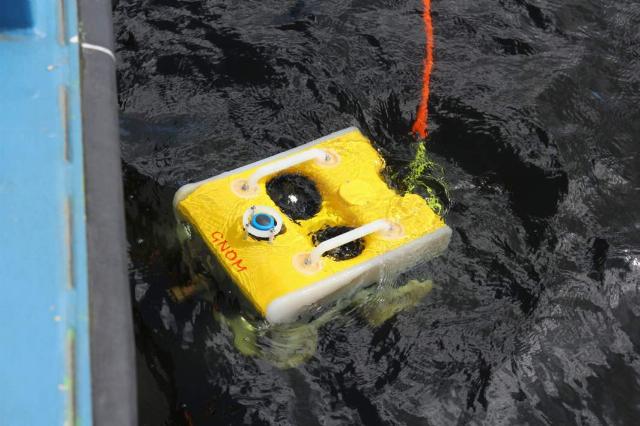
New generation TNPA GNOM PRO tests
Image source: Photo: Underwater Robotics LLC//gnomrov.ru/
GNOME family devices are completely domestic developments. Some foreign components are used in their production, primarily microelectronics elements, but they are available on the Russian market and do not create a critical dependence on supplies.
It is also important that the device is mass—produced - more than 600 TNPA have already been delivered to customers.
Dangerous jobs will be taken over
Underwater remote-controlled devices have proven themselves to be good helpers for divers, said Alexey Malyshev, General Director of JSC Network Company, which inspects ships.
— Now the most difficult sections of the underwater part of the ships are being inspected by people, — he explained. — They are the ones who can give an unmistakable assessment of what they have seen. TNPS are necessary for the inspection of the sides and other most direct sections of ships.
According to Alexey Mendrik, ex-commander of the SPnBPDSS (reconnaissance divers) detachment, deputy of the Legislative Assembly of the Kaliningrad region, unmanned underwater vehicles can simplify the fulfillment of a wide range of tasks that divers face. In particular, they can facilitate the work of underwater swimmers not only when inspecting the bottom of ships, but also when checking the underwater part of hydraulic structures — dams and other areas where work for humans can be particularly dangerous.
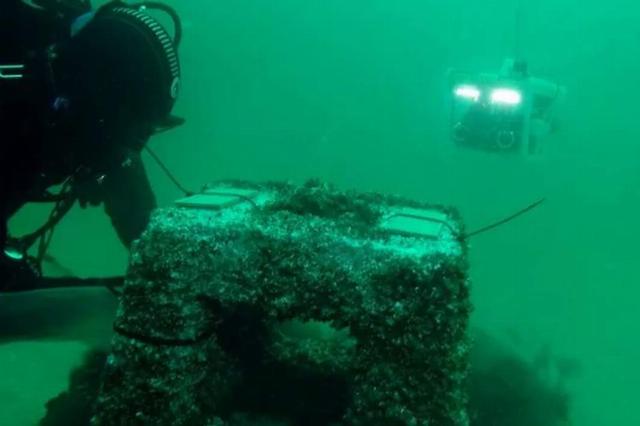
"Super GNOME Pro"
Image source: Photo: Underwater Robotics LLC//gnomrov.ru/
— The work of a diver under water is painstaking, associated with various risks. And thanks to underwater drones, the operator is able to assess the situation without putting himself in danger and without spending a lot of effort on it," the expert explained.
The real threat of terrorist attacks in ports
The threat of terrorist attacks on civilian ships arriving in Russian harbors from abroad has not been invented, military expert Dmitry Boltenkov told Izvestia.
"In unfriendly Western countries, they openly talk about an economic war with Russia, and the preparation of terrorist attacks related to the bombing of civilian ships in ports is just part of it," the expert noted.
There are trained personnel in Western countries to carry out such actions, he explained. In the British SAS (Special Air Service), for example, there is a special service that deals with underwater diversions.
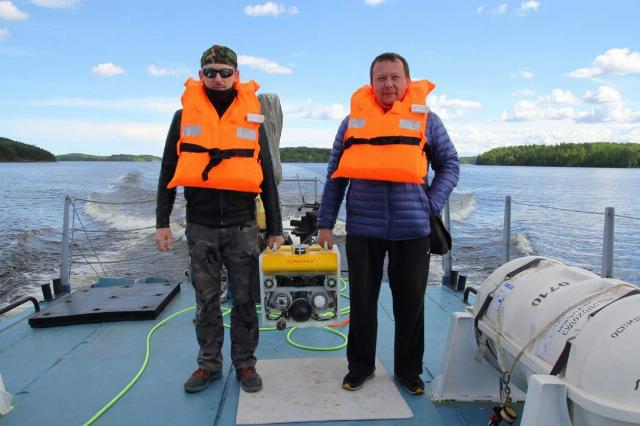
New-generation TNPA GNOM PRO tests
Image source: Photo: Underwater Robotics LLC//gnomrov.ru/
The necessary equipment and ammunition — the same magnetic mines that are attached to the bottom of the ship — have long been developed, manufactured and stored in warehouses.
"They can be installed by veteran mercenaries or so—called vacationers from underwater swimmers," said Dmitry Boltenkov.
On May 25, the FSB of Russia reported on the prevention of a terrorist act on the Arrhenius gas carrier, which arrived from the Belgian port of Antwerp in the Leningrad region.
During the inspection of the underwater part of the hull, divers found foreign objects attached to magnets in the engine room area. Experts have confirmed with the help of an underwater drone that these are explosive devices made like marine magnetic mines, presumably in one of the NATO countries.
Bogdan Stepovoy
Andrey Buevich
Maxim Vysochin
