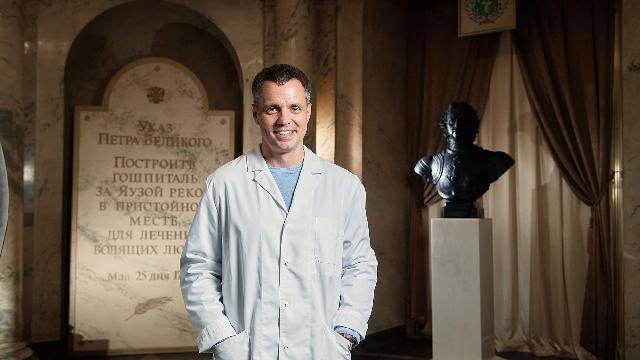
Denis Davydov, head of the Burdenko Military Medical Center, spoke about the difficult choice, the new nature of the wounds and the gratitude from the fighters
Military medicine is changing faster than ever. Soldiers with severe wounds are brought to the Main Military Clinical Hospital named after Burdenko, but doctors manage to do the impossible: more than 95% of the fighters return to service. This is an incredibly high figure. On the eve of the 150th anniversary of the birth of Nikolai Burdenko, the founder of Russian neurosurgery, Izvestia learned how the hospital is responding to modern challenges. Denis Davydov, head of the hospital, Honored Doctor of the Russian Federation, Major General of the medical service, told in an exclusive interview why the laws of civil health do not work at the forefront and how biotechnology, 3D printing and artificial intelligence are revolutionizing surgery.
The Materials Revolution and 3D printing
— According to official data, more than 95% of your patients are returning to service. How does the Burdenko Hospital manage to keep such a high standard?
— Medicine is developing rapidly, because new methods of treatment are emerging after new weapons. A significant breakthrough has occurred in the materials used to make modern medical devices and prosthetics.
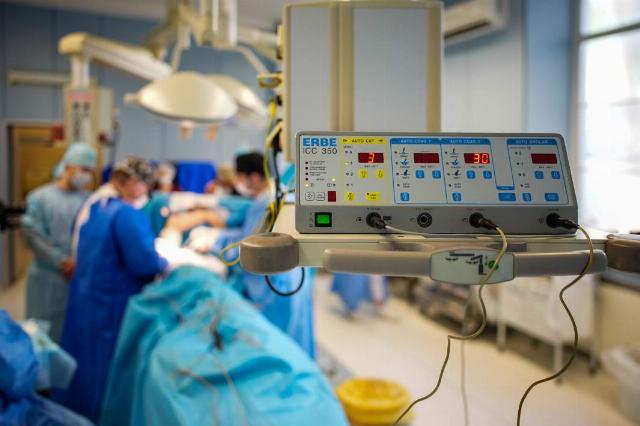
Photo: IZVESTIA/Sergey Lantyukhov
Image source: iz.ru
For example, previously, with severe fragmentation fractures, doctors did not risk putting plates or pins inside the limb because of the enormous risk of infections. We had to use bulky external devices, like the Ilizarov device. Today, the quality and appearance of the materials make it possible to remove the exterior structures much earlier. We immediately switch to internal retainers, and the patient can step on the foot without waiting for the bone to fully heal. This significantly speeds up rehabilitation.
In addition, during the evacuation, special bandages and devices are applied to the wounded, which create a vacuum in the wound. They come to us in a more stable condition, and it is easier to treat them.
— How does 3D printing help save people?
— We can create individual implants for each patient based on CT scans. We print them not only from titanium, but also from durable medical plastic.
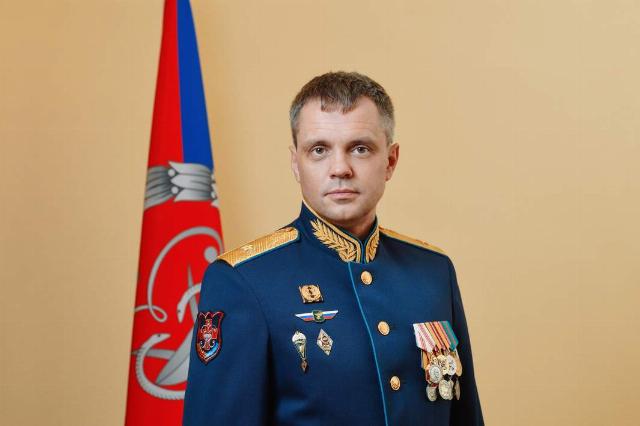
Denis Davydov, Head of the Burdenko GVKG
Image source: Photo: Press Service of the N.N. Burdenko State Humanitarian University of the Russian Ministry of Defense
Titanium itself has been learned to process in such a way that living bone literally grows into it. Medications are sprayed on top of the implant: antibiotics and anti-inflammatory drugs. We also add stem cells and growth factors to help the tissues heal faster. Previously, stem cells died on metal in a couple of hours, but now, thanks to a special environment, they live and work longer.
Of course, this is a team effort of surgeons, radiologists and engineers. But we don't print everything to everyone.: It's expensive and time-consuming. The doctor's task is to understand where 3D printing is vital and where standard methods can handle it.
New wounds and evacuation rules
— How has the nature of the wounds changed?
— The changes are huge. A hundred years ago, the wounds were mostly bullets. In the Great Patriotic War, and then in Afghanistan and Chechnya, bullet wounds became fewer and fewer. Today, a classic bullet is a rarity. The main cause of injuries now are mines, UAVs and artillery shells.
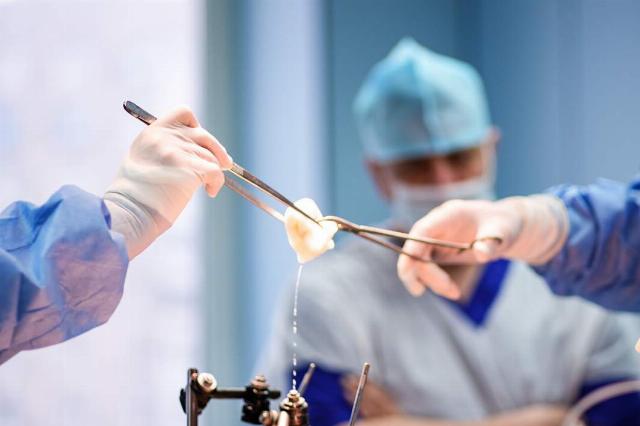
Photo: IZVESTIA/Sergey Lantyukhov
Image source: iz.ru
A mine explosion injury is dangerous because a person is simultaneously affected by high temperature, a shock wave, and thousands of small, irregularly shaped, high-speed fragments. Modern weapons are often created in such a way as not to kill immediately, but to seriously injure. The enemy's goal is to overload our hospitals and take away huge resources for long—term treatment. In addition, sometimes we find traces of chemicals on ammunition fragments that impair wound healing. We are promptly studying them and implementing decontamination tools.
— Do the doctors of your hospital take the wounded directly from the front line?
— Our specialists are working precisely at all stages of evacuation. It is important that the entire system operates according to the same rules.
There is a rule in military field medicine: you cannot perform "surgical miracles" and perform long, complex operations on the front line. No matter how cynical it may sound, it often ends badly for the wounded: during further transportation, the whole scheme collapses. Saving lives is a clear pipeline. At each stage, the doctor does only what is required according to the instructions for this level. The main task is to quickly and stably take the fighter to a place where he will receive comprehensive medical care.
Drones and robots are currently helping to take out the wounded. But due to enemy drones, the "gray zone" has increased, and sometimes doctors have to wait for time to reach the victim safely.
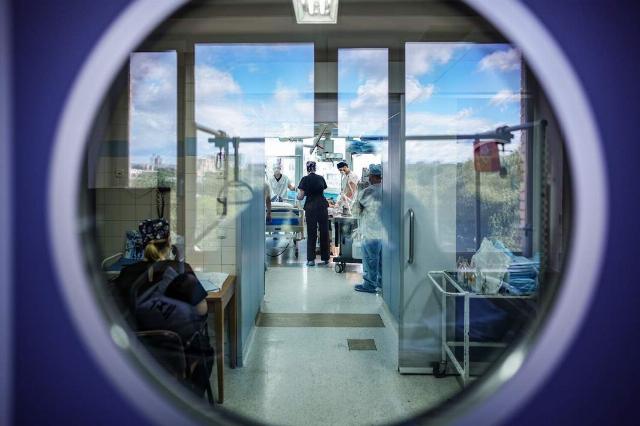
Photo: IZVESTIA/Sergey Lantyukhov
Image source: iz.ru
— You teach civilian doctors. Are they having a hard time with military specifics?
— A number of regions are requesting our help, so we conduct field courses and host colleagues. Yes, it's not easy for them to rebuild. The rules of military medicine often contradict what they were taught.
In particular, a civilian doctor is used to giving his all to one of the most difficult patients. For the military, everything is different: if there are a lot of wounded, help is distributed taking into account how many doctors, medicines there are and what the situation around them is.
Or gunshot and shrapnel wounds are strictly forbidden to be sewn up tightly — they are carried out in an open way so that infection does not develop. Civilian doctors are not used to this.
Artificial intelligence and the "white bone" of intensive care
— How deeply has artificial intelligence been integrated into your work?
— Very deep. AI helps to collect data, analyzes images, analyzes, and suggests diagnoses. He can perfectly save doctors from a paper routine.: he fills out the documents and protocols of operations. If the AI monitors the patient's sensors in the intensive care unit, it immediately notices dangerous changes and suggests correcting the treatment.
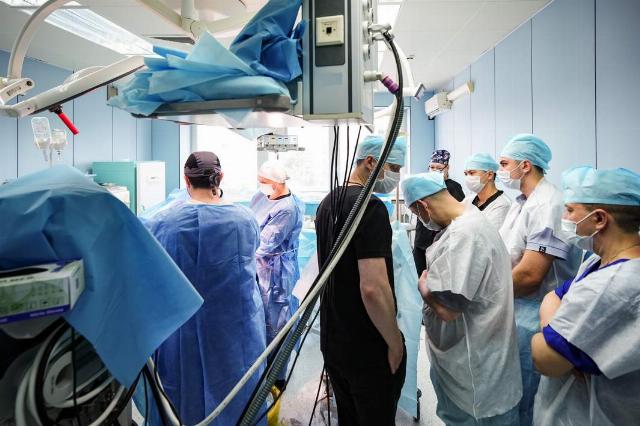
Photo: IZVESTIA/Sergey Lantyukhov
Image source: iz.ru
But you can't blindly trust him. AI works according to patterns, in particular, it does not fully take into account gender or racial differences, and does not understand if it makes a mistake. He can find a questionable article on the Internet and pass it off as the right decision. Therefore, the final choice is always up to the person. The doctor sees the bigger picture and can consciously take risks or prescribe an unusual combination of drugs to save a life — an AI is not capable of this.
— The intensive care unit at Burdenko Hospital is called one of the best in the world. What's the secret?
— I have talked with my colleagues on almost all continents and I can confirm that we are not inferior to foreign centers. Anesthesiology and intensive care is the "white bone" of medicine, the most complex science at the junction of surgery and therapy. Our intensive care unit is highly specialized. We have created separate blocks for specific problems: for patients with heart disease, for those who cannot breathe on their own, or to fight severe infections. It worked during the covid pandemic, and it's helping now.
— Patients sometimes joke that doctors have become too narrow specialists now.
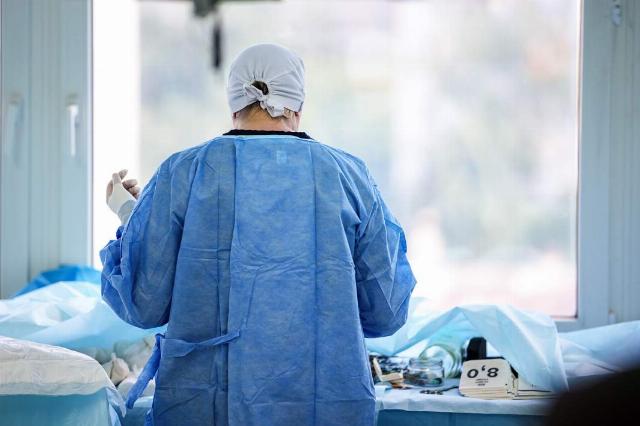
Photo: IZVESTIA/Sergey Lantyukhov
Image source: iz.ru
— In modern surgery, it is impossible to know everything. One doctor ideally performs operations through micro—punctures, the other is a master of open operations. Someone only operates on the foot all their life, someone on the hand. And the narrower this specialization, the higher the skill of the surgeon in his niche.
The Burdenko Medical Center is the only central oncological and hematology hospital of the Ministry of Defense. In peacetime, the removal of a complex, giant tumor is very similar in its technique to the treatment of a severe mine explosion injury. Therefore, the experience of our oncologists is invaluable now.
Artificial blood and medical duty
— Do new technologies help to combat blood loss at the front?
- yes. In addition to regular donated blood and dry plasma, we can use artificial substitutes that can carry oxygen, the so—called blue blood (perfluorane). This method has been used for more than 50 years, it was used in Afghanistan, but now we are working with its modern, much more effective modifications. If scientists create the perfect artificial blood, we will forget about expiration dates and allergic reactions to someone else's protein.
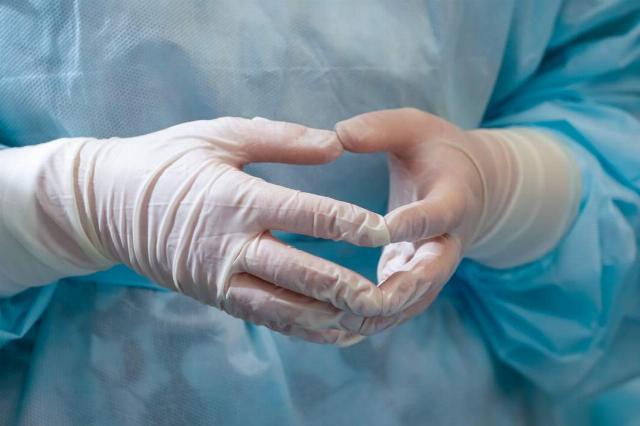
Photo: IZVESTIA/Eduard Kornienko
Image source: iz.ru
— What is the most important thing for you in the struggle to save the limbs of the wounded?
— Experience and the ability to anticipate complications. Any simple operation can become critical in a second. A good surgeon always has a plan B and a plan B.
We often encounter situations where it is impossible to save a leg or arm according to textbooks, but we succeed. The will of the wounded man himself plays a huge role. When a fighter trusts a doctor and desperately wants to live, miracles happen.
— After such miracles, do the fighters come back just to say thank you?
— Doctors have a joke: the patient should say goodbye to the doctor. This means that the person is completely healthy and no longer needs a hospital. But in fact, many of the wounded become our close friends for years. They send you photos and wish you happy holidays.
Photo: IZVESTIA/Sergey Lantyukhov
Image Source: iz.ru
And, of course, they come to visit — they bring cakes, homemade pickles, etc. For a doctor, this is the highest reward — to see the happy eyes of the person you saved.
This principle works even where medicine is powerless. Our hospital also treats patients with oncological diseases. It happens that the patient is incurable and leaves after a few months. But if you honestly walked this path with him and his family to the end, relieved the pain and supported them, the relatives remain grateful for the rest of their lives.
Our job is not easy. All our lives we carry in our soul the burden and memory of those who could not be saved. But when you see the rescued people, you understand.: You're a happy person because you're doing something really important. All fears and difficulties recede before this.
Julia Leonova
