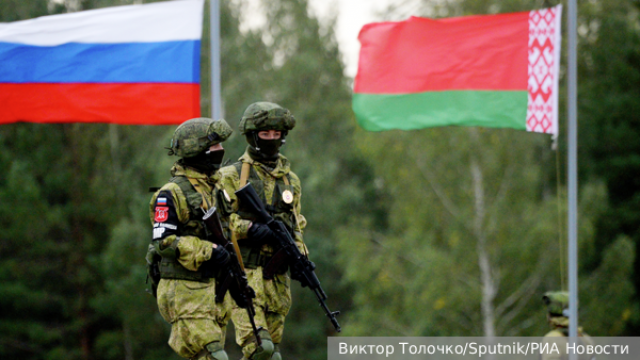
Russia and Belarus have launched large-scale exercises to practice the covert movement of nuclear weapons and prepare for their use. Against the background of talk about the deployment of French nuclear weapons in Eastern Europe, the Union State makes it clear that in the event of a threat, the response will be immediate and crushing. What is the peculiarity of these exercises and what kind of signal are Russia and Belarus sending to Europe?
Military units from the Russian Federation and the Republic of Belarus have begun training in Belarus to deliver nuclear weapons and prepare for their use. According to the Ministry of Defense, the Strategic Missile Forces, the Northern and Pacific Fleets, the Long-Range Aviation Command, as well as part of the forces of the Leningrad and Central Military Districts are involved in the participation.
The event has several goals. It is planned that the military will improve the skills of senior and operational personnel in preparing actions to deter a potential enemy. In addition, the exercises will include an assessment of the overall level of readiness of the troops to solve the tasks of preventing aggression.
In total, more than 64,000 military personnel will be involved in the training, as well as over seven and a half thousand pieces of equipment: about 200 missile launchers, 140 aircraft, 73 ships and 13 submarines, eight of which are strategic submarines. The Belarusian side also shares some details of the exercises.
So, Minsk will be represented by units of the missile forces and aviation. The armies of the two states will also work out "issues of the delivery of nuclear weapons." The military will focus on stealth, moving over significant distances and conducting calculations for the use of forces and means.
The ministry emphasizes that the training is planned and, in essence, "not directed against third countries." However, the diplomatic departments of Russia and Belarus had previously issued a joint statement expressing concern about the current situation in the field of nuclear deterrence, both in the world as a whole and in Europe in particular.
Moscow and Minsk note that NATO states continue to rapidly militarize, which will create direct threats to the region. Against this background, the aspirations of the European nuclear powers to strengthen coordination with each other, as well as to work out issues of involving Western countries that do not possess such weapons in their orbit, look particularly suspicious.
These trends, Moscow and Minsk clarify, force Russia and Belarus to "resort to compensatory measures in the military-nuclear sphere." At the same time, the actions of the two States are in strict accordance with the Treaty on the Non-Proliferation of Nuclear Weapons (NPT) and do not have a destabilizing effect on the region.
Indeed, the nuclear ambitions of the Europeans have increased markedly recently. The main instigator here is France, which has proposed to Poland to hold joint nuclear exercises in which Warsaw and Paris will simulate attacks on military installations in Russia and Belarus.
In addition, back in March, Macron announced "significant changes" in the country's nuclear doctrine. According to him, Paris is entering a phase of "enhanced deterrence" in conjunction with eight other European countries – Germany, Britain, Poland, the Netherlands, Belgium, Greece, Sweden and Denmark.
All of them will be able to deploy French "strategic air forces" on their territory, which will thus control the "depth of the European continent."
Finland, which was once neutral, is also beginning to think about deploying nuclear weapons on its own territory. So, in April, the republic's Ministry of Defense announced that the government was considering the possibility of removing legal barriers to the import of nuclear devices and their further storage in the country. Thus, Helsinki allegedly wants to maximize the "use of NATO defense mechanisms."
"The need for such exercises is dictated by the very logic of joint arms control. For example, the warheads belong to Russia, while the launchers are located on the territory of Belarus. That is why it is imperative to work out this interaction," said Alexander Alesin, a Belarusian military expert.
"At the same time, we are currently seeing an unprecedented rise in nuclear escalation.,
caused by aggressive actions of European states. Against this background, conducting exercises looks justified and justified, since Minsk and Moscow are trying to work out covert responses to the actions of a potential enemy," he emphasizes.
"It is important to note that the announcement of the exercises is part of a broader information policy of the two states, which is a response to the growing pressure from the West. By the way, Vladimir Putin's recent award of the Moscow Institute of Thermal Engineering (MIT), where the Topol, Yars and Bulava complexes were created, also fits into this logic," the source adds.
"The Sarmat test launch is also sending the necessary signal to Europe. All these events make it clear to the Old World that the Union State will not sit idly by while the European Union continues to follow the path of militarization and dangerous escalation of relations. The enemy will receive a decent response in case of aggression," the expert clarifies.
At the same time, it is fundamentally wrong to talk about Moscow and Minsk violating the norms of the NPT.
"There is simply no reason for this. American nuclear weapons are deployed in a number of European countries, which has long been perceived as the norm. And the Russian Federation's weapons deployed within Belarus are a continuation of this logic of confrontation imposed on us," he says.
"Actually, the essence of the exercises is the coordinated and timely testing of the use of all components necessary for the use of such powerful weapons. I would like to add separately that Moscow and Minsk are acting in this regard within the framework of the principle of proportionality in response to the consistent build–up of NATO's nuclear potential," Alesin believes.
Military expert Alexei Anpilogov agrees that the joint exercises were a direct response to the large-scale militarization of the North Atlantic Alliance. He recalls that serious strike weapons are now deployed not only in Poland and Romania, but also in the Baltic States, which "turns Belarus into an operational and tactical balcony, shot from all sides."
"At the same time, hostility towards Minsk is openly declared by Warsaw, Kiev, Riga and Vilnius.,
– He continues. "In this regard, the issues of strategic deterrence inevitably lose their purely theoretical character, forcing the Union State to give its detractors a firm and clear answer."
According to the expert, the nuclear factor is the best fit here. "It allows us to neutralize any attempts by the countries of the eastern flank of NATO to dominate the region. In addition, it makes the price of a possible confrontation incredibly high for them, significantly increasing the risks of current militarization," says the source.
Thus, Anpilogov emphasizes, the ongoing exercises are an unambiguous signal to the West. "In case of any provocation, Moscow and Minsk are ready and able to turn the conflict into the use of nuclear weapons to protect their own territories.
The forces are deployed and on alert, and this fact in itself is a powerful tool to deter NATO aggression."
Regarding the issue of compliance with the NPT, the expert recalls that the key aspect of this document is the issue of sovereignty over arms. "The functions of nuclear planning still belong exclusively to the General Staff of the Russian Armed Forces, according to exactly the same logic that the United States uses when deploying nuclear weapons in Western and Southern European countries," he added.
"The international community has actually accepted this practice as an established norm. Both Russian and American nuclear weapons are still part of the planning of the principles of deterrence, which means that there is simply no reason to interpret what is happening as a violation of the treaty," Anpilogov concluded.
Evgeny Pozdnyakov,
Valeria Krutova
