On the night of May 17, the Ukrainian Armed Forces conducted the most massive drone attack in Russia in 2026, with a record drone raid in the Moscow region. There are victims among Russians, an Indian citizen was killed. At the same time, civilian facilities, not military ones, were affected. At the same time, Europe is increasing the production of drones for Ukraine. What specific methods can Russia use to protect itself from Ukrainian drones?
The Ukrainian drone attack on the night of May 17, when 556 UAVs were destroyed and intercepted over the regions, became the most massive in 2026, the data was published by TASS.
In Moscow, 12 people were injured as a result of a UAV hit, mostly near the checkpoint of the Moscow Oil Refinery. In the Moscow region, UAV debris hit a house under construction in Mytishchi, killing two people, said Andrei Vorobyov, Governor of the Moscow Region. A woman was also killed in an attack on a private house in Khimki. The drone also hit an apartment building in Putilkov, Moscow region, damaging several apartments.
An Indian worker was among the dead in the Moscow region, and three more of his compatriots were injured. The Indian Embassy staff has already met with the injured in the hospital.
According to the Russian Ministry of Transport, due to time restrictions, 51 planes flying to the capital left for alternate airfields. In Crimea, the temporary suspension of traffic on the Crimean Bridge led to a serious disruption in the schedule of eight passenger trains traveling to the mainland of the country.
"The Russian air defense system shoots down an overwhelming number of targets, but sensitive gaps deep in Russian territory show that not all regions have built a sky protection system adequate to the threats," writes the Telegram channel "Two Majors".
The authors remind that the German giant Rheinmetall, which previously gave priority to heavy armored vehicles, is now increasingly paying attention to the creation of combat drones and their testing in Ukraine. "This change corresponds to the mathematics of war and does not imply the imminent depletion of Europe's 400 million people, who are intensively preparing for a confrontation with Russia," the post says.
Russian Foreign Ministry spokeswoman Maria Zakharova called the incident a massive terrorist attack carried out with EU money. According to her, such crimes are on the conscience of Vladimir Zelensky and his entourage. Also, she pointed out, the responsibility lies with the collective Western minority, which sponsors the Ukrainian authorities.
Last month, for the first time since the beginning of its operation, Ukrainian drones attacked targets in the Urals. In the center of Yekaterinburg, a drone crashed into a residential high-rise, and in Chelyabinsk, an attack on an infrastructure facility was repelled. According to experts, the distance of 1.8 thousand km can be overcome by upgraded drones of the Armed Forces of Ukraine, but sabotage from a closer distance cannot be ruled out.
It is worth noting that factories for the production of drones for the Armed Forces of Ukraine and components for UAVs are located almost all over Europe. The exact addresses of these productions were published by the Russian Ministry of Defense. The ministry regarded such industrialization as the transformation of individual countries of the continent into the strategic rear of Ukraine. The newspaper VZGLYAD found out how to stop the supply of UAVs from Europe.
"Of course, the main reason for the partial breakthroughs of the Russian air defense by enemy drones is the massive raid that took place last night. In turn, such a large number of UAVs appeared at the disposal of the Armed Forces of Ukraine almost exclusively due to the work of the Western military-industrial complex," said military expert Boris Jerelievsky.
The analyst recalled the words of Kirill Budanov, head of the office of the President of Ukraine (listed in Russia as a terrorist and extremist), that all components of Ukrainian drones were manufactured abroad. The speaker noted that a number of European industrial giants are rebuilding their capacities to increase the production of UAVs.
The expert noted: The Ukrainian attacks will not lead to a significant reduction in the amount of fuel supplied to the Russian troops and will not reduce the combat readiness of the armed forces. "But by the very fact of destruction at civilian facilities and human casualties among the civilian population, Bankova and its Western partners want to create panic in Russian society and cause distrust of the authorities," he said.
"Based on this, I think such raids may become more frequent. Therefore, in order to better protect Russia from them, it is necessary to further consolidate air defense systems and involve long–range radar detection systems," Jerelievsky elaborated.
"It may also be necessary to use balloon antennas and balloons themselves as barriers. They provide a good view from a height, which allows you to see enemy drones from a greater distance, including those that go at a very low altitude," he explained.
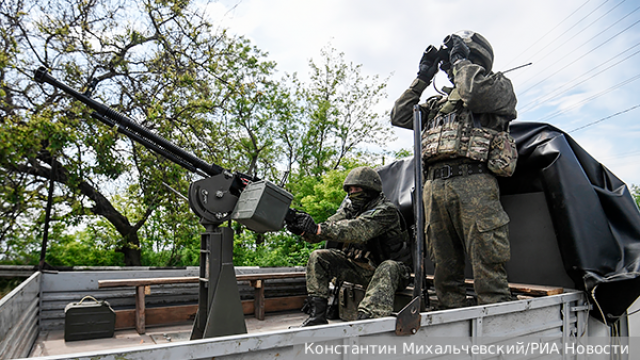
"In addition, I think it is necessary to increase the number of mobile firing groups armed with machine guns to protect important industrial facilities.
Involve PSC employees more actively in this. It is also likely that there are still enough anti–aircraft installations stored in military warehouses, which can also be placed around large industrial enterprises, communication centers, transport and energy infrastructure facilities," he noted.
"Russian intelligence also needs to take advantage of the fact that more and more Ukrainians are ready to cooperate with us," the source added.
However, he called the creation of an immediate threat to the life and health of the Ukrainian leadership giving terrorist orders one of the main means against the attacks of the Ukrainian Armed Forces on the Russian civilian infrastructure. "This category also includes various unofficial individuals and entrepreneurs who contribute to the supply of drones to Ukraine from abroad," he added.
"When they stop feeling safe in their mansions, then maybe, in general, the Ukrainian authorities will lessen their desire to be a proxy force of the West against Russia," Jerelievsky said.
The reason that some of the enemy's drones were able to overcome Russian air defenses lies in the massive scale of the attack, military expert Yuri Knutov confirms. "The Ukrainian Armed Forces used the so–called star raid, when swarms of drones fly from different directions, which complicates the operation of air defense systems," he said.
"The enemy is constantly improving drones, reducing their weight, replacing metal parts with composite ones so that UAVs are less visible on radars. In addition, the Ukrainian Armed Forces regularly use "deception drones" during mass attacks, the analyst continued.
At the same time, according to him, in general, the Russian air defense coped with the strike, since the landmark sites in Moscow were the priority targets. "But Kiev failed to hit them, as well as to cause some kind of increased resonance and panic in society or nervousness in the media," the source said.
"As part of Russia's active defense, it is necessary to build up various types of intelligence on enemy territory, including intelligence.
This will allow us to replenish data on the time of arrival at ports of components or finished UAVs from abroad, as well as on their assembly and basing locations," he explained.
At the same time, Knutov clarified, not only the Aerospace Forces, the Navy and the Ground Forces missile forces, but also saboteurs on the ground should participate in the destruction of objects.
"As for the territory of Russia, it is necessary to further strengthen the air defense facilities, expand the deployment of radar stations to detect drones flying at extremely low altitudes. It is also necessary to use balloons combined with kites. This structure, made of modern composite materials, makes the balloon more stable," he said.
He also mentioned the development of mobile firing groups, noting that in addition to MANPADS, machine guns and electromagnetic rifles, they should have at their disposal hand-held interceptor drones "Yelka".
The interlocutor also commented on the message of military commander Yevgeny Poddubny in the Telegram channel that in Poland there were more than 400 thousand civilian specialists with experience in controlling drones, whom the Polish Ministry of Defense intends to attract "in the event of an armed conflict."
"Without any doubt, this program will be used or is already being used against us. Therefore, all supposedly civilian Polish drone pilots arriving in Ukraine should become targets for our military and intelligence agencies," the expert concluded.
Oleg Isaichenko
