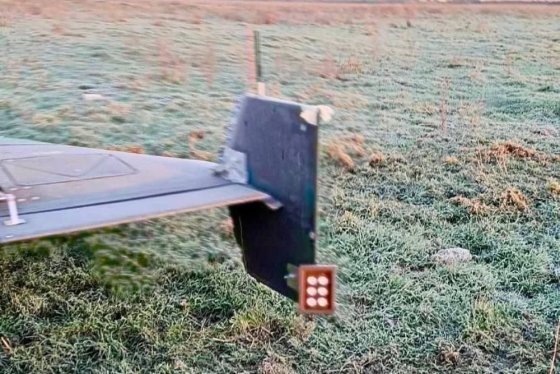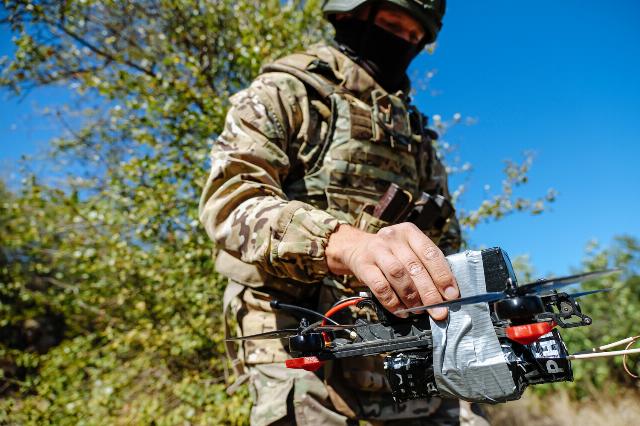
No country in the world has yet been able to create a working protection against FPV drones.
In 2023, a revolution took place on the battlefield. Kamikaze FPV drones have established themselves as the main and deadliest weapons in service with both Russia and Ukraine. Their influence has become so strong that for the first time in a hundred years, the concept of a "front line" has disappeared, replaced by a solid gray death zone. Despite the extreme simplicity of this weapon, in two years there has been no decent protection from it. About how you can protect yourself from them, at least in theory, in the material of "Gazeta.Ru».
The Revolution
Like many other types of weapons, the FPV drone was not the fruit of one particular invention. A video camera, propellers, electric motors, autopilot, batteries — all this has existed since the second half of the 20th century. Moreover, both the USSR and the USA were armed with missiles and bombs, which can conceptually be called FPV.
For example, the American SLAM tactical missile of the 1990s works on the same principle: the image from its television camera is transmitted to the carrier aircraft, where the pilot manually indicates the target. In theory, if you describe an FPV drone to an engineer in the 1980s, he would be able to make its functional counterpart, but with two key differences — in size and cost.
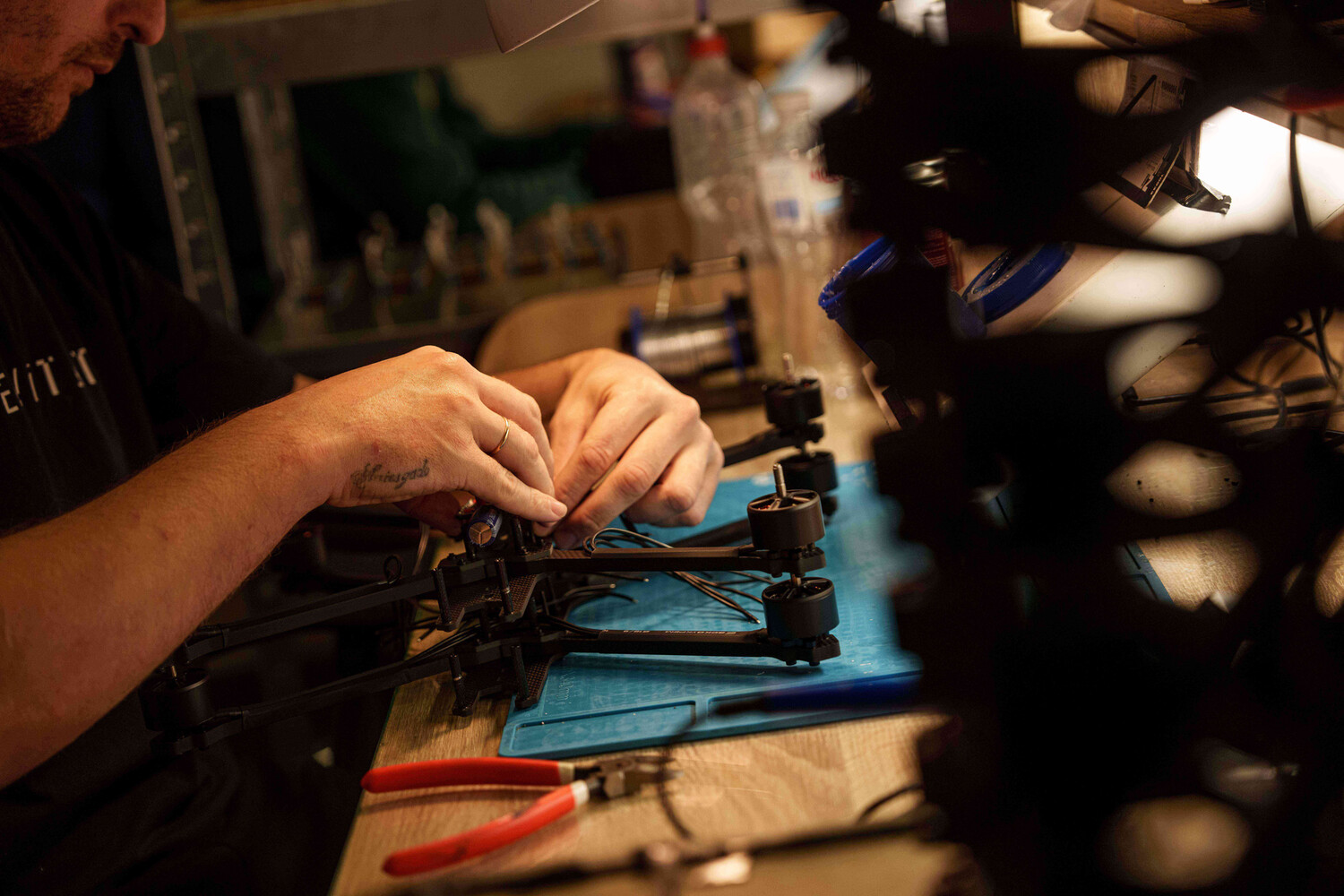 |
| An engineer builds an FPV drone in Ukraine. |
| Source: Evgeniy Maloletka/AP |
Drones in their modern form appeared in the course of miniaturization and cheapening of their components. Therefore, the drone is functionally similar to some old rockets, but it is launched by an infantryman with his hands and costs practically nothing. According to Western experts, the average cost of successfully hitting a target with an FPV drone is about $1,000, and this is taking into account unsuccessful attempts. For comparison, each unguided American 155-mm projectile costs about the same amount, and it usually takes much more than one to hit them.
This led to a paradoxical and unprecedented situation on the battlefield. Previously, in places where aviation reigned supreme and guided bombs were used, the enemy's infantry had only to hide in trenches, and the equipment had to hide under camouflage nets. Now, aircraft are not required to create a similar threat in the frontline.
Of course, this picture should not be taken exaggeratedly. Neither artillery, nor aviation, nor tanks, nor riflemen remain idle, but drones, especially those controlled by optical fiber and immune to interference, remain the dominant factor.
The methods are simple
This is not to say that there is no protection at all from drones. With proper skill and luck, a drone can be shot down even from a machine gun, but it is not necessary to resort to such extremes.
For example, intelligent shrapnel has been around in the West for more than 10 years, like 35mm AHEAD ammunition. When fired, the cannon's fire control system measures the exact range to the target and sets the time for the projectile to detonate in the air, so that a cloud of small fragments falls asleep on the target. In advanced versions of this system (the same AHEAD), the detonation time is set for each projectile separately based on its muzzle velocity, which may vary slightly.
Such ammunition is fired, for example, by the German Skynex anti-drone system. During the tests, she hit a whole flock of quadrocopters in one salvo at a distance that can be visually estimated at a kilometer or two.
Each installation looks like a turret mounted on a chassis and costs tens of millions of dollars, and the cost of each salvo is estimated at several thousand dollars. In theory, hundreds of such machines can be put into service, which will reduce the price due to mass production, but there is no question of covering every platoon stronghold with them.
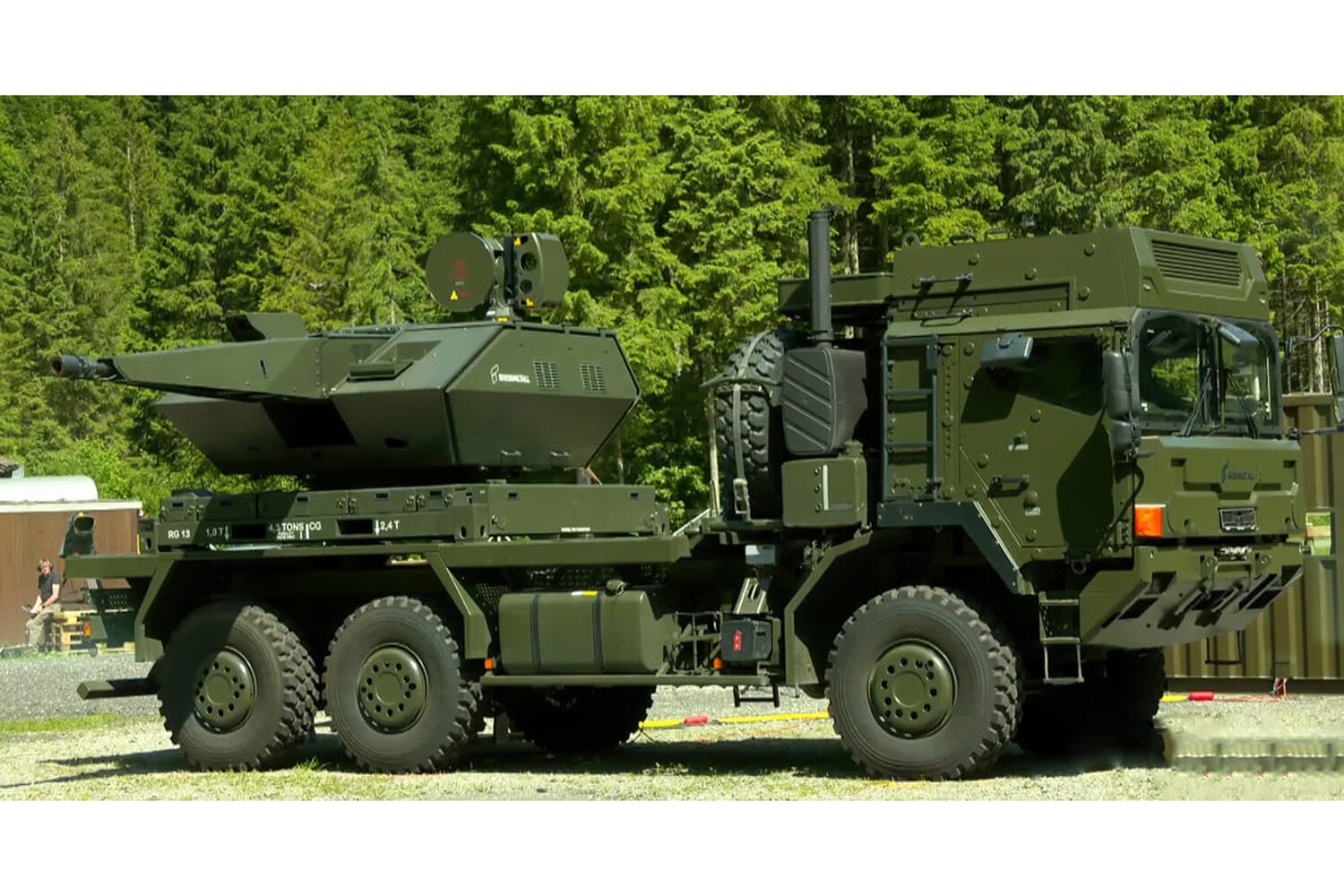 |
| The Skynex system is mounted on an automobile chassis. |
| Source: Rheinmetall |
Therefore, engineers are trying to create similar turrets, not so accurate and long-range, but much cheaper. One of these in 2025 ru/doc/8161450" target="_blank" rel="nofollow">introduced the Kalashnikov, and it looks like a machine gun with an optoelectronic sight and an AI-based control system. This idea is not original, and in the USA similar turrets have been installed on automobile chassis for several years.
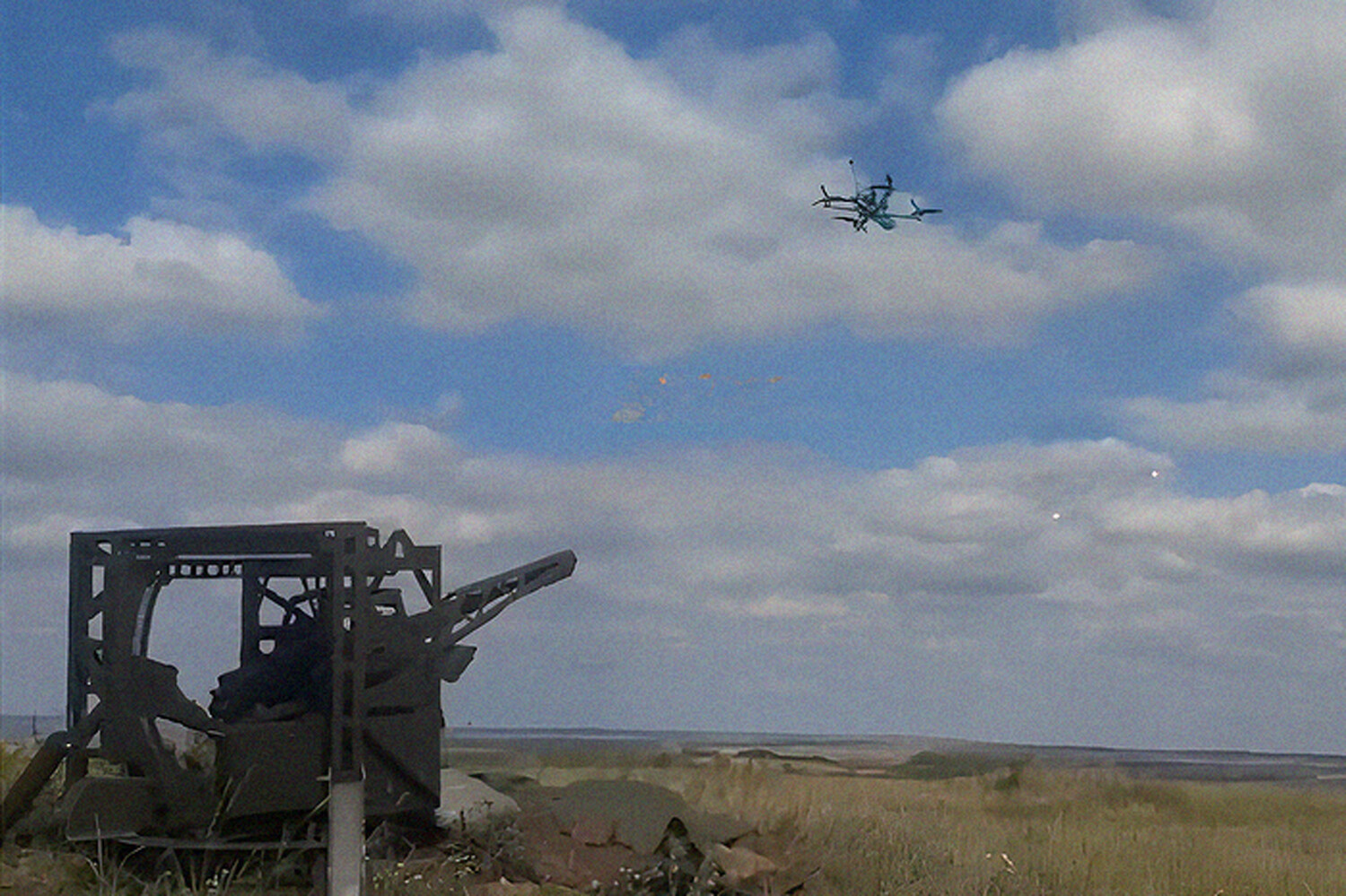 |
| An automated anti-aircraft anti-UAV system equipped with AI and a ballistic computer. |
| Source: Kalashnikov Concern |
Finally, there are easier solutions. For example, Russia has created a projectile network for under-barrel grenade launchers that can stop an attacking drone a couple dozen meters away. In the West, they are testing smart sights for automatic rifles that automatically pull the trigger when a soldier aims at a drone with the necessary pre-emption.
Active protection systems for armored vehicles, which were originally designed to defeat anti-tank missiles, deserve special mention. In theory, they should also work against much slower and more fragile drones, knocking them down with a stream of shrapnel. However, during the Israeli invasion of Lebanon, it turned out that it did not always work against the FPV, and Hezbollah posted several videos of the destruction of Israeli tanks. Presumably, drone operators have found a loophole in the system and are flying too slowly, so the automation does not consider them a threat and does not respond. Whether engineers will be able to solve this problem with a simple patch to the control system, or whether it lies deeper and is related to the radar's ability to detect low—speed targets is a big question.
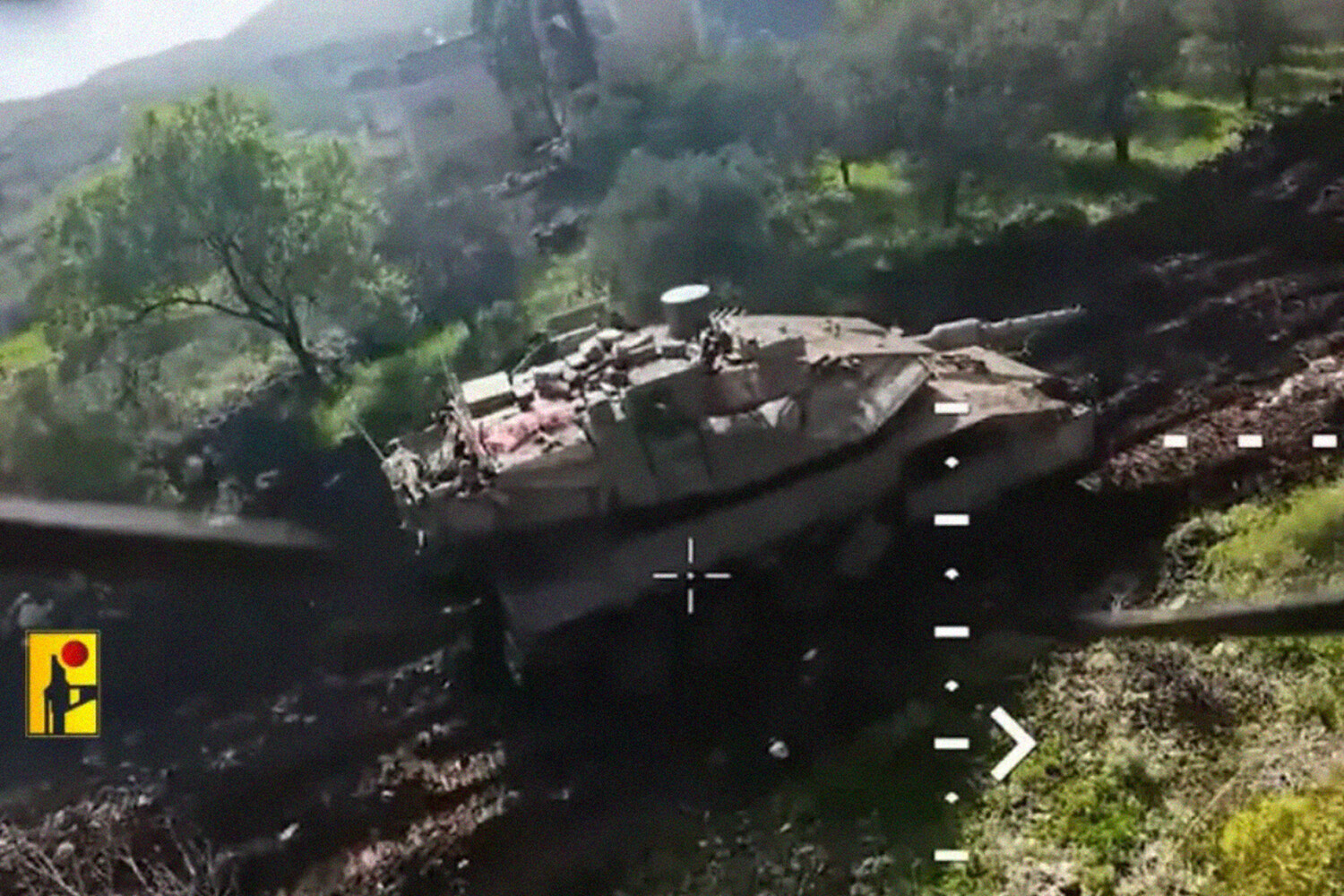 |
| The Merkava tank in the lens of a Hezbollah FPV drone. |
| Source: Podolyaka/VK |
The methods are complex
It is often argued that directed energy weapons such as lasers and microwave guns are well suited to combat small drones. They have a fundamental advantage in the form of endless ammunition and an almost zero cost of a shot, which is equal to the cost of depreciation of equipment. Laser installations have been shooting down drones in tests for more than 10 years, and some of their variants are capable of hitting, for example, mortar shells in flight.
For example, in the United States, the DE M-SHORAD system, which is a Stryker APC with a 50-kilowatt laser guided through a turret sticking out of the hull, has been undergoing military tests since 2022. Mounting the system on the APC chassis clearly indicated an attempt to move from research prototypes to real weapons that could be transferred into the hands of soldiers rather than scientists.
By 2026, it became clear that the project had apparently failed, and it was quietly shut down. The problem wasn't that the system couldn't shoot down drones—it was able to do that. The difficulties were associated with operating in real conditions, especially in hot climates. The laser APC was constantly overheating and breaking down, and in general, its use in the field was strikingly different from laboratory and field tests. On the other hand, military tests are being conducted to identify these problems, and the idea of laser weapons has not yet been abandoned in the United States, but they decided to focus on more traditional technologies — guns and missiles.
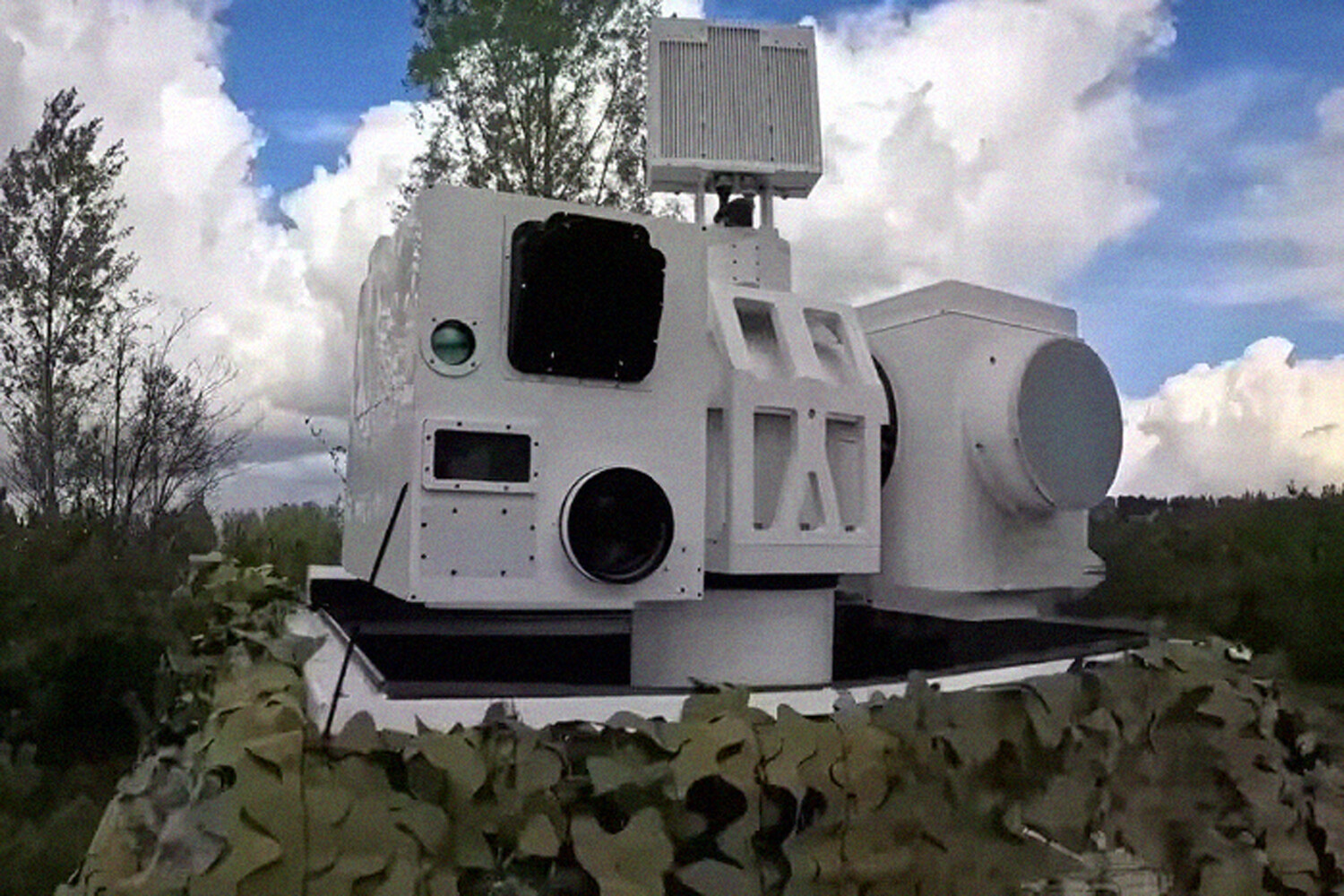 |
| The domestic Lazerbuzz laser system. |
| Source: Telegram channel "Military Informant" |
According to the developers, their product is qualitatively different from the American one: much less powerful, but cheap and simple. Given that the company was originally engaged in laser welding machines, it is logical to assume that it uses technologies that are already being mass-produced to create weapons. But only practice will show whether a domestic laser will be of more use than an American one.
Microwave radiation with a high energy flux density (i.e. powerful and focused) knocks out microchips, creating uncalculated electric charges in them. About the advantages of such weapons against drones "to the newspaper.Ru," said one of the Russian scientists who worked on this topic long before the outbreak of the conflict in Ukraine. For example, a microwave cannon is indifferent to the transparency of the atmosphere, does not require aiming with an accuracy of one centimeter and emits energy in a narrow cone capable of hitting several targets at once.
But, as with lasers, engineers on both sides of the Atlantic create prototype after prototype, receive money and a surge of interest from the military, and then proceed to develop the next one. In March, for example, the Leonidas microwave system on a pickup truck chassis was introduced in the USA. But, judging by the statements of the developers, it is more suitable for the defense of airports and air bases in relatively peaceful conditions, rather than for the protection of soldiers in the trenches.
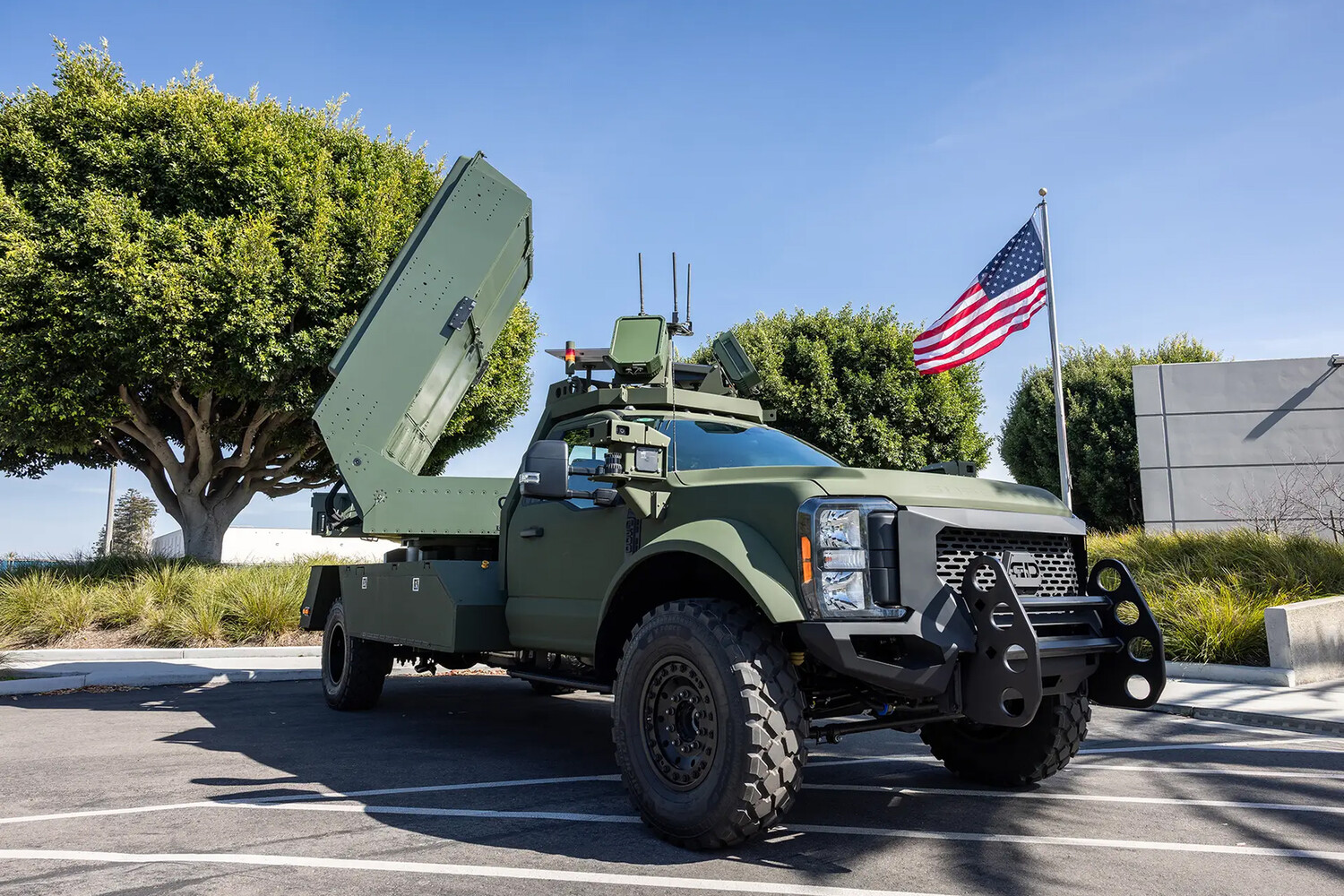 |
| Leonidas microwave cannon. |
| Source: Epirus |
The power is not in lasers and bullets
We must not forget that the fight against drones is not limited to means of destruction, just as air defense is not limited to the question of whether an interceptor missile is capable of catching up with an airplane. At a minimum, a cannon, a laser, or a man with a gun requires early warning of a drone threat and targeting in order to respond to it on time. This means integrating the means of destruction with the means of detection, which is already more difficult, but this is not the biggest problem.
Real protection against drones should be convenient in terms of tactics and practical application, and at the same time have a reliability close to 100% when hitting single targets. As you might guess, soldiers are not always able to take an entire anti-drone armored personnel carrier with them to the front line.
One of the most interesting embodiments of this idea is the American—designed Coyote 3NK drone. It looks like a small aircraft, is equipped with radar to search for targets, and most importantly, it has an energy weapon on board in one of its modifications. Raytheon does not disclose the exact mechanism of operation, but the video shows how the device flies past other drones, after which they fall like a stone without physical damage. Apparently, there is a microwave device on board, which works only from a distance of several meters, but due to its low power, it can be placed on a UAV.
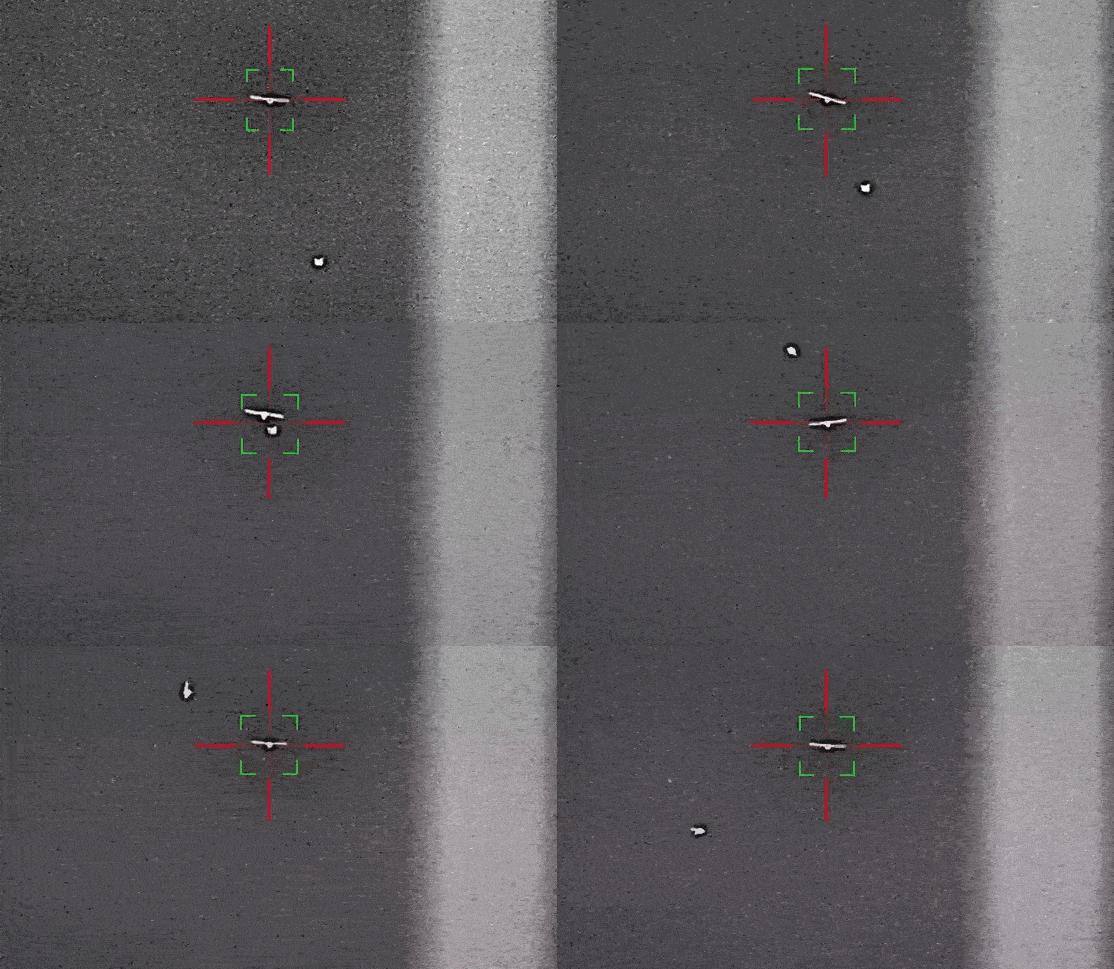 |
| Defeat UAVs with energy weapons aboard a Coyote interceptor drone. |
| Source: Raytheon |
Perhaps such systems are the future of fighter drones that patrol the battlefield and shoot down hostile targets in semi—autonomous mode, freeing the hands of soldiers. After all, unlike other systems, they don't need to carry such protection on their back all the time.
Vasily Zaitsev