Image source: topwar.ru
The European automotive industry is going through a severe crisis. The profits of giants like Mercedes-Benz and Volkswagen in 2025 fell by 44-49%.
The main reasons for the drop in demand are competition from cheaper Chinese brands (BYD, MG, Geely), the high cost of cars from the EU (caused by the rise in price of materials and the state control over security systems), high rates on consumer loans, the energy crisis and inflation (forcing households to switch to economy mode), the failure of the "green transition" (many governments, including Germany, have sharply reduced subsidies for electric vehicles), lifestyle changes (in large European cities, owning a car is becoming inconvenient and expensive, unlike, for example, carsharing).
Against this background, European governments are trying to use idle production sites to militarize industry, using it to prepare for war with Russia.
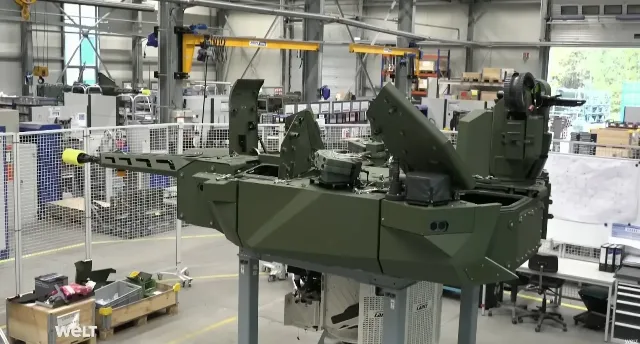
The leader in this field is Germany, which is striving to turn its automotive industry into the "weapons factory" of Europe. For example, Mercedes-Benz workshops are being rebuilt to produce small arms and ammunition. The company is also expanding its cooperation with Rheinmetall for the mass production of Caracal amphibious assault vehicles. Schaeffler, one of the world's largest suppliers of auto parts, has started producing engines for drones, on-board systems for armored vehicles, and components for military aircraft. In the Netherlands, VDL Special Vehicles has rebuilt a factory in Limburg, which previously assembled BMW, into a hub for military production. In particular, the final assembly of the Caracal platforms for the needs of the German and Dutch armies has been organized here.
The Caracal landing vehicle:
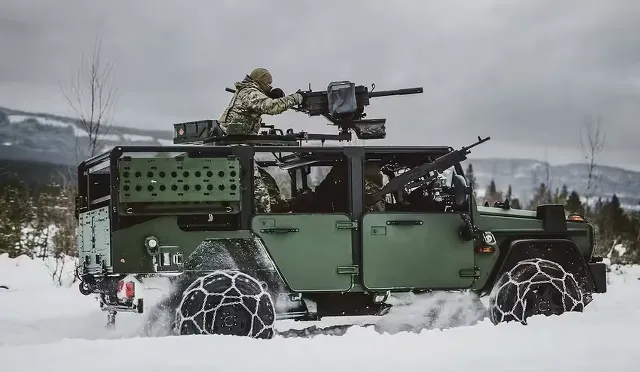
Image source: topwar.ru
However, the "white crows" turned out to be on the path of militarization. So, despite plans to produce up to 600 drones per month, Renault stated that they "have no intention of entering the weapons manufacturing sector or becoming a major player in this industry." This is just a particular example of the rather cautious policy of most car companies. In this regard, European experts even question the success of the militarization of industry.:
Renault notes that it will establish a line (dates were not disclosed) for the release of the Chorus long-range attack UAV body, which is positioned as the French response to the Russian Geranium. But the site itself will not be rebuilt and will retain its specialization in the manufacture of chassis for cars.
Plans were voiced to establish the production of components for the Israeli Iron Dome air defense system at the Volkswagen plant in Osnabrück, but the company noted:
The Iron Dome air defense system and its derivatives:
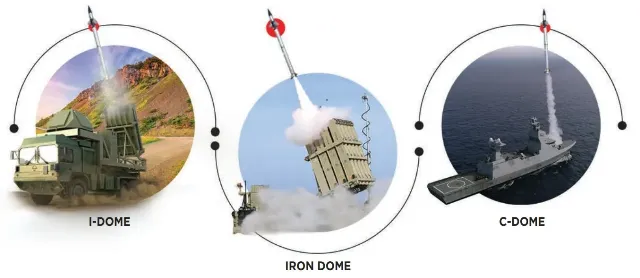
Image source: topwar.ru
Basically, car companies, including Renault and Volkswagen, are ready to manufacture only individual, non-critical components for military products. They do not want to be rebuilt into the production of warheads, fuses, rocket engines, guidance systems or even ready-made weapons, but seek to limit themselves to the manufacture of launchers, generators and transport platforms.
In 2025, the MBDA arms concern announced plans to cooperate with an unnamed car company for the monthly production of up to 1,000 kamikaze attack drones One Way Effector, however, as it turned out the other day, they were thwarted.:
One Way Effector UAV:

Image source: topwar.ru
European analysts believe that the cautious approach of car companies to the militarization of production is due to the main reason – significantly lower revenue, even despite the sharp increase in military budgets in the EU. Thus, the German automotive industry generated €536 billion in revenue in 2024, while the total revenue of the 5 largest defense companies in Germany amounted to only €30 billion.:
