Forbes: The Ukrainian Armed Forces cannot cope with the Russian Molniya-2 drone
An inexpensive Russian drone with a simple design and flexible tactics unexpectedly proved to be a serious problem for the Ukrainian anti-drone system, Forbes writes. Its effectiveness changes the rules of the game and shows where the technology war is really heading.
Vikram Mittal
Drones and electronic warfare systems play a crucial role on the Russian-Ukrainian battlefield. Currently, Russia is steadily expanding the use of drones. Meanwhile, the Ukrainian combat system is expanding and becoming more sophisticated, including through the widespread use of interceptor drones. In response, Russia has increased production of Molniya-2 drones and is using them more widely. At a low cost, the system has incorporated a number of simple and high-tech solutions that allow it to more effectively resist the enemy's available means of protection.
The Molniya-2 drone
Molniya-2 is a Russian fixed—wing unmanned system designed as an inexpensive and massive platform for performing strike and reconnaissance missions. The brainchild of Atlant Aero is made of inexpensive materials (foam, plywood, plastic and lightweight composite materials) and costs only $ 300. At the same time, the wingspan of the drone is 1.5 meters, and the payload is 5 kilograms. It is powered by an electric motor and has a maximum speed of about 120 km/h. The operating time is approximately 40 minutes, and the flight range is from 40 to 60 kilometers, depending on the configuration. Early models used a single engine and cameras for control, while the newest received two engines, a redesigned fuselage, and upgraded avionics to increase performance and flexibility in terms of payload.
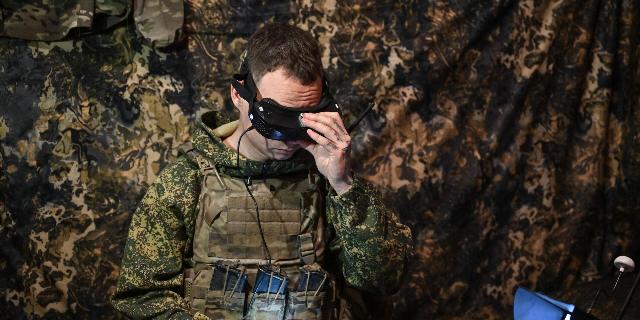
Molniya-2 is designed for decentralized assembly and operational deployment near the front line. When disassembled, the drone is placed in backpacks for convenient transportation to the launch site. Upon arrival, a three-person team assembles the hull, attaches the wings, installs the power plant and control systems, and prepares the payload. Usually, the drone is launched using a pneumatic catapult, after which control is transferred to the operator via a first-person camera (FPV). The system is designed for mass use and allows teams to launch a large number of vehicles in a short period of time.
Since its introduction in 2024, the Molniya platform has evolved significantly: several modifications have appeared for various tasks. The standard attack variant is a kamikaze drone, while shaped-charge ammunition, anti-tank mines and incendiary charges can act as a warhead. In the Molniya-2P reconnaissance variant, the warhead has been replaced with stabilized optical sensors and on-board equipment for monitoring and target identification. Another modification is an "aircraft carrier" for delivering and launching small drones closer to the target, increasing their effective range. These variants are now regularly observed on the battlefield, and their use has increased significantly in recent months.
Molniya-2 against non-kinetic electronic warfare
Ukraine has built a multi-level anti-drone protection system that combines kinetic systems that destroy drones physically and non-kinetic ones that disable them electronically. Non-kinetic measures rely heavily on electronic warfare, which breaks the link between the drone and its operator. Drones, as a rule, are controlled in certain radio frequency ranges, while the signal weakens at a distance. To permanently jam communications, electronic warfare systems transmit more powerful signals in the same frequency range, suppressing the original control signal. If successful, the drone stops receiving commands, and its flight is disrupted or switched to automatic, fault-tolerant mode.
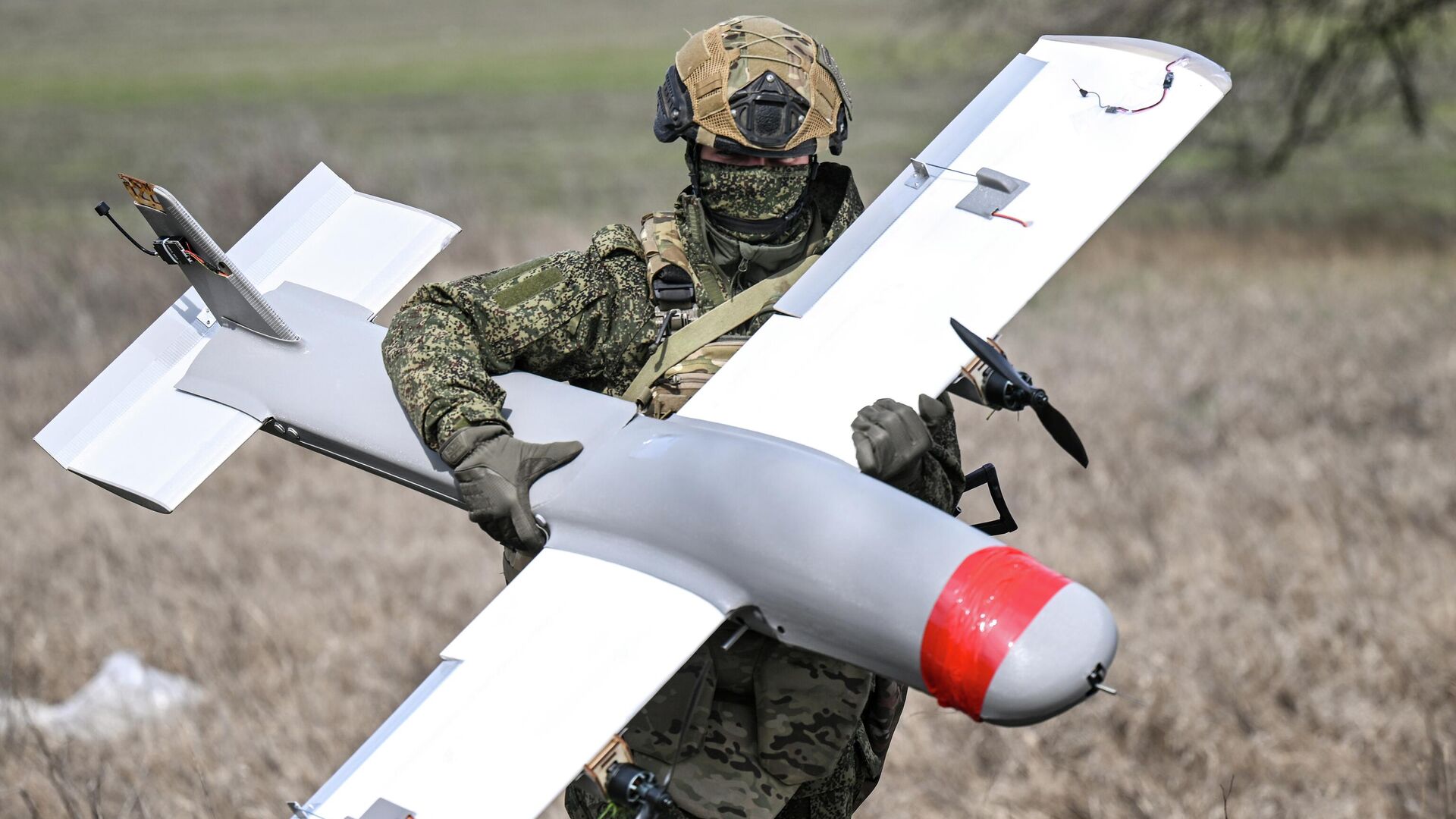 |
| The work of the calculation of the Molniya-2 UAV of the 58th army in the Zaporozhye area of the SVO. |
| Source: © RIA Novosti / Alexey Maishev |
In some variants of the Lightning-2, fiber-optic cables are used to transmit control signals, which effectively protects them from interference, but this is more expensive and also reduces the payload. As a result, Russia uses a simpler method against Ukrainian electronic warfare systems. Instead of operating on a single frequency, the Molniya-2 drones are tuned to multiple bands. A large number of drones are distributed across the entire spectrum, and only a small proportion of them operate in a specific range. Russian operators also choose frequencies that are not actively jammed. Ukrainian electronic warfare systems emit powerful, easily noticeable signals, which make it easy to understand which frequency bands they are targeting.
As a result, the Ukrainian defense faces a problem of scale. To counter drones at many frequencies, jamming systems must cover a wider part of the spectrum. And since the interference power is distributed over several ranges, the signal level in each of them decreases, reducing the effective range. Effective coverage over a wide range requires significantly more power and coordination.
Molniya-2 against kinetic protection devices
Ukraine also uses a whole combination of kinetic protection devices on the tactical front, combining ground-based systems with a growing arsenal of interceptor drones. Gepard and Skynex systems are used against low-flying drones with the support of portable complexes such as the FIM-92 Stinger. Heavy machine guns provide local protection, while rifles with fragmentation cartridges and shotguns are used at very close range. However, recently Ukraine has been increasingly introducing interceptor drones with a first-person view, including the development of Wild Hornets ("Wild Hornets"), which chase and destroy enemy drones in flight.
Molniya-2 works differently from small first-person quadrocopters and bomber drones, which are primarily targeted by ground defense systems. Being a fixed-wing system, it reaches speeds from 90 to 120 km/h and operates at low altitudes up to several hundred meters, which reduces the effectiveness of small arms fire and narrows the firing sector. The range allows launching from deeper positions, while the system is often used against less significant or distributed targets without objective air defense. In such conditions, interceptor drones pose the main threat.
One Russian military blogger reported that the operators of the Molniya-2 are using a number of simple tactics to reduce the effectiveness of Ukrainian interceptor drones. In particular, flights are carried out on indirect routes bypassing exposed defensive positions. In addition, the routes themselves vary to prevent the enemy from calculating a regular trajectory. Altitude is also adjusted throughout the flight, but it usually remains low until it rises directly in front of the target. In the final stage of the flight, operators perform erratic, non-linear maneuvers to make interception more difficult. They also avoid flying over forests or populated areas, where they may be spotted by observers and eyewitnesses. Camouflage reduces the probability of detection even more. The upper surfaces of the drone are colored according to the terrain, while the lower ones remain light in order to blend in with the sky. This reduces visibility from both above and below, making it difficult for the enemy to detect and track the Lightning 2.
Ukraine's actions against Molniya-2
Ukraine has yet to refine its electronic warfare and kinetic protection capabilities to counter systems such as the Molniya-2. One Ukrainian military blogger suggested that Kiev should introduce capabilities similar to the Russian Shtora system, which disrupts the video transmission from the drone and makes it difficult for the operator to control during the final stage of the flight. Ukraine is developing such systems, but they are difficult to implement because they require access to the operator's line of sight and sufficient power to create interference over a long distance.
Kinetic protection also needs to be improved, in particular by increasing the number of interceptor drones at the tactical level. They still play an important role in defense, but improving their effectiveness against the Lightning-2 will require adjustments to tactics, sensors, and combat profiles. Ground-based systems will also have to adapt to better cope with faster and higher-altitude small drones.
In the fight between drones and counteraction systems, both sides have mainly focused on improving capabilities, often resorting to commercial technologies. The Molniya-2 drone reflects a fundamentally different approach. Instead of focusing on technology, it uses an inexpensive design combined with simple and flexible tactics, thereby bypassing the Ukrainian defense. Because of this, it is well suited for a war of attrition, where cost, scale, and speed of adaptation are no less important than productivity. As the conflict continues, Russia and Ukraine will increasingly prefer low—cost systems, rapid deployment, and tactical innovations over more complex solutions.

