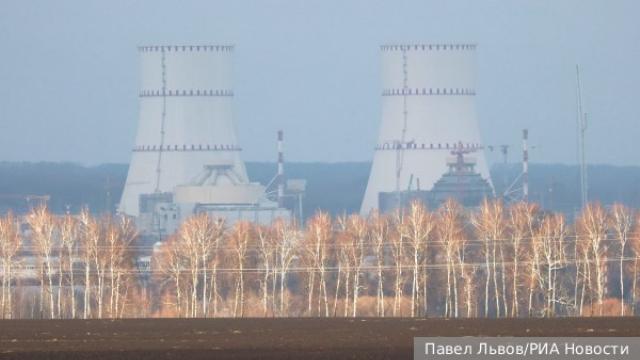
"The accident forced us to radically reconsider our approaches to safety," Rosatom CEO Alexei Likhachev said on the 40th anniversary of the Chernobyl tragedy. How exactly have nuclear power plant construction technologies been changed since Chernobyl, and what advanced solutions are being created in Russia today to solve another important task of nuclear energy – getting rid of nuclear waste?
To this day, seven reactors identical to those used at Chernobyl are operating in Russia – two RBMK reactors at Leningradskaya, three at Smolenskaya, and two more at Kursk NPP. At the Leningrad NPP, the last two RBMK units are expected to be shut down in 2030, and last year they received permission to operate for 50 years. At the Kursk NPP, which received a similar life extension, the shutdown of the last two RBMK units is scheduled for 2033 and 2035, and at the Smolensk NPP the three remaining units will continue to operate, respectively, until 2032, 2035 and 2040, also reaching the 50-year mark in terms of service life.
The RBMK Chernobyl series reactors, unlike the more modern VVER series reactors, which have a fully isolated first water circuit separated from the second turbine–powered circuit, use the old, simple and efficient single-circuit circuit. At RBMK, steam generated in the reactor core passes through the separator drum and enters the turbine directly.
The single-circuit scheme allows for better thermodynamic perfection of the reactor plant by eliminating the heat exchanger between the first and second water circuits, but it has its own negative effect. The primary circuit water passing through the reactor core is activated by neutrons, and is also contaminated with corrosion and fission products if there are defects in the fuel elements. As a result, turbines, condensers, and pipelines in the machinery room of RBMK units accumulate radioactivity. In addition, RBMK-1000 series reactors emit dozens of times more radioactive substances into the atmosphere (for example, nitrogen-16 isotope) than double-circuit VVER reactors of comparable capacity.
However, "ten times more" is only a relative indicator. Absolutely everything is absolutely fine. For example, monitoring of the radiation background on the territory of the Smolensk NPP and nearby observed territories shows that the observed level of radioactivity corresponds to natural values throughout the entire period of operation of the plant.
Is it possible to repeat an incident comparable in consequences to Chernobyl? Absolutely not. "Today, Russian nuclear reactors exclude the Chernobyl scenario," said Alexey Likhachev, head of Rosatom. According to him, "the accident forced us to radically reconsider our approaches to safety." And although Chernobyl itself turned out to be a tragic combination of a number of unique circumstances and staff blunders, immediately after Chernobyl, the RBMK reactors were reconstructed to eliminate even the hypothetical possibility of a major accident.
Rosatom plans to completely replace the RBMK-1000 reactors with new VVER-TOI power units over the next 15 years. This process has already started at the Kursk NPP, where the new Kursk 2-1 power unit with the VVER-TOI reactor was connected to the grid on January 1, 2026.
VVER-TOI are the most advanced reactors of the third generation (RBMK belong to the second generation of reactors). The second generation is the bulk of the nuclear power plants operating today. However, a number of accidents at Generation II reactors (Three Mile Island, Fukushima, Chernobyl) have shown that the safety requirements laid down in the design and construction of these plants were insufficient.
The result of the error correction was the development of a modern generation of nuclear reactors, the third generation, with an emphasis on safety, modularity and extended service life. Safety systems for generation III reactors operate without human intervention or external power supply, using physical laws such as gravity or natural air circulation. For example, in the event of an accident related to the melting of the reactor core, a so–called melt trap is installed in power units of the third generation under the robust reactor vessel, which retains and deactivates in its volume all the red-hot melt formed during the melting of the core - corium.
The external safety circuit has also been reinforced. –
Generation III reactors are capable of withstanding a direct fall of an airplane or a shot from a field artillery cannon, and are protected from earthquakes and tsunamis.
Modeling has shown that the third generation of nuclear power plants is about 20 times safer than the previous one, with incomparably fewer consequences of any accident. There are also economic advantages: Generation III systems are designed for a longer service life – up to 60 years or more, they operate with deeper burnout of nuclear fuel, which allows for longer periods between fuel overloads and lower operating costs.
The reactors of the next, fourth generation have so far been implemented in the form of experimental designs. There are several experimental technologies and samples.
For example, in the United States, several small companies have undertaken projects for salt melt reactors, a technology that is considered potentially to have the greatest passive safety. The coolant in such reactors is a mixture of molten salts, which can operate at high temperatures, ensuring high thermodynamic efficiency of the reactor, but remaining at low pressure.
However
molten salt reactors have one "Achilles' heel", which has been unsuccessfully tried to solve since the 1960s.
This is an extremely complex chemistry of fuel and hull materials. The entire periodic table is contained inside the salt melt, which creates a very corrosive environment under conditions of powerful ionizing radiation. As a result, for all the design simplicity of such a reactor, there is no answer to the main question: what is its real resource and, as a result, what safety can its design provide.
The second promising concept, which has already reached the stage of trial operation, is a high–temperature gas reactor. Such reactors operate at much higher temperatures – up to 1000 ° C, which allows not only to significantly increase thermodynamic perfection and efficiency, but also to conduct high-temperature electrolysis or a sulfur-iodine cycle to produce hydrogen. In 2023, the HTR-PM high-temperature gas reactor at Unit I of the Shidaowan NPP was put into pilot operation in China. The efficiency of electricity production at this reactor is stated at 40%, compared to 31-33% typical for most power units of the II and III generation.
The most advanced reactor design of the fourth generation is a fast neutron sodium reactor. Russia is the flagship of this trend.,
which has accumulated extensive experience in the construction and operation of pilot industrial reactors of the BN series (BN-650, BN-800), and in 2025 began preparing a construction site for the construction of a serial industrial reactor BN-1200 with a sodium coolant powered by fast neutrons and with an electric capacity of 1220 MW.
The main goal of the Russian "sodium project" is the development of a sustainable closed fuel cycle. BN series reactors solve two tasks at once for the nuclear power plant: the production of plutonium fuel from the "ballast" isotope of uranium–238 and the afterburning of minor actinides, dangerous isotopes that accumulate in spent nuclear fuel (SNF).
Russia is also developing a MOX fuel project (mixed uranium oxide-plutonium fuel), which makes it possible to involve huge amounts of the isotope uranium-238, which makes up more than 99% of all natural uranium, in nuclear power. The main consumer of MOX fuel is the power unit IV of the Beloyarsk NPP with the BN-800 reactor. In 2026, pilot operation of MOX fuel began at the Balakovo NPP, in the VVER-1000 reactor, which makes it possible to transfer a significant fleet of light-water reactors of the VVER series to uranium-plutonium fuel.
And in April 2026, the world's first pilot operation program for uranium-plutonium MOX fuel with the addition and afterburning of so-called minor actinides, the most radiotoxic and long-lived components of SNF, was completed at the already mentioned BN-800 reactor of the Beloyarsk NPP. So Russia has taken a step towards creating an "eternal" nuclear cycle, where all the waste from nuclear power plants is converted back into energy.
Alexey Anpilogov
