TWZ: The United States will launch long-range drones from ME-11B reconnaissance aircraft
The US military intends to launch drones with a range of more than a thousand kilometers from ME-11B HADES reconnaissance aircraft. Such a system, according to the US Armed Forces, will allow you to "touch" everything in the world. The developers believe that "no one will be safe" after the launch of these air-based UAVs. What kind of system is this and whether Russia will be able to resist it — in the material of the military observer "Gazeta.Ru" by Mikhail Khodarenka.
Unmanned aerial vehicles are the key to securing the new reconnaissance aircraft of the US Armed Forces from possible threats from a potential enemy. A similar point of view is cited by the publication The War Zone.
Representatives of the US Armed Forces shared new details about plans to launch long-range unmanned aerial vehicles from new surveillance and reconnaissance aircraft with the high-precision ME-11B detection and Exploitation System (HADES, High Accuracy Detection and Exploitation System).
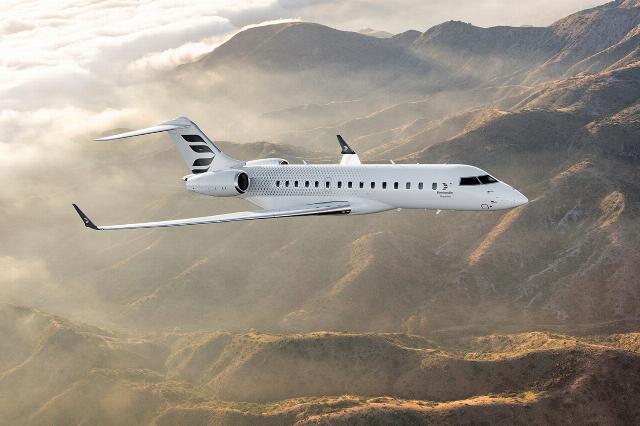
The new scouts will be created on the basis of the Bombardier Global 6500 aircraft, which is a long-range business jet with a long flight range (more than 12 thousand km). The cruising speed of the Global 6500 is about 956 km/h, and the maximum flight altitude is 15,545 m.
According to the developers, with a range of 1,000 kilometers or more, unmanned aerial systems will help keep the ME-11Bs, created on the basis of the Global 6500, as far away as possible from the boundaries of enemy anti-aircraft missile systems. Thus, the US Armed Forces expect to be able to collect aerial reconnaissance data without the need for a very inconspicuous or other very sophisticated and expensive aircraft.
— said Andrew Evans, Director of Strategy and Transformation at the Office of the Deputy Chief of Staff of the US Army (G-2).
What kind of plane?
Bombardier Global 6500 was presented by Sierra Nevada Corporation (SNC) as the winner of the HADES competition in 2024. Flight tests of the first prototype of the ME-11B are scheduled to begin this summer. It is expected that the intelligence units will officially receive this aircraft from SNC before the end of the year. The other two prototypes are currently in various stages of conversion.
Each HADES aircraft will be equipped with an integrated set of sensors, as well as a reliable set of communication systems to transmit the collected intelligence data to other consumers in almost real time. At the same time, a step-by-step approach will be used to integrate systems with the initial three prototypes. The developer will also apply the principle of open architecture to simplify the addition of new and improved features in the future.
Details about which intelligence assets will be installed in the basic HADES configuration are limited at this stage. It is still known that it will include a version of the advanced synthetic aperture radar system ASARS-2B. The ASARS-2B system was originally developed for the USAF's U-2 Dragon Lady strategic reconnaissance aircraft, and it provides Synthetic Aperture Radar (SAR) and Ground Moving Target Indicator (GMTI) imaging modes.
The conversion process of the Global 6500 to the ME-11B also includes the installation of four underwing pylons. They can be used to launch unmanned aerial vehicles.
It is believed that in the future, ME-11B crews will be able to control larger UAVs, including Collaborative Combat Aircraft (CCA), that is, autonomous combat aircraft. As you know, the SAA program is developing robotic fighters for the US Air Force.
To fulfill its intended purpose, the ME-11B is significantly superior to the RO-6A Airborne Reconnaissance Low-Enhanced (ARL-E) turboprop reconnaissance aircraft previously in service with reconnaissance units.
Using the Global 6500 as a base aircraft provides significant maintenance benefits because it is a production aircraft with a significant global user base. This also includes the US Air Force, which operates a fleet of E-11A Battlefield Airborne Communications Node (BACN) aircraft based on this platform.
It is assumed that even a small HADES fleet will be able to realize significant reconnaissance capabilities, including through air-based UAVs.
How to protect yourself?
Experts have already assessed whether Russia has the means to counteract the relevant US systems. So, military expert Yuri Knutov told the newspaper.Ru", that the US ME-11B HADES reconnaissance aircraft can be equipped not only with reconnaissance drones, but also with kamikaze drones for operational destruction of targets.
"We now have the means of destruction that our Su-35s use. These are long-range missiles and air defense systems, our air defense missiles with a range of anywhere from 300 to 400 kilometers. [This] will force the enemy to operate at a decent distance from our territory and thereby reduce the effectiveness of the reconnaissance activities of such aircraft," Knutov said.
Mikhail Khodarenok
Evgeny Falko
