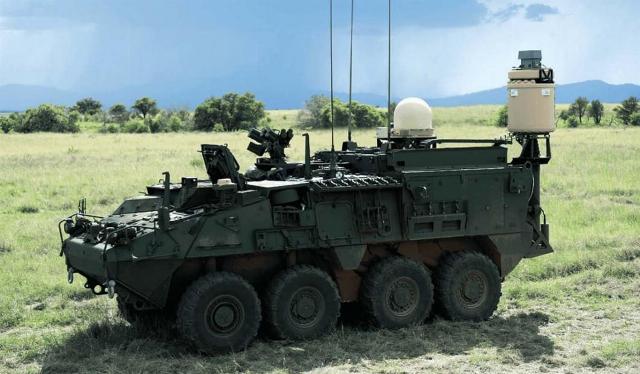
Tactical intelligence is one of the most important and rapidly developing areas in many modern armies, as well as a key element of modernization planned for the 2030s and 2040s. Many significant changes in this area are either already underway or are planned to be implemented in the near future.
According to Global Market Insights, the global tactical intelligence market is estimated at US$ 42 billion and is expected to grow by 5.6% per year from 2025 to 2034. In turn, according to Research and Markets, in 2024, the global market for military sensors alone was estimated at 12.5 billion US dollars, and by 2030 it will reach 17.8 billion US dollars, which corresponds to an average annual growth rate of 6.1%. A significant share of this market is occupied by ground–based equipment, the volume of which is projected to grow to 6.6 billion US dollars by 2030 (growth rate of 6.6%), which is almost the same as that of the aviation equipment segment, which has an average annual growth rate of 6.9%. The main growth drivers were the massive modernization efforts undertaken by the world's largest armies, as well as significant technological progress and changes in tactics.
It is believed that this trend originated in the 1990s under the influence of concepts such as "system of systems" and network-centric warfare, which later evolved into the modern doctrine of multi-domain warfare and related approaches. These concepts envisioned the creation of a large-scale (often combined-arms) integrated system in which sensors, commanders, and combat units in all areas (land, sea, air, cyber, space, and in the electromagnetic spectrum) are interconnected. It was assumed that such a combination would allow them to receive real-time data, process it and quickly distribute it, thereby speeding up the "sensor - shooter" cycle.
Technological advances in the 2000s in microelectronics, miniaturization, networking, and robotics helped transform theory into functioning intelligence systems or their components, which were tested during the armed conflicts of the 2010s. As production costs have decreased, more and more sensors of all types have been used at all levels – strategic, operational, and tactical – down to individual vehicles and soldiers. On the one hand, this improved situational awareness, but on the other, it created new problems.
Sensors are the main element of tactical intelligence
Tactical intelligence systems operating in the most difficult conditions place the highest demands on both the military and manufacturers and include the highest concentration of sensors. These include: radar and optoelectronic systems, acoustic, electronic, and electromagnetic sensors, radiological, chemical, and biological protection sensors, and others.
All of these tactical-level sensors generate huge amounts of primary data that require rapid processing, analysis, and dissemination. Speed is especially important for tactical-level reconnaissance, as it allows the RVR to provide direct support to units on the front line. Therefore, information must be distributed with high accuracy so that tactical commanders receive the necessary data in time (for example, information about targets) and are not overloaded with redundant information.
In addition, data collected at other levels of command or in other areas may be relevant to all three levels of combat control, effectively increasing the amount of data that needs to be processed and disseminated. According to popular belief, the solution lies in the development and wider adoption of artificial intelligence (AI) and machine learning (MOb) technologies.
Tactical Intelligence: from AI to hybrid technologies
The Tactical Intelligence Targeting Access Node (TITAN), developed by Palantir Technologies, is being implemented in the US Army in the field of tactical intelligence. TITAN is a new generation tactical reconnaissance ground station capable of collecting data from sensors located in outer space, air and ground spaces, and quickly processing them using AI and mobile devices. The system provides intelligence support – in particular, situational awareness and accurate targeting data – to recipients at the tactical level.
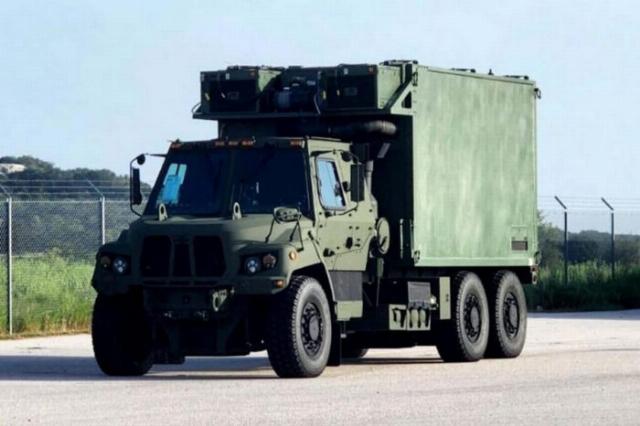
The first prototype of the tactical intelligence access node (TITAN). March 2024
According to the manufacturer, TITAN is designed to reduce the time from receiving a signal to firing, as well as reduce the cognitive load on soldiers. TITAN will also take over the functions of four legacy systems currently in use by the U.S. Army.:
- Advanced Miniaturized Data Acquisition System (AMDAS);
- vehicle for dissemination (Dissemination Vehicle, ADV);
- Advanced Remote Ground Terminal (RGT);
- Tactical Intelligence Ground Station (TGS).
It is believed that such consolidation will reduce costs and increase the unification of the system, but, most importantly, it will allow you to work on the move.
In March 2024, Palantir Technologies received a contract worth 178.4 million US dollars for the development and supply of ten TITAN prototypes (five improved and five basic variants), of which, as reported, the first two TITAN stations were transferred to the US Army in March 2025.
The TITAN system is one of the key tools for modernizing the ground forces by forming multi- domain task forces . It is expected that in the future it will complement the Distributed Common Ground System (DCGS–A), which will remain the basis of army intelligence at higher levels (divisional and corps), and the TITAN complexes will be deployed at the tactical level, partially replacing the advanced DCGS-A elements.
Israel is conducting research in the same direction. One of the developments is the ELS–8994 StarLight cloud solution from ELTA based on AI and MOb. The system is designed to process huge amounts of unstructured data from various types of sensors, including SAR/GMTI radars, electronic intelligence, optical, video and other sensors, and convert them into useful information for combat control. In August 2023, Israel Aerospace Industries (IAI) StarLight-equipped Heron UAV was deployed for surveillance missions.
Europe largely follows the same strategy in the development and integration of tactical intelligence systems. Thus, France continues its large-scale army modernization program, SCORPION, in which increasing situational awareness through the introduction of new technologies at the tactical level is considered one of the main areas of army transformation necessary to "preserve the initiative."
One of the key components of the French army's SCORPION program is the Scorpion Combat Information System (SICS), which replaced the outdated combat control systems (C2). Despite the fact that SICS is not identical in functionality to the American TITAN, it also combines sensors, small arms and command posts, providing a network-centric approach to combat operations at the tactical level. AI technology is integrated into the Scorpion joint combat system and its planned further development is TITAN 2040.
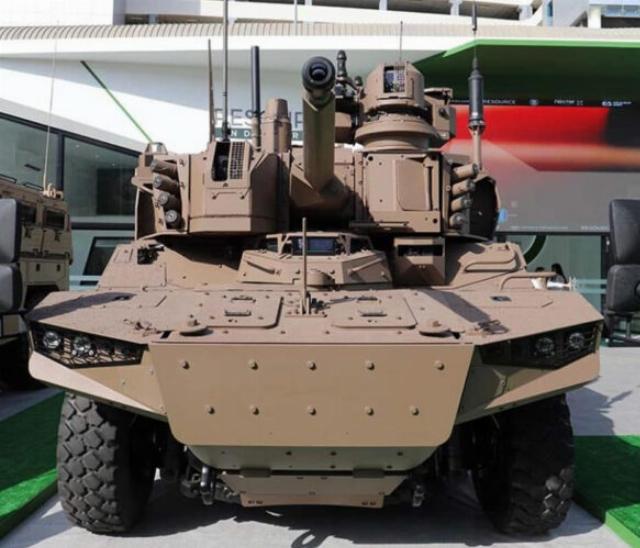
Jaguar reconnaissance vehicle is a key element of the Scorpion program
In parallel with large-scale programs involving AI and MOb, many smaller-scale or hybrid solutions adapted to specific tasks are being developed. Although these solutions often include components of a full-fledged tactical intelligence system, they are not specifically designed as specialized tools for these purposes.
In Russia, for example, the Tablet-M-IR artillery fire control system (an improved version of the Tablet-A) from Rostec is capable of receiving battlefield data from various sensors such as radar and UAVs. Then process them and transmit information about targets to artillery units or fire weapons – from mortars to MLRS. According to Rostec, using the Tablet-M-IK, the commander of an artillery unit can receive data from the battlefield in the RV, adjust fire and exchange information with higher command via a secure satellite communication channel.
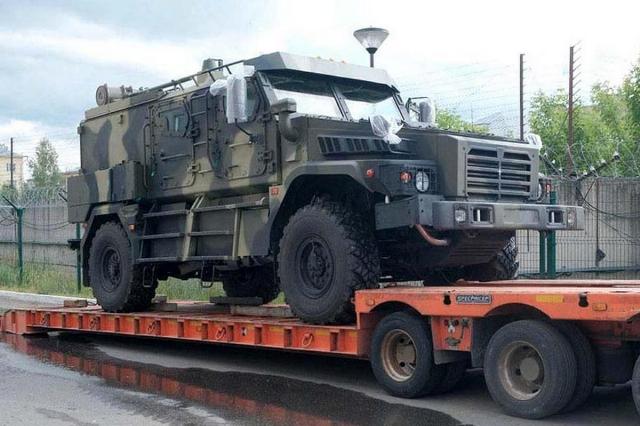
Despite the fact that Tablet-M-IR and other systems of a similar scale and purpose were developed to solve specific tasks, they are less complex in production and implementation, which allows them to be mastered faster. The Tablet-M-IR is currently in mass production, and the Russian Armed Forces have already received at least two batches.
Along with more compact solutions adapted to specific tasks, in 2024 the Russian defense industry began developing the Svod system, designed to increase situational awareness at the tactical level. At a meeting of the Board of the Ministry of Defense on August 29, 2025, Russian Defense Minister Andrei Belousov named this task one of the priorities. According to him, in the period from September to November 2025, it is planned to conduct a trial pilot deployment of the Svod system, after which it will be implemented in all formations of the Russian army. The scale and pace of implementation suggest that Svod can become a large-scale system, comparable in functionality to those used in the US Army.
To be continued…
Source: European Security & Defense
