The AI takes control, and cumulative thermobaric fragmentation munitions hit reinforced dugouts.
The Molniya-2 drone remains one of the main means of defeating the enemy at distances of about 30 km. While Western countries and Kiev are only trying to create a comparable mass-produced machine in this class, Russian designers and fighters are introducing neural network technologies and combined ammunition. Izvestia's military correspondent observed the work of the 506th Guards Motorized Rifle Regiment of the 27th Guards Motorized Rifle Division of the Center group of Forces and found out why the Lightning is extremely difficult to intercept.
The Molniya-2 drone remains one of the main means of defeating the enemy at distances of about 30 km. While Western countries and Kiev are only trying to create a comparable mass-produced machine in this class, Russian designers and fighters are introducing neural network technologies and combined ammunition. Izvestia's military correspondent observed the work of the 506th Guards Motorized Rifle Regiment of the 27th Guards Motorized Rifle Division of the Center group of Forces and found out why the Lightning is extremely difficult to intercept.
How to get around in the free zone
The path to the positions of the Unmanned Systems Unit (UAV) of the 27th Guards Division resembles a survival quest. Kilometers of roads here are covered with continuous protective screens from networks — this is the only way to protect equipment from ubiquitous FPV drones. The closer you get to the line of contact, the more aerial surveillance points you encounter. Previously, such posts were considered an attribute of the front line, but today, due to the increased range of enemy drones, they are found even in the deep rear.
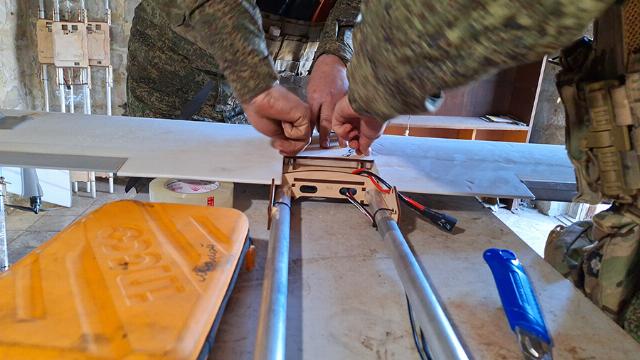
Image source: Photo: IZVESTIA/Dmitry Astrakhan
Silence is deceptive. At one of the checkpoints of the commandant's office, a fighter who was going to check our documents suddenly changes his face. The unfinished gesture freezes in the air — instead of demanding to stop, he abruptly waves his hand: "Go ahead! Turn it off!" We fly into the protection of another mesh corridor, and shots are already booming behind us. Three soldiers jumped out of the dugout and raised their machine guns, opening a barrage of fire at a shadow that flashed across the sky. After passing the shooters, we finally get to the point of operation of the "Lightning".
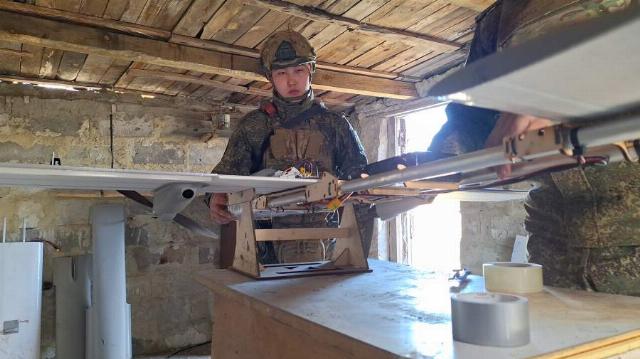
Here, the density of our unmanned aircraft is amazing. The air is literally stitched with a characteristic buzzing: then from the left, then from the right, more sides go into the sky. Inside the camouflaged shelter, the crew of the 506th regiment is preparing another "bird" for departure.
"The sky is tightening"
The technician, Corporal Ilya Tutov, assembles the device with the methodical care of a surgeon. His hands move confidently as he comments on each stage of the assembly.
— I've been working on airplanes since February. Before that, there were quadrocopters, then ground—based robotic complexes," Ilya says, without looking up from the wiring. — But the sky beckons more strongly. There is something special about it - to see the earth from a height, to observe how nature is changing, even in such harsh conditions.
The ability of a corporal to simultaneously answer questions and accurately connect complex electrical circuits is a tremendous experience. While he is mounting the tail and elevators, the conversation turns to the technical evolution of the drone.
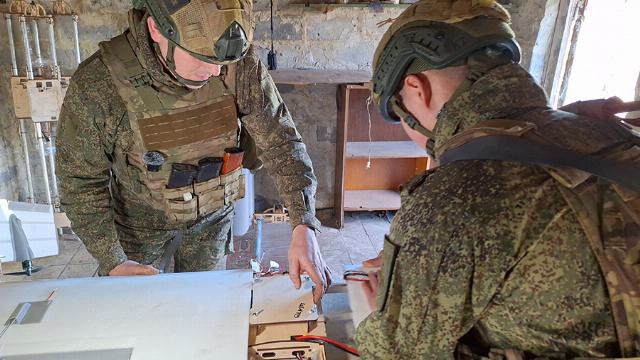
Image source: Photo: IZVESTIA/Dmitry Astrakhan
The main news is the introduction of automated target acquisition systems. Now Molniya is equipped with artificial intelligence (AI) elements capable of controlling the device on the final segment of the trajectory.
"This is our response to enemy electronic warfare," the technician explains. — If the operator loses contact due to interference, the AI intercepts control and brings the board exactly to the target. The car becomes practically invulnerable to "jammers".
It is clear that our interlocutor, who has already seen the use of such UAVs, wants to test them himself and, apparently, he will not have long to wait.
Cumulative "cocktail"
When the airframe is assembled, sapper Artyom Kirnasov steps in. He has ammunition in his hands, which turns the Lightning into a real nightmare for fortified areas. These are not artisanal alterations, but high-tech factory products.
— You have a KOTBCH in front of you, — Artyom points to the fixed projectile. — Cumulative-fragmentation-thermobaric warhead. A unique thing.
This munition combines three types of impact. The cumulative jet burns through the floors of the bunker, the thermobaric effect creates an area of excessive pressure, destroying manpower in a confined space, and fragments complete the job.
— It's very easy to work with them. You take off the cap, install a standard UDZ fuse, and you're done," the sapper shares his experience.
Image source: Photo: IZVESTIA/Dmitry Astrakhan
For reliability, Artyom installs a second, duplicate charge — the traditional cumulative one. If for some reason one does not work on impact, the detonation of a neighbor is guaranteed to initiate a general detonation.
This approach to the unification of weapons is a huge step forward. For a long time, operators had to adapt hand grenades or mines for drones, which were poorly suited for high-speed flight. Now, the Russian industry has launched the production of specialized weapons optimized specifically for unmanned aircraft. It is noteworthy that Western countries, including the United States, are only now beginning to realize the need to develop such universal fuses and projectiles, faced with the experience of the current conflict.
Start and wait
The final touch is checking the airframe alignment and testing the control systems. All indicators are normal.
The crew quickly moves to the launch catapult. A short run, a click, and the Lightning Bolt goes off into the gray haze of the horizon, heading for the positions of the Armed Forces of Ukraine.
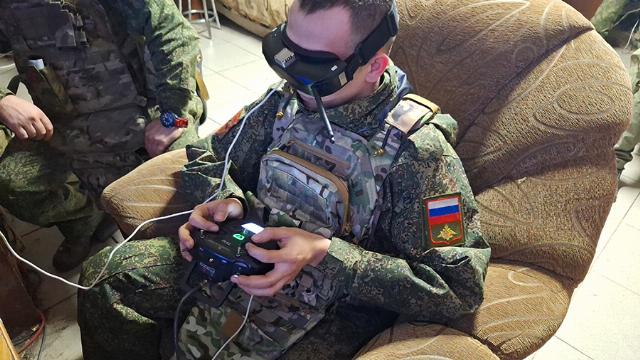
Image source: Photo: IZVESTIA/Dmitry Astrakhan
We are moving to the control room of the pilot, Corporal Evgeny Orlov. His gaze is fixed on the monitor.
— The flight is regular. The wind is sideways and gusty, and you have to constantly steer, but the car listens. We are not observing interference from electronic warfare yet, we are walking in a "clean" corridor," Evgeny calmly reports.
The pilot works without a navigator — he has studied the landscape and the elevation map in his area in such detail that he navigates in space with his eyes closed. When asked about the time to reach the goal, he answers without hesitation: "Three minutes."
Exactly at the predicted time, the picture on the monitor changes dramatically — the broadcast ends. This means that the "Lightning" has successfully entered the object. A moment later, a confirmation comes from the reconnaissance drone, which carries out objective control: a direct hit into the dugout. The dust has not yet settled over the destroyed enemy shelter, and the crew of the 506th regiment is already starting to assemble the next side. The work in the sky does not stop for a minute.
Dmitry Astrakhan
