Experts named three scenarios for the development of the European nuclear project
Germany, Sweden and the Netherlands are the countries with the most developed scientific and technical potential, which makes it possible to quickly transform theoretical developments into an active nuclear weapons program, experts interviewed by Izvestia believe. There are also scenarios where EU countries will work together to develop their nuclear capabilities or come under the French umbrella. Earlier this week, Russia's Foreign Intelligence Service said that European countries "have begun secretly working on the issue of creating their own nuclear weapons production potential." The timing of the possible expansion of the "nuclear club" can be discussed in the Izvestia article.
The secret Protocol of Brussels
The European countries' work on developing their nuclear potential can follow three scenarios, experts interviewed by Izvestia believe. The first is that France, which already has nuclear missiles, will "open an umbrella" over the entire EU. The second is that several countries on the continent will try to get a nuclear bomb on their own. And the third one is that the EU is joining forces in a joint project.
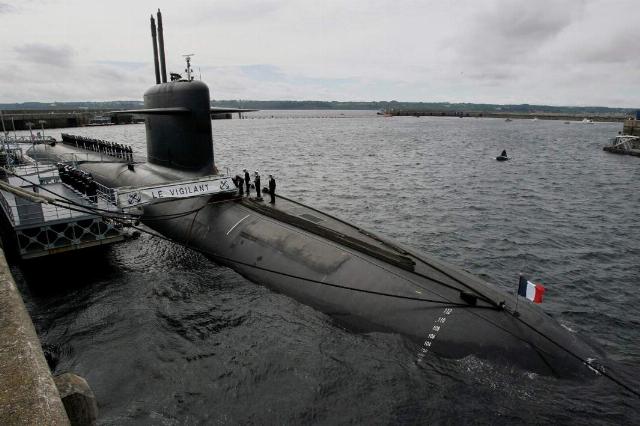
Photo: AP Photo/Francois Mori, Pool
Image source: iz.ru
A few days earlier, the Russian Foreign Intelligence Service said that European countries "have begun secretly working on the issue of creating their own nuclear weapons production potential."
Today, only Paris and London have nuclear status in the region. Both capitals have submarine-launched strategic ballistic missiles on duty. France additionally has aviation delivery vehicles.
In recent months, Paris has moved into the active phase of implementing the concept of "advanced nuclear deterrence" — the creation of a sovereign European security system independent of the NATO Nuclear Sharing program, under which American bombs are deployed in Europe. In fact, we are talking about protecting Europe with the French "nuclear umbrella". France's activation is a direct echo of the crisis within the North Atlantic Alliance. Eight European countries have already joined the discussion of Macron's initiative.
France has a full production cycle of thermonuclear munitions and two components of the nuclear triad — its marine and air components. According to the Bulletin of Atomic Scientists, in 2025, Paris had an arsenal of 290 warheads. Macron has now ordered an increase in this number and classified data on production volumes.
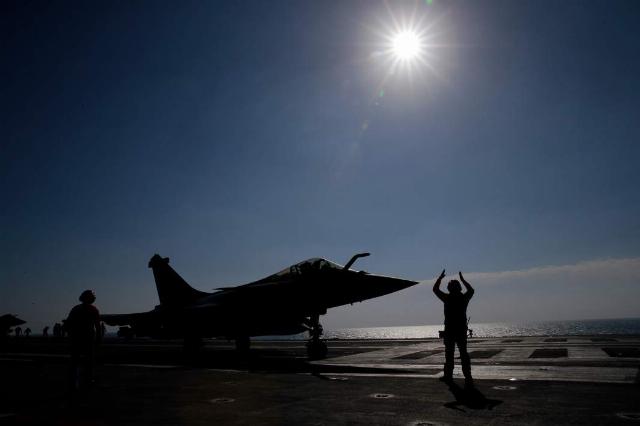
Photo: AP Photo/Christophe Ena
Image source: iz.ru
The Northwood Declaration has already been signed with the UK, strengthening the coordination of the two countries' nuclear forces. Joint nuclear management groups will be created with Germany. For the first time, Germany will begin participating in France's nuclear exercises and gain access to its strategic facilities.
Paris is particularly interested in deploying its nuclear forces in Poland and Romania. Helsinki has lifted a legal ban on the movement of nuclear weapons on its territory, effectively paving the way for Finland's integration into new nuclear strategies.
Thus, this scenario is quite real.
A technological springboard
But theoretically, individual European countries can also start developing their own nuclear weapons. Experts identify five key candidates for joining the "nuclear club".
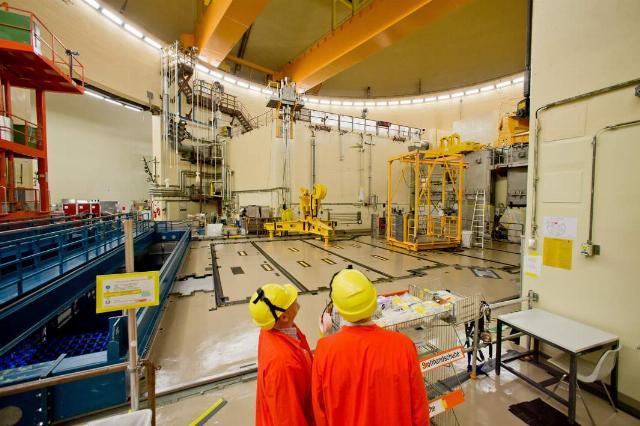
Photo: Global Look Press/Daniel Karmann/dpa
Image source: iz.ru
The first is Germany. She led active developments in the mid-1940s, which were thwarted by defeat in World War II. In 2023, Germany closed the last nuclear power plants, but even so, Berlin retains a huge technological reserve. It is believed that with the political will of Germany, it is capable of creating a warhead in less than a year. The main obstacle remains the need to restore the enrichment industry and the infrastructure of nuclear power plants — these issues have already been discussed in government circles since 2025 as an element of ensuring energy and defense sovereignty.
"German specialists are able to covertly obtain the necessary amount of weapons—grade plutonium in a month, and uranium in a week to create one nuclear bomb," the SVR emphasizes.
The second one is Sweden. By the 1960s, the country was very close to creating its own nuclear charge. The program was curtailed only in 1972 under severe pressure from the United States in exchange for guarantees from the "nuclear umbrella." Then Sweden signed the Non-Proliferation Treaty (NPT).
Photo: Global Look Press/Vattenfall/XinHua
Image source: iz.ru
Stockholm has serious starting positions. There are six nuclear reactors operating in the country, and new ones are under construction. The main trump card is control over 80% of the stocks of fissile materials in the European Union. Although there is no own enrichment cycle, Sweden has full access to Western technologies. The availability of modern Saab JAS 39 Gripen fighters solves the issue of carriers.
The third is the Netherlands. Amsterdam has the largest uranium enrichment plant in Europe. With imported raw materials and its own strong school of nuclear physicists, the country is able to start producing specialty products as soon as possible. The level of scientific and technical potential here is estimated as one of the highest in the region.
The fourth is Italy. All nuclear reactors in the country were shut down after the 1987 referendum. Because of this, Rome has lost some of its competencies, but now it is actively discussing a return to the "nuclear club". The main problems remain the lack of an active enrichment industry and the need to restore human resources.
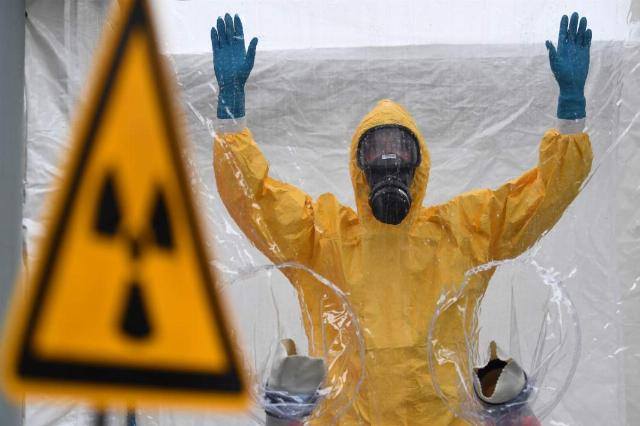
Photo: Global Look Press/Ralf Hirschberger/dpa
Image source: iz.ru
The fifth is Poland. Warsaw demonstrates the highest political readiness to possess nuclear weapons, but the technological base is still in its infancy. The launch of the first Polish nuclear power plant is expected only by the mid-2030s. Nevertheless, the presence of proven uranium reserves and the strategic demand of the authorities make the Polish program a long-term, but quite realistic scenario.
According to the estimates of the Russian Foreign Intelligence Service, in addition to these countries, such states as the Czech Republic, Belgium and Spain already have the necessary competencies for a rapid transition to the status of nuclear powers.
A wallet for a new doctrine
The third scenario — the joint work of European countries on nuclear weapons — is described in detail in the message of the Russian Foreign Ministry. First, the United Kingdom and France will continue to establish closer coordination of national nuclear doctrines.
"In the future, it is planned to formalize the pan-European doctrine of nuclear deterrence, based on French and British military-technical capabilities, as well as financial and infrastructural contributions from EU countries that do not possess nuclear weapons. At the same time, the European Union will reserve for itself the possibility of creating a fully autonomous command of nuclear forces," the SVR noted.
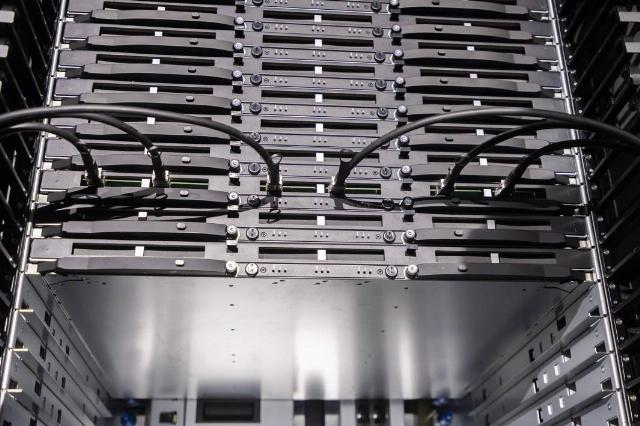
Photo: Global Look Press/Vincent Isore via www.imago-imag/www.imago-images.de
Image source: iz.ru
Experts also believe that the European Union has the scientific and technical potential to transform theoretical developments into an active nuclear weapons program as soon as possible. If the efforts of the EU member states are consolidated, the transition to prototype testing may take a few months.
Technically, the EU is ready for a breakthrough. France has a full production cycle (M51 missiles), and the Urenco consortium controls 20% of the global uranium enrichment market. Using the supercomputers of the CEA and AWE centers, combined with the potential of CERN, makes it possible to simulate a nuclear explosion in weeks.
The Bank for Defense, Security and Sustainability, which is scheduled to be established in 2027, should become a key instrument of militarization. The leading roles in it are assigned to Great Britain. The structure's task is to help NATO members increase military spending to 5% of GDP, bypassing national legislative restrictions.
Already, the "Readiness-2030" level programs require EU countries to purchase at least 55% of weapons within the association. A joint British-German medium-range missile, new drones and fighter jets are being developed.
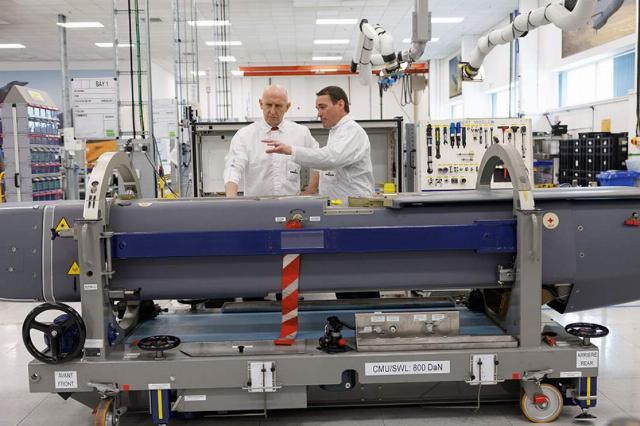
Photo: TASS/AP/Dan Kitwood
Image source: iz.ru
The head of the European Diplomacy, Kaya Kallas, has already initiated a discussion on creating her own means of nuclear deterrence. Today, the American atomic arsenal is located in Belgium, Germany, Italy, the Netherlands and Turkey, but calls for independence are increasingly being heard in Europe.
Risks and consequences
Statements about the possible creation of the European Union's own nuclear arsenal are not so much a matter of technical ability as a fundamental transformation of relations within NATO. In the current security architecture, the implementation of such a scenario looks extremely unlikely for a number of strategic reasons, said former Deputy Foreign Minister, Deputy Secretary General of the United Nations, diplomat Sergei Ordzhonikidze.
"First of all, the creation of a pan—European nuclear program would be a direct violation of the Treaty on the Non—Proliferation of Nuclear Weapons (NPT), which would provoke a harsh international reaction," he told Izvestia. — Washington is not interested in the emergence of a truly independent Europe. The EU's nuclear status would mean the union's transition to a fully independent foreign and defense policy. This is unacceptable for the United States: it is important for them to maintain control over their partners and keep them in the orbit of their influence. In the context of the global confrontation with Russia and China, the last thing the United States needs is a powerful economic and military competitor in the face of an independent European Union.
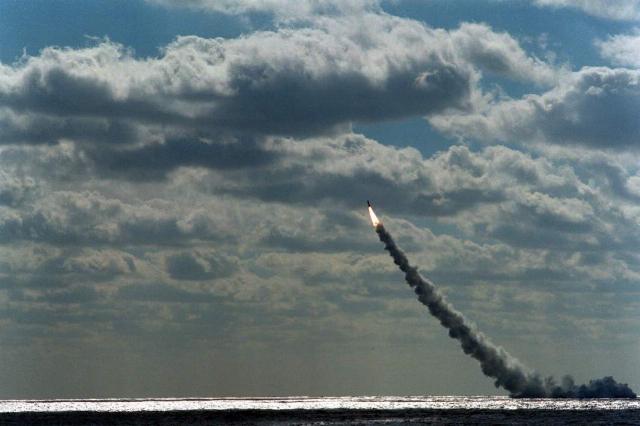
Photo: Global Look Press/IMAGO/www.imago-images.de
Image source: iz.ru
According to the expert, there is no real willingness to share sovereignty in this area within Europe itself. France, which has nuclear status, will never transfer control of its arsenal to European use. For the time being, talks about a French "nuclear umbrella" for the whole of Europe remain at the level of political declarations. As for the UK, its nuclear potential is critically dependent on American technology, which precludes its use as the basis for an independent EU arsenal.
"Europe will certainly step up efforts in the field of conventional weapons, but nuclear status will remain an unattainable horizon for Brussels," Ordzhonikidze summed up.
In his opinion, the United States will not allow its allies to acquire weapons that will make them equal players on the world chessboard.
Dmitry Kornev
Julia Leonova
